
A few years ago, my Australian friend Will visited Mexico City. For approximately three weeks, we travelled across different states in Mexico, including Querétaro, Puebla, Guanajuato, León, and Guadalajara. We drove in my van, and along the way, we would often stop in small towns between cities, sometimes places I thought were important for him to see, other times places he had researched beforehand, and occasionally places neither of us had ever visited.
One of those places was a small town called San Juan de los Lagos, in Jalisco. It is well known for the production of cajeta (caramel goat’s milk) and all kinds of sweets. Historically, it has been shaped by immigration, mainly from Spanish, Basque, and Galician families, who have long been involved in agriculture, food production, and textiles. It was Will who suggested we stop there before heading to Guadalajara, since it was on the way and he was eager to buy more of the cajeta he had already fallen in love with in Mexico City.
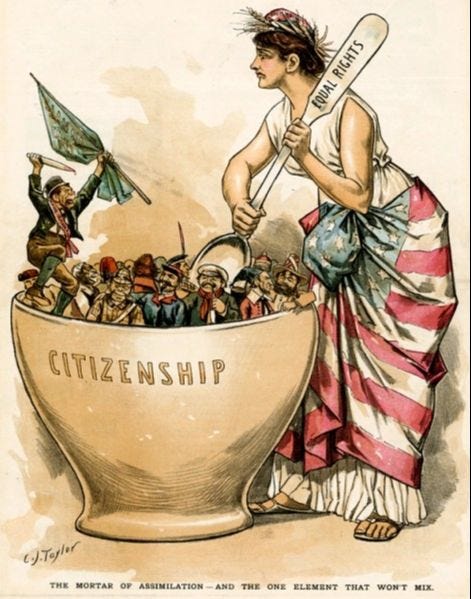
The Melting Pot as a Device of Power to Dissolve Difference
When we arrived and walked through the market and the main square, I noticed something unusual: Will was quiet. Much quieter than usual. He typically asked constant questions about everything he saw, expecting me to explain contexts and origins as if I were an encyclopedia, something that often put me in difficult situations, as I rarely had all the answers. This time, however, his silence suggested something was off. Still, despite his mood, he bought around two litres of the best cajeta in the area.
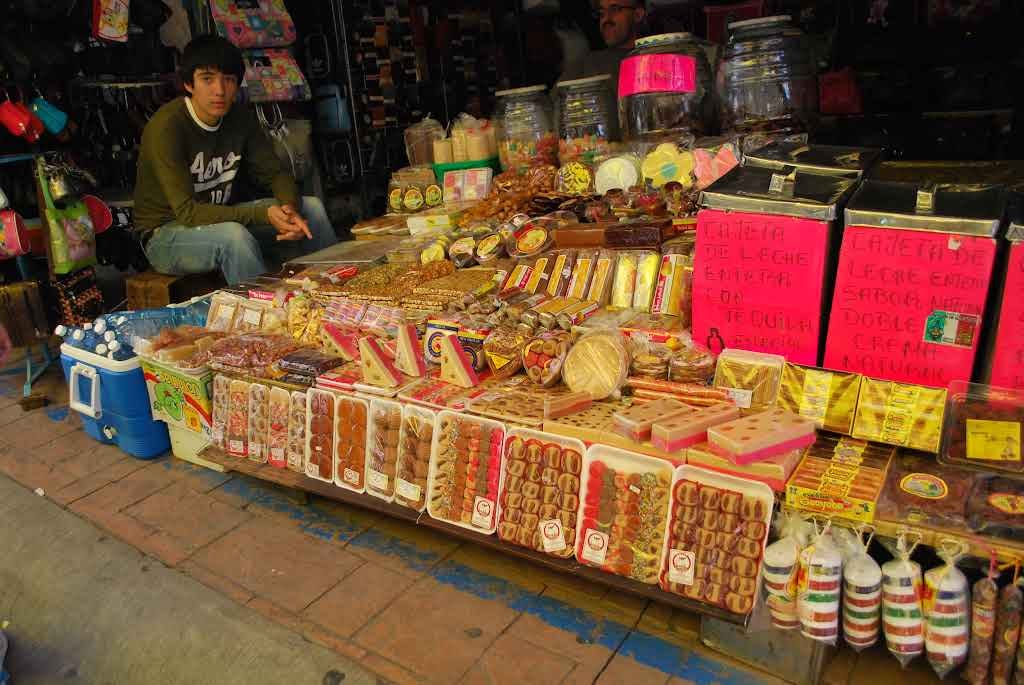
Do you want cajeta? Go to San Juan de los Lagos like my friend Will
On the road, I asked him if he was okay, whether he missed home, or if he was simply tired of travelling. No, he said. What surprised him, he told me, was seeing white people who were Mexican. He explained that, through television and film, his image of Mexico was that of brown-skinned people, not very tall, or people who looked more like me, dressed in a particular way. But in this town, he saw people who looked more like him: fair-skinned, wearing boots, belts, and cowboy hats, like American cowboys who had somehow ended up there. He even pointed out that they resembled him more than they resembled me.
A second moment that had a similar effect occurred when Will tried beer with Clamato for the first time. This drink is popular across Mexico and can be found in bars and restaurants, or made at home. It is especially enjoyed in warm weather, often by the beach. The shock it produces for someone unfamiliar with it is significant: salty, spicy, acidic, sometimes enhanced with sauces like Maggi. When Will tried it again, he began to tolerate it. By the fifth time, he had become something of a connoisseur, even ordering it in a bar with prawns lining the glass, while I opted for a michelada with gummies. For beer purists, this is an aberration; for others, it is simply the result of a recipe that has been endlessly reconfigured according to social and cultural conditions.
Looking back on these moments, I see myself almost caricatured as Virgil guiding Dante through the circles of hell, or rather, through the many layers of culinary variation across Mexico. Will had to move through spaces and encounters that did not fit his preconceived image of what “Mexican” meant, confronting the difficulty of learning through uncertainty and dealing with his own frustrations.
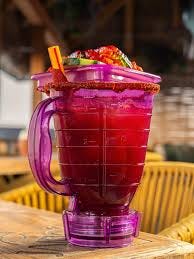
Licuachela: Beer with Clamato. An Overloaded Object of Desire
At the time, I often wondered what was required, in psychic terms, for someone to move from preconception towards letting go of it and learning something new. Why some people manage this more easily, while others do not even attempt it, despite being intellectually capable, even within artistic or literary fields. During that period, I was studying psychoanalysis, and I began to understand that seemingly simple acts—like trying a new dish without checking reviews, or walking without a destination—are, for the mind, complex processes. They require a leap of faith into a grey zone of uncertainty where the outcome is unknown.
“Without memory and desire,” as the psychoanalyst Wilfred Bion famously proposed, is a mental state the analyst must aim for in order to avoid the illusion of already knowing the patient or imposing their own expectations. What appears simple is, in fact, extremely difficult, not only in the consulting room, but in everyday life, where we remain bound to our own ideas of how the world should function.
Over time, my interest shifted from the study of aesthetic experience through mental processes towards understanding how similar mechanisms operate in the construction of the city. Cities are increasingly homogeneous, lacking distinct character; buildings, squares, and even pubs begin to resemble one another, much like in The World’s End film, where pubs are overtaken by an alien system.
In Dublin, we are not quite ruled by aliens, but we are shaped by housing crises, rising costs, and corporate investment, which produce a society more concerned with working, spending, and living in isolated bubbles. The Finnish architect Juhani Pallasmaa describes the contemporary city as a “city of the eye,” where visual dominance distances us from embodied experience. Similarly, Rem Koolhaas foresaw the emergence of the “Generic City”: spaces defined by functionality, repetition, and ease of navigation. Within this logic, classifications tend to simplify what was once complex. “Latino food,” once a political category asserting difference, has become a consumable one. In these menus, everything is already organised: familiar, recognisable, predictable.
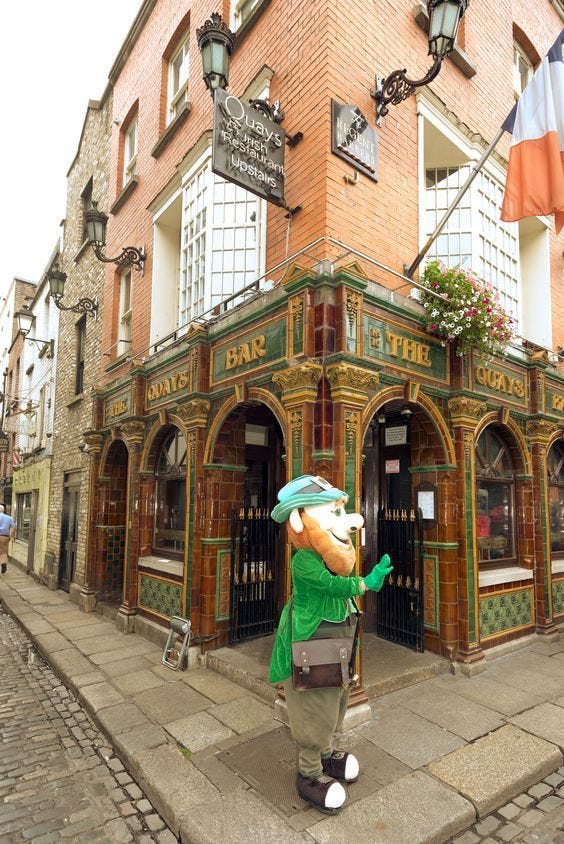
Generic Dublin for Generic Tourists?
Recently, a catering company organised a “Latin American Supper Club” featuring tortilla chips, prawn tostadas, enchiladas, and churros, inviting guests on a “culinary journey through Central and South America.” I found myself thinking that such a journey might begin with a better understanding of geography, given that Mexico is located in North America. The most telling detail, however, was that their promotional video included footage that appeared to be from Asia. But, ultimately, within this logic, what difference does it make?
The risk of merging all “Latino”cuisines into a single melting pot is that the consumer no longer needs to think. The aesthetic experience is replaced by recognition. Instead of encountering something unfamiliar, one simply confirms what is already known. This raises an important question: what responsibilities do food businesses, workshops, and cooking schools have? Should they simply reproduce what is easily consumed, or can they create experiences that sustain uncertainty, tension, and discovery?
Otherwise, what is at stake is not only the simplification of a culinary tradition, but the transformation of these cuisines into generic versions of themselves, easily identifiable, quickly consumed, and ultimately interchangeable.
No posts
Comments
Nothing yet. Say the first thing.
Sign in to join the conversation.