
“Daddy, why do these people have cardboard all over their houses?” As a child, I remember my father driving us through the reservations in South Dakota as we traveled between our home in the Dakotas and Colorado to visit my married sister. “This is an Indian reservation,” (this was before the term “First Nation” was used), “and they are very poor here. They were rounded up and put into what is very much like a large concentration camp.” I said, “I don’t understand.” I still don’t.
As an adult, I identified South Dakota as the “Deep North,” a parallel to the “Deep South.” I’ve heard bigots call members of the Lakota, a.k.a Sioux, “prairie n@##%^s” as a vicious epithet. “Bury My Heart at Wounded Knee” is a groundbreaking book about the war our country waged against indigenous people and mentions that many Midwest place names, such as Custer, Miles, and Sheridan, are named after officers charged with committing genocide. You may recall General Philip Sheridan’s famous quote: “The only good indian is a dead indian.” The list of atrocities, over the Rockies and Great Plains, is deep and wide.
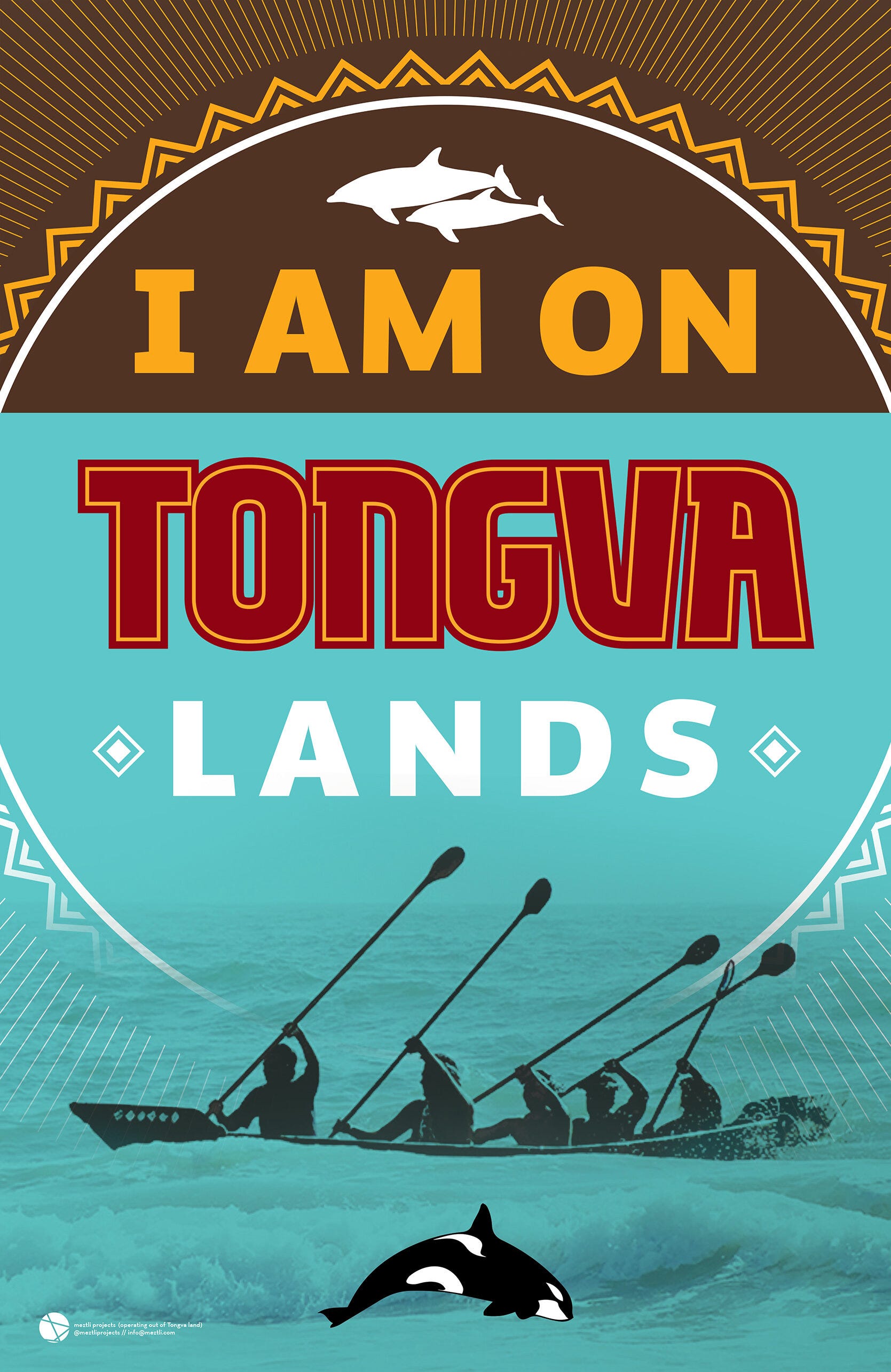
Southern California was as historically brutal to our Indigenous siblings as the prairie campaigns. I am embarrassed to admit that I know little about the Southern California bands of First Nations people and what they can teach us. Recently, I had the great fortune to attend a presentation on the Tongva people by Mona Morales at All Saints Church in Pasadena. Mona’s stated mission is Cultural Preservation, Education, and Visibility.
I’m rarely almost completely ignorant about a topic, especially the topic of folks who were colonized in California. All I really knew was that the missions, as I learned from Ms. Morales, were akin to deep-South plantations. Years ago, I had read “Ishi In Two Worlds,” Theodora Kroeber’s unforgettable book about the only survivor of the Yahi tribe in the Lassen County area. Enter “Ishi” into a search engine, and you’ll find many accounts of a man who had survived only to succumb to tuberculosis because he had no antibodies to the colonizers’ diseases.
You can also read “The Island of the Blue Dolphins” by Scott O’Dell, a fact-based children’s novel about an indigenous girl who lived alone on an island off the California coast, across from Santa Barbara. She was rescued after 18 years of solitude, only to succumb to dysentery seven weeks after her “rescue.” One of the best tips I ever got came from my late editor, Kevin Uhrich, who said that if I needed to quickly brush up on an unfamiliar area, I should read a children’s book. And, wisely enough, the Gabrieleno/Tongva presentation had several children’s books on its table.
Ms. Morales opened my eyes. California may not have had generals like Sheridan, Custer, and Miles. Still, we had Cabrillo, Portola, and a real doozy, Governor Bigler, who placed a $17.50 bounty on the bodies of Tongva people. The West Coast colonizers practiced their own forms of genocide, first administered by the Jesuits, then by the Mexican and Californian governments.
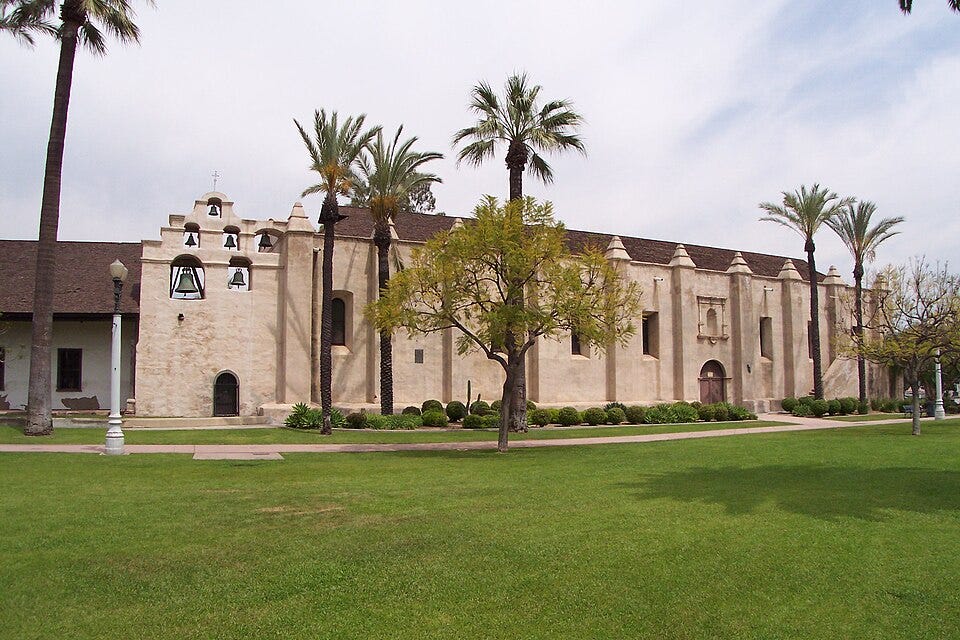
I am mortified to admit that I have not visited any of our local missions. The closest is the San Gabriel Arcángel Mission, which was the 4th wealthiest of the 22 California missions. It was wealthy because of ideal grape-growing conditions for wine. They also excelled at candle-making, and, of course, at the enslavement of the Gabrieleno/Tongva people.
A Jewish-Polish man, Lemkin coined the word “genocide” around 1946. The wholesale destruction of entire groups of people seems to have existed since prehistory, but there was no word for the phenomenon until the mid-1940s. What we did to the Native Americans was absolutely genocide.
The aspects of genocide are myriad, such as “gentle cultural genocide”; for instance, taking children from their families, cutting their hair, and forbidding them from speaking their native language, all under the guise of saving their souls. One of the most heartbreaking aspects of California’s colonization of indigenous people during Governor Bigler’s post-Gold Rush term was the $17.50 bounty for dead native people, which led entire families to fold into Mexican families and adopt Mexican surnames. My Tongva friends all have Mexican surnames, and now I know why.
Did you know there’s an active freshwater spring in West Los Angeles that is sacred to the Gabrieleno/Tongva people? I didn’t. It’s called Kuruvungna Springs and is open on the first Saturday of each month. Located on the University High campus near Barrington Avenue, it is a two-acre oasis amid the cityscape. Regarding the Tongva, I learned that securing federal recognition for the band is a complex web of challenges, and the band has only 700 enrolled members. I’ve always wondered about our street names like Cahuenga, Tujunga and Topanga. Ms. Morales taught us that the “nga” is indicative of the Gabrieleno/Tongva language. To book Mona Morales to speak, contact her here.
I left the presentation with a new commitment to explore more places in my own backyard. While I’m happy to know so much about the Great Plains nations, I still have significant gaps in my understanding of the land where we live. Filling those gaps is the very least we can do, or as Homer Simpson says, “The least we can do is nothing.” So far, I’ve done nothing. That ends now.
If you’re interested in Ellen Snortland’s online creative writing class, send an email. Also, there is still a much-needed GoFundMe to help Ellen and Ken recover from the devastating loss of their home and possessions. You can donate here.
No posts
Comments
Nothing yet. Say the first thing.
Sign in to join the conversation.