
Note: This post is time-sensitive and involves an event this coming Tuesday, June 9th. Details are in the last paragraph.
“I couldn’t stop reading.” Substitute any word for “reading,” such as drinking, eating, or gambling, and you’re looking at an addiction. Yes, I admit I’m a book addict. I always send a tiny prayer to Calliope, the Greek goddess of literature, hoping the next book I pick up will hook me, especially if it’s my favorite genre: historical fiction.
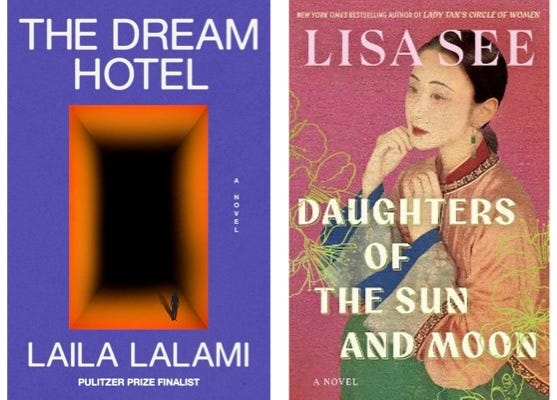
One of the many things I love about living in the Pasadena area is the annual library-sponsored One City, One Story event. This marks the 24th year of One City, One Story, a lovely tradition for us book nerds. Their 2026 selection is “The Dream Hotel” by Laila Lalami. If you love books, add it to your list to read this year or any year.
While not a historical novel, it offers a glimpse of what our history may become, told as a dystopian tale. The story follows Sarah Hussein, an archivist, who is detained in a government facility called “Madison” after an algorithm flags her dreams as potentially criminal. Ms. Hussein is detained because the algorithm deems her a threat to others, including her husband. I was both mesmerized and creeped out while reading it, and, true to great writing, I couldn’t stop reading. It also made me — and will make you, dear reader — more discerning about what you post online.
Ms. Lalami spoke at the One City, One Story event in March. The inevitable question came right away: “Have you changed your online habits since writing this book?” She answered, “Yes, of course,” and added that she hasn’t sworn off being online. However, with all the brouhaha about AI gobbling up our data, “The Dream Hotel” will stoke your fears and possibly allay some of them as well. I won’t say anything further for fear of spoiling anything for you.
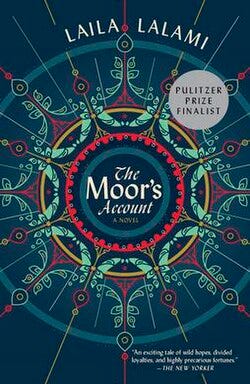
Ms. Lalami is one of my favorite authors. The first book of hers I read was “The Moor’s Account,” a historical novel that is now on my favorite book list and a must-read. Lalami’s prose is brilliant and cinematic. The story is a twist on the theme of enslavement, in which her protagonist, Mustafa, sells himself into slavery to earn enough money to keep his family in Morocco from starving. “The Moor’s Account” takes place in the late 16th century and follows Mustafa from North Africa, where he was born, to the New World, where he encounters and lives with Native Americans. He travels more than a flea on a stray dog’s back.
Another of my favorite authors is Lisa See; her latest novel is “Daughters of the Sun and Moon.” From her website: “Beloved New York Times bestselling author Lisa See draws on the vibrancy and turmoil of post-Civil War Los Angeles to tell the story of three Chinese women who managed to survive and, eventually, thrive, despite all odds.”
I was somewhat familiar with the violent treatment of Chinese immigrants in Los Angeles and the draconian federal policies toward Chinese immigration, but I had no clue how venal and brutal it was. Lisa See’s sweeping account takes us back to 1870, to the dusty, truly Wild West of early Los Angeles, a time when indigenous people were close to being wiped out by smallpox and genocide. California was overrun by bitter white Civil War veterans. Did you know that before the war, we were close to joining the Confederacy? The same attitudes carried over into the relations many white folks had with the Chinese, including lynchings and arson.
The novel follows the unlikely friendship among Dove, Moon, and Petal. They would never have known each other, let alone bonded in China, but being 3 of only around 30 Chinese women in Los Angeles, in a very small area of their village, thrust them together. Dove was the daughter of an academic in China. She had bound feet, was illiterate, and had no skills other than embroidery and maintaining her beauty. Also illiterate, Petal was on the opposite end of the spectrum of Chinese womanhood; her feet were large because they’d never been bound, since farm families needed all hands and feet on deck while eking out a living on a tiny plot of land. Moon was a different “species” of female altogether. A botched footbinding left her crippled. Moon spoke English and, along with her husband, often dressed in Western clothing. They built a very successful medical practice in both the Chinese sector and a white neighborhood.
All three women could never have imagined the challenges they’d face in Los Angeles. There’s such a large “cast” in this novel that I could have used a legend to keep track of them. Lisa See’s extensive research is matched only by her exquisite prose. I learned a lot about the beginnings of LA, especially about the Night of Horrors, which culminated in the lynching of dozens of Chinese men.
Both Ms. Lalami and Ms. See have me hooked as a reader; I will read anything they write. They embroider intricate stories with so many colors of thread that I can’t wait for their next book to lose myself in.
Lisa See will discuss and sign her new book on Tuesday, June 9th, at the Pasadena Presbyterian Church. Tickets include a copy of “Daughters of the Sun and Moon,” which will be distributed at check-in. Purchase tickets here.
If you’re interested in Ellen Snortland’s online creative writing class, send an email. Also, there is still a much-needed GoFundMe to help Ellen and Ken recover from the devastating loss of their home and possessions. You can donate here.
No posts
Comments
Nothing yet. Say the first thing.
Sign in to join the conversation.