
Twenty-one years ago, I packed my bags and headed west to San Francisco. I was hungry for something more and eager to shed my Michigander shell, which had never really felt like it fit.
A few days ago, after a series of canceled and rerouted flights, I unexpectedly found myself driving down the freeway that ran right past my hometown. I was with my three boys and giddily asked, “Do you guys want see where I grew up?”
I was definitely taking that exit, but I was pleased by their unanimous support and surprised by how much I wanted to see it too.
We moved to Cranberry Lake when I was six. Our house sat on top of a big hill that rolled down to a small lake lined with lily pads and willow trees. It was a quiet area, with only a few neighbors nearby.
Growing up, I attended a private school in another town and never really felt like my hometown was mine. I spent most of my time going up and down the freeway between where I lived and where I went to school. My hometown was a place I physically inhabited, but not one where I knew many people or ever really felt like I belonged.
California felt different. I loved the dramatic coastline, the wild ocean, the majestic oaks and redwoods, and the mid-2000s tech culture, with its drive, intensity, and sense of purpose. I made friends from all over the world and settled into a life that felt like my own.
My parents later joined me in California. Once they left Michigan, I didn’t really have any reason to return and I didn’t feel any innate pull toward the place where I had grown up.
But then, suddenly, there was the exit.
As the boys and I turned onto my old road and followed it around the lake, my heart began to race. I didn’t know whether everything would look as I remembered it or whether it would be wildly different from the version that had settled in my mind.
I softened my anxiety by telling the boys how I had learned to get up our driveway in the snow, giving the car just enough gas to make it up the hill without sliding out. I told them how several of the weeping willows had broken during an ice storm, and how my dad had planted the fallen branches that took root and grew into trees of their own. I pointed out the tree my mom had planted in memory of her father after he died.
As we climbed the long driveway toward the house, it felt like revisiting a dream. Things weren’t exactly the same, but they were so deeply familiar.
The hill looked smaller than I remembered, and our little beach was a bit less glamorous. But the house was still there, along with the brick patio my mom had spent an entire summer building. The lake sparkled in the afternoon sun, with docks and paddle boats dotting the shore.
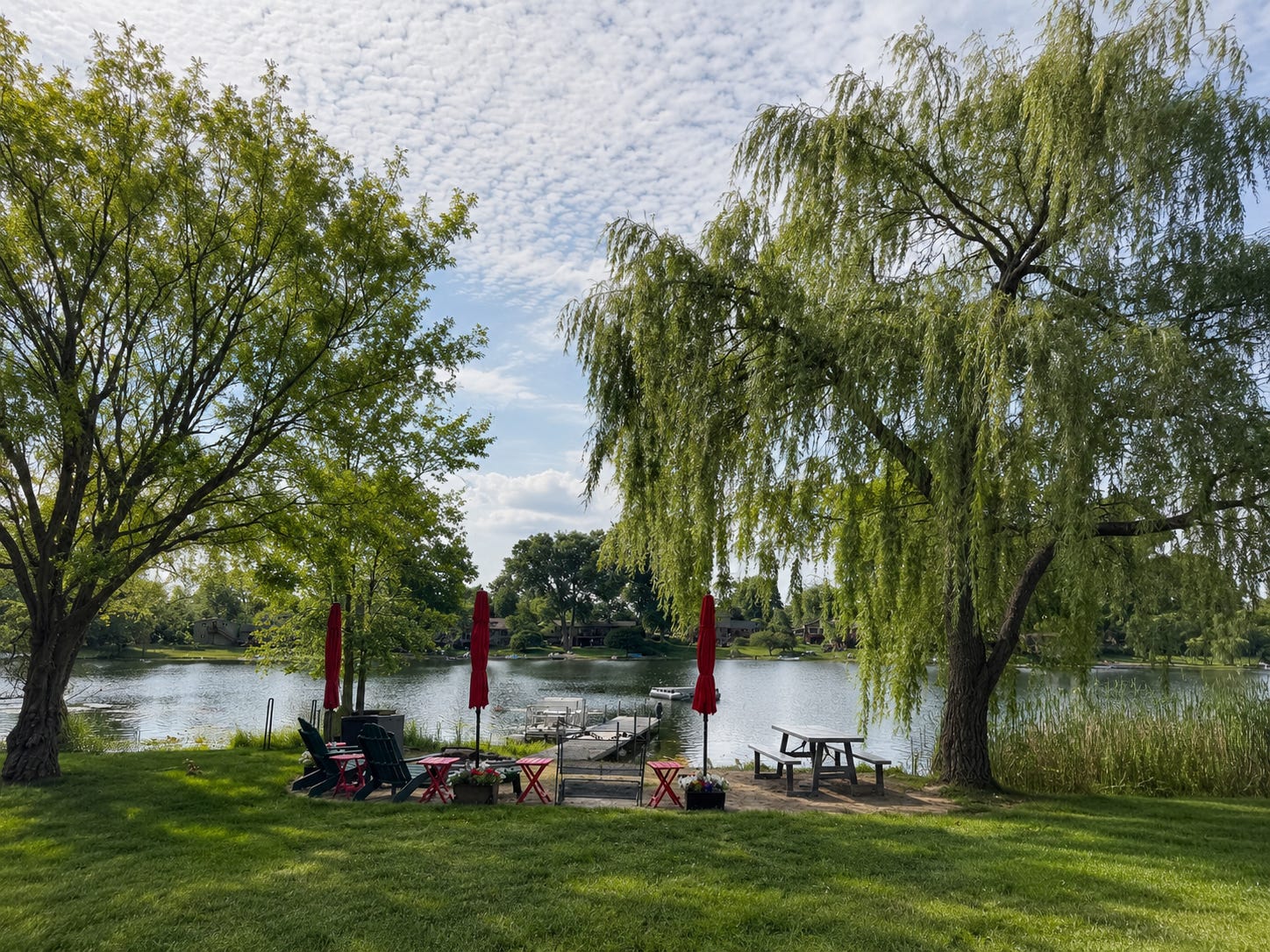
This was no longer my home. My family didn’t own a house or land there anymore. But it still felt like mine. And in that moment, I realized it always would. Not in a way that any property deed could capture, but just because the place was so deeply embedded in me.
I knew the curves of the road as it wound around the lake, the cattails and lily pads along the shore, and the small rises and dips I had biked and run along thousands of times. These memories were rooted so deeply that even moving thousands of miles away couldn’t shake them loose.
Other people lived there now, just as others had lived there before me. But we were all entitled to the memories we had made there. We could all hold this same physical place in our hearts as our own.
I loved showing the boys where we had cleared a little area for a beach, where the geese used to chase me on my bicycle, and where our dog used to spend hours hunting for frogs. They were enthralled. And as I introduced Cranberry Lake to them, I found myself delighted to be rediscovering a place I had forgotten I loved so much.
For the rest of the drive, they kept asking if maybe someday we could get a house on a lake in Michigan…
No posts
Comments
Nothing yet. Say the first thing.
Sign in to join the conversation.