
I just wanted to buy kitchen scissors. This was a low cost, low stakes item. I didn’t turn to AI or curated recommendations lists. I just went to Amazon and searched for “kitchen scissors.”
I was scanning the options when suddenly 1/4 of my screen was taken over by AI.
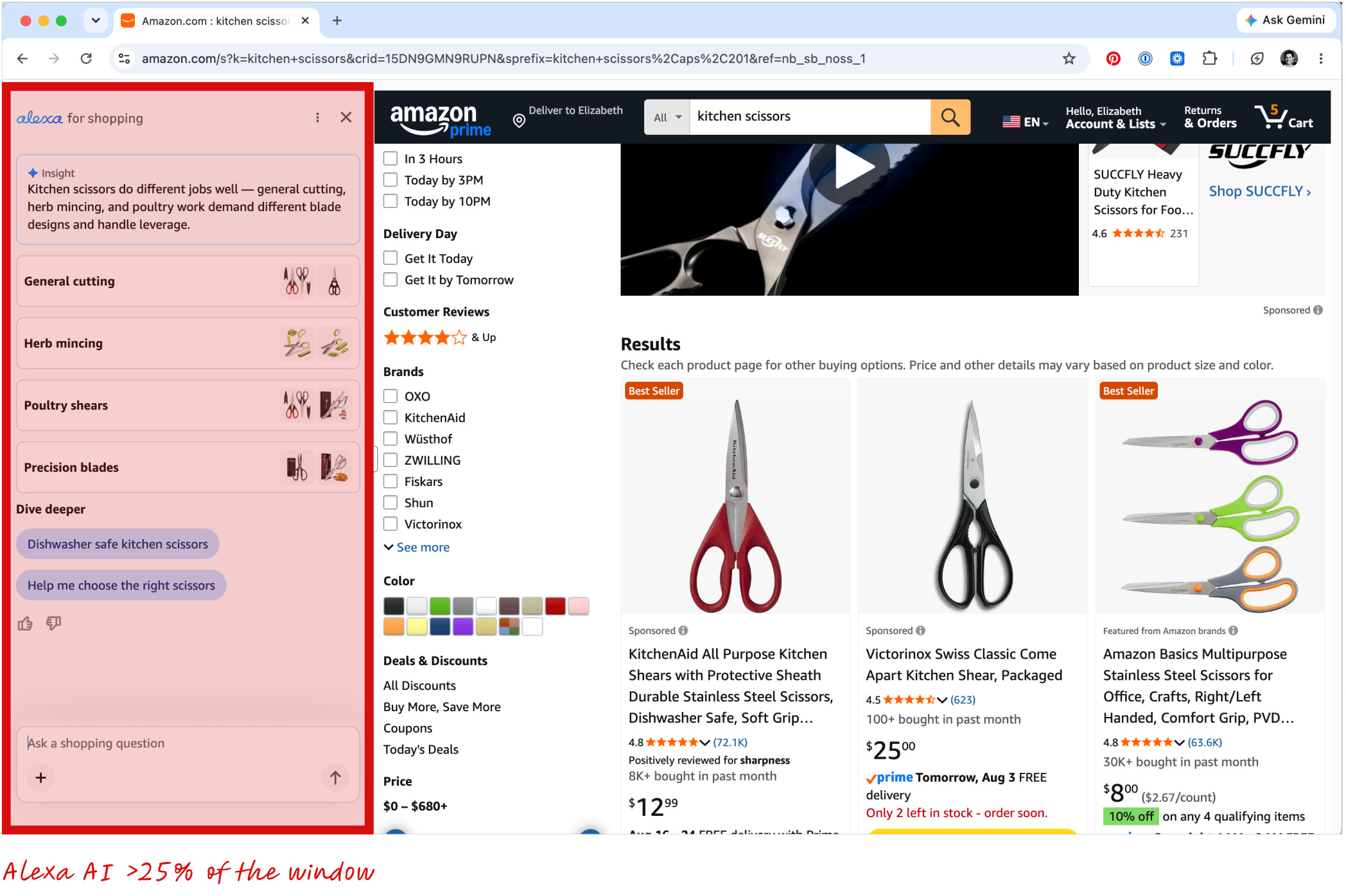
I didn’t want AI assistance. So I quickly closed the panel to get my browsing space back and return to the task at hand.
But then the designer in me got curious… If Amazon was willing to dedicate >25% of it’s search results screen to an AI shopping panel, maybe it did add value? So I reopened it.
Immediately, I started to feel both under-researched and overwhelmed by all of the kitchen scissors options…serrated edges for herbs and poultry, spring-loaded handles to reduce hand fatigue, offset designs to keep knuckles clear of the board.
I just wanted a pair of decent quality scissors with separable blades that I assumed would be about $20. But now I started to wonder if I should invest more consideration into choosing a pair of kitchen scissors?
So, I followed Alexa’s lead. Sure, help me choose the right pair of scissors.

Its first recommendation was a pair of $60 multi-purpose scissors. The second could also function as a nutcracker, fish scaler, and bottle opener. Then came a few more options, down to a set of two for $8.
This didn’t feel smart or personalized. It felt like the system plucked out some high, medium, and low price options and handed them to me. The interaction itself made shopping harder and more complicated.
My normal Amazon flow is pretty simple: search → scan → consider a few options → buy.
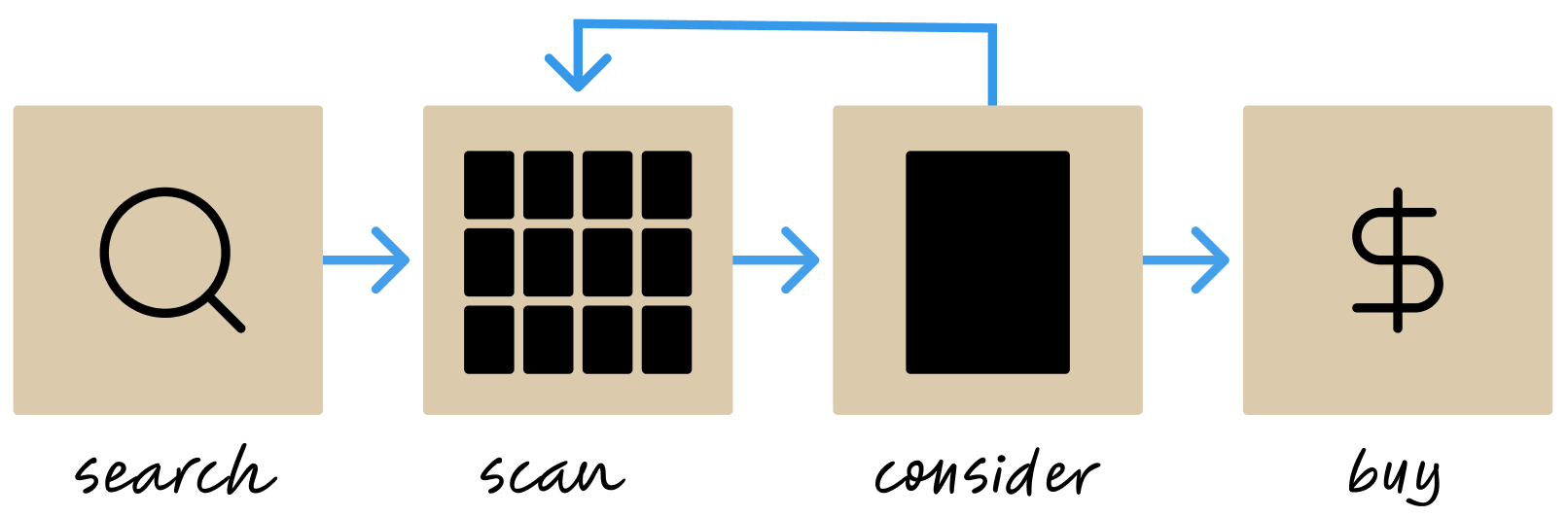
Every time I clicked on one of Alexa’s recommendations, the AI panel updated. To return to it’s original list of recommendations, I had to scroll back through the the conversation to find them. Instead of helping me move through the results, AI introduced this second, competing interaction model. It reacted to my behavior, but didn’t stay synchronized with it.
The panel was also slow to load, which made the whole experience feel heavier. Its interactions were also unpredictable. Sometimes Alexa took over part of my screen. Sometimes it didn’t show up at all. On mobile, it took over my whole screen. The suggested prompts varied. Sometimes it reacted to my behavior. Other times, it seemed completely disconnected from my search.
I understand unpredictability is inherent to generative AI. But the interface and user experience around it needs to have some level of predictability.
The promise is real. I’d love to be able to say “I want a pair of decent quality kitchen scissors with separable blades” and start with pre-filtered results. But right now, Amazon’s Alexa Shopping AI feels like an over-eager, erratic salesperson. I never know when it’s going to pop it’s head into the aisle and whether it will help me make an informed choice, pull me down a rabbit hole, or make me leave the store all together.
AI makes it easy to become an informed expert on anything. But good product design recognizes when more information isn’t the goal. AI does not always need to be front and center. It can work smartly in the background. Or, stay out of certain interactions all together.
In my case, what should have been a simple $20 purchase became a quest.
So I left without buying the scissors.
No posts
Comments
Nothing yet. Say the first thing.
Sign in to join the conversation.