
I’m a strong believer in finding the books that speak to us even when we are not looking for them. Many of us have experienced this bit of magic that can happen to readers. Welcome to our new regular feature where bookish folks from all over weigh in on a special book that found them at exactly the right moment. You never know, this may be how you find what you or someone you know most need to read right now.
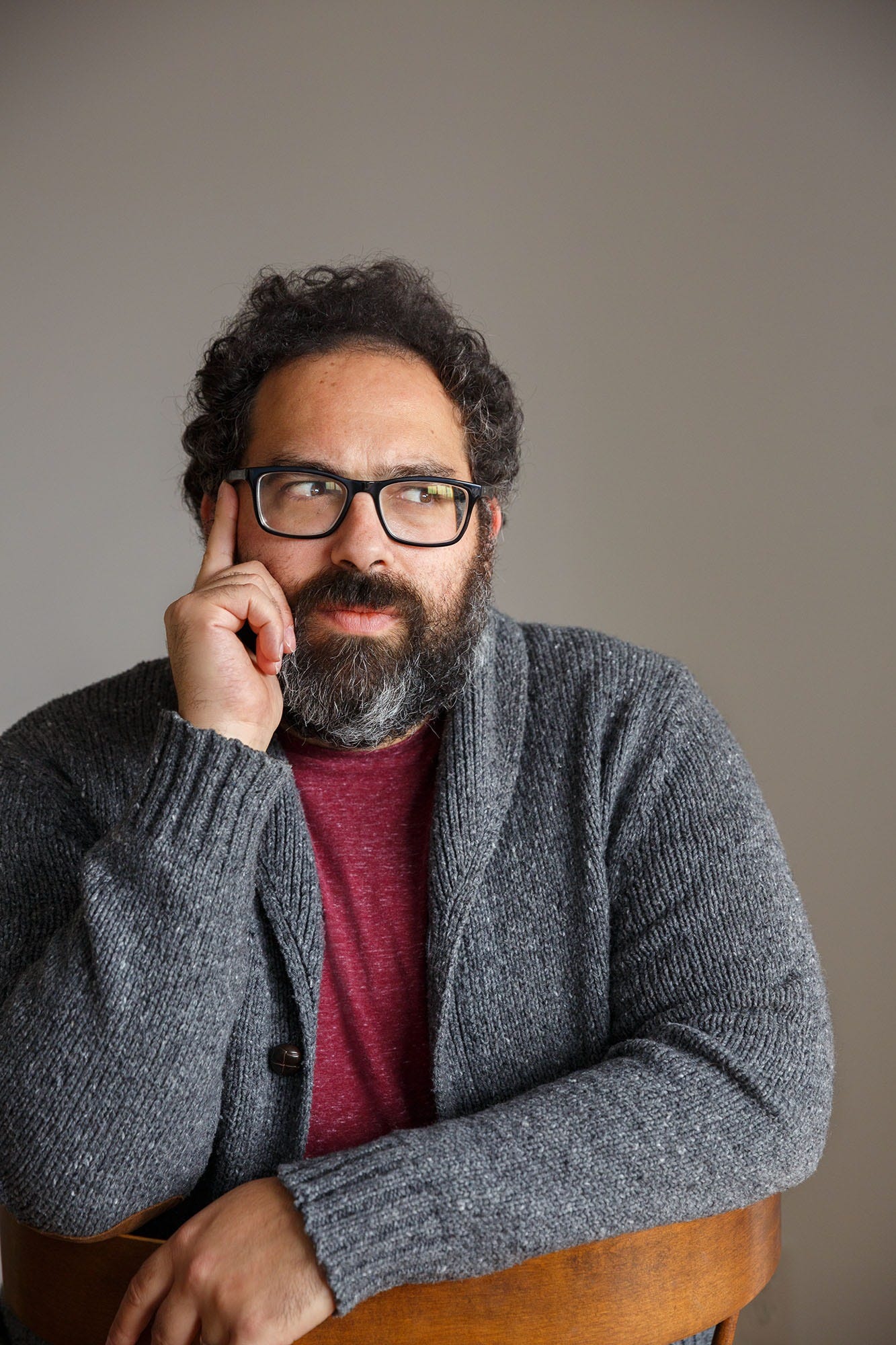
Today we hear from Michael Estrin, author Not Safe for Work, Murder and Other Distractions, and Ride/Share: Micro Stories of Soul, Wit and Wisdom from the Backseat. I found Michael when I came across his Substack Situation Normal soon after I started Spark. The most important thing to know about Michael Estrin? Best eavesdropper in the business. This post started in the line of a local Vons and features a twist he never expected. His notes makes me want to follow him around just to pick up the crumbs of conversations he overhears or starts himself because he was born curious. He observes the humans around him with the eye of an anthropologist who does stand-up comedy on the side.
He’s got a love affair with noir going on that is terrific too. I read this take on the television adaptation of Carl Hiassen’s Bad Monkey and I think Michael nailed it. And even though he has pinned the entirely relatable, very funny story about his garage door to his home page, I still love this piece about the time his wife Christina saved Michael when a real-life monkey invaded their hotel room. He married well.
What book found you when you needed it most?
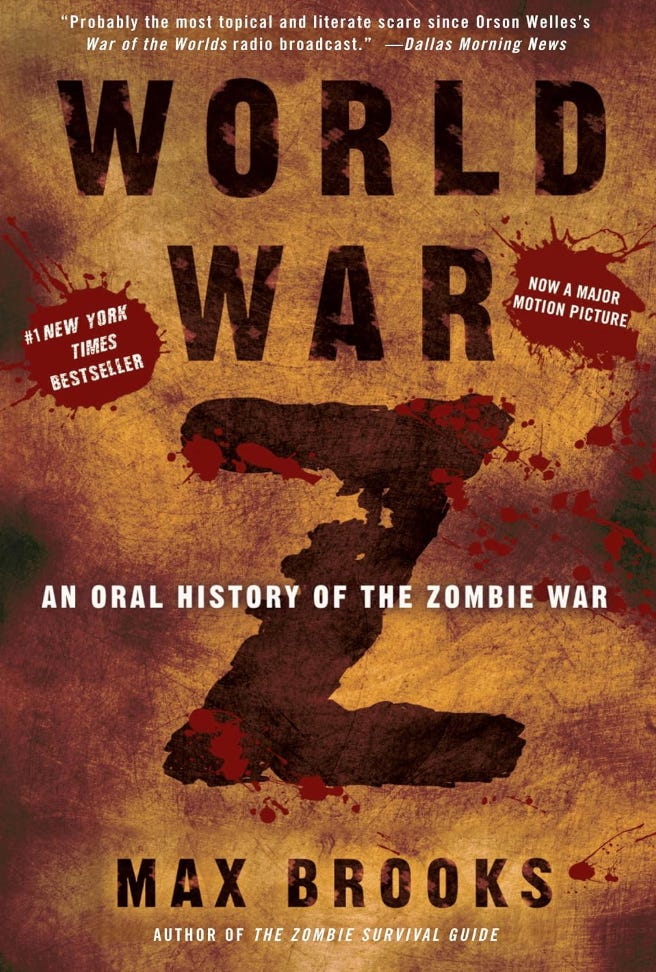
World War Z: An Oral History of the Zombie War by Max Brooks.
When and how did it find you (or how did you find it)?
I’d heard about the book when it came out in 2006, but I didn’t want to listen to it. (I’m a very slow reader and I don’t have great eyesight, so I’ve been doing audiobooks most of my life). I’m not really a fan of the horror genre. I just find it too scary. That said, I’m intrigued by zombies because they make such great metaphors, so let’s just say World War Z sat on my TBR list for a few years. I picked it up in 2011 while I was recovering from a broken ankle. I was stuck at home, and I burned through a lot of books pretty fast, so I decided to give this zombie book a try, even though it kinda scared the bejesus out of me.
Why it mattered
So many reasons. First, it’s just a fantastic story. Actually, it’s several dozen fantastic stories rolled into one book. But the thing that really made me sit up and take notice was the author. Max Brooks is a funny guy. He comes by it naturally. His father is Mel Brooks, one of my comedic heroes. I assumed World War Z would be mostly scary and maybe a little funny. There’s actually a relationship between horror and comedy, and I know some writers who think of those two genres as opposite sides of the same coin. I work the comedy side of that coin, and I’m too much of a chicken-shit to flip it over.
Anyway, I figured that’s how World War Z would go, and that the book would provide some mindless entertainment that pairs well with painkillers. I was wrong. The book has some haunting passages and a few jokes, but mostly it’s a very serious book. How serious? Well, let’s just say that Max Brooks did so much great research and thought so deeply about how societies face — or refuse to face — crises that West Point invited him to speak to cadets and military officers. I believe he’s actually a fellow at the Modern War Institute — which is a wild achievement for a guy who started out writing comedy.
There are a lot of lessons in the book about human nature, history, trauma, resilience, panic, denial, leadership, etc. But the lesson that sticks with me is this: Funny people can tackle serious topics. Not that we need permission. But World War Z serves as a reminder not to underestimate comedy writers. We’re wired to make you laugh, which means we’re good at seeing things people don’t expect. If you expect the punchline, if you can see it coming, it won’t be funny. When you apply that comedic mindset to serious topics, you tend to find insights that elude a more serious approach. My instinct is to follow the funny, but sometimes that leads me to serious places, and that’s OK. Actually, it’s a good thing, because I believe that if I can make you laugh, I can open your mind and heart to some other possibilities. That’s not what World War Z is about, and I’m almost positive Max Brooks didn’t write it as a battlecry for comedy writers to get serious, but that’s the lesson that’s stuck with me all these years.
Would you read it again?
Absolutely. I’ve read it at least a dozen times. I picked it up again during the first month of the Covid lockdown. My wife thought I was nuts. She knows I’m a chicken-shit, and with so much terrifying stuff going on, she thought it was a bad idea to read World War Z. But here’s the thing: It’s an oral history about winning the zombie war. Put another way, it’s that rarest of post-apocalyptic stories, because it isn’t about the end of civilization, it’s about resilience. So a very optimistic book … about zombies.
A bit more about Michael
Michael Estrin writes and tells stories from his life that are funny, heartfelt, vulnerable, and sometimes even profound. His essays have appeared in Vox, Narratively, and Tablet. His journalism has won two Maggies and earned an LA Press Club nomination. Michael also wrote a couple books (self-published), including the slacker noir Not Safe for Work. He received his BA from Wesleyan University, and JD from Brooklyn Law School. He studied comedy at UCB.
Michael lives in Los Angeles with his wife and partner in crime, Christina. He is the Chewbacca to her Han Solo. Their dogs, Mortimer and Bodhi, are named after the villains in Trading Places and Point Break. His Substack is Situation Normal a slice-of-life humor newsletter that sometimes veers into crime, local politics, and acts of absurdist journalism.
Comments
Nothing yet. Say the first thing.
Sign in to join the conversation.