
The Federal Energy Regulatory Commission (FERC) delivered a master class in policymaking last week.
After Energy Secretary Chris Wright proposed in October that the Commission assert jurisdiction over large loads (i.e. data centers) connecting directly to the interstate transmission system, the energy sector braced for a rulemaking with a sweeping expansion of federal control. State public utility commissions, utilities, ratepayer advocates, and dozens of other commenters* warned FERC that usurping the retail ratemaking authority traditionally held by states would result in lengthy litigation—the opposite of the “speed to power” Wright was trying to address.
But FERC’s position remained a mystery. And the night before the Commission was scheduled to issue a final rule, six “show cause” orders—naming each regional transmission organization (RTO) and independent system operator (ISO) as well as the transmission owners within their respective boundaries—were added to the agenda: the regulatory equivalent of getting called into the Principal’s office.
At the meeting, FERC Chair Laura Swett explained: rather than issue a rulemaking, FERC was delivering each regional grid operator an assignment. The RTOs/ISOs must address their large load interconnection procedures or explain how their current processes are just and reasonable (spoiler alert: FERC already thinks they’re not). The show cause orders weren’t punishments, they were an opportunity for each organization to provide tailored, regionally-appropriate solutions according to five principles laid out by the Commission.
The categories for reform include:
Application and study processes for transmission service to large loads, including alternative transmission technologies (ATTs) or grid-enhancing technologies (GETs).
Transparency in transmission costs and network upgrade costs to prevent cost-shifting.
Accommodating co-location and behind-the-meter generation.
New transmission services for flexible large loads.
Processes to study generators serving “electrically proximate” and co-located large loads.
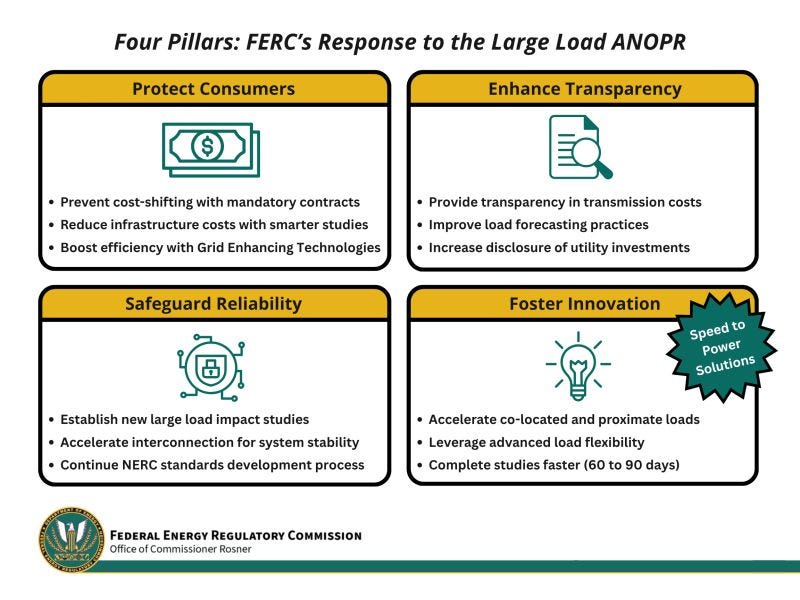
Courtesy of Commissioner Rosner - always clutch with the graphics.
In reading the actual orders, it is clear that FERC is grading on a curve here, with the Southwest Power Pool’s (SPP) approach taking top marks. The six orders are largely identical, but SPP's directive list is shorter because SPP has already done much of the homework in its high-impact large load (HILL) and HILL generation assessment (HILLGA) frameworks. PJM gets a pass on the co-location issue since FERC addressed that separately earlier this year.
FERC’s narrowly tailored actions lay out with perfect clarity how organized markets should proceed with interconnecting data centers, and they offer a roadmap to states looking for guidance on how to structure retail ratemaking principles. FERC expects to see utilities outside organized markets submit filings under Sec. 205 of the Federal Power Act as well. And they will probably all look a lot like the student model from SPP.
But even if all the RTO/ISOs and others file timely and complete responses, there are still a lot of gaps where rate-shifting can occur. In particular, the FERC orders are largely silent on generation—the grid operators have 30 days to submit a plan for how they intend to ensure resource adequacy, but this is largely a job for the states.
The Ratepayer Protection Pledge promised that data centers wouldn’t just gobble up existing capacity and force utilities to socialize the costs of building the next power plant. But states have a lot of leeway in codifying that promise and determining how data centers source the power they’ve promised to bring.
With that in mind, I offer a few principles of my own that states could consider as they work to meet the moment:
Utilities have no business earning a profit on power plant builds funded by data centers. An investor-owned utility’s regulated rate of return compensates it for taking a commercial risk, and that risk doesn't exist when the data center brings and bankrolls its own generation. Utilities should absolutely be involved in these deals—they bring expertise, coordination, and operational services that large loads need to tap into—and large loads will still be customers that must share in the fixed costs of the overall system. Utilities should be able to charge data center customers for their time and expertise in integrating and serving large loads, even if that looks different from the rate recovery utilities are accustomed to.
Close the self-supply loophole on clean energy. Many states have adopted portfolio standards or established clean energy goals, and most of those statutes are written to apply to load serving entities. Behind-the-meter and islanded generation facilities create a self-supply loophole that states will likely want to close. Large load-owned generation should be subject to the same portfolio standards as utilities in a given state, even if islanded facilities aren’t subject to other laws meant for public utilities.
Let hyperscalers fund distributed generation that households actually own. Want an easy way to build public goodwill in a community? Create localized vehicles (cooperatives or community choice aggregators work well) that receive funds from hyperscalers; allow that entity to facilitate, finance, or heavily subsidize distributed energy resources (DER) like rooftop solar, home batteries, and smart thermostats; and allow it to aggregate the resources into a virtual power plant that reduces the system peak. The household owns the asset outright, and the hyperscaler earns credit against its own capacity obligation for the verified, durable load it took off the system—plus, depending on how the vehicle is structured, a possible tax benefit for the contribution. The community now boasts self-sufficient homes that barely lean on the grid, ratepayers who finally own a piece of their own energy future, and a data center that has bought the cheapest, fastest, most equitable power around.
Make utilities answer for system-wide resource adequacy—but data centers should create it rather than lean on it. Utilities should remain responsible for the adequacy of the overall system, and states should determine an appropriate reserve margin. Data centers should not be permitted to draw down that shared headroom to power new facilities, but their new resources should be visible and accounted for in a resource adequacy regime.
Protect the generation communities already depend on. Just this year we saw a community lose access to wholesale power when their contract expired because data centers will pay more for the steel already in the ground. That is replicable and catastrophic at scale. A five-year delay before reallocating generation that has been serving residential customers gives distribution utilities and PPA holders time to keep their supply until a distributed replacement is actually in place. Paired with household-owned DER, it’s the bridge that makes the handoff orderly instead of abrupt.
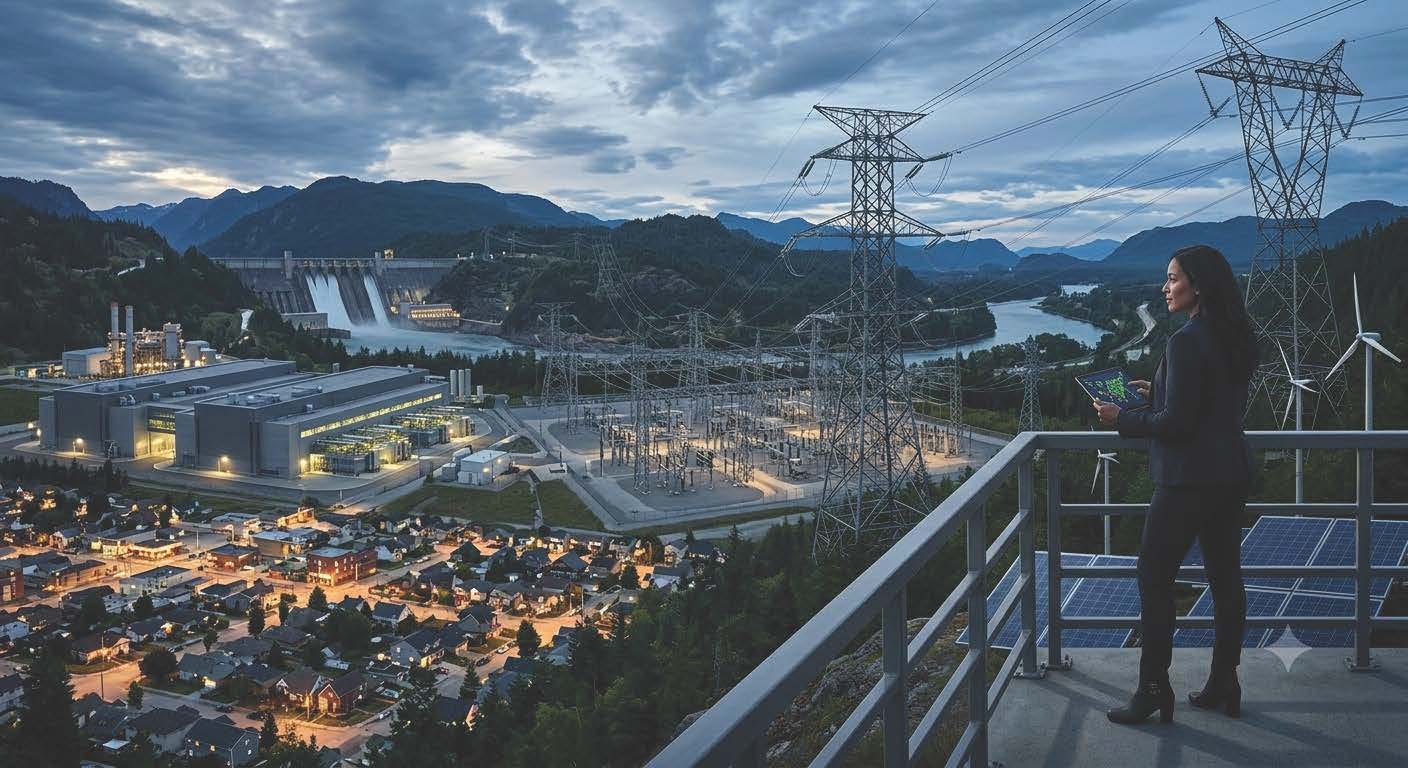
In an ironic twist, Congress turned in homework of its own on the same day FERC issued its orders. The bipartisan “Ratepayer Protection Act” would codify the Ratepayer Protection Pledge—sort of. It requires state regulators to consider a large-load cost standard under Section 111(d) of PURPA, and it reaches only network upgrades, not the questions that are actually up for grabs.
A codification of the Pledge may or may not be necessary, but it is certainly not sufficient. A huge cost-shifting risk still lies outside the four corners of a rate case and is untouched by either FERC or state authorities: hyperscalers and utilities are now bidding for the same finite inputs. Gas turbines on order books already years deep. Transformers, switchgear, and long-lead equipment. The crews who install them.
A buyer with effectively unlimited capital doesn't just get its turbine; it bids up the price and the timeline for the utility building the plant that serves your house. So a data center can honor every dollar of the Pledge and still raise your bill—a cost shift that happens entirely outside the mechanisms FERC and the states are divvying up. Regulators can shield ratepayers at the margins, but cannot change the bidding. Only one actor can.
If hyperscaler capital is going to outbid utilities for new projects and make existing contracts too expensive to extend, the federal answer isn’t to ask states to consider a cost standard—it's to put a thumb on the scale for the other side. For example, Congress could create a new tax credit for generation that serves households and consumer-owned utilities, designed expressly to counteract the bidding power data centers now bring to a constrained market.
The beauty of FERC’s orders are that the Commission brilliantly understands its own role and the division of labor. Congress can learn that lesson by leaning into the role only it can play: taxing and spending.
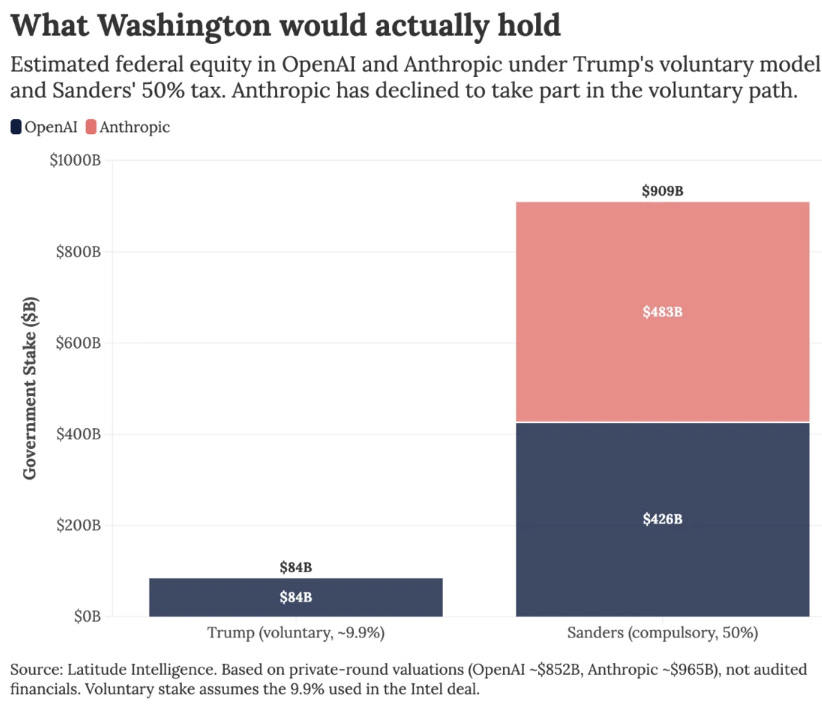
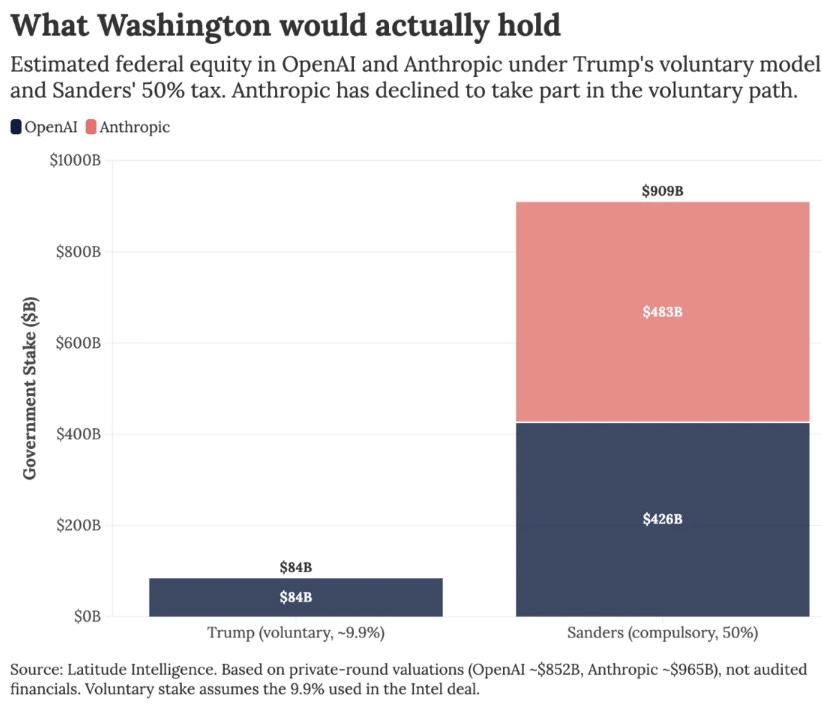
Will the U.S. government get an equity stake in major AI companies, as President Trump has suggested? Or will they have to pay into a sovereign wealth fund, like Sen. Bernie Sanders (I-VT) wants? And other sentences I never imagined writing before last year. (Semafor, Latitude Media)
PriceWaterhouseCoopers’ new report says AI-driven load growth is a primary factor behind increased merger and acquisition activity across the power sector. (T&D World)
Sen. Elizabeth Warren (D-MA) is looking into the growing concentration of ownership overlaps between data centers and utilities in the private equity space. Let her cook! (Axios)
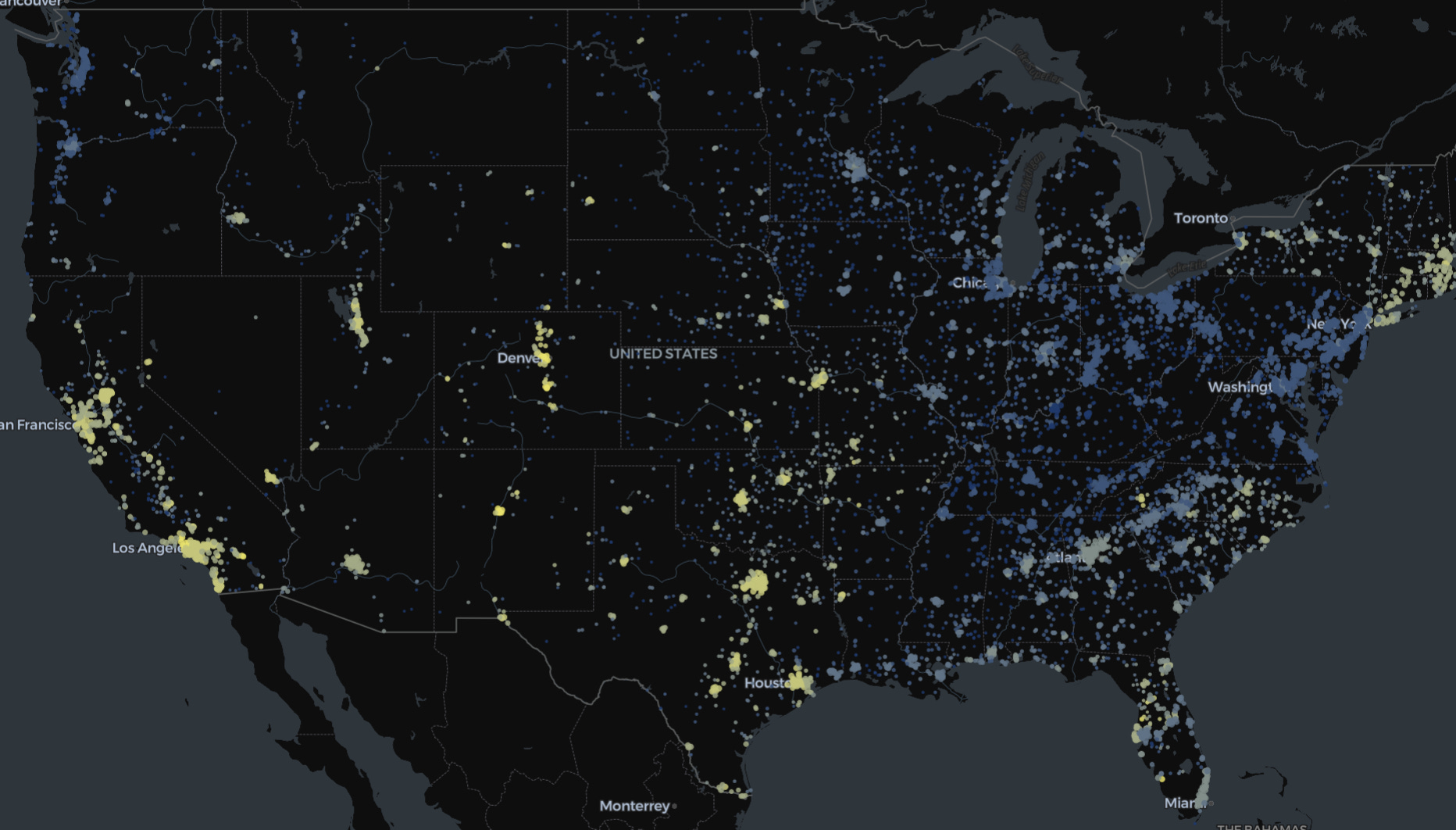
WattCarbon’s “GridSolver” is a visual representation of DER needs across the country. And it's beautiful. (gridsolver.wattcarbon.com)
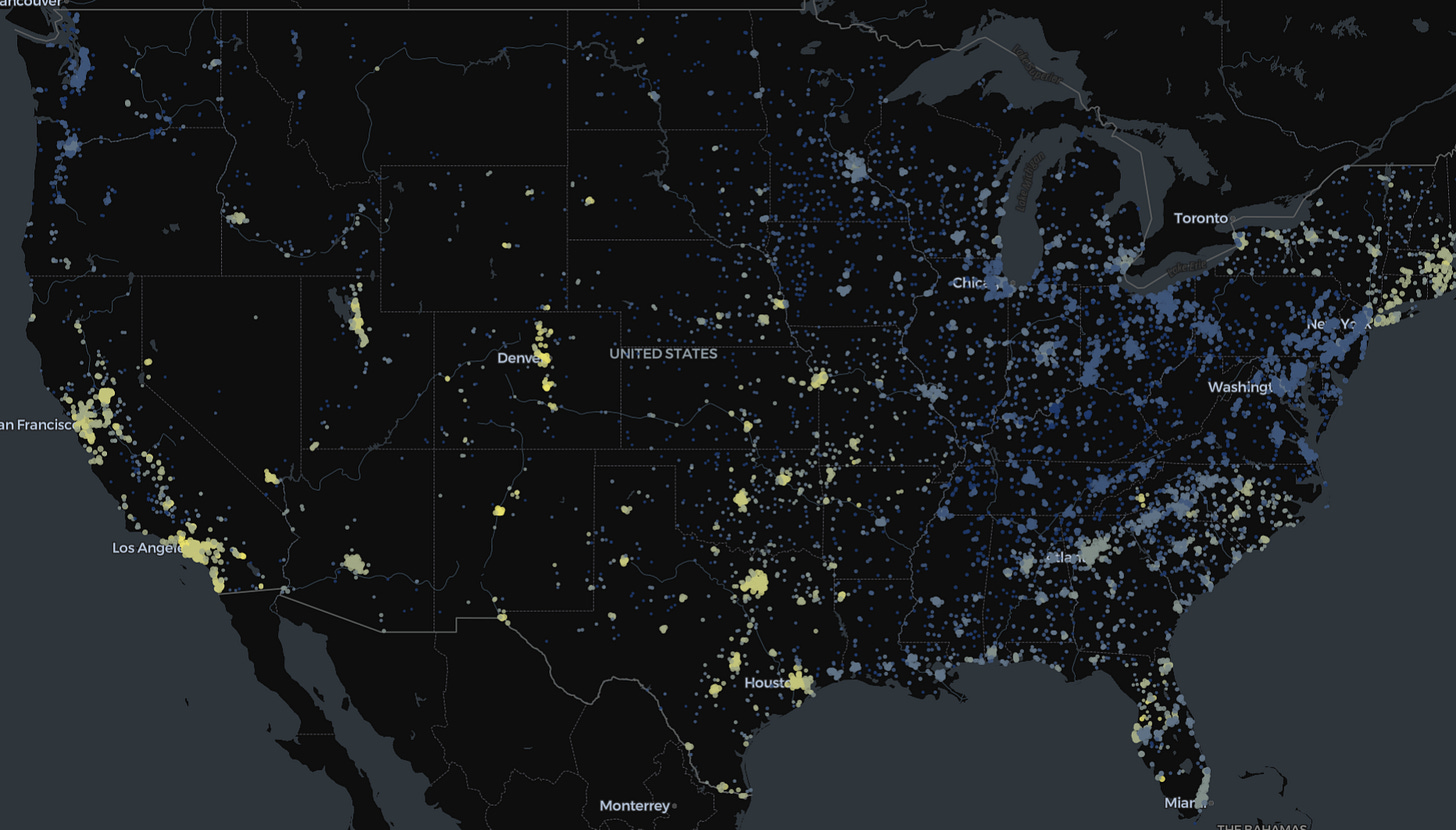
Most data centers are located in areas facing extreme heat or drought, a new report shows. (Politico Pro)
That data center water consumption issue? Nothing to see here, Nvidia solved it. (Axios)
Microsoft’s gigantic West Texas AI campus will be powered by natural gas from Chevron, cementing the tech company’s retreat from its climate goals. (Wall Street Journal)
Insiders don’t always have the best ideas about which messages move public opinion on data centers. This survey identifies ones that do. (Milltown Partners)
That’s all for this week! Thanks for reading, and please share with me your takes on the FERC orders and what’s next in your state.
*Meguire Whitney represents the Community Choice Energy Alliance (formerly LEAN Energy US), which submitted comments in RM26-4.
Comments
Nothing yet. Say the first thing.
Sign in to join the conversation.