
A CLASSIC AMERICAN MEMOIR THAT CAPTURES A TIME, A PLACE, A LIFE IN WHICH WE ALL CAN FIND OURSELVES
Foreword to Looking for the Klondike Stone
I first heard about Camp Wynakee in 1981, not long after Elizabeth Arthur and I began living together in Waterville, Maine. It was the name of the summer camp Liz had attended for five glorious summers as a child, and in her retelling of her times there, it had an otherworldly glow.
I, too, had been to a summer camp. But while hers was a sleep-away camp where she spent the entire summer - from late June to late August - my sojourn had been for only two weeks. Liz had first slept in an enchanted place called the Wren’s Nest, and later in a cottage called Owl’s Head, with a cohort of girls her age, while I had slept with a tent mate in a Baker tent on a wooden platform in the woods. Her camp was named for its owners, Kuhrt and Helen Wieneke, while mine - a Boy Scout camp in Stanhope, New Jersey - had been named Allamuchy after a Lenni Lenape chieftain whose name meant “place within the hills.”
Still, our camps had many things in common - a reverence for the natural world, a regimented regime (mine rounded by Reveille at 6:30 a.m. and Taps at 9 p.m.), an emphasis on water sports and riflery, and a dining hall where all the campers ate together, washing down the meal with bug juice. Both camps had Native-American-inspired honor societies as well.
For Liz, it was the Wayaku Huya. For me it was the Order of the Arrow, and my initiation, at the age of 15, was one of the highlights of my adolescence. In the aftermath of being “tapped” - by which I mean roughly shoved from behind by one of the circling dog soldiers - I and the other initiates walked in silence in single file and total darkness for what seemed miles until we reached the hidden ceremonial site.
There, in a large arrow-shaped pit in the ground, a bed of orange-red coals glowed, little flames licking at the air above. On a hillock overlooking the clearing stood a young man in full Native American regalia, wearing a feathered headdress that almost reached the ground. After some solemn words from him, we were pledged to join by reciting the Order of the Arrow Oath - which I cannot reveal here on pain of death. But part of it reads: “I will always regard the ties of brotherhood in the Order of the Arrow as lasting, and will seek to preserve a cheerful spirit, even in the midst of irksome tasks and weighty responsibilities.” This last admonition I can tell you I have consistently failed miserably at.
Allamuchy was rustic, rough, and traditionally masculine, with dirt roads, small brown-stained log cabins, clearings for tent sites, a dusty parking lot where we raised the flag each morning and lowered it at dusk. It seemed tradition-bound and ancient - though wonderful in many important ways.
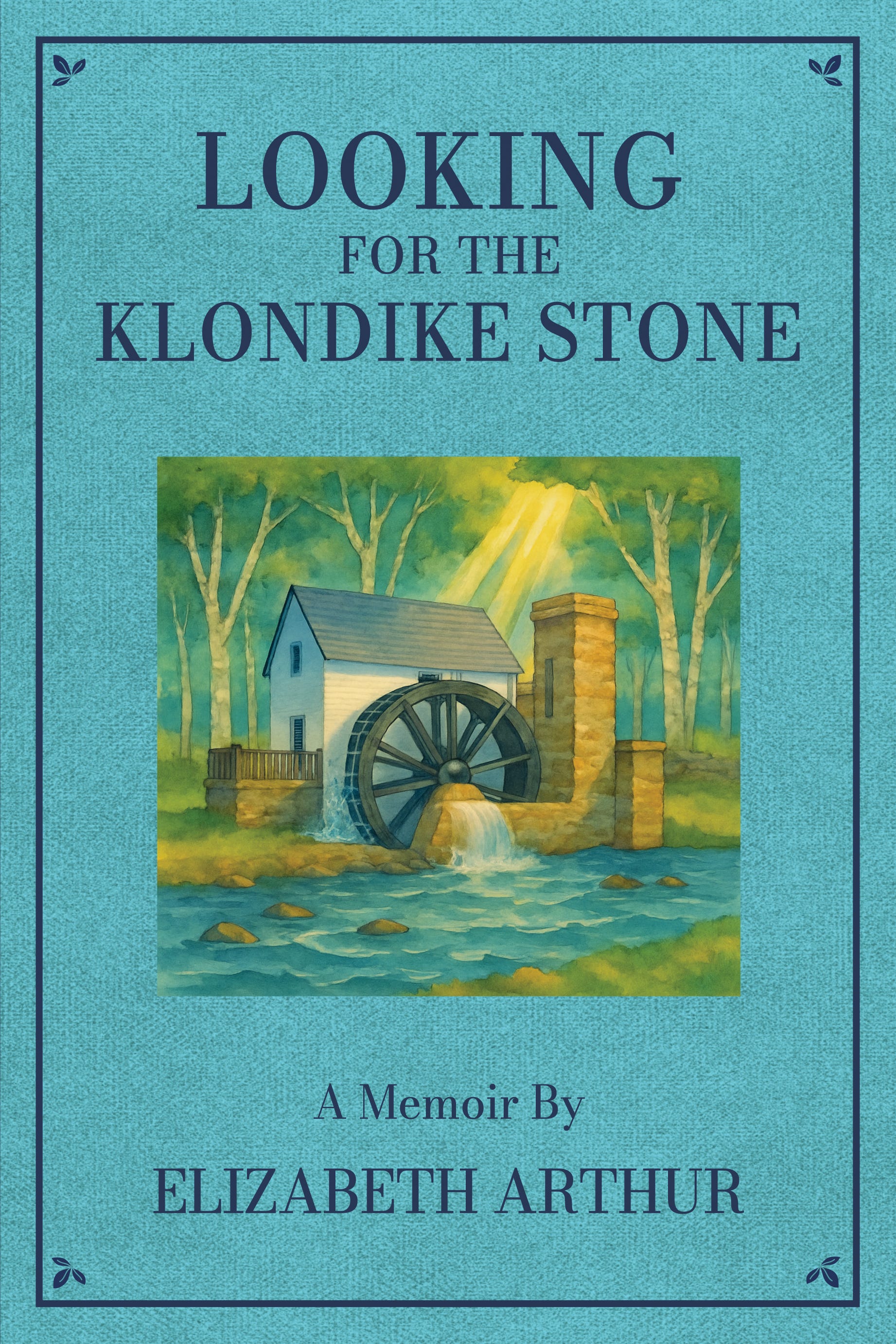
Camp Wynakee, on the other hand, was co-ed, and its presiding spirit was a woman whose nurturing sensibility and love of theater imbued all camp activities. It was surrounded by a working farm, and with its horses, white-painted buildings, stone walls, and waterwheel, it was quintessentially Vermont.
This radiant memoir is, among other things, a story about a fortunate and perfect meeting of a person and a place. Liz was seven when she first crossed the bridge over the Mettawee River, uncertain of the world she was about to enter. She was still reeling from the dislocations of her early years - the loss, through divorce, of her adored father and the arrival of a stepfather almost Dickensian in his traits. Though he later achieves unforgettable dimensions in Antarctic Navigation, the memoir itself shows no real inclination toward complaint. It is too busy telling a story of recovery and transformation.
From the beginning of her very first summer as a Wren, Camp Wynakee fits Liz right down to the soles of her sneakers. Though she is dressed from head to toe in a brand-new outfit, it is the camp itself - as Liz later describes - which becomes the garment she wears. The bell that signals the day’s activities is like a monastery’s bell announcing the Canonical Hours. It says not only “Listen,” but “I hear you” to a child deeply in need of such reassurance.
Indeed, the camp envelopes her, its activities aligned with her interests, honing her skills, sharpening her attention, and swathing her in the mystery of the senses. Even those events she dislikes or fears - social dances, horseback riding - teach her something valuable. Looking for the Klondike Stone emerges as a profound psychological portrait of a girl lost and, through amazing grace, found again.
In these pages, a writer with near-total recall, a masterful command of metaphor, and a deep generosity of spirit re-imagines herself as a child through the transparent lens of her adult self. Its humor - and it is genuinely funny - is benevolent, based not in pratfall but in the piercing, poignant, and consistently hilarious language of its telling.
While we meet fellow campers - Wendy, Johnny B., Sarah - the memoir’s focus remains on Liz’s internal journey. Her pivotal moments happen in solitude. If relationships matter, they are with the camp’s adults. A constellation of men fills the void left by her missing father: Uncle Kuhrt, a semi-stern figure who provides a sense of order and dignity; his son Carl, of the biceps, on whom Liz has her first crush; Seth, the one-armed mechanic, who shows her the vastness of the possible; and especially Jo-John, the reticent and enigmatic leader of the Indian Lore program - an avatar of such spiritual importance that, even forty years later, Liz venerates his memory in this book.
In Aunt Helen, Liz finds a maternal figure - wholly devoted to the camp and its children, directing not only the plays in the Hayloft Theater but orchestrating the entire camp as a grand unfolding pageant. She seems to intuit each camper’s needs, guiding and encouraging them toward their fullest potential.
When Liz suggests that the world would be a better place if every child had been to Wynakee, how can we possibly disagree? The camp’s philosophy was rooted in a comprehensive vision of human wellness, liberty, independence, flexibility, and creativity. By granting children the freedom to choose and develop at their own pace while fostering a sense of belonging to something greater, it taught each one that they were masters of their own destiny, not victims of circumstance or chance.
For the child at the center of this memoir, every moment is alive, multilayered, and essential, a sensory feast. With Liz, we feel the sensuality of skinny dipping, the intoxicating potential of a rainy day. On our way to the Council Fire where Liz will join the Wayaka Huya, we “hear, beneath the drumbeats, the sound of the river and the leaves rustling in the maples, and a horse whinnying once or twice up on the mountain, and the movement of people’s bodies producing little swishing sounds.” Such layered sensory moments allow us to live through a summer at Wynakee with almost mystical intensity.
But if this is a story of recovery and transformation, a book about re-creation through language, it is most deeply and movingly a spiritual quest - a theme running through all of Liz’s work. From the very first page, a governing simile frames the book: crossing the bridge over the Mettawee, she is “like any pilgrim ready to be reborn.” The rebirth happens at Wynakee, but the pilgrimage is a lifelong search for the ecstatic oneness of the sacred.
At the core of the book are two elusive mysteries: the Klondike Stone - an ordinary, larger than normal rock, painted gold and in that instant transformed into a profound symbol - and the shimmering ball lightning seen only by Liz, a cryptic force almost like an avatar of God.
Liz never finds the Klondike Stone nor does she follow the ball of fire to its destination. From these “non-events” she learns that life’s deepest desires gain their power precisely because they remain unattainable. What matters most is the quest, not the discovery; the process, not the product; the wish, not its fulfillment.
To read Looking for the Klondike Stone is to inhabit a prelapsarian world - a place without screens or phones, where transportation might mean a horse or hay wagon, and where the only town is the one we find ourselves in. Camp Wynakee - as seen through the eyes of an extraordinary child - is pristine, flawless and absolute, a place where everything is newly created - the first river, the first barn, the first horse, the first pond. Yet beneath its shimmering surface, this is also a profound story about loss. As Robert Frost wrote, “Nothing gold can stay.”
Camp Wynakee was Liz’s first island. Among her books, Looking for the Klondike Stone remains the most universal, approachable, and lovable. Its purity is unassailable. Before it, we are almost wordless.
Steven Bauer 2025
Looking For The Klondike Stone
“Stunningly good…If you prefer to read a novel, that novel had better be by someone such as…Jane Austen if it’s to give you more pleasure than Looking for the Klondike Stone. [Arthur has] a memory easily equal to Proust’s or Wordsworth’s...” ~ Noel Perrin, The Boston Globe “Enchanting” ~ The “Prose of unfailing dazzle and profound specificity…enchanted…electrifying as touch, warming as sun, and refining as poetry” ~ Donna Seaman, “Contains not a single false step...as delicate as gossamer. This book is a memory feast – a rich, detailed evocation of a time of wonder and innocence and daring.” ~ Geoffrey Stokes, “Arthur’s ability to convey the impressions of her childhood is eerie, almost supernatural...literary alchemy at its most magical.” ~
Comments
Nothing yet. Say the first thing.
Sign in to join the conversation.