
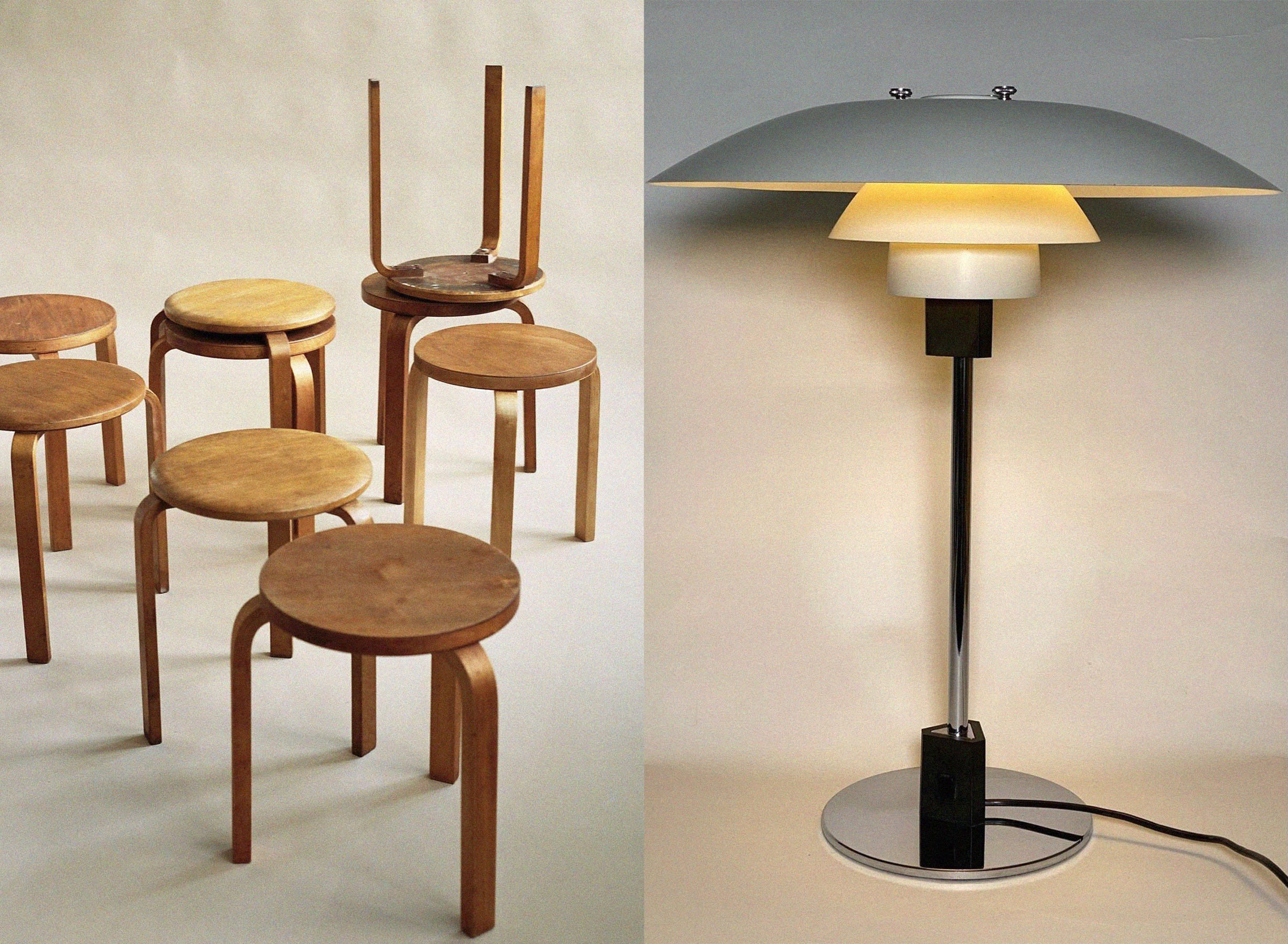
Of Finnish and Danish origin, Scandinavian design developed within the avant-garde movement during the 1930s. It reached its peak on the 40s and lasted for about twenty years, before Italian design took off in the 60s. Then, between 1980 and 1990, it came back into fashion, and now, almost forty years later, I think it is safe to say nordic design is not planning on going out of style —quite the opposite: it’s become a staple worldwide both in homeware and furniture. How is it possible that it still feels timeless in the modern world?
Distinguished due to the use of wood, a great commitment to natural materials and a strong emphasis on balancing line and form, Scandinavian designers conceive design as equals, creating functional and aesthetic objects for modern society grounded in equality.
I believe that these pillars, grounded in such an authentic philosophy and purpose, laid the foundation for values that shaped a timeless aesthetic. I endlessly scrolled through furniture shops because I moved into my new place some months ago, and Scandinavian design’s influence was reflected in the products —if not directly replicated. You might well have seen it, but let’s break this phenomenon down and see why it still matters —almost a hundred years later.
Tradition and Modernity
Tradition, both popular and cultural, is a significant feature of nordic design: it represents a link between artistic movements, modern functionalism and popular production. Nevertheless, the preserved tradition is reinterpreted through a modern lens.
This continuity of tradition is reflected in the work of the Danish designer Kaare Klint (1888–1954). His style lies between two polarised interwar furniture styles: the haute ébénisterie of Ruhlmann and the austere modernity of Le Corbusier and the Bauhaus designers, resulting in a modernised tradition. Klint laid the foundations for modern Scandinavian style developing typologies from the past and translating them into an entirely new morphology, a pattern we still turn to.
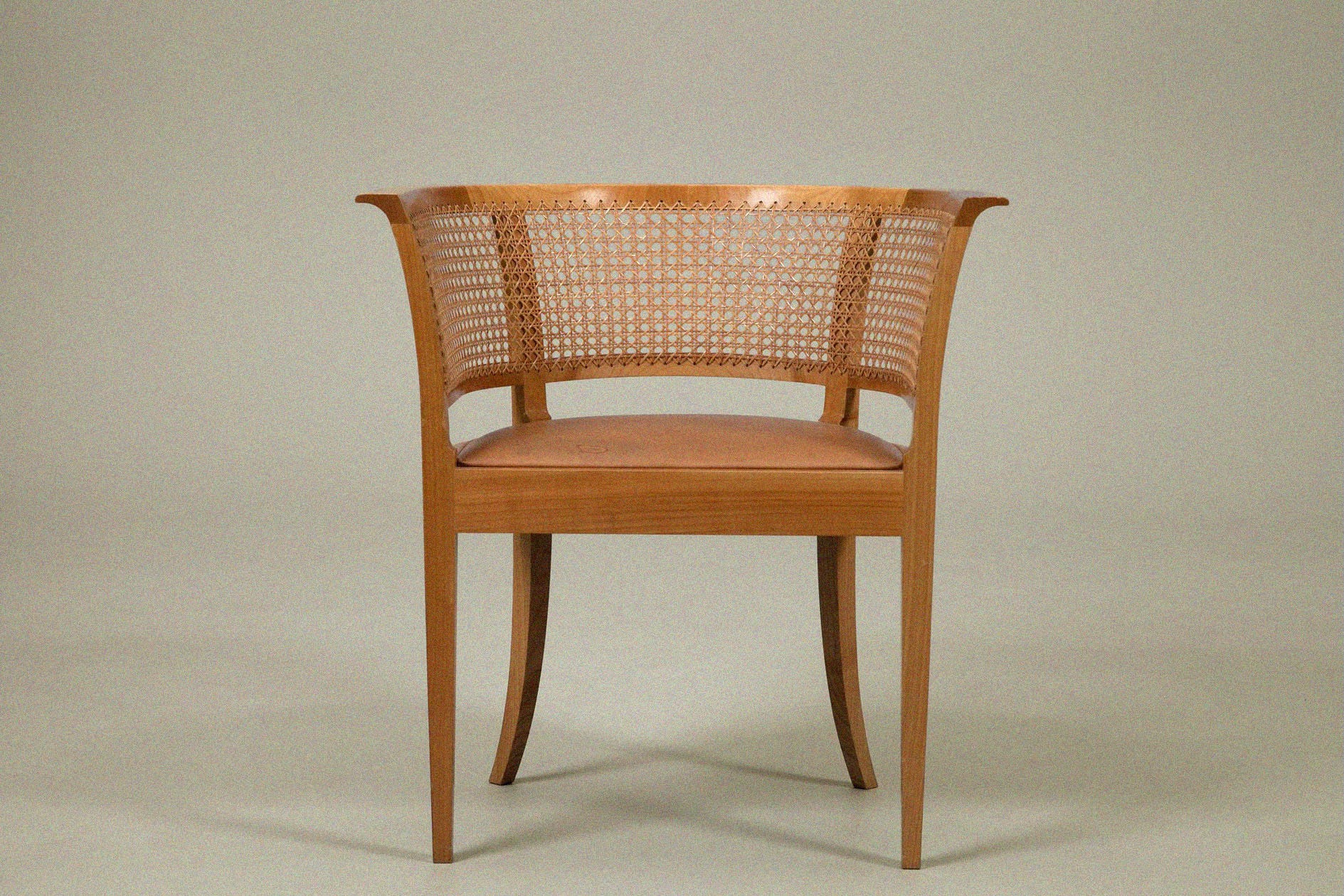
Hans Wegner (1914-2007) also looked back to tradition and modernised it. He’s mainly well known for the chairs he designed, particularly his wooden ones —especially birch. He drew on the Chinese tradition of the Ming dynasty as a reference.
Today, it still remains a relevant way of designing —a hybrid between pure historicist eclecticism and the most imaginative, futuristic fantasies. Historicism is a frequent ingredient in design, yet the key lies in how such codes are reimagined for the present. It works when these objects have a personality, a soul (e.g. historicist feature), but respond to the current functional and aesthetic codes.
The Materiality of Light
Nordic countries suffer from darkness most of the year, thus light is of a great relevance. Light is not merely projected by a lamp, it is thoughtfully provided with lampshades and diffusers, which aims to blend artificial light with the natural daylight.
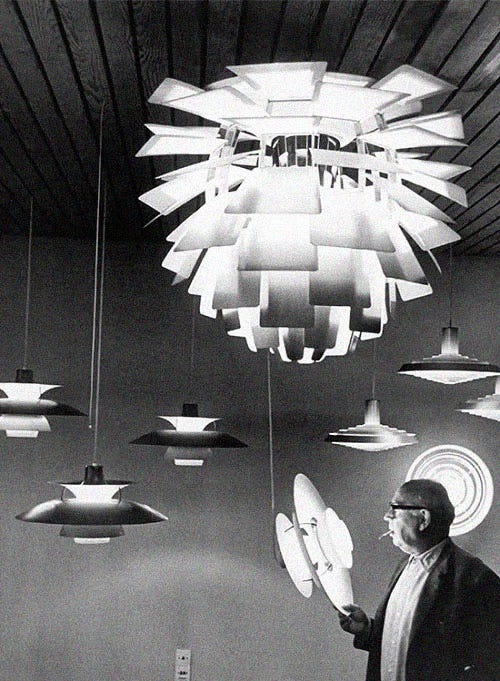
In exploring the nature of light, Poul Henningsen stands out as a true innovator. He first turned to glass, testing different methods of production and experimenting with colour and texture to reveal how each variation could transform the quality of light and therefore the user’s comfort. Subtle changes in the choice of bulb also offered new possibilities, as well as the intricate arrangement of a lamp’s components.
Louis Poulsen is a Danish lighting company founded in 1874, with which Henningsen collaborated to create his lamps. They saw light as his material —a material that could be moulded. Craftsmanship, high-quality materials and innovative design were essential when designing. Poulsen’s pieces pay homage to Danish tradition, based on the principle that form serves function —the result being a timeless piece, an elegant piece we still see today.
Nature Shapes the Pieces
Materiality, linked to nature, is also of utmost importance for Scandinavian designers. The matter itself shapes and defines the final product, as though it had been sculpted. Nordic design, as I’ve stated before, is functional —not in the same way as Bauhaus though, which is more of a utopian design. Functionality in this case is understood from a humanistic point of view, leading to a user-centred design. Day-to-day life, the spatial experience and that of the humanised, stand at the core of this ergonomic design.
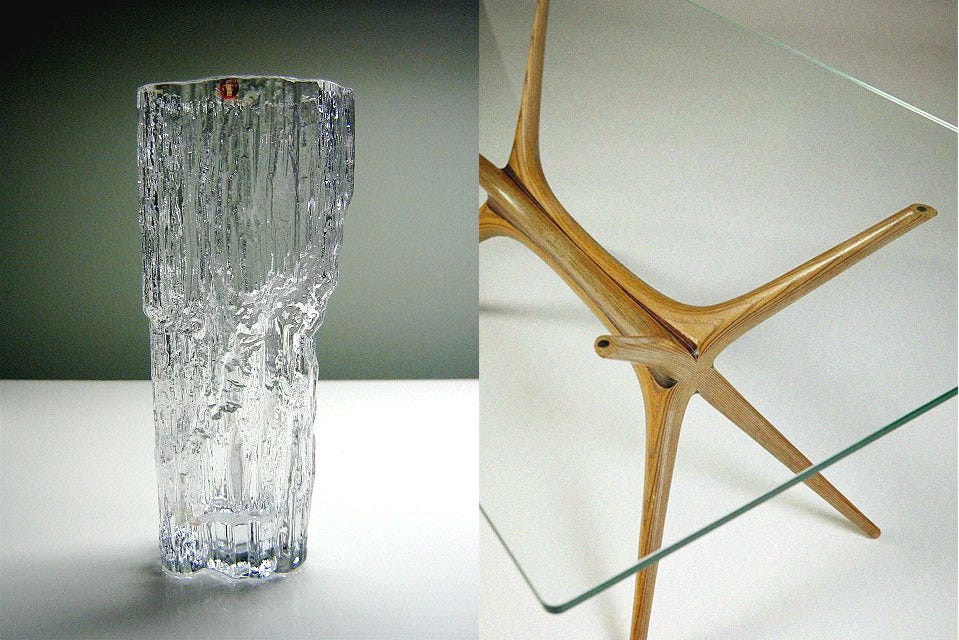
Nature was the main source of inspiration for Tapio Wirkkala (1915–1985), the Finnish designer and sculptor: he stated that each material has its inner laws and therefore, it’s all about trying to find a harmony in it, rather than forcing or being violent with it. He became well known for designing at Iittala glassworks, where he created vases inspired by the nature of Lapland and the Arctic, as if he’d polished a glass, drawing inspiration from a piece of ice beginning to melt on his hands. Respecting Lapp culture’s ancient craftsmanship, Wirkkala uncovered wood grains and shaped a vase, a bowl or a table from them, being precisely created as an organic process of stratified lines.
Craft and Industry
Scandinavian designers integrate a craft-based approach into industrial production, translating artisanal methods into industry. Grounded in craftsmanship, their products have a lasting quality. One of the most important companies is Artek, founded in 1935, and they sell many of Alvar Aalto’s pieces. Artek brings together art and technique: each part of the production involves a measure of craftsmanship —and they don’t mass produce. It is an organic, sensitive project, respectful to both people and the surrounding nature.
In a world where most things are mass-produced and technologically-driven, preserving the craftsmanship that defines our tradition has gained a considerable importance —we’re humans, after all, and need an identity. We value the hand-crafted and are starting (and desperately need) to treasure techniques that are about to disappear, the ones that our ancestors invented and make us feel connected to them.
Plywood Making History
Plywood has been used in furniture across various countries since the 18th century. Artisans of the Biedermeier style, Michael Thonet, and others experimented with it. The most notable precursor to modern furniture is the bent plywood chair patented in New York by Isaac Cole in 1874.
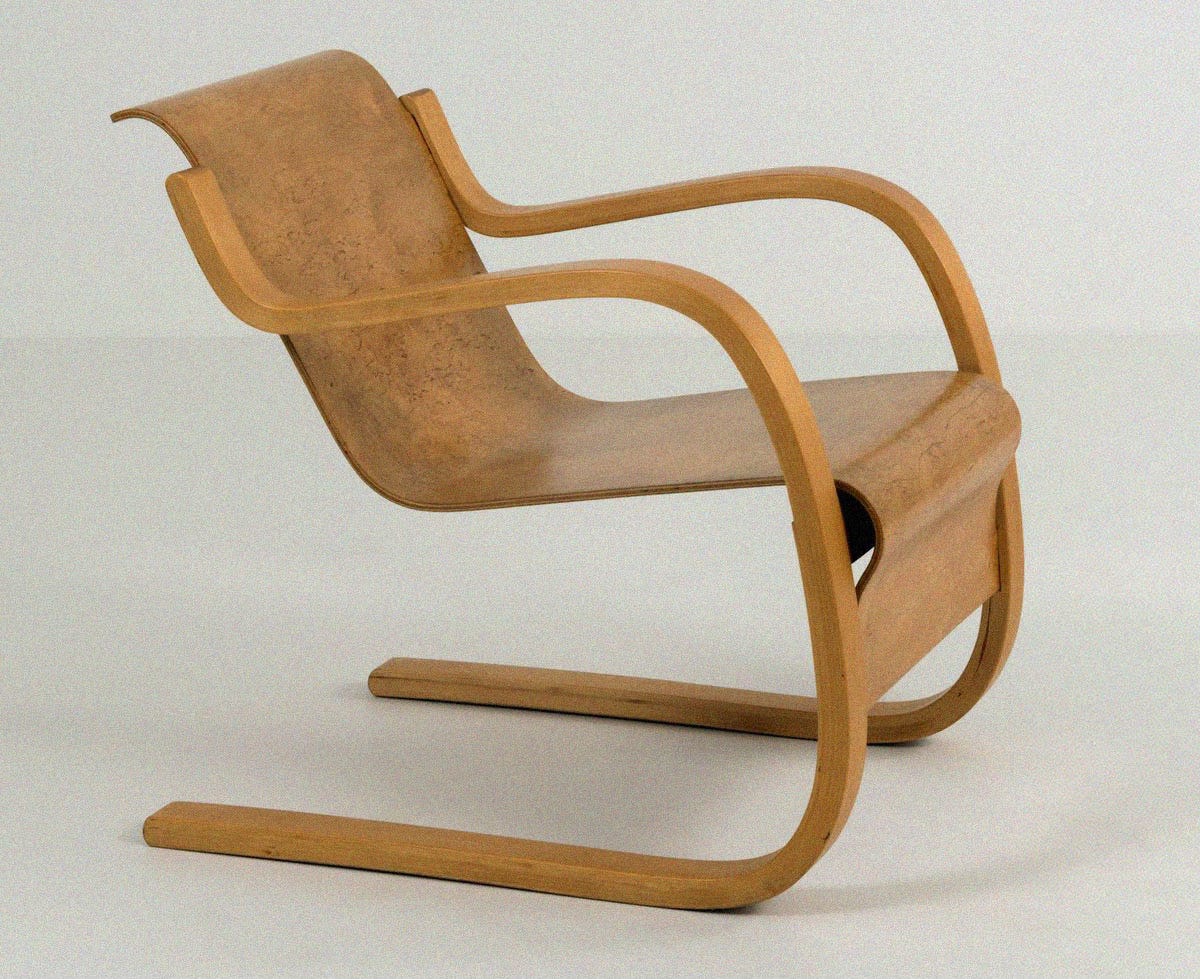
Finnish designer Alvar Aalto did his own experiments in this field: he studied ski-making techniques used in the nordic countries for decades. He would bend wood not just with steam, as Thonet had done, but by harnessing the natural moisture of Finnish birch. The most celebrated example of this technique is the 1935 armchair, where the seat and backrest emerge from a single bent plywood sheet, joined to two thicker U-shaped laminated wood strips that provided the same elasticity as the models of Stam, Breuer, and Mies van der Rohe. This armchair became —and still remains— a model of countless replicas.
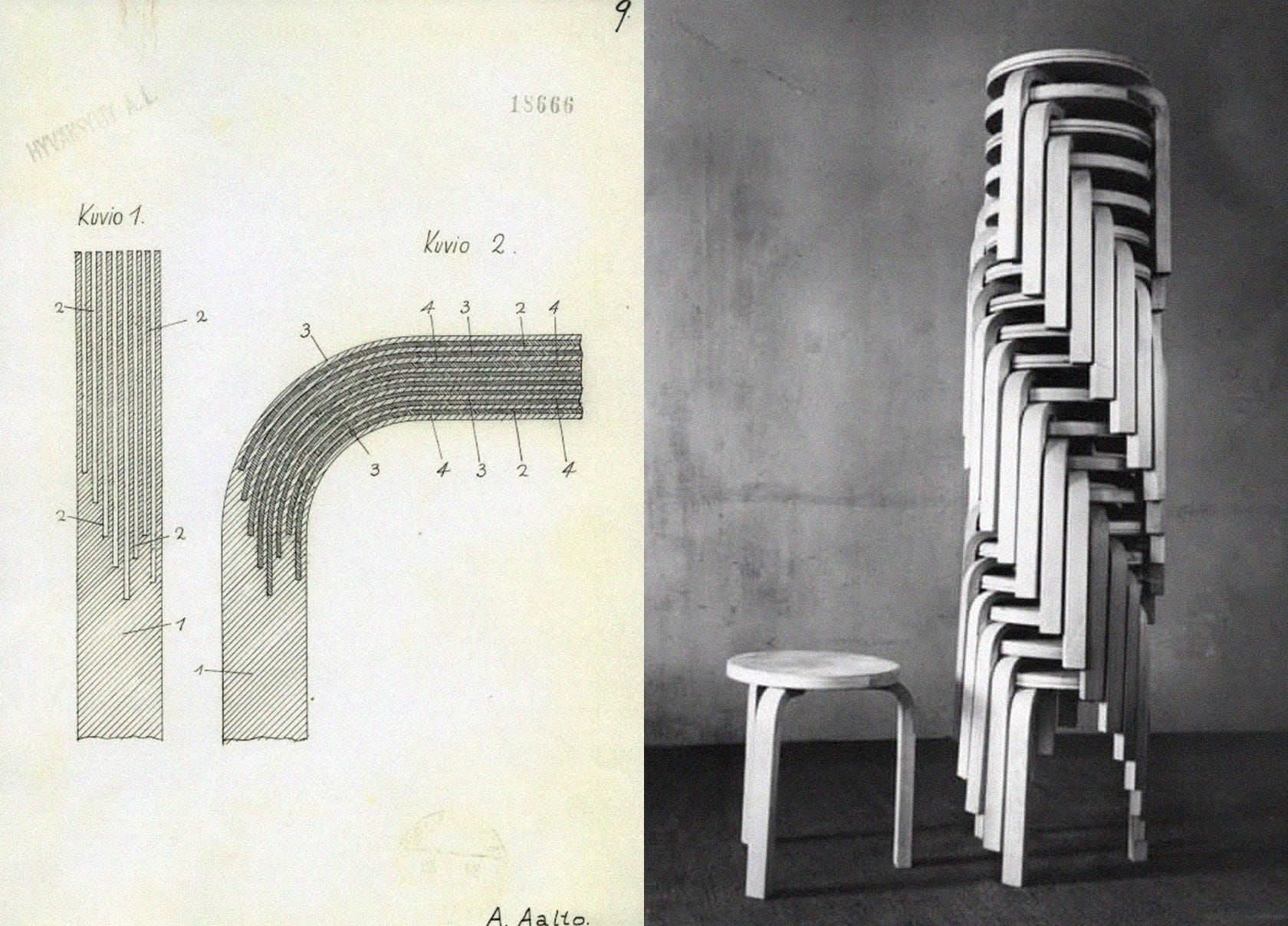
Aalto’s iconic birch plywood stools established an early precedent for the seamless connection of vertical and horizontal junctions. The edge of the seat reveals its construction with the structural joints remaining visible as an incidental decorative feature. Practicality was Aalto’s motto too and this L-leg stool was also designed to be stackable. This design is functional, beautifully timeless, widely recognised and sought after, and that’s why it’s imitated and copied, even now.
Home as a Temple and Ethic Design
Scandinavian designers understand good design as something honest and ethical —both with people and nature— rooted in a strong social vision shaped by tradition. They believe design should help improve people’s lives, and so each object is conceived first and foremost to meet a real need. With much of the year spent in darkness and the threatening cold discouraging going outdoors, a great deal of time is spent indoors. Home becomes a haven, a space of great meaning.
After some years in which an aseptic modernity aesthetic was leading —which could have been partly shaped by the aftermath of the 2008 financial crisis, encouraging us make safe, affordable and functional choices in uncertain times— a renewed need for warmth emerged. This became even more obvious when the pandemic hit in 2020. There’s been a move towards comfort, warmth and nature, these values translating into clean yet organic shapes, soft lighting, more colour (earthy hues), layering textiles, natural materials (wood, clay) with cozy and ergonomic spaces. We long for a safe, comfortable and warm haven.
Sustainability and craftsmanship, like for Scandinavian designers, have become core values —not just in aesthetic terms. We are starting to seek more durable, environmentally responsible and ethically made products. Whether it be locally crafted items or smaller scale artisan pieces, design is expected to have a purpose and to have a soul and to have a responsibility.
No posts
Comments
Nothing yet. Say the first thing.
Sign in to join the conversation.