
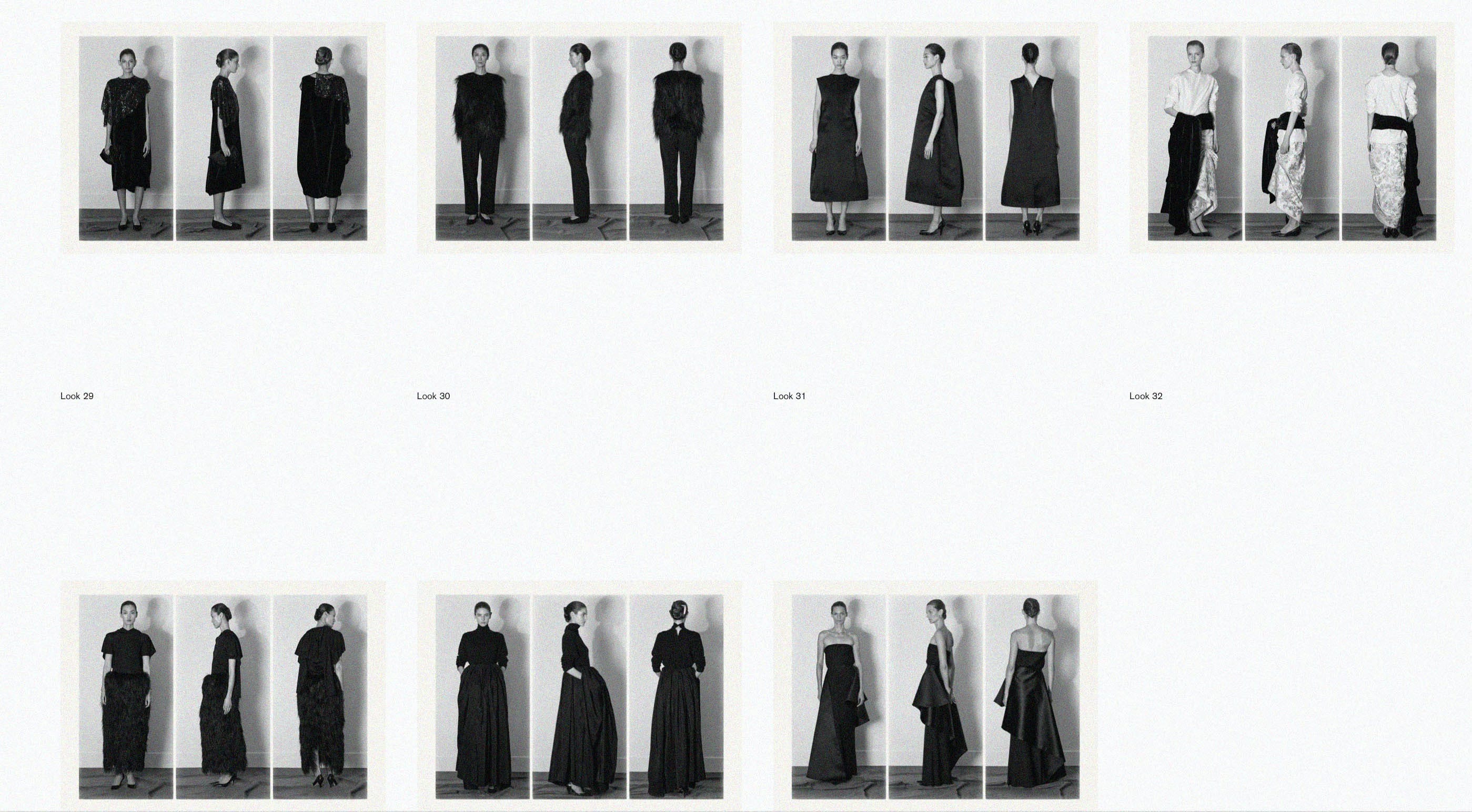
Every time we’re in the middle of the Fashion Week, scrolling through runway photos or whenever I go to a museum (if only the glass faded and I could walk around the piece), the same thought strikes me: the back generally remains in the shade. I must say though, I loved how The Row showcased their Summer 2026 collection through three angles per look, respecting the tridimensional nature of clothing.
The back suffers from being the least visible representation, yet it’s crucial to understand the structure, the social, and the aesthetic. The back is secondary, at first glance —when we meet someone or when something is introduced to us, it’s always exhibited from the front —but it’s crucial when we dress and when we want to understand the narrative of the body.
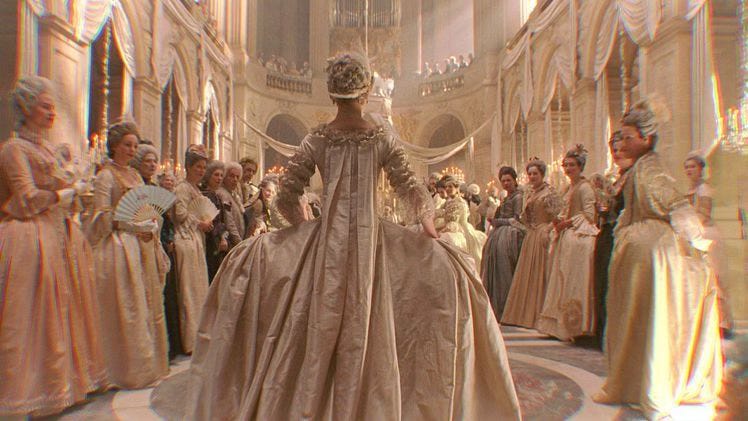
Zooming out, if we analyse the period from the Middle Ages until the 18th century, we can see that the back served as a social and functional feature. Corsets, for example, would be either fastened from the back —meaning that you needed help, a sign of belonging to a high class, or from the front —which meant you had do it yourself. Another sign of aristocracy, prestige and social status was the length of capes and trains —essentially a prolongation of the back— even being regulated by law.
However, the back, sometimes unseen, was also a mere practical element: in men’s fashion, vests would be primped at the front in silk or fine fabrics, whereas the back —hidden and lighter— would be made from a cheaper cotton or linen pattern.
If we carry on through history, during the 18th century, the robe à la française or Watteau pleat was a manifestation of the back as a structural surface. It featured one or two loose box pleats at the nape, giving a distinctive draped, cape-like effect to the back of the gown. The Victorian dress also made use of the back as a support for bustles, hoop skirts and corsets. The back continued being the hidden architecture of the body, a structure rather than an ornament.
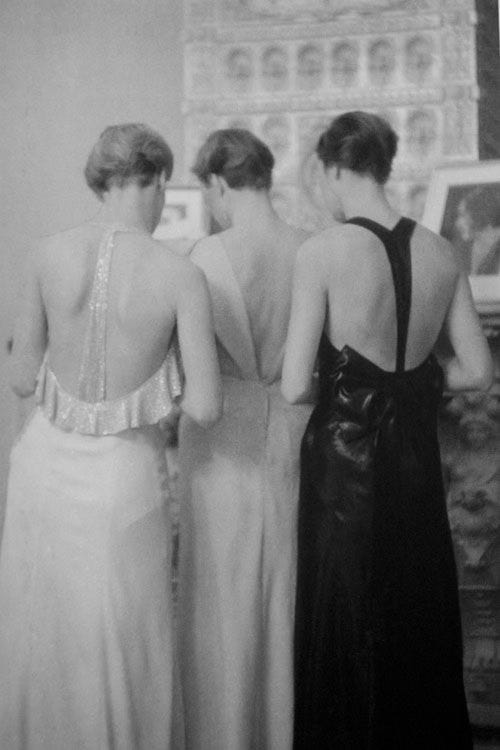
With the new century just around the corner, change was to come. It was, undeniably, a century of unprecedented revolution in fashion: women were freed from corsets, skirts were shortened, and both menswear and sportswear influenced womenswear. Open backs in evening wear became popular in the 1920s and 30s. Madeleine Vionnet’s bias-cut dresses revealed the back as a new place for eroticism: opposed to the front’s neckline, it is suggestive, mysterious. Drawing from Japanese tradition, the nape and upper part of the back were regarded as the most sensual and delicate area of a female’s body. It became sensual and its character enabled it to emancipate from the rest of the body.
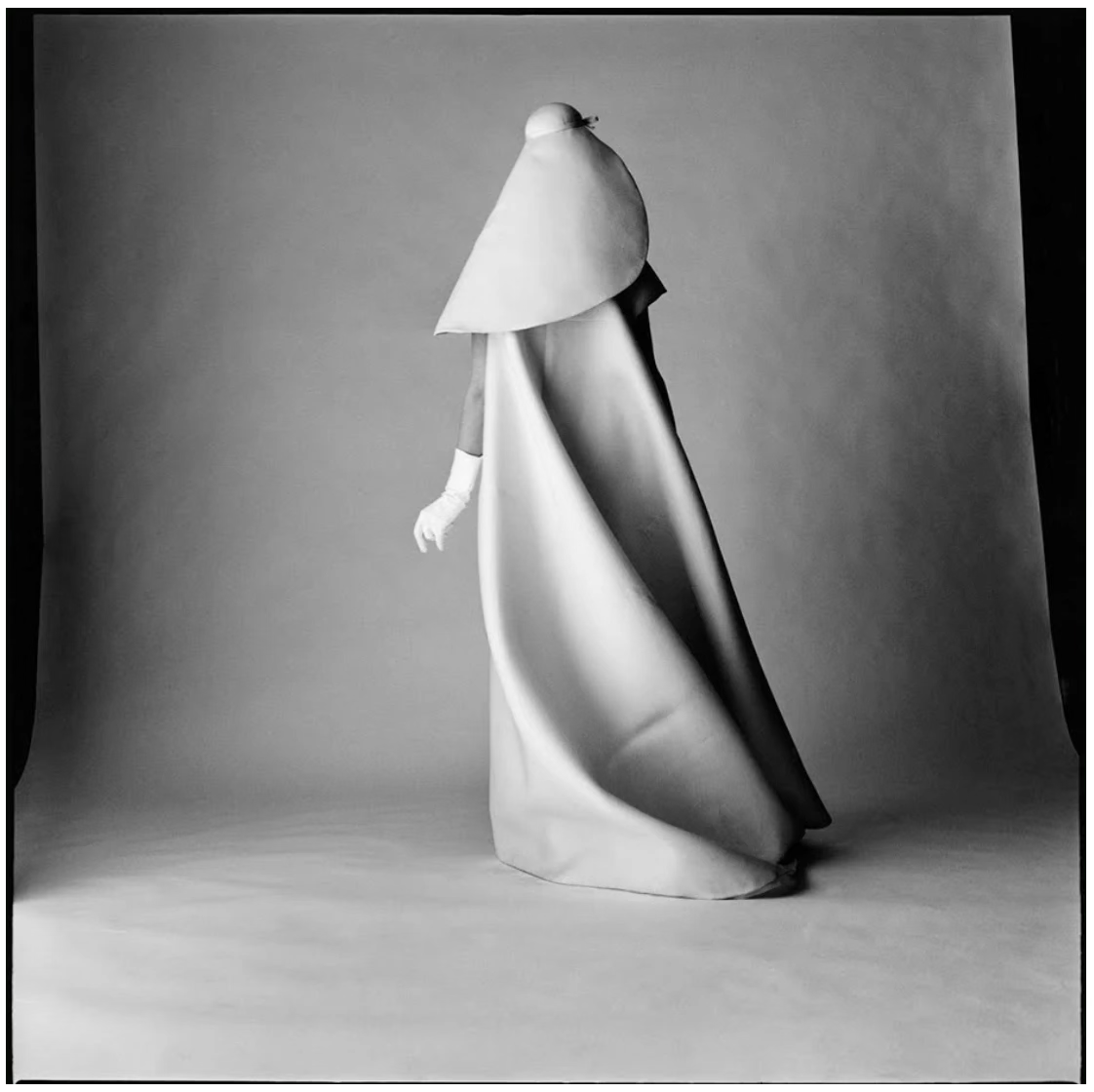
From mid-century on, the back, still a secondary surface at the time, turned into a central experimentation space in contemporary fashion. Cristóbal Balenciaga was a pioneer constructing volumes from the back and his philosophy revolved around wrapping the body. He revolutionised the fashion world with his “tonneau line” (1947), semi-fitted line (1951) and “sack” line (1957), and reached his apogee in volume abstraction in the 60s with the sculptural minimalism. Diane Vreeland, the influential American fashion editor, said that you had to look at a Balenciaga in movement, but first and foremost, from the back, in order to understand his genius.
Japanese designers of the 80s—Yamamoto, Kawakubo, Miyake— also featured that Balenciaga legacy: the back as a way of wrapping the body, rooted in the philosophy of eastern culture, rather than constricting as western civilisation traditionally did. Yamamoto played with pleats, capes and asymmetrical cuts and Miyake’s iconic pleats created volume at the back, enhanced by movement.
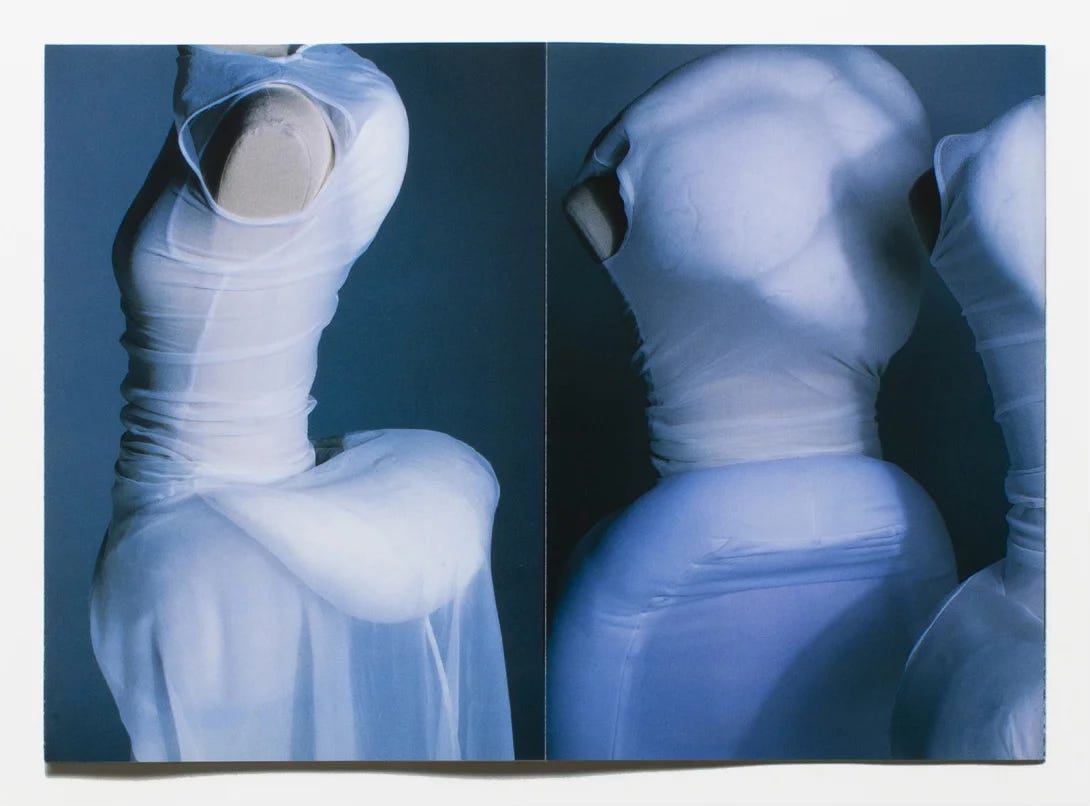
As for Kawakubo, on her Lumps and Bumps collection (1997), she entirely deformed the silhouette by placing padding on the back, shoulders and hips. The back is introduced as a subversive space to question and condemn beauty standards.
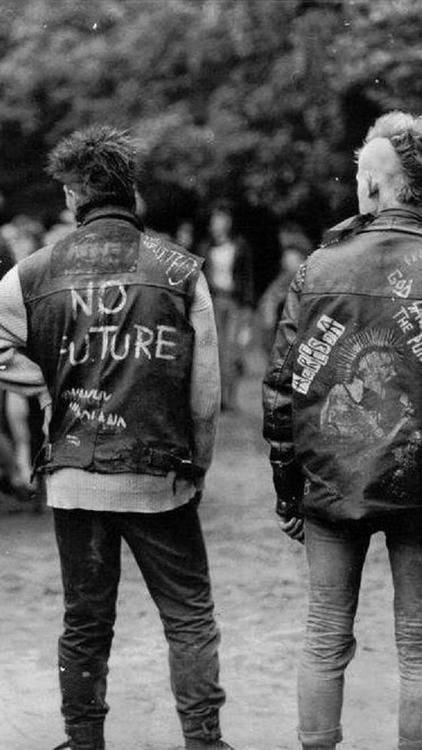
We shift from the ornamental to the conceptual. From 1960s-70s, with the birth of cultural movements, fashion becomes a means of communication to express either social or political ideas, and the back serves as the main canvas to place messages —it still does. The rise of logo mania in the 21st century hasn’t gone unnoticed by this part of the body.
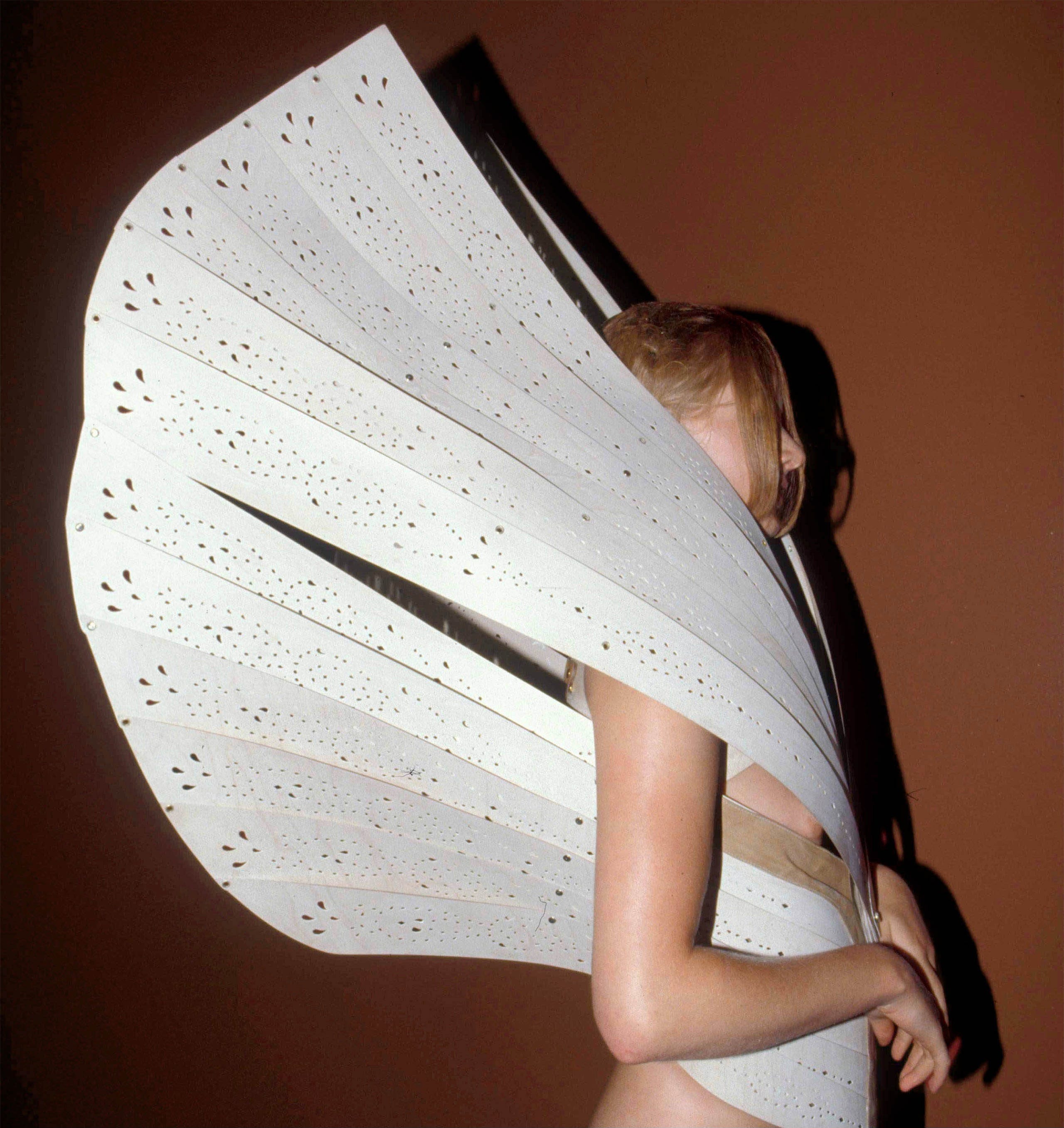
Within the spectrum of contemporary haute couture (from the end of the nineties to the noughties), the back was turned into a fantasy, a dramatic stage where designers like Gaultier, Mugler, Galliano and McQueen experimented with architectural backs, wings and sharp cuts or necklines.
What does the back represent nowadays? All of the above, I’d say, if we want to understand the social, aesthetic and symbolic construction of dress. It does have its place, yet it rarely leads imagery in modern culture, selfies being a clear example. In language, the word “back” doesn’t generally have a positive connotation: we commonly use expressions like “To turn one’s back on someone”, “To talk behind someone’s back” or “To go behind someone’s back”. Maybe it was just a misfortune that the face was placed at the front, and social communication really is front-oriented. It’s the paradox of the back.
Either way, I just feel that we need more back views in fashion, don’t you?
No posts
Comments
Nothing yet. Say the first thing.
Sign in to join the conversation.