
Chew it for yourself to experience the oddness of flavour and texture. Soften a little piece of mastic gum in your mouth and work it with your teeth, and you’ll understand its use as an early form of chewing-gum. Which doesn’t explain why, weight for weight, the shiny little chunks fetched the price of silver or, in a year of scarcity, gold - making it one of the most expensive and sought-after substances in the medieval spice-chest.
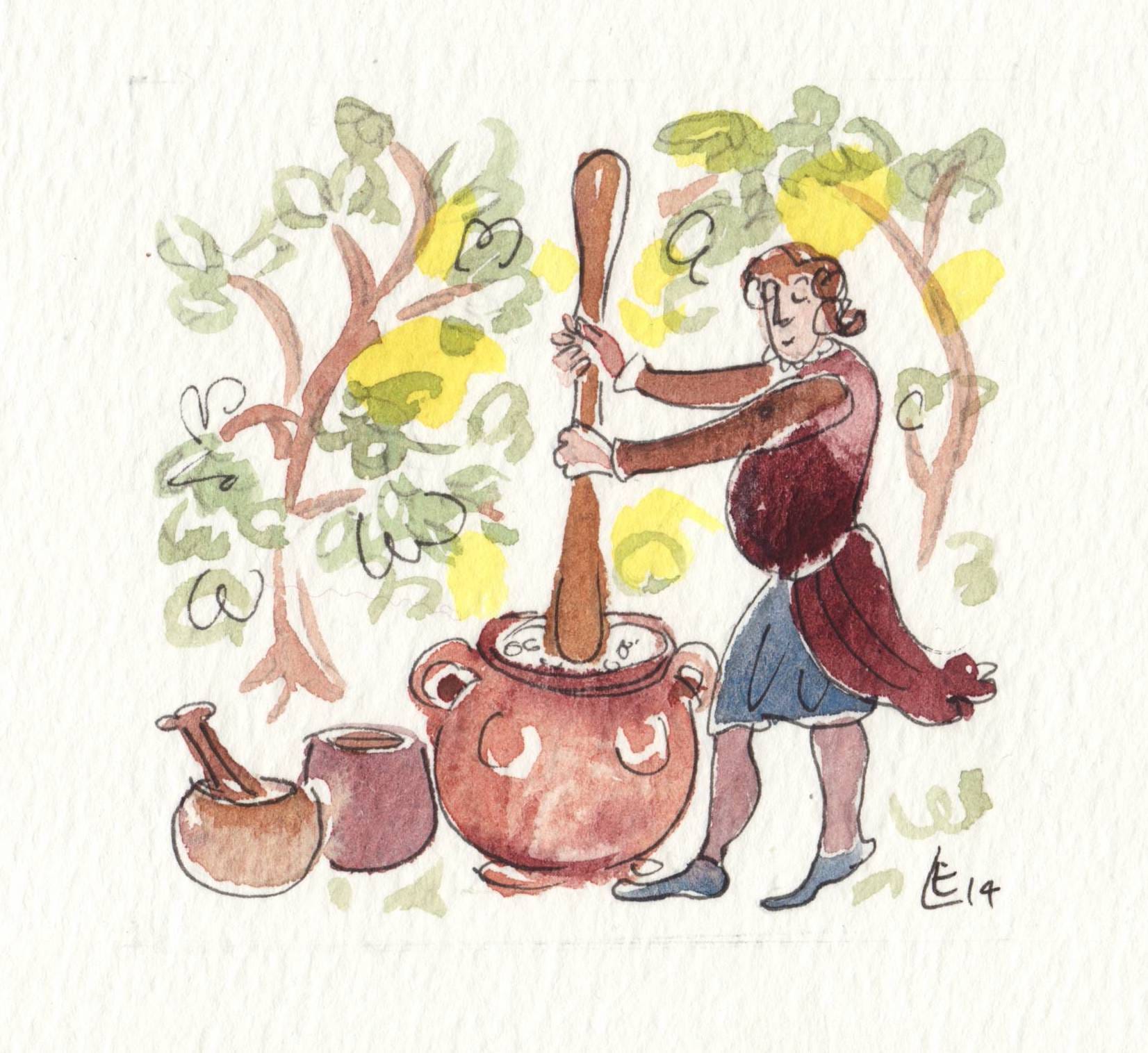
As a culinary ingredient, mastic was valued d by the sophisticated cooks of the Ottoman Empire as a transforming-agent, a way of making liquids solidify while remaining soft and malleable. A delayed melting point was, still is, a useful attribute in a hot climate where much of life is lived in the open air, away from the magic of the ice-chest or freezer. As an addition to icecreams, chilled drinks and cold desserts at a time when the climate of the Meditarrean is moving rapidly northwards, expect mastic icecream and its associates coming soon to an alfresco restaurant near you.
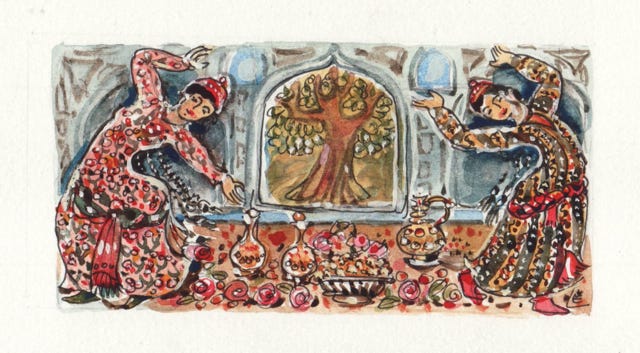
The flavour is medicinal. Pine-needles and liquorice-root with a touch of bitterness deliver a flavour appropriate to its early use (there are indeed chemical reasons for its efficacy as a tooth-scrub). Eaten first thing in the morning on an empty stomach by those who love sugary things, it’s virtues were well appreciated by the perfumed beauties of the sultan’s seraglio. Mastic toothpaste, anyone?
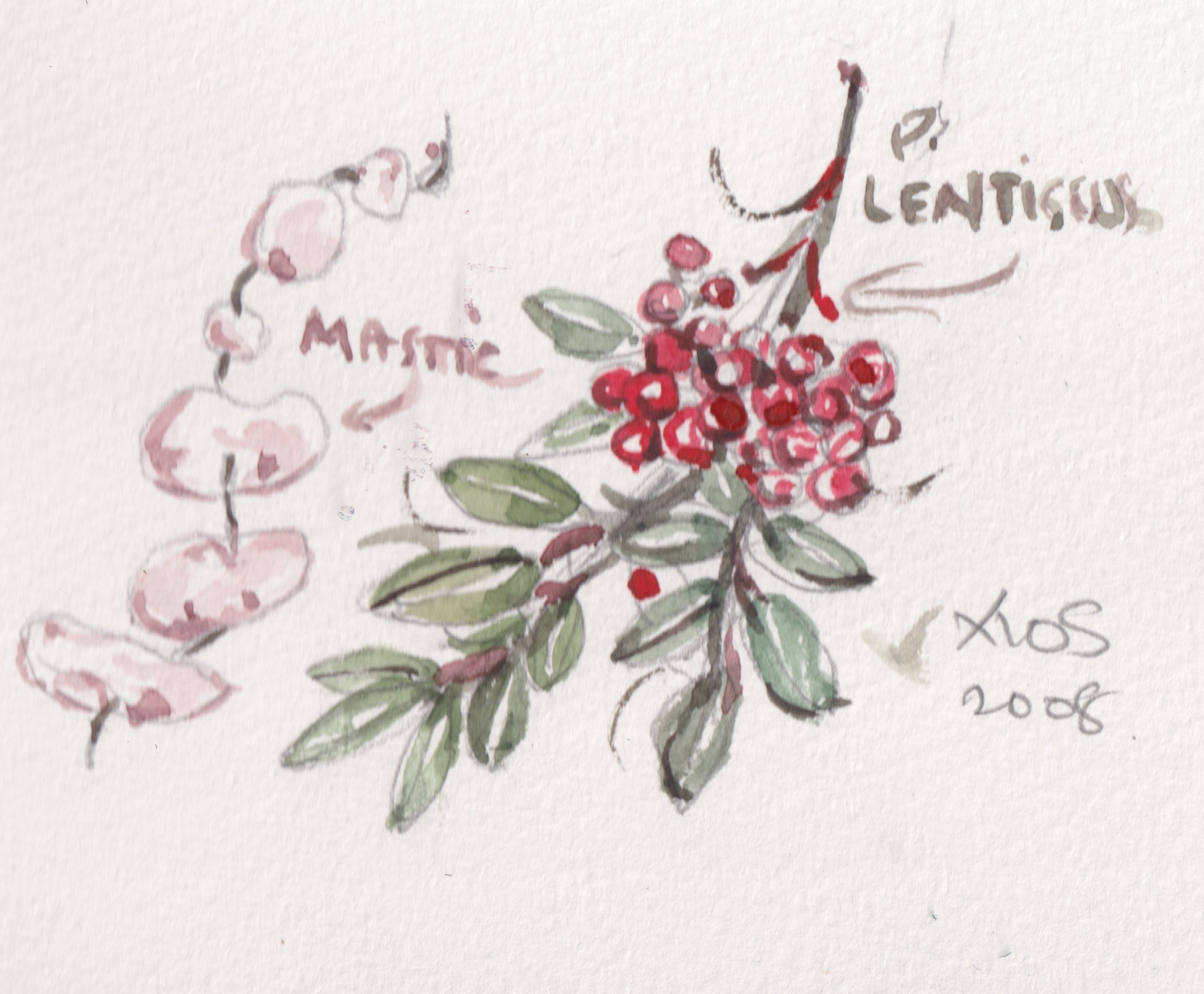
As a portable trade-item, shiny pieces can be strung like beads on a thread and worn like a necklace. Mine is little past its best as neckware, but after ten years, the beads are still chewable, given patience - a useful item to pop in a backpack on holiday. As a trade-item - portable and virtually indestructable - mastic was the essential ingredient in the embalming fluid prepared by Egyptian physicians to conserve the bodies of the pharoahs entombed in their pyramids, ostensibly for all eternity. And also, by reason of its particular properties, used in traditional herbal remedies as a stomach-soother, and in modern cosmetics as a non-toxic, all-natural ingredient that won’t melt at skin-temperature.
Right. There’ll be other uses, no doubt - please share. Meanwhile, the source of the trees that produce this miraculas substance is confined to a small corner of Chios, aka Xios, one of a string of Greek islands in the north Aegean. There’s also, I’m reliably informed, an outpost just opposite on the Turkish mainland that shares the same soil and climate conditions - but that’s it. At the time of my visit in the 1990’s, Chios - before the airport was built and the island became a became a tourist destination - was reachable only by ferry-boat, allowing me ample time to think about what I’d observed, and make notes. Just as useful were my travelling companions (see Greek island=hopping (2)), a group of chefs, food-historias and cookbook authors courtesy of Oldways, a US not-for-profit out of Boston, bless their cottom socks, a source of much of the information that later produced the Mediterranean Diet Pyramid.
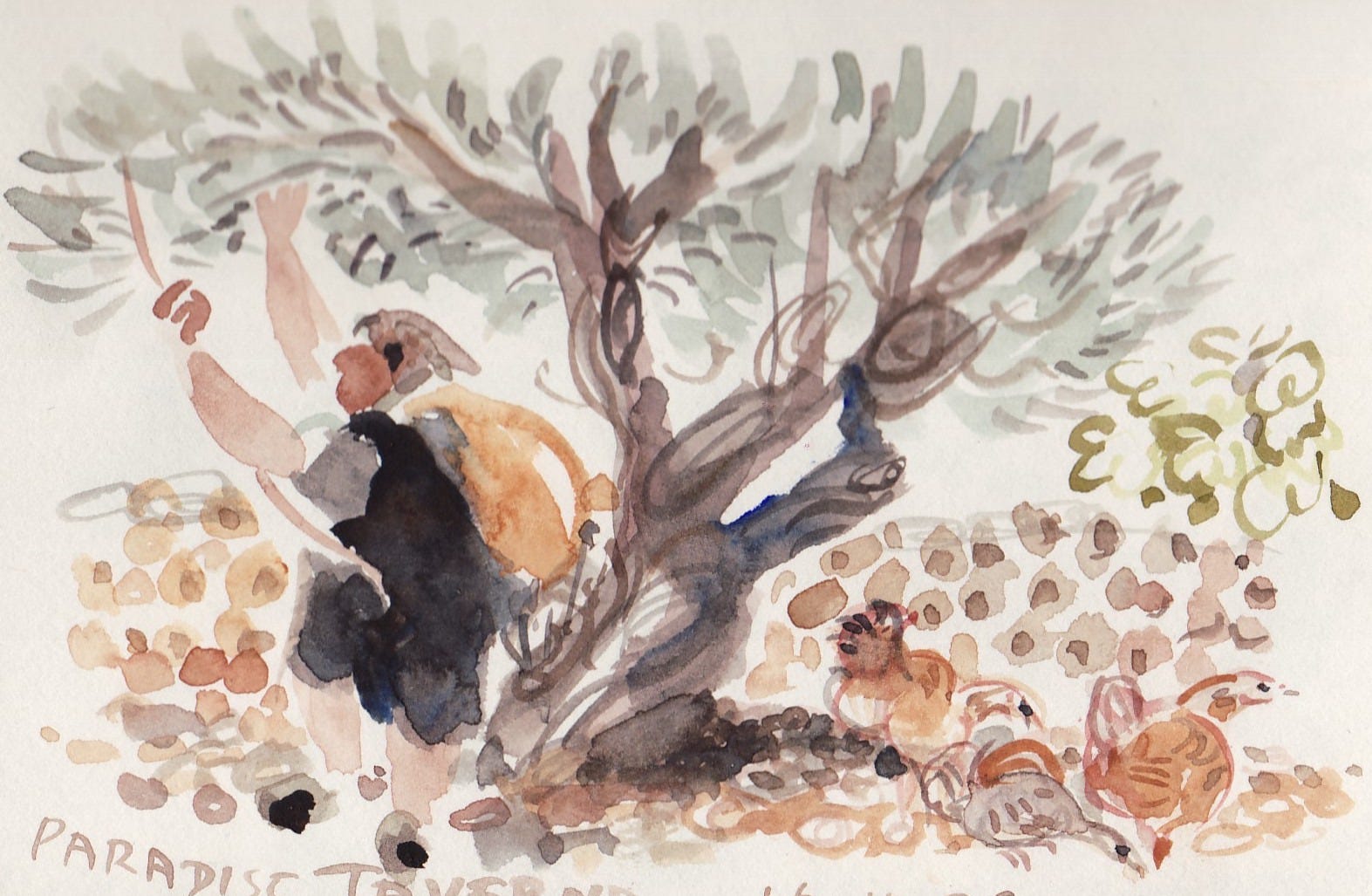
Mastic receives honourable mention in the Bible and the Koran, which makes the knowledge of how to prepare it very old indeed. The mastic trees, Pistacia lentiscus, are grafted from one generation to the next to preserve the line of descent. The precious sap, result of small incisions made in the bark, falls to earth beneath the trees and solidifies into a shimmering carpet on the ground. Once gathered, the shiny little chunks are washed twice, in much same way as in Andalucia I learned to leach the bitterness from eating-olives, first in plain water so that leaves and debris rise to the surface for scooping. Second, in salted water of sea-water strength, so that the resin floats.
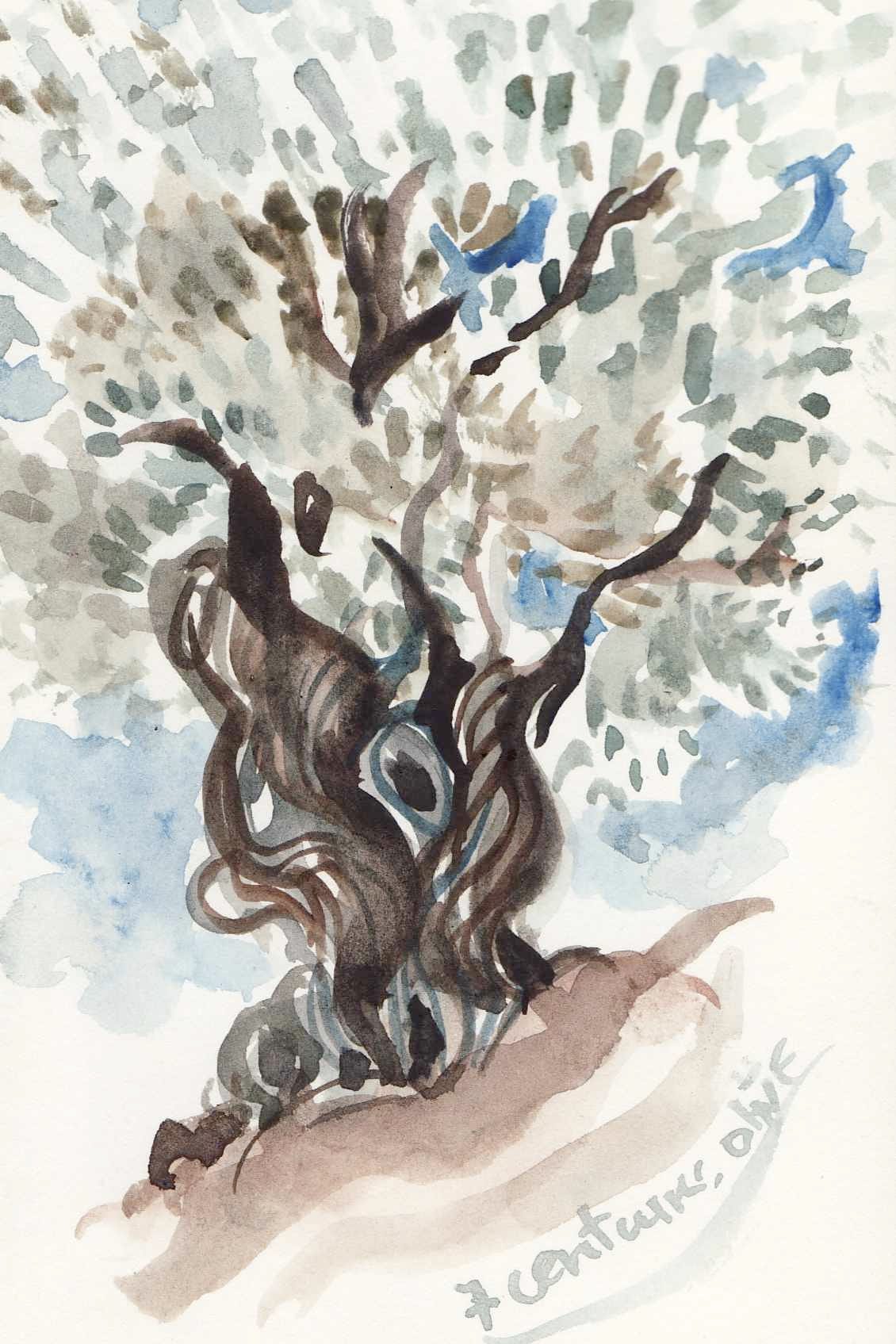
It so happened that I first encountered Pistacia lentiscus - local name, lentiscal - as a botanical artist in southern Spain. One of several dark-leaved shrubs that survive though the summer’s heat on bone-dry hillsides - sage-brush, cistus, wild olive - lentiscal was easily identified by its clusters of scarlet berries, a strong scent of turpentine released when the leaves are touched, and a useful habit of shedding twigs that could be used as lighter-fuel for charcoal, the main heat-source in rural Andalucia in the 1970’s. Easy flamablity, botanist Betty Allen told me as we worked together, allows the roots to hold heat underground from one season to next, source of many a brush-fire attributed to human carelessness.
Nicos, our native-born guide to the mastic island, described his first taste of the gum crushed with sugar as a very young boy. “You had it on a spoon with a glass of water. You ate it from the spoon, stirring it in the water to keep it cool. And then you drank the water.” Did he like it? “No. But we knew it was worth money. So it wasn’t polite to refuse.”
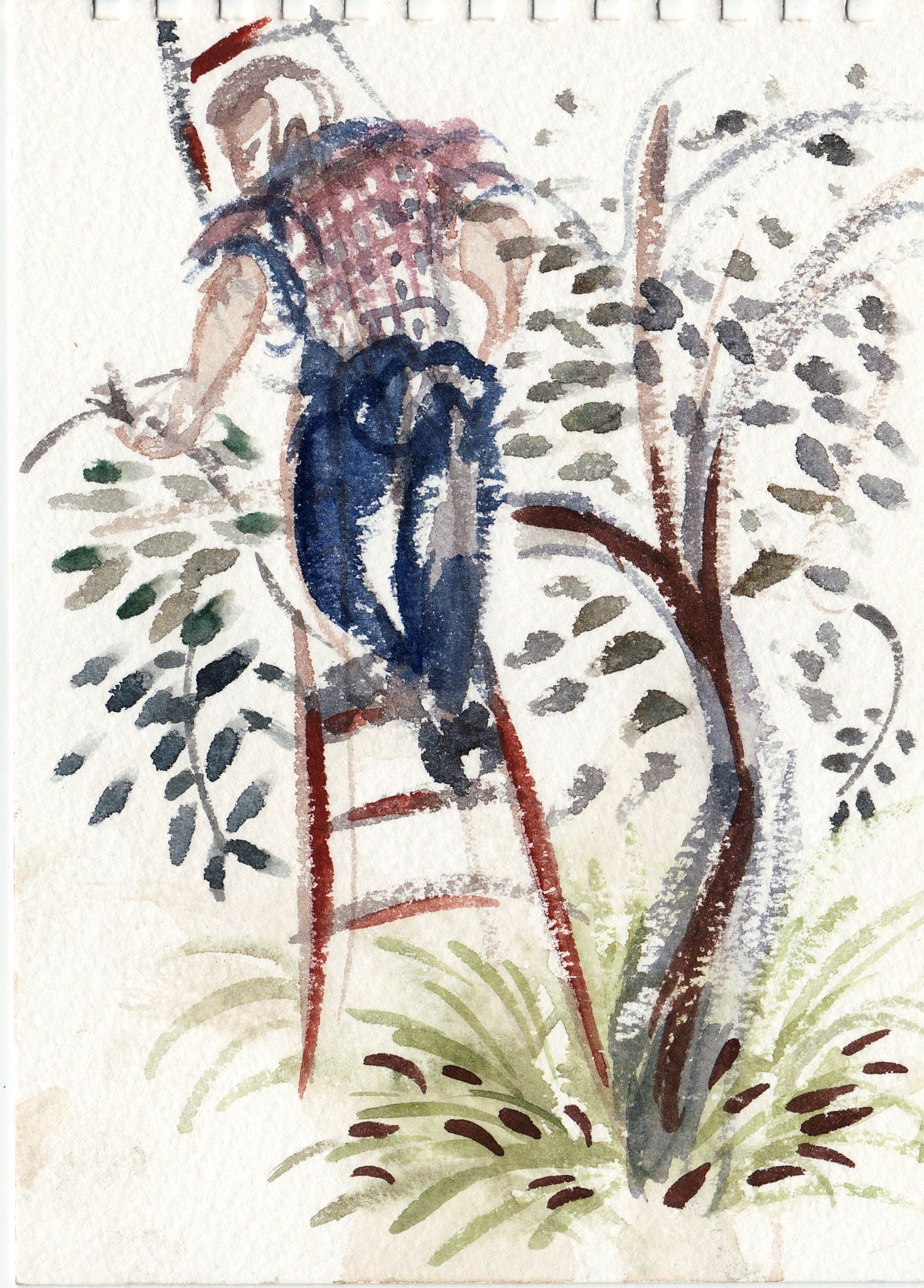
The mastic-gathering season runs from July to September. On that day of our visit in high summer, the gatherers - women’s work, needing patience and sharp eyes - were wearing quilted headscarves turned up at the edges like Dutch caps. And no, Nicos didn’t know if that was to protect them from the sun, or some other reason. Maybe because there was a little money to be made on the side by the old people, including Nico’s ya-ya, grandmother, by sorting through the debris, sitting outside in the street, selling direct to passers-by.
Our final visit that day was to the mastic villages of Kampos. Built in medieval times on the lowland plain to house the workers at a time of pirates, the lookout tower was always the first to be built. The villas of their employers, Genoese merchants, are astonishingly grand. High walls and wrought iron gates keep out the mob, and, for that matter, tourists like us. Beyond the gates can be seen groves of citrus trees, green and lush where everything else is dry and parched. Water, a scarce commodity on all the islands, was - maybe still is - pumped up from aquafers to fill the marble reservoirs and irrigate the citrus groves, visible evidence of unimaginable luxury for the rich and privileged, then as now.
p.s. beloved paid-subscribers (not that I don’t appreciate all who read me!) will shortly be in receipt of a couple of mastic-inclusive recipes for pistachio icecream and plum-and-lamb stifado.
No posts
Comments
Nothing yet. Say the first thing.
Sign in to join the conversation.