
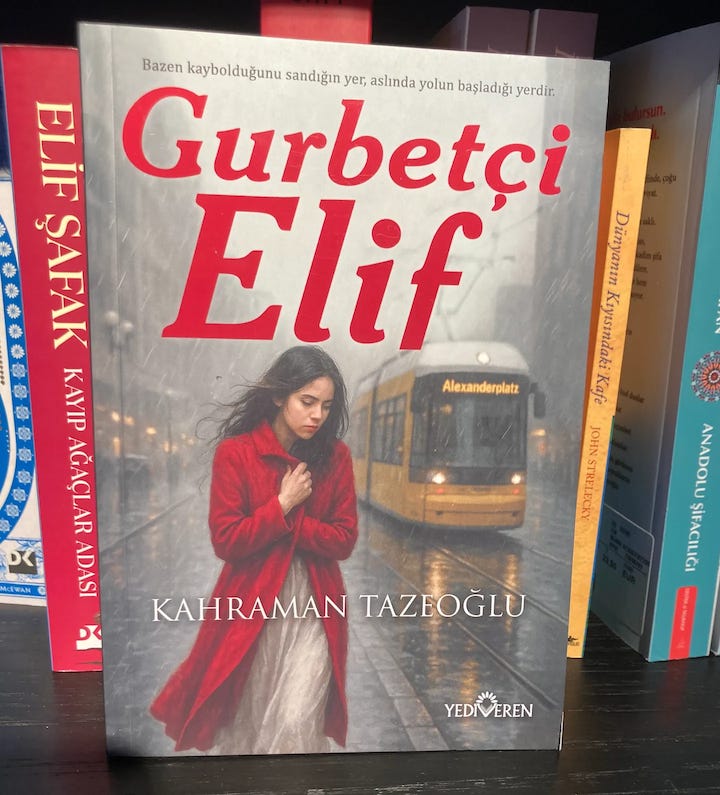
Dear readers! I am proud to report that, notwithstanding my rigorous program of never leaving the apartment, I have now made it to a total of three excellent bookstores in Berlin. One was the giant Dussman’s near the DAAD office, where I saw but did not purchase this volume:
A couple days ago I swung by Desirelines Books, a beautiful brand-new English-language bookstore on the Landwehrkanal, where I signed some stock(!)—if you’re in the area, stop by this Saturday April 25 for Independent Bookstore Day, I think they’re raffling off signed books!
Maybe my favorite was Pequod Books, which is used international books 😭, I could have stayed there all day. I went hoping to find something in Turkish that would be easy to read and “educational”; I came home with this large sentimental historical novel by Ahmet Ümit—so far, it’s a melancholy revolutionary holed up in Pera Palace, recapping a lot of early 20th-c Turkish history in the form of letters justifying his emotional and physical unavailability to an old flame, Esther. Just what the doctor ordered! (I see that it exists in English, too.)
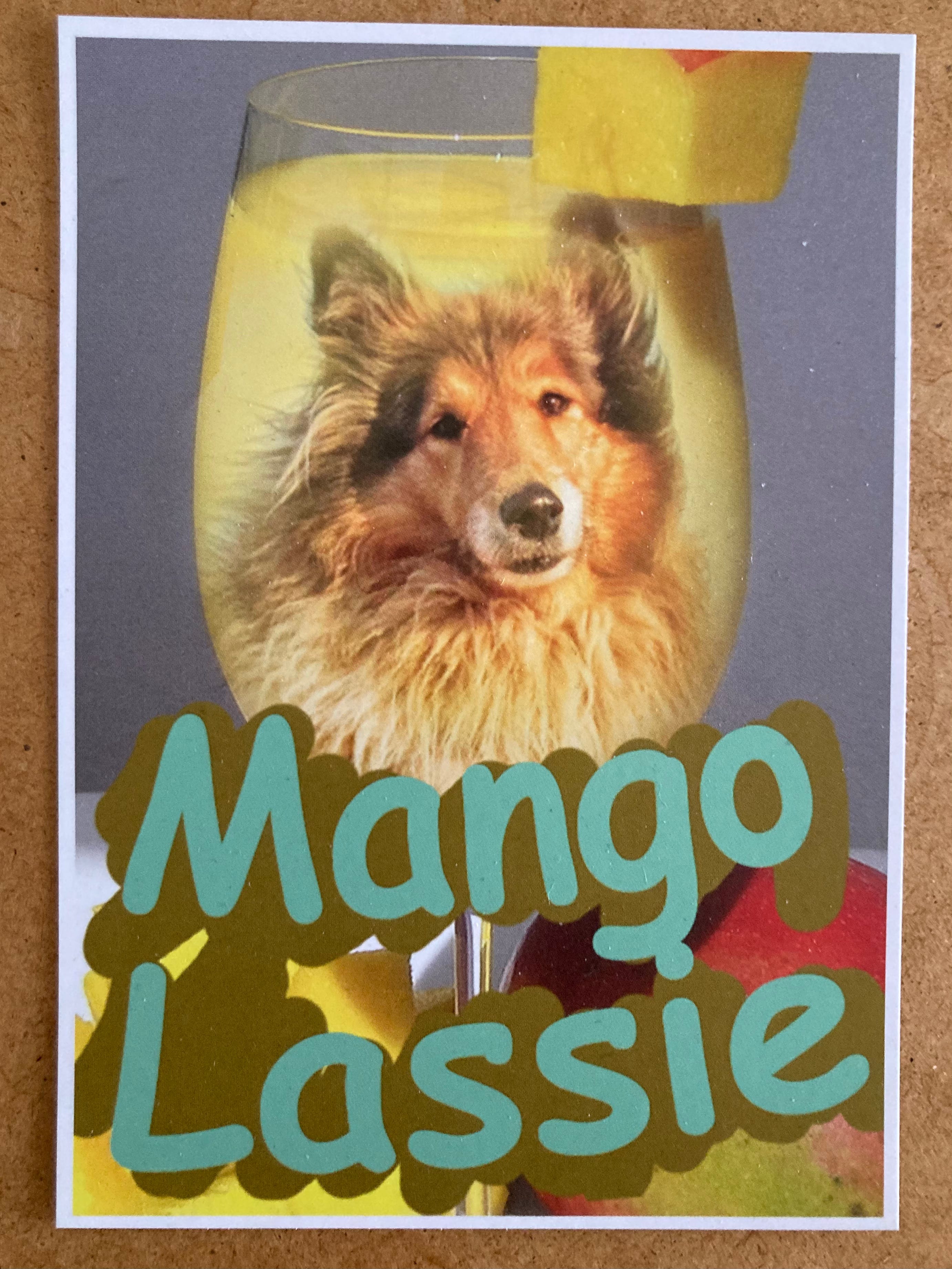
The thing that inspired today’s post is that Pequod also carries postcards with original art, by Ricardo Pickman (potentially an alias of the bookstore owner). This is the first one that caught my attention…
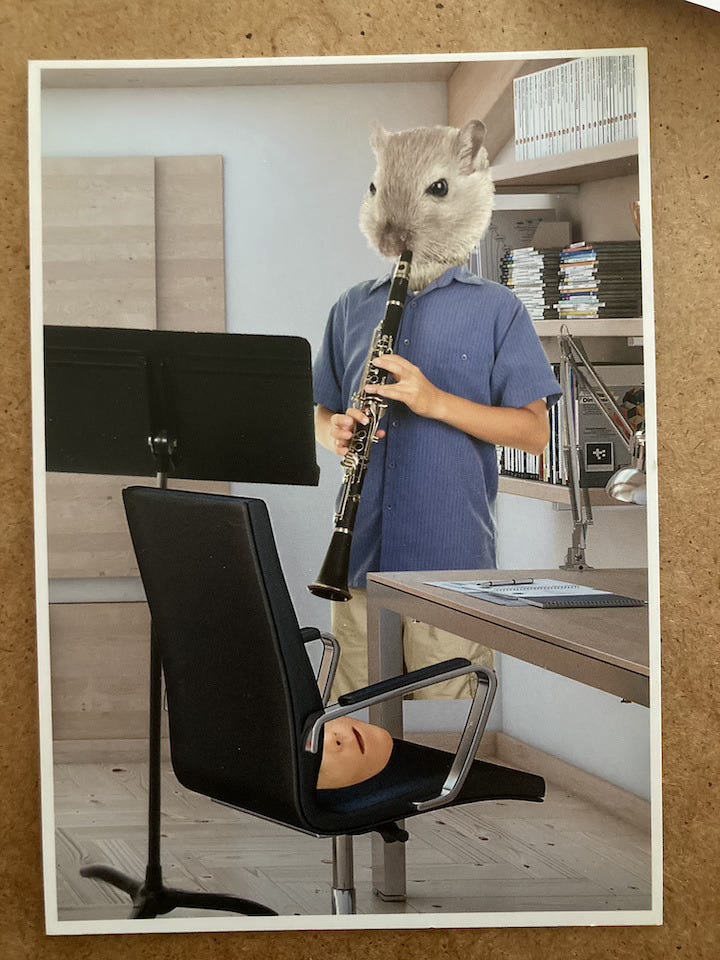
… but then I noticed this one…
… which now forms a valued part of my workstation.
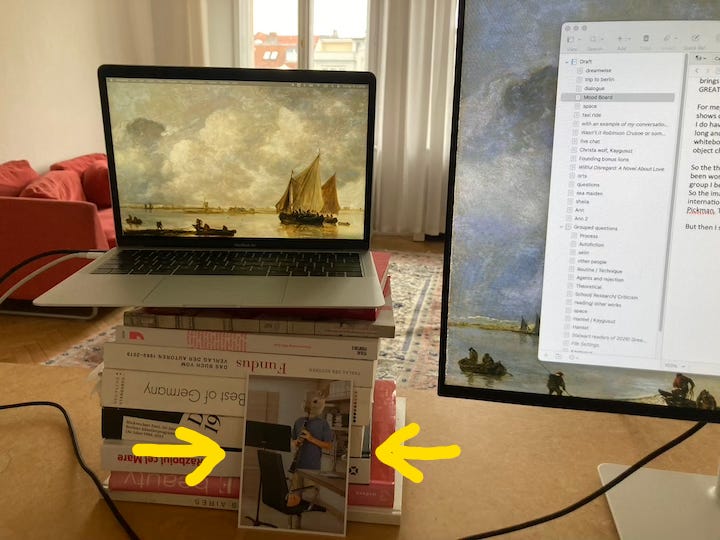
Today’s post is about the challenges of staying motivated during a long project where you don’t leave the house; how it can help to use a “mood board” with one or more inspirational images; and how I have been helped by that particular image.
So look: what is that creature, a gerbil? Did anyone ask it to devote itself to its unclear, yet obviously artistic, undertaking? No; clearly this is the gerbil’s idea. Yet its energy is calm and relaxed. It doesn’t have legs; it doesn’t need them. It isn’t looking for confirmation from the outside world. It has its mask on an office chair. I love that even though it’s clearly engaged in art, its environment has the same IKEA-type office furniture that I, and perhaps you, use every day. I particularly appreciate the music stand, which tells us that, whatever the gerbil is up to—it’s repetitive. Every day, it goes in that room, consults notation for something too complicated to hold in its head—and practices. How else is it going to get really good?
For long writing projects, I find it helpful to have a few such inspirational artifacts (often postcards) on hand—things that sums up some aspect of the work and its energy: in this case, the mysterious nature of repetitive solitary work. I’m calling this collection a “mood board,” even though I don’t use a board, though I do also have a whiteboard where I periodically copy out quotes that make feel excited about my project.
The mood board is related to another piece of writing advice that I’ve mentioned before (via Shelly Oria and Jessica Nordell), about how to get back into a writing project after some time away.
The advice is: do not immediately try to muscle your way back into the place that “needs the most work.” Instead, spend the first ~20 minutes re-connecting with the vibe—re-experiencing the initial excitement that got you into this project in the first place, perhaps with the assistance of your inspirational materials.
It may feel counterintuitive or inefficient, in our fast-paced world, to spend the first 20 minutes of your work time communing with a postcard. But personally I find that, when I zoom right into the “problem” area, I tend to spend the first 20 minutes just trying and re-trying things that already didn’t work—because I don’t remember exactly how they didn’t work and I need to see it play out again. By contrast, when I’m able to first tap back into the energy or vibe of the book, it gives me a different filter, where if I then go and reread the last thing I wrote, I see it in a new light. Instances of “delight” or “interest” jump out at me; it becomes clear that these instances are the most important part of the writing—are, in fact, the only important part, the rest is dispensable. This shifts the conversation in my mind about what can and can’t be changed, and frees me from the feeling that I’m facing an inextricable jenga tower of sentences, where nothing can be moved or changed because everything depends on the thing right next to it.
Coming up after the paywall: tips for retaining the authentic or vital spark1 while working on the same material for a long time; getting over the idea that repetition is “sterile”; plus further analysis of the clarinet gerbil by members of the writing group I belong to (including a bonus artwork by Jenny Odell), with an emphasis on how to write from a place of delight rather than a place of anticipating criticism from people who are pains in the butt. (1400 words.)
Thanks for reading!
Comments
Nothing yet. Say the first thing.
Sign in to join the conversation.