
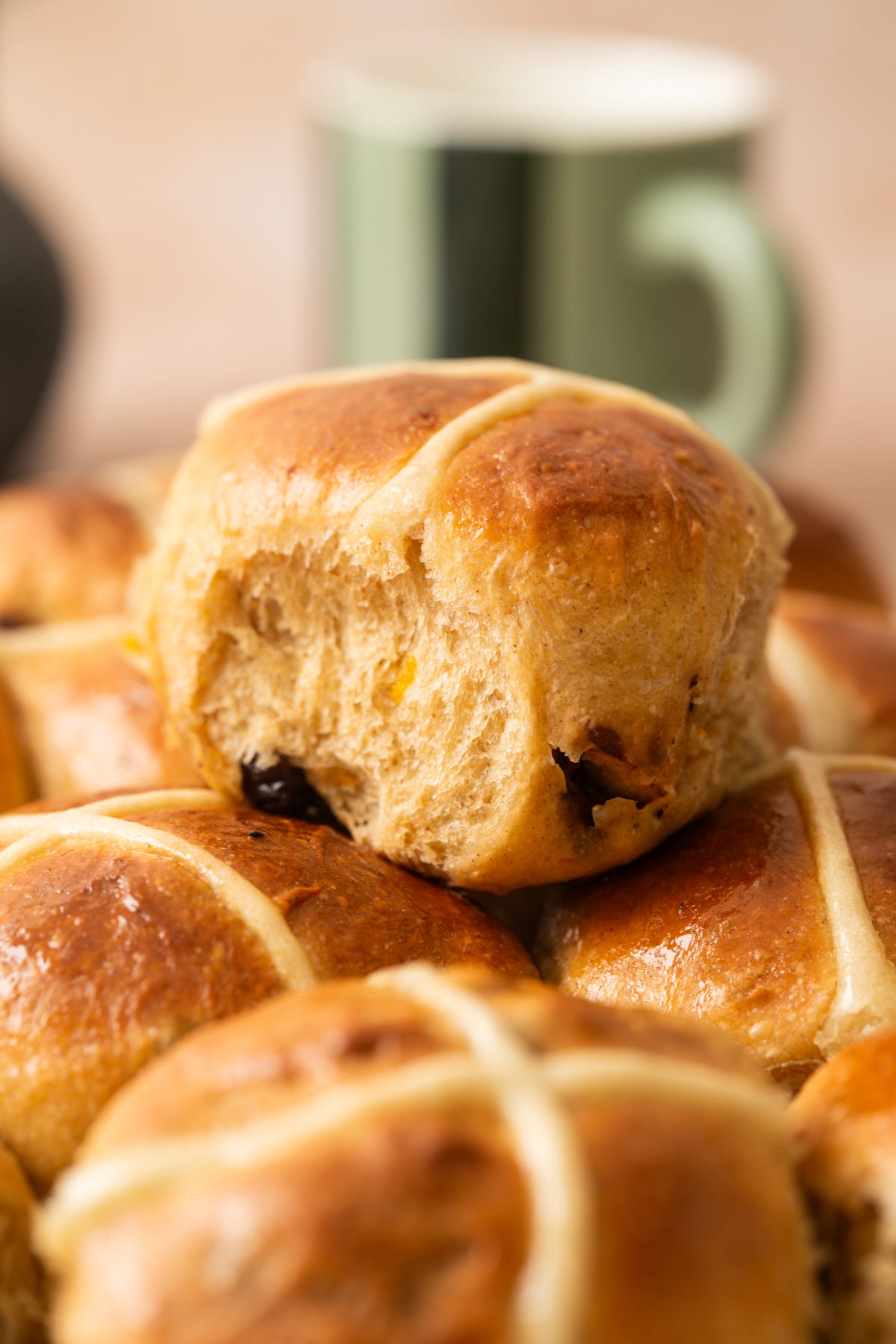
These are my brioche-style hot cross buns, enriched with lots of butter and eggs which makes them so tender and soft. They are only moderately spiced, unlike the more spice-heavy traditional hot cross buns, but I love it because it lets the orange and butter flavours come through. If you like a more boldly spiced bun, feel free to increase the spices to taste!
They are such a lovely Easter treat and one of my favourite things to bake when the weather starts to cool. A warm bun fresh out of the oven, lots of butter and a good cup of coffee, that’s the dream.
I’m still going through my blogs and redoing older recipes and this is the latest recipe I’ve revamped. I really like creating new content but it’s a bit of a shame when you put lots of work into a recipe and put it on the blog and then it gets lost under all the new posts. Plus, every time I do go through an older recipe I realise how much more I’ve learned since then so it’s an opportunity to add that all in, and take new photos.
I make them over two days. The first day it’s mixing the dough and a room-temperature rise, then the dough goes into the fridge overnight and I shape them the next morning. The overnight cold proof is optional, so don’t worry if you won’t have time, but if you do, I recommend it. The yeast activity slows down in the fridge and it gives more time for flavour to develop. It also helps with shaping because there’s a lot of butter in the dough and when it’s warm from the first rise, it can be very soft, so even a short fridge rest before shaping can help stiffen it back up.
They are best eaten warm on the day they are made, or warmed up on the following days. Because butter is solid at room temperature, the buns firm up a bit on the following days. But, a quick warm in the oven or microwave brings them right back to super soft.
The thing about brioche dough
One of the most important steps with a brioche dough is gluten development. I know it feels like a long time to leave the mixer running, but the mixing after all the butter is incorporated matters. You’re looking for a dough that’s gone from sticky and messy to something smooth and strong and that pulls cleanly from the sides of the bowl. That structure is what gives you that feathery crumb in the final bun.
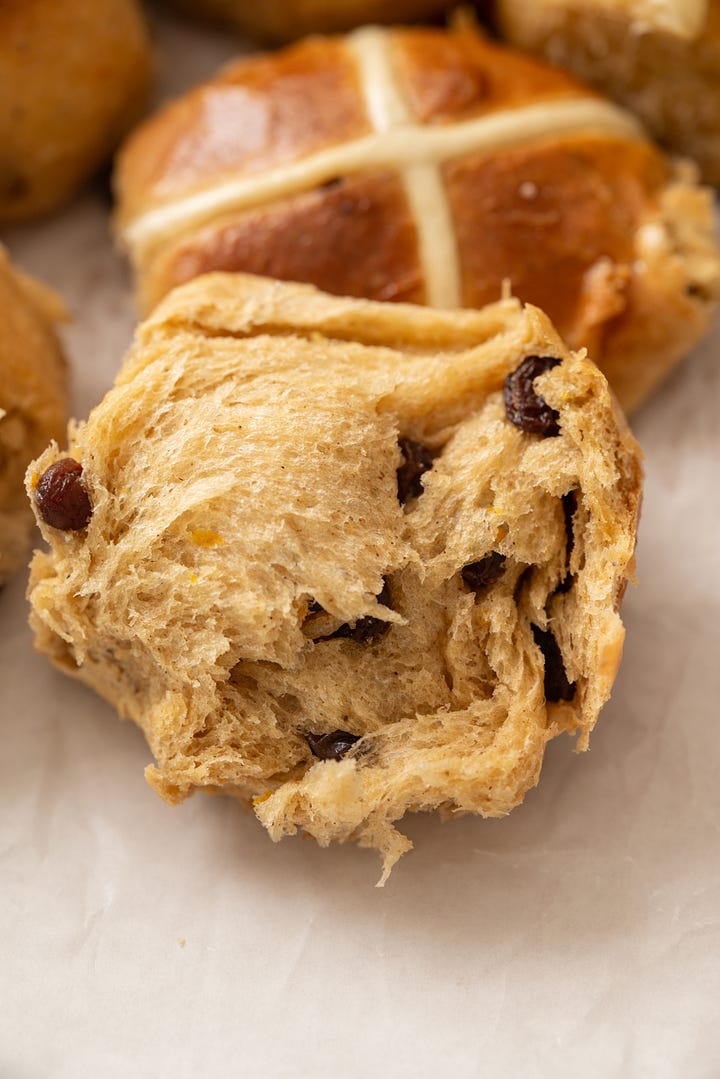
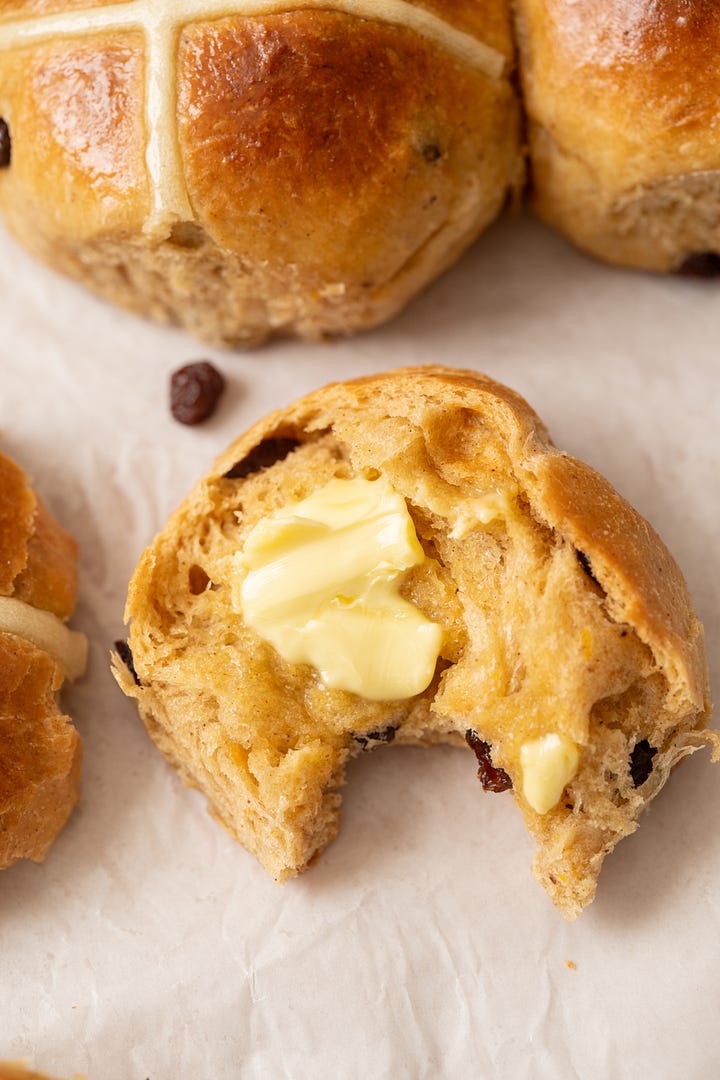
For step-by-step photos, head to the full post on my Baking with Butter blog.
Dough
140g (1 cup) raisins (or a mix of dried fruit)
60g (1/4 cup) orange juice
Zest of one orange, finely grated
120g (1/2 cup) whole milk, lukewarm (35-40°C / 95-104°F)
2 teaspoons instant yeast (or active dried yeast)
70g (1/3 cup) granulated sugar
530g (4 1/4 cups) all-purpose flour (at least 11% protein)
3 large eggs
1½ teaspoons salt
1 teaspoon vanilla extract
1½ teaspoons ground cinnamon
½ teaspoon ground ginger
¼ teaspoon ground nutmeg
⅛ teaspoon ground cloves
170g (3/4 cup) unsalted butter, at a cool room temperature, and cut into cubes
Cross paste
32g (1/4 cup) all-purpose flour
30g (2 Tbsp) water
Sugar glaze
50g (1/4 cup) granulated sugar
60g (1/4 cup) water
Start with the raisins. Combine them with the orange juice and zest in a small bowl, give it 30-40 seconds in the microwave, stir, and leave them to sit and plump up while you work on the dough.
Pour your lukewarm milk into the stand mixer bowl and sprinkle the yeast and a tablespoon of the sugar over the top. Active dried yeast needs 5-10 minutes here until it turns foamy. Instant yeast can skip straight ahead, but if you’re not sure how old your yeast is it’s worth giving it a few minutes anyway just to make sure it’s still nice and active.
Add the flour, remaining sugar, spices, vanilla, salt, and eggs and mix on low with the dough hook until everything comes together into a thick, shaggy dough.
With the mixer still running, add the butter a few cubes at a time, and let each addition incorporate before adding the next. Once it’s all in, turn the speed up to medium and keep mixing for at least 15-20 minutes.
You’re looking for a dough that’s smooth, strong, and clearing the sides of the bowl cleanly. To check it’s ready, rest the dough for 5 minutes then tear off a small piece and stretch it slowly between your fingers. It should stretch thin enough to see light through without tearing. This is the windowpane test, and it’s your signal that the gluten is properly developed.
Tip the soaked raisins and any remaining orange juice into the dough. It will get sticky again but keep mixing on a low-medium speed for a couple of minutes only until the juice is incorporated and the fruit is evenly distributed, and then stop.
Turn the dough out onto a lightly floured surface, shape it into a ball, and transfer to a greased bowl. Cover and leave somewhere warm around 24-26°C (75-78°F) for 1½-2 hours or until doubled in size.
Once risen, punch the dough down and refrigerate for 8-12 hours. If you’re making them the same day, that’s fine too, but try to give the dough at least a 30 minute rest in the fridge before shaping to firm the butter back up.
Shaping
Take the dough out of the fridge, weigh it, and cut it into 12 equal pieces. Shape each one into a tight ball and arrange them in a greased or lined 9x13 inch (23x33cm) pan.
Just know that cold brioche dough doesn’t feel like regular cold bread dough. It won’t feel elastic and springy out of the fridge, it will be quite stiff because the butter has hardened, but that’s completely normal, they will soften again once they are proofing.
Cover loosely and leave in a warm spot until puffy and doubled, and when gently pressed the dough springs back slowly, about 2 hours, though this will take longer in a cool kitchen or less in a warm one so go by look rather than the clock.
Near the end of the proofing time, preheat your oven to 180°C / 350°F standard oven. Mix the flour and water for the crosses into a smooth paste and transfer to a piping bag or a zip-lock bag with a small corner snipped off. Pipe a cross over each bun just before they go in.
Baking
Bake for 28-30 minutes until deeply golden. Mix the sugar and water for the glaze while the buns are in the oven, stirring until the sugar dissolves. As soon as the buns come out, brush the glaze over the tops while they’re still hot. You won’t need all of it.
Leave them to cool for at least 20 minutes before eating.
Mixer overheating: Brioche is a heavy dough and the long mix can overheat your mixer. If it starts to feel hot, stop and give it a 10 minute rest before continuing.
Greasy dough: The friction from mixing generates heat, and if the dough gets too warm the butter can lose its emulsion and the dough will look greasy. If that happens, pop the bowl in the fridge for 15-20 minutes before continuing. This is also why the butter you add should be soft but still cool, around 18-20°C, not melted or greasy to the touch.
Happy baking!
Comments
Nothing yet. Say the first thing.
Sign in to join the conversation.