
There is a story I’ve only ever told in pieces.
Some of it appeared in Journey to Unity. Some of it has been scattered across essays, interviews, and field reports. But until now, I’ve never told the story as it actually happened—or why I believe it matters.
This book exists because I eventually realized that what I had dismissed as a lifelong sleep problem may have been something far stranger.
For most of my life, I believed I was broken.
Every night, I needed an orgasm before I could fall asleep. Not because I preferred it. Because I couldn’t sleep without it. For decades I was embarrassed by that fact. I explained it away as stress, a high libido, or simply “the way I was wired.”
Only much later did I realize I wasn’t describing a bad habit.
I was describing a survival strategy.
As a child, I developed an overwhelming fear of falling asleep. Somewhere along the way, my young mind had become convinced that sleep and death were somehow the same doorway. Every night my nervous system approached sleep as though it were something dangerous.
Then adolescence added a second challenge.
Restless Legs Syndrome turned bedtime into another kind of prison. The moment I lay still, my legs filled with an unbearable electrical restlessness. Sleep became something my mind feared and my body resisted.
Without ever intending to, I found the one thing that reliably quieted both systems.
Orgasm.
It calmed the restless legs.
It relaxed the vigilance.
It opened the door to sleep.
So I repeated the same ritual.
Night after night.
Year after year.
Decade after decade.
I never imagined I was training anything. I thought I was simply getting through another night.
Then everything fell apart.
In late 2021, I injured my shoulder. The chronic pain gradually overwhelmed the only sleep strategy that had worked for forty years. Over the following months my sleep deteriorated until it almost disappeared entirely.
The exhaustion became profound.
Hallucinations appeared.
Reality became unreliable.
By June of 2022 I had gone nearly six days without meaningful sleep. My mind entered acute psychosis, and under the combined strain of extreme sleep deprivation and overwhelming psychological stress, my heart briefly stopped.
I was resuscitated.
During that experience something happened that permanently changed my understanding of consciousness, identity, and life itself.
Two weeks later, an entirely different experience followed—one that I had no framework to understand at the time. It wasn’t something I had pursued through meditation or spiritual practice. It simply arrived, transforming my understanding of myself in ways I could never have predicted.
For years afterward I assumed these experiences had appeared out of nowhere.
Now I’m no longer convinced that’s true.
Looking back, I see forty years spent returning to exactly the same neurological threshold every single night.
The threshold between waking and sleeping.
The threshold between tension and release.
The threshold between identity and surrender.
Contemplative traditions have spent thousands of years exploring that territory intentionally.
I may have spent forty years rehearsing it accidentally.
That realization changed the questions I was asking.
Instead of asking, “Why did this happen to me?” I began asking, “What was my nervous system actually doing all those years?”
That question eventually led me far beyond memoir.
It led me into neuroscience.
Into sleep physiology.
Into contemplative traditions from around the world.
Into EEG research and years of carefully documenting unusual states of consciousness—not to prove a belief, but to better understand an experience.
This book is the result of that search.
It isn’t a book about convincing you to adopt my conclusions.
It’s an invitation to explore a possibility with me.
What if one of humanity’s oldest spiritual technologies has been hiding in plain sight?
What if the doorway we’ve spent millennia searching for isn’t something we have to build, but something our nervous systems already know how to approach?
I don’t claim to have all the answers.
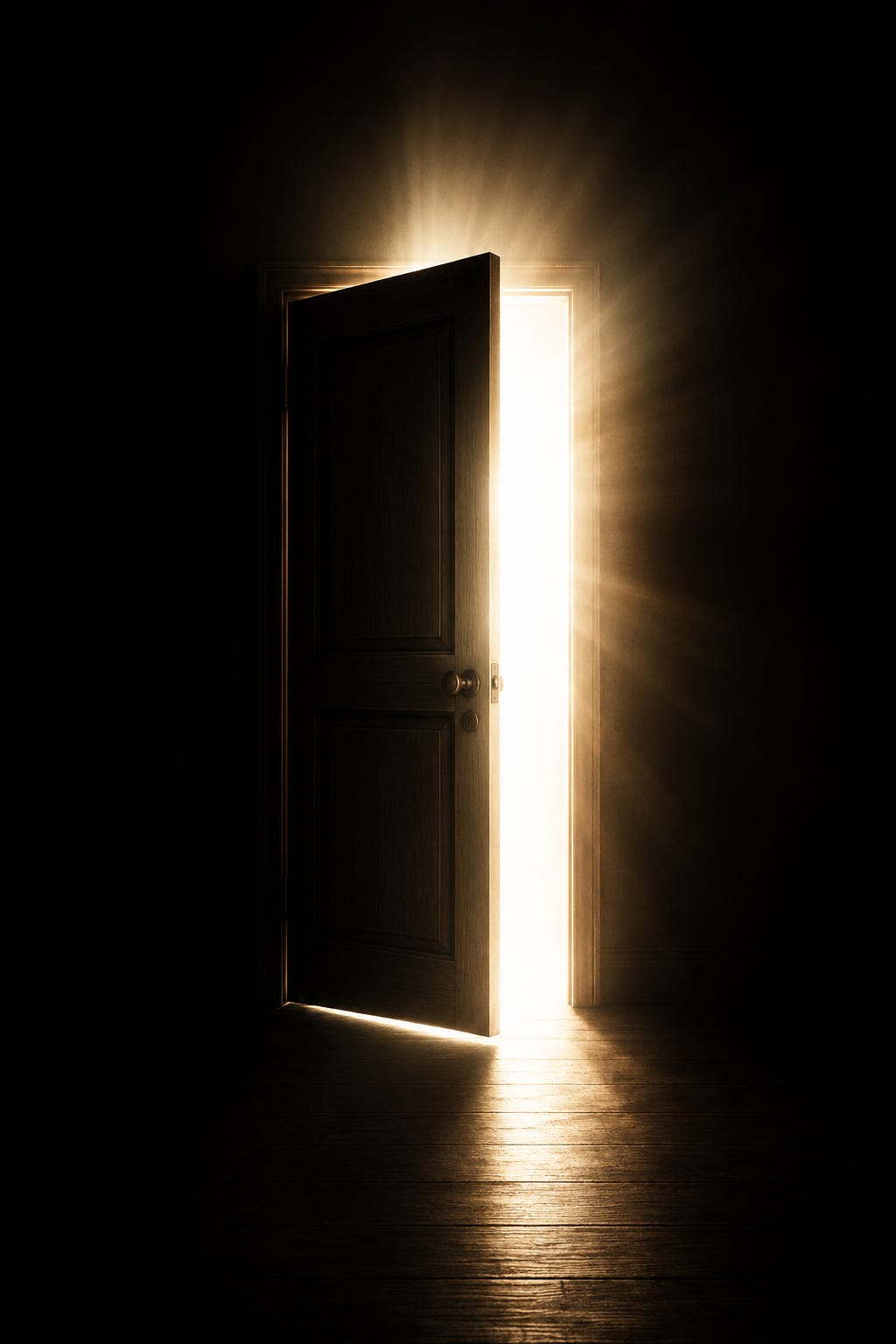
But I do think I’ve found a door worth opening.
And that’s why I wrote this book.
Over the coming months I'll be sharing selected ideas from The Open Door: Sex, Neuroscience, and Humanity's Oldest Spiritual Technology as the manuscript develops. The essays will stand on their own, but together they'll trace the journey that eventually became the book.
-Elias
Comments
Nothing yet. Say the first thing.
Sign in to join the conversation.