
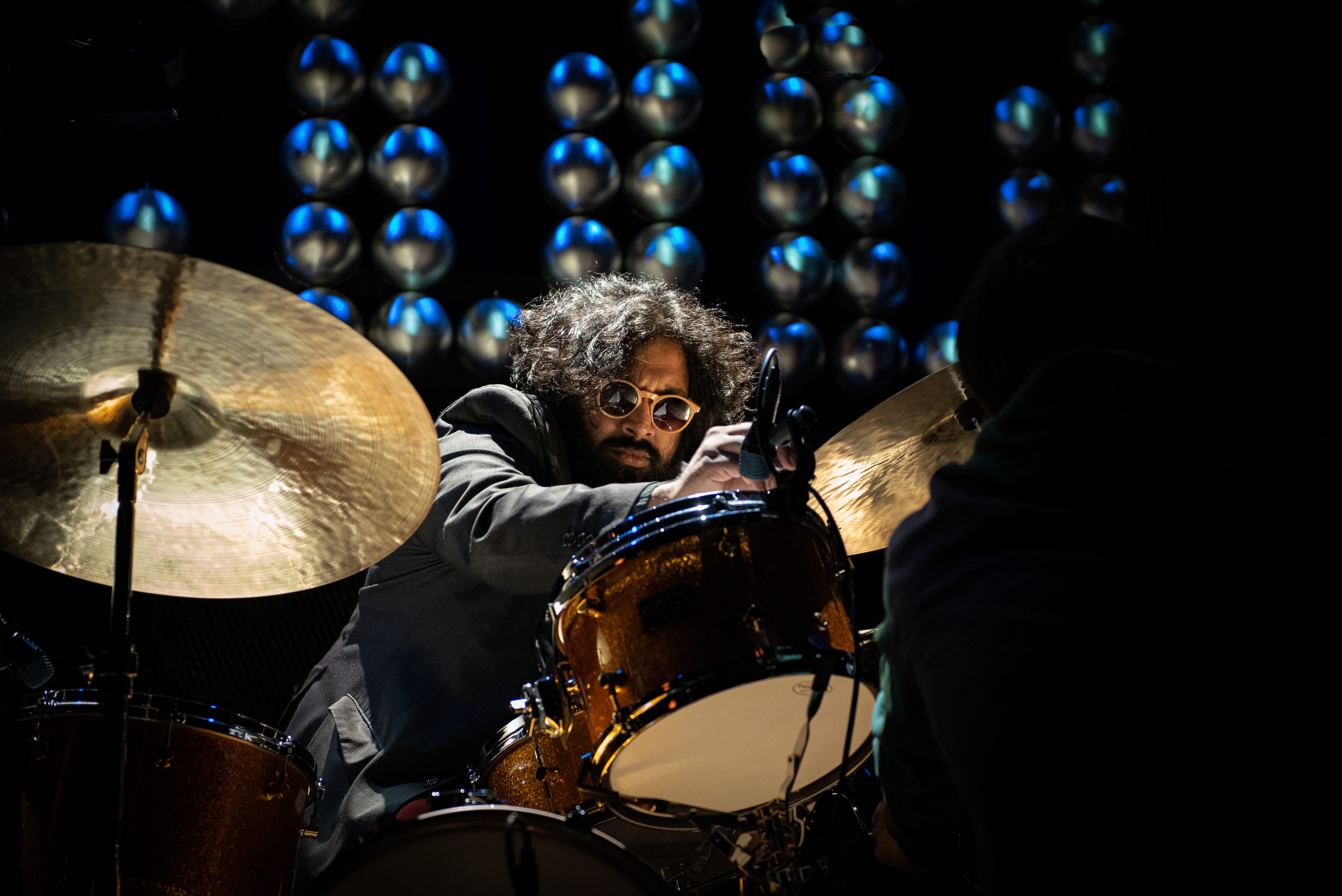
Kesivan Naidoo grew up in a township in East London, now KuGompo City, in the 1980s and early 1990s, surrounded by his mother, uncles, and grandparents. Of them, he says, his grandmother Maude had the greatest influence on him. She taught him about “dancing, rhythm, and life.” He also remembers her cooking lessons, including one maxim: “The secret ingredient is not in the food, but in the people you share it with.”
He was still in high school (1992-1996), one of the first students of color at a white school at a time when South African schools were slowly deracializing at the end of apartheid, when Hotep Galeta, whom I have posted about here before and who had returned from a long exile—and a successful jazz career in the US—invited him to play in his band. This was in 1996, when Naidoo was just 17 years old. Galeta singled out Naidoo and Mark Fransman, the Cape Town-born multi-instrumentalist (piano, saxophone, guitar), as future stars of South African jazz. They went on to start the classic band Tribe, which the next generation of musicians, including Darren English, Kyle Shepherd, Benjamin Jephta, and Bokani Dyer, recognize as a seminal influence. Later, once Naidoo had scored more gigs, he met another former exile who would profoundly shape the way he approaches music and have the same effect on him as Maude: the pianist Bheki Mseleku.
As he recently recounted to jazz journalist Gwen Ansell (she did the liner notes for “We Dance at Home”), Naidoo was only 19 years old when Mseleku called him to drum for him. Mseleku wasn’t any musician. Abbey Lincoln said of her song classic, “Through the Years”: “Even though it is my lyric, it is Bheki’s song.” Alice Coltrane gifted one of John Coltrane’s saxophone mouthpieces to Mseleku, who had also mastered that instrument. Mseleku also wrote songs for Joe Henderson and Pharaoh Sanders.
At some point, Naidoo introduced his grandmother to Bheki in 1999 after a rehearsal. “When I introduced them to each other, it was like they were related—in both look and wisdom.” Mseleku died from complications related to severe, long-term diabetes in London in September 2008. He was only 53. Maude died in April 2016 in Cape Town aged 79.
Naidoo is the first to admit that he is very much a creation of Mseleku—in how he approaches music (“serve the music, but it is okay to have some fun too”) and in his spiritual practice. Mseleku was a Buddhist; Naidoo practices Daoism.
“We Dance at Home,” Naidoo’s new album, released in August 2026—his first in twelve years—features cover art of himself as a baby with Maude. His grandmother holds him, her oldest grandson, in the living room of her house, teaching him how to dance “langarm,” a ballroom dance style, hence the album’s title. But the title also refers to the fact that South Africans - unlike audiences in other parts of the world - prefer to dance to jazz, not just sit and listen to it in silence.
It is also no coincidence that the album opens with a cover of “Angola,” a tune Mseleku composed for Robbie Jansen, the late saxophone player from Cape Town, who in 1975 took his band Oswietie (literally “We don’t know,” from the colloquial Afrikaans spoken in the Cape) to Luanda and got stuck in a civil war. (Incidentally, Oswietie consisted not only of Jansen, but also guitarist Russell Herman, who later managed Bheki and produced two of his albums. The rest of the lineup were equally talented: Lionel Beukes, Mervyn Africa, and Nazier Kapdi.
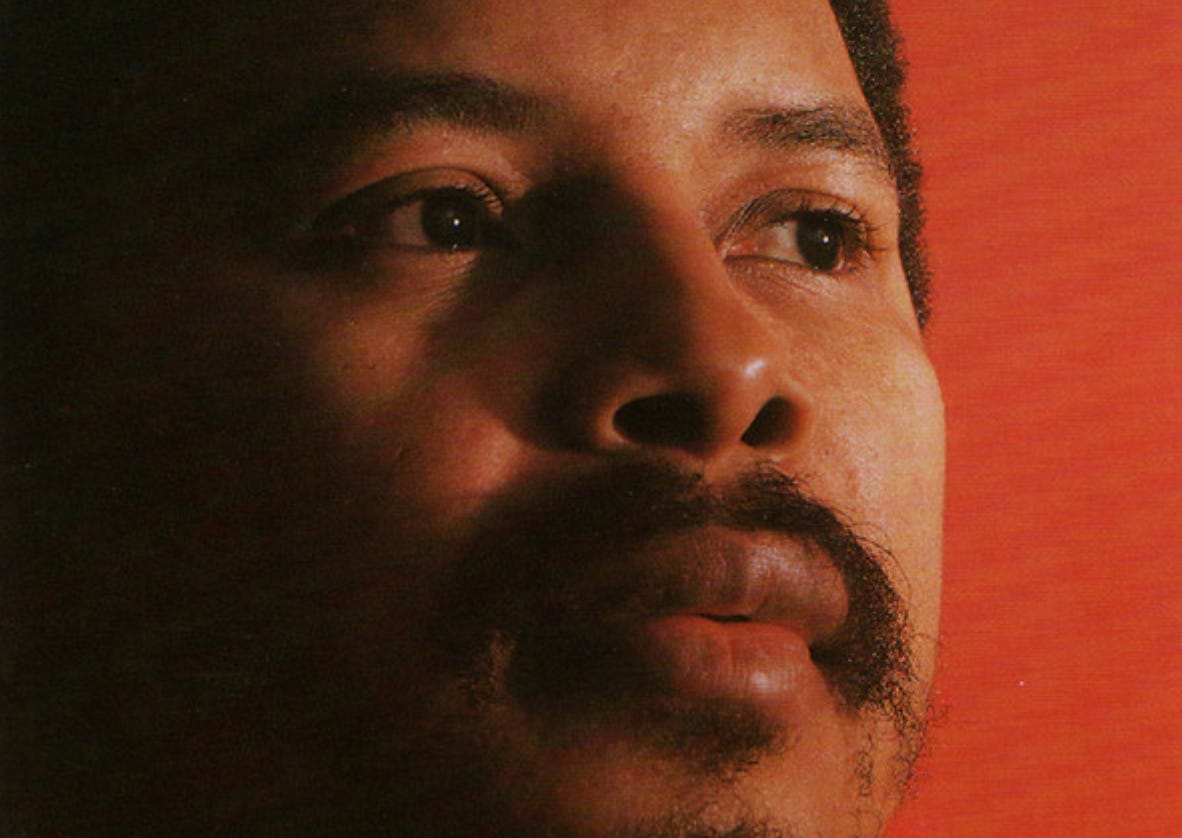
Angola had just won independence from colonial Portugal when the new government faced a proxy war from the US and apartheid South Africa. The frenetic energy of “Angola” combines pure Goema and swing. Naidoo told me the swing groove is legendary American drummer Elvin Jones’ ride pattern, which Jones taught Bheki, who, in turn, taught Naidoo. Naidoo’s version ends in a Kwaito groove that emphasizes dance. Naidoo says the arrangement is exactly as Bheki wanted: Mseleku wrote “Angola” so people would dance.
The Lights was first founded in 2009 and has had many personnel changes, though some players keep making appearances. On “We Dance at Home,” Naidoo drafted Bokani Dyer on piano, Darren English on trumpet, both from South Africa, Charley Rose from France on tenor saxophone, Fabio Gouvea from Brazil on guitar, and Joan Codina from Spain on double bass. English and Dyer have been fixtures in Naidoo’s ensembles.
Like “Angola,” the rest of the album is made up of arrangements and compositions that Naidoo and his band play at his gigs with various ensembles.
“Sama Layuca” is a cover of the title track of a celebrated 1974 studio album by American jazz pianist and composer McCoy Tyner. Naidoo had met Tyner, now late, who had come to play at a festival in South Africa. There is even a photo to prove it. The memory still enamors Naidoo.
But before the Nirvana and Beyoncé covers come three “Inception Suites” which Naidoo composed—“Time,” “Contact,” and “Dream Is Collapsing”—a tribute to Hans Zimmer and the music of the film “Inception.” The suites reflect Naidoo’s passion for cinematic music. The suites are moodier.
The cover of Radiohead’s “Pyramid Song,” which follows the suites, is a sort of continuation of this, but feels like a transition between the Inception Suite and the tone that follows for the next two songs: Kwaito reworkings of Nirvana’s “Smells Like Teen Spirit” and Beyoncé’s “Single Ladies (Put a Ring on It).” The Nirvana and Radiohead influences come from his time at a white high school. Later, Naidoo met Radiohead bass player Colin Greenwood, and covering “Pyramid Song” in a jazz style stemmed from a promise he had made then. If the inclusion of a cover of Beyoncé’s song may surprise some listeners, Naidoo also includes a track celebrating Snoop Dogg: “The Shizzle,” a reference to a catchphrase by the LA rapper and now mainstream celebrity. Brazilian Gouvea’s guitar gets an extended solo on the track.
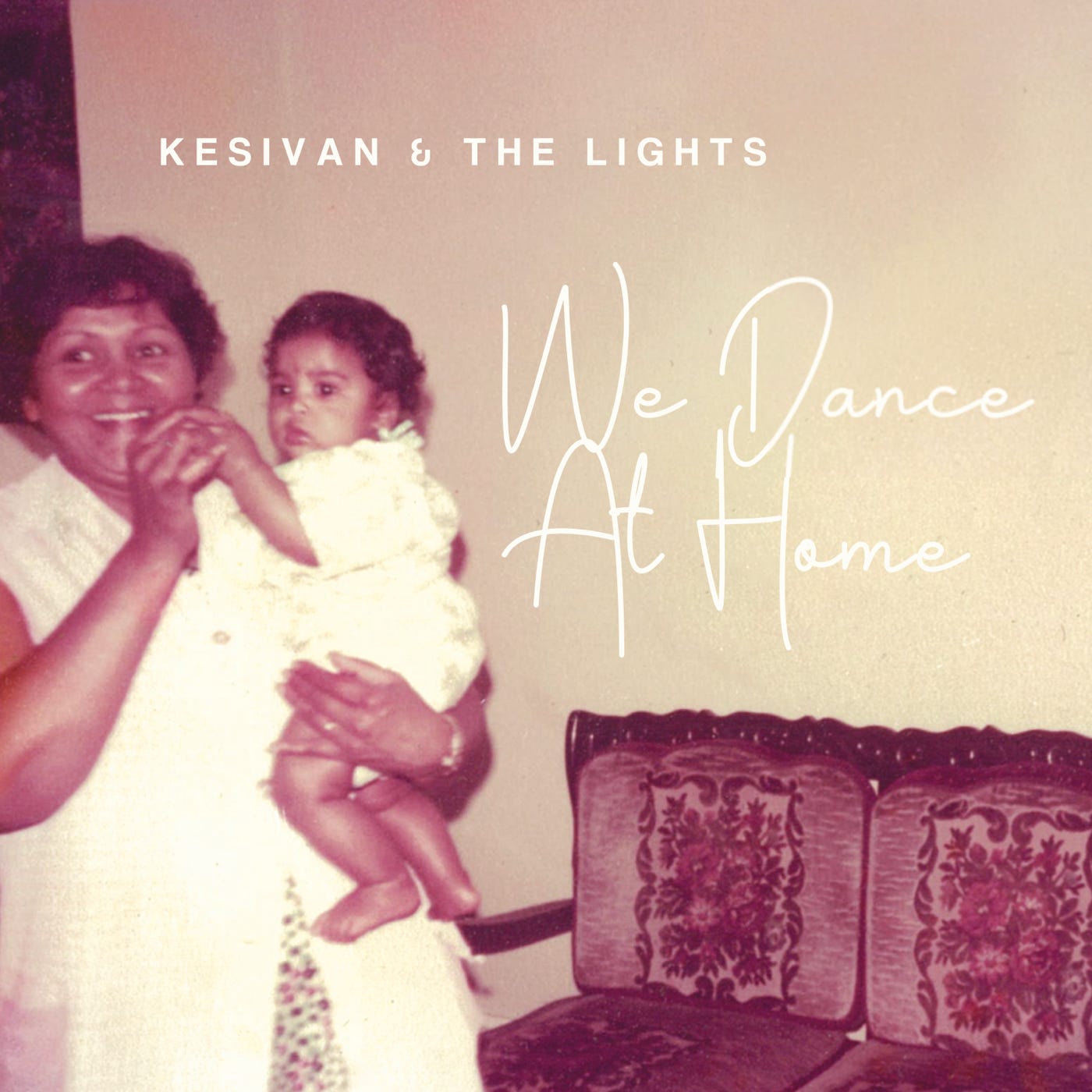
The album, fittingly, closes with a homage to Naidoo’s grandma, with the song “Mamma’s Secret.” The saxophone-driven track reminds me of a jazz standard, something out of Mankunku or Coetzee’s oeuvre. (On Naidoo’s first record, “Instigators of the Revolution,” he includes a cover of Mankunku’s most famous song, “Yakhal ‘Nkomo”.)
It is surprising, given his profile in South African jazz, that Naidoo has only recorded three albums as a bandleader. But that would mean discounting his many appearances on the albums of his contemporaries as well as those of South African masters; he has guested on albums for Dyer, the saxophonist Zim Ngqawana, and for Miriam Makeba (2004’s “Reflections”).
Naidoo was a drum prodigy when he first burst onto the jazz scene. Years later, a jazz critic would describe his energetic playing as imagining him “perform[ing] a creation myth using only his drumsticks, beating life into his drumkit in the process.” JazzTimes concluded that his relentless style offered “buoyancy and sturdiness.”
Shortly after Naidoo’s encounter with Mseleku, he decamped to Johannesburg for a crash course in music and living with Mseleku. He went on to play various gigs and toured with Winston Mankunku and Miriam Makeba.
Later, on Galeta’s insistence, Naidoo moved to Cape Town in 1997 to study at the University of Cape Town College of Music. UCT’s musical tastes are quite old-fashioned—Kyle Shepherd, who has been a part of Naidoo’s ensembles including The Lights, famously left the university after one year—so I am surprised Naidoo survived that experience intact.
I sense that the Cape Town jazz scene into which Galeta smoothed Naidoo’s entry and where veterans such as Robbie Jansen, Basil Coetzee, Errol and Alvin Dyers often vibe and jam with young musicians made it more bearable and productive. It also helped that Rene McLean, whose father, Jackie (yes, him), mentored Hotep, taught at UCT. Cape Town at the time was also a great place to experiment musically.
That is around the time I first paid particular attention to Naidoo. Naidoo and his band Tribe—the version I saw consisted of Fransman, Buddy Wells, and Charles Lazar—played regularly at the Indoor Armchair Theater in Observatory, a suburb of Cape Town favored by recent UCT graduates, when I was living there in the early 2000s.
In 2009, Naidoo eventually won the Standard Bank Young Artist Award. He used the money and reputation of the award to make the debut album with the Lights, “Instigators of the Revolution,” in 2010, which was nominated for a South African Music Award. He had also drawn on other influences; earlier, in 2002, he traveled to India for one year to study Indian classical music in Kolkata. Another result of this period was the formation of the group Babu, which played Afro-Indian fusion. Around that time, he also opened a jazz club, Mahogany Room (later Straight No Chaser), in downtown Cape Town.
This venue, at 79 Buitenkant Street, a few hundred yards up the street from a police station notorious for the torture of anti-apartheid activists and a museum in honor of District Six, the black (also meaning coloured) quarter razed by apartheid and which the City of Cape Town’s reactionary politicians will never rebuild, was for a while a required stop for jazz fiends in the city and those visiting. The music writer Tseliso Monaheng once wrote about Mahogany Room that it allows you to hear “musicians breathe.”
This is how Naidoo was invited by Masekela in 2014 to front a band for a major South African-focused celebration at Carnegie Hall in New York City. Masekela loved Kesivan’s club; despite his fame, he played there regularly with pianist Larry Willis. Naidoo joined these sessions as a special guest from time to time. The band Naidoo took to New York City included a whole slew of musicians he had played with for years: Feya Faku, Justin Bellairs, Shepherd, Reza Khota, and Shane Cooper.
By all indications, Naidoo and the Lights wowed the audience. The album, “Brotherhood,” followed. At the time, the Mail & Guardian, a local paper, summed up the album as “the birth of a new South African jazz sound taking shape” (an observation also made by CNN’s correspondent). The Mail & Guardian also reported that “the revolutionary impetus of the Jazz Epistles lives on in Naidoo and the Lights.” That last part carried some weight. The Jazz Epistles, which featured Dollar Brand (Abdullah Ibrahim), Hugh Masekela, and Kippie Moeketsi and recorded the first album by a black jazz ensemble, are like gods in South African jazz. JazzTimes concluded that the album’s 12 original tunes “are as buffed and modern as anything you might hear coming out of Brooklyn today, but they have an air of darkened urgency.”
Not long after, Naidoo left the jazz club business behind, packed up, and moved to Boston to study at Berklee College of Music; there Danilo Perez and John Patitucci - who had chosen him for a scholarship - mentored him. Though Naidoo arrived at Berklee somewhat of a finished article, Berklee has been a finishing school for several of South African jazz musicians of this generation, like Lumanyano Mzi and Benjamin Jeptha.
At the end of his time in Boston, Naidoo moved to New York City, where he continued to find opportunities to play, record, and collaborate. Our paths crossed again. I sensed that, while New York City could be challenging for Naidoo—as it can be for any musician—it also brought some important musical encounters, including work with William Parker, the free-jazz pioneer, at Roulette, the famous Brooklyn venue, and with Patitucci at Dizzy’s Club.
At the end of his time in New York City, Naidoo moved to Basel, Switzerland, where he lives with his wife, Julia Büchele, a university administrator. From his social-media activity and the occasional Zoom call, Naidoo seemed to have settled into Basel’s quieter, slower pace and to be making a success of it. Musically, he has taken a patient approach, playing perhaps three or so gigs a year and performing with local ensembles, including as a special guest of the Swiss Jazz Orchestra and the Jazz Werkstatt Big Band. He has also played at the famed Bird’s Eye Club in Basel, a venue that has hosted many South African musicians and where Makaya Ntshoko, one of the great drummers to emerge from South Africa (he was part of the Jazz Epistles), would hang out and play.
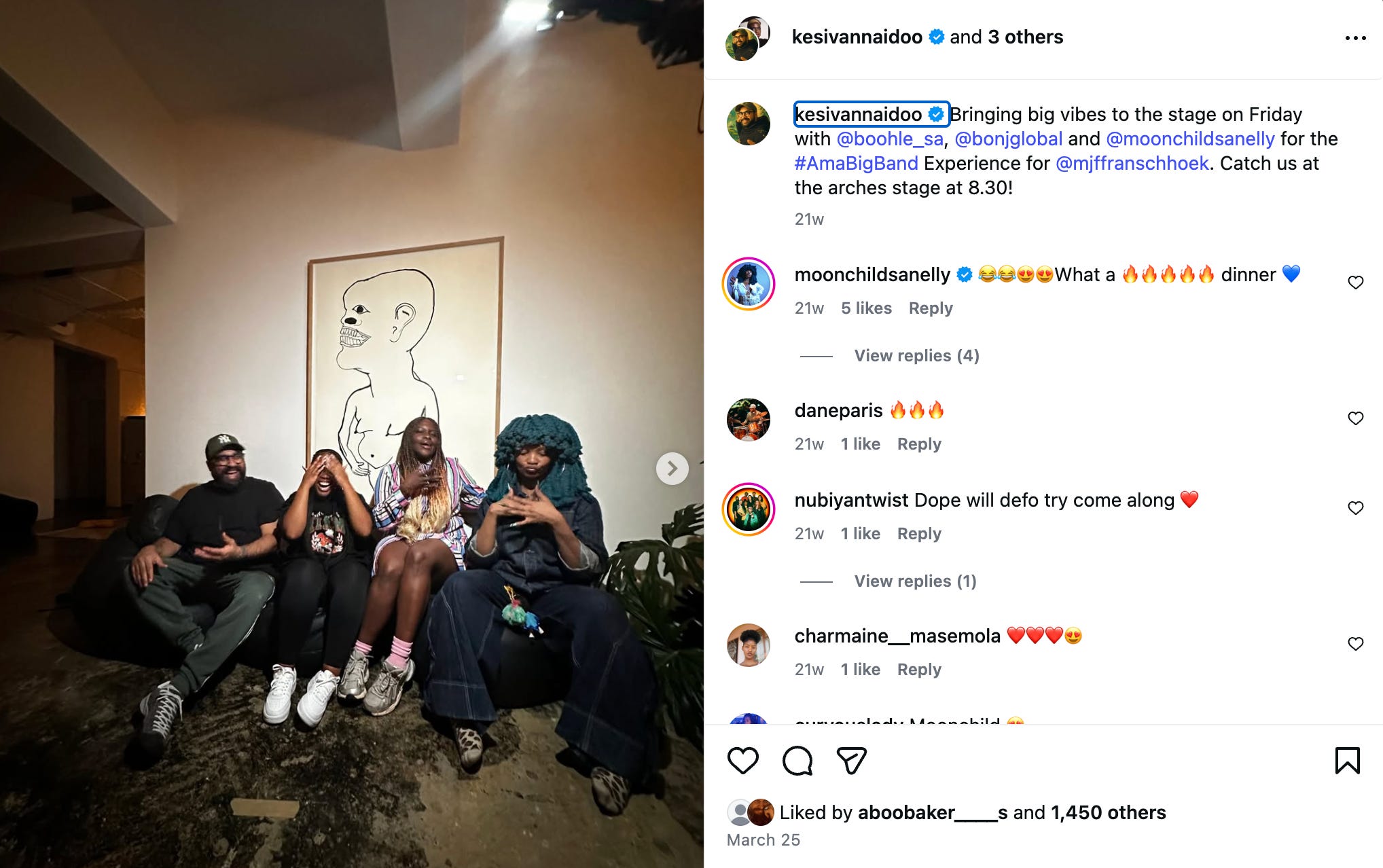
That said, he is not short of work. Naidoo’s Big Band project went on tour in South Africa in 2023, and his most recent gig before “We Dance at Home” was at the new Franschhoek Montreux Jazz Festival in the Boland region, where he debuted his AmaBigband concept, featuring Amapiano stars Bhoohle, BONJ and Moonchild Sanelly.
Next year Naidoo plans to complete a book and go on a pilgrimage to China to study Tai Chi and Daoist philosophy with one of the practice’s masters in the Wudang Mountains.
Something is fitting about the arc. Naidoo has spent much of his life moving farther from East London: to Johannesburg to learn from Mseleku, to Cape Town and its jazz community, to India to study more, to Boston and New York, and finally to Basel. His horizons have expanded with every move, and so has his music. He has absorbed things that could not have been learned at home, and he has become, inevitably, someone different from the boy his grandmother raised.
There is a particular challenge for a musician whose audience and horizons keep expanding: how to remain legible to the people who knew you before you left, and perhaps how to keep yourself legible to yourself. Naidoo’s music suggests the answer is not to stay put or worry too much about anything except the art. It is to travel, change, absorb, and return with what you have learned—while carrying your grandmother’s lessons about dancing, rhythm, and life, and Mseleku’s injunction to serve the music while having some fun with it.
Comments
Nothing yet. Say the first thing.
Sign in to join the conversation.