
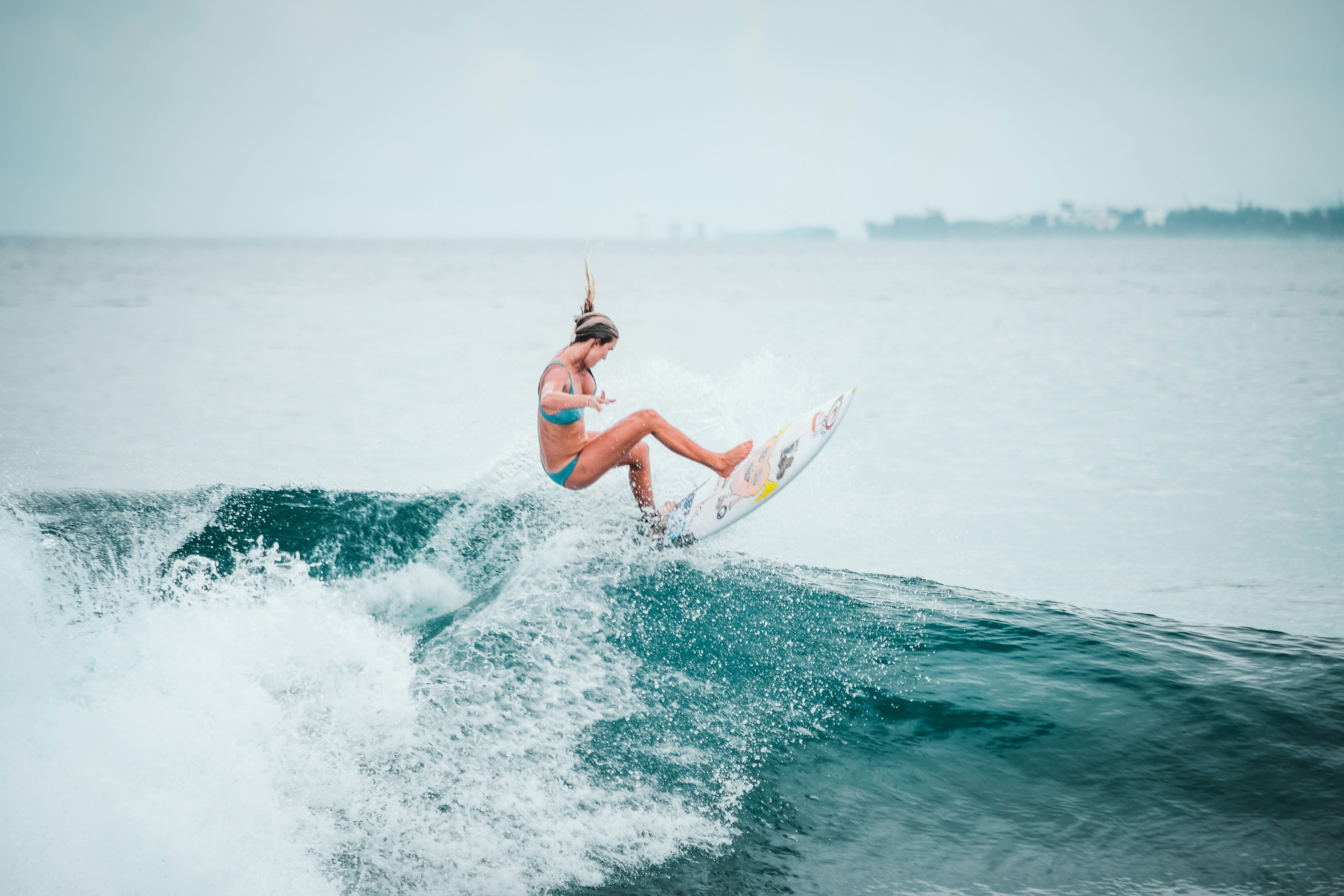
Photo by Anuk De Fonseka on Unsplash
For most of my life, I braced against life.
I thought this was my responsibility.
If I wanted a good life, I had to make it happen. Work harder. Think faster. Heal more. Anticipate problems. Make better decisions. Figure out what I was doing wrong and correct it.
Jump higher.
Run faster.
Be smarter.
I treated life like an obstacle course I had somehow entered without adequate preparation.
Then, through my healing work, I encountered the idea of Divine Design.
It’s hardly a new concept. Religions and spiritual traditions have been talking about divine plans, destiny and surrender for thousands of years.
But I had a problem with it.
I didn’t understand the trust part.
Trust the Divine Design.
Trust whom, exactly?
Some invisible higher entity had apparently designed my life, neglected to show me the plans, erased my memory and now expected me to trust that everything was proceeding according to schedule?
This seemed like an unreasonable governance structure.
And besides, what if the design was shit?
This possibility arrived slowly through the spiritual experiences I’ve had over the last few years.
What if Divine Design isn’t some external God’s plan for me?
What if it’s my own?
Not the design of this particular version of me, the human me sitting here trying to figure out what happens next.
I mean the larger consciousness I experience in journeys and healing sessions as my higher self.
What if, before dropping into this human experience, I had some understanding of what I was coming here to experience?
And then I arrived.
And forgot.
This isn’t something I can prove. I don’t know that we literally sit somewhere before incarnation with a celestial clipboard selecting childhood wounds and financial problems from a dropdown menu.
And I would never tell another person that they chose their illness, abuse, loss, war or suffering. I think spiritual ideas can become dangerous when we use them to explain somebody else’s pain to them.
But as a framework for my own life, this idea has changed something profound.
Because if I participated in the design, then perhaps life isn’t something being done to me.
Perhaps I’m inside an experience whose full intention I temporarily cannot remember.
I’ve done ayahuasca ceremonies where I consciously chose to enter an experience that I knew might be difficult.
I knew why I was there.
Healing. Learning. Exploration. Whatever the intention was at the time.
Then I drank the brew.
And somewhere along the way, the fact that I’d voluntarily signed up for this became considerably less interesting than the fact that I was nauseous, vomiting, exhausted and occasionally wondering why anybody in their right mind would do this voluntarily.
Ayahuasca can be tough.
There can be beautiful moments. Extraordinary moments.
There can also be moments when you would quite like the extraordinary moment to end now, thank you very much.
But imagine if, once the ceremony started, I completely forgot that I had chosen to do it.
I forgot ayahuasca existed.
I forgot drinking the brew.
I forgot my intention.
All I knew was that I was suddenly lying there feeling terrible while bizarre things happened to my consciousness.
I would probably conclude:
Something has gone terribly wrong.
But it hasn’t necessarily.
The nausea doesn’t become pleasant because I remember why I’m there.
The vomiting is still vomiting.
The difficult part remains difficult.
But it stops being evidence that the experience has gone wrong.
And recently I wondered:
What if human life is something like that?
Maybe that’s the veil of amnesia.
Maybe I came here intentionally and then forgot why.
And maybe forgetting is part of the experience.
I look at the life I’ve lived and, from the human perspective, there are plenty of things I would not have consciously ordered.
For years, every difficult period seemed to confirm that something was wrong.
I was behind.
I was failing.
I hadn’t healed enough.
I had made the wrong choice.
I wasn’t trying hard enough.
There must be something I hadn’t understood yet.
There must be another wound to clear, another modality to try, another insight to uncover, another version of myself I needed to become before life would finally work.
So I fought.
Not necessarily against the events themselves.
I fought life as it was.
I kept trying to force it into the shape I thought it was supposed to have.
And because I assumed it was my responsibility to make everything work, I became extraordinarily good at bracing.
This may be the biggest shift for me.
I used to treat difficulty as information.
If something hurt, stalled, collapsed or didn’t happen when I thought it should, I assumed I needed to fix something.
But if I entertain the possibility of Divine Design, my own divine design, the interpretation changes.
Maybe I don’t currently have enough information to know what this part is doing here.
Maybe I don’t have the aerial view.
Maybe I’m halfway through the ceremony, vomiting into a bucket, declaring the entire thing a catastrophic failure.
And maybe the part of me who chose to enter the ceremony knows something the part holding the bucket has temporarily forgotten.
This doesn’t mean I have to enjoy suffering.
It doesn’t mean I stay in situations that hurt me because Divine Design.
It doesn’t mean I stop going to doctors, making decisions, setting boundaries or changing things that aren’t working.
And it certainly doesn’t mean that every terrible thing that happens in the world should be explained away as somebody’s soul choice.
It means something much smaller and much more useful to me:
I can stop treating every difficult moment as proof that my life has gone wrong.
This part has been surprisingly difficult.
As I’ve begun trusting life more, I’ve become more relaxed about how it unfolds.
And sometimes - often - that feels... irresponsible.
Almost like giving up.
Because my old definitions were very clear:
Effort meant agency.
Vigilance meant responsibility.
Thinking meant intelligence.
Control meant safety.
Healing meant progress.
If I’m not constantly thinking about what to do next, am I doing enough?
If I’m not pushing, will anything happen?
If I’m not controlling the outcome, who is?
My old system hears trust the unfolding and apparently translates it as:
Excellent. You’ve decided to be idle and ruin your life.
But I’m trying to give surrender a chance.
And I keep reminding myself that surrender and resignation aren’t the same thing.
Resignation says:
Nothing I do matters.
Surrender says:
I don’t have to know everything in order to participate.
I can still choose.
I can still act.
I can still change direction.
I can still say no.
I can still work very hard when something calls for hard work.
I just don’t necessarily have to wrestle life to the ground first.
In some of my journeys, when I feel most connected to what I experience as my higher self, my head becomes very quiet.
And I love that state.
There isn’t the constant commentary.
The forecasting.
Rehearsing.
Analyzing.
Solving hypothetical problems.
Constructing seventeen possible futures and preparing contingency plans for all of them.
Our culture rewards thinking, and for good reason. Thinking is useful.
But I think I mistook incessant thinking for preparedness.
For me, overthinking was often an attempt to manufacture certainty.
If I could understand enough, anticipate enough, analyze enough, perhaps I could be better prepared.
Perhaps I could hurt less.
Perhaps I could finally get life right.
Underneath all that thinking was an assumption I didn’t even know I was making: I was on my own.
If I didn’t figure out my life, who would?
If I didn’t make things happen, what would?
I had to do something.
My mind had become the twenty-four-hour risk-management department for my existence.
Very Ivy League MBA of me.
I’m not firing it.
I just don’t think it needs to be CEO anymore.
I’ve been thinking about what trust would actually look like in practice, and the closest image I have is surfing.
A surfer isn’t passive.
She watches.
Responds.
Balances.
Adjusts.
Uses skill.
Makes decisions.
Sometimes she catches the wave.
Sometimes she falls spectacularly into the water.
But she doesn’t control the ocean.
She doesn’t stand on the board screaming:
WAVE, THREE METERS TO THE LEFT PLEASE.
The ocean moves.
She meets it.
Maybe that’s the relationship with life I’m learning.
Not passivity.
Participation without domination.
The skill isn’t controlling the ocean.
It’s developing enough trust in myself to meet whatever wave comes.
And perhaps this is where my years of healing look different to me too.
I thought I was healing so I could finally have the life I wanted.
Maybe, at least partly, I was healing so I could stop fighting the life that was trying to happen.
I wish this realization came with access to the blueprints.
It didn’t.
I still don’t know what happens next.
I don’t know whether every event in my life was literally designed before I arrived here. I don’t know exactly what incarnation is or how much choice consciousness has before entering one.
I know what I’ve experienced.
I know that in altered states I have encountered consciousness that feels larger than my ordinary human identity.
In hypnotherapy we call it the higher self.
And increasingly, I experience the intelligence I once thought of as something alien to me as something that is also me.
That changed the question.
Instead of:
Can I trust some mysterious higher entity with my life?
I find myself asking:
Can I trust myself even when I don’t remember what I intended?
And strangely, the answer is beginning to be yes.
Because if I really entertain the possibility that a larger multidimensional version of me chose to come here, do I really think she would’ve designed a shitty life for herself?
Because if I really entertain the possibility that a larger multidimensional version of me chose to come here, do I really think she would’ve designed a shitty life for herself?
Or might she have had intentions I can’t currently see from inside it?
Maybe I spent decades fighting the life I had designed because I’d forgotten I was the designer.
Maybe I’ve been judging the design by how comfortable it is rather than by what it makes possible.
For now, I’m experimenting with not assuming that every unexpected wave is a mistake.
I still paddle.
I still choose.
I still fall off things occasionally (yes, I am talking about the Warsaw scooter accident), although I’m hoping to limit that particular form of spiritual instruction going forward.
But I’m trying to stop ordering the ocean around.
Maybe I can trust the person who chose to get into it.
Me.
Empty head.
Full heart.
Ride the wave.
Thanks for reading! This post is public so feel free to share it.
Comments
Nothing yet. Say the first thing.
Sign in to join the conversation.