

https://unsplash.com/@shvedkriss
A few weeks ago, I fell off a scooter in Warsaw.
I got a concussion and a few stitches. I missed my flight to France, where I was supposed to go for work, and spent the next few days lying in a dark hotel room.
There wasn’t much to do besides replay what had happened.
And the more I replayed the evening, the less interested I became in the actual fall.
I started noticing everything that happened before it.
I had met a friend, a former student of mine, for the evening. I had an early flight the next morning and what I really wanted was to stay in and rest.
But I went.
We spent about five hours together. For four and a half of them, we talked about him.
His life. His problems. Things he was going through.
I listened. Supported. Encouraged. Asked questions. Did what I am very, very good at doing.
I didn’t even get around to telling him about the project I’d been working on.
I drank wine with him even though I didn’t want to drink. I wanted to be on the same wavelength.
And then, at the end of the evening, he wanted to take scooters back.
I didn’t.
But it would be faster.
I was in no rush.
But he was.
So I went along with that too.
And then I fell.
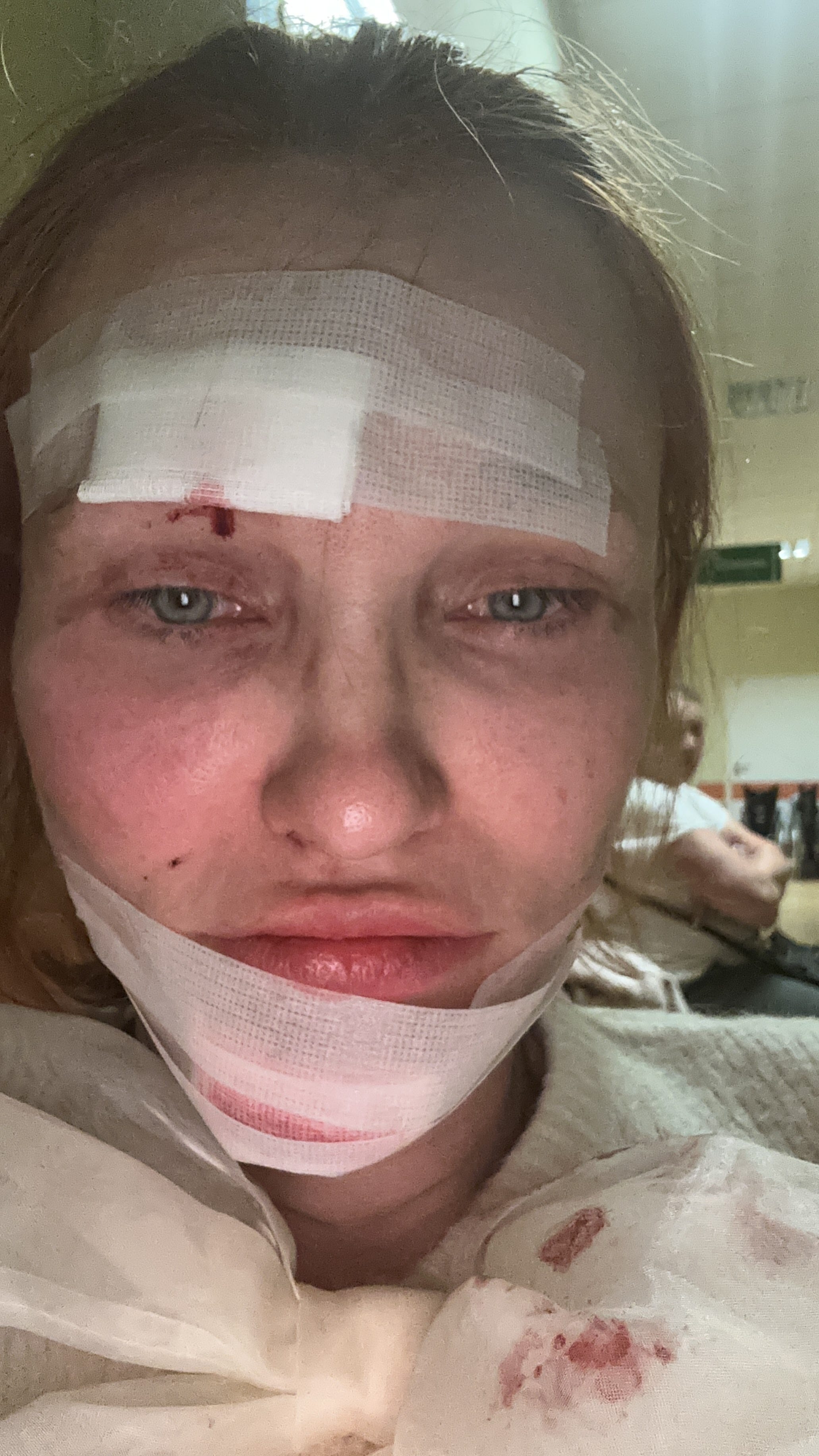
I could have enthusiastically chosen the scooter and fallen anyway.
I’m not suggesting that the Universe threw me onto a Warsaw pavement because I failed to honor my boundaries.
But lying in that dark hotel room afterwards, I could suddenly see something I hadn’t been able to see while I was doing it.
At almost every opportunity that evening, I had overridden myself.
I wanted to stay in.
I went out.
I wanted the conversation to include me.
I made it about him.
I wanted to rest.
I drank.
I didn’t want the scooter.
I got on it.
None of these decisions seemed particularly consequential in the moment.
Together, they showed me an entire relationship I had with myself.
And I recognized it because I’d been doing some version of this my entire life.
I’ve always tried to be extraordinarily generous in relationships.
Not necessarily with money.
With attention.
I see people.
I see their potential. I encourage them. I tell them what is extraordinary about them. I listen for hours. I help them think through problems. I motivate them. I accommodate. I rearrange myself.
I have done this in friendships.
I’ve done it with men I’ve loved.
I’ve done it professionally.
And I genuinely care about people, so for a very long time I thought this was simply one of my better qualities.
I still think generosity is one of my better qualities.
But lying in Warsaw, I saw something underneath some of it that was considerably less comfortable to look at.
There was a bargain.
Not a conscious one.
I wasn’t thinking:
I’ve listened to you for four hours, so you now owe me 3.7 units of affection.
But somewhere underneath all that giving was a frightened calculation:
If I see you deeply, maybe you’ll see me.
If I make you feel valuable, maybe I’ll become valuable to you.
If I support you, maybe you’ll support me.
If I’m useful enough, perhaps you’ll need me.
And if you need me...
maybe you won’t leave.
I was trying to become indispensable.
That’s different.
Being lovable leaves another person free.
They don’t have to choose me.
They don’t need my advice. They don’t need me to solve their problems. They don’t require me to regulate them, motivate them or make their lives work.
They can survive perfectly well without me.
And yet they choose me.
I realize as I write this that I barely understand that kind of love.
It exists outside the world I learned to live in.
What would someone love me for if I wasn’t useful to them?
I genuinely don’t know.
I. Don’t. Know.
And perhaps that’s why usefulness became such an effective substitute.
I couldn’t guarantee that somebody would love me.
But maybe I could become too valuable to lose.
Except, of course, it never actually created the security I was looking for.
A friend of thirty years still dropped me one day.
Men still left.
People took everything I offered and never became curious about me.
Sometimes I responded by giving even more.
Be more understanding.
More supportive.
More encouraging.
More accommodating.
See them more clearly.
Love them harder.
Surely eventually there would be a return on investment.
And there is something both funny and heartbreaking about realizing that I may have spent decades trying to hedge the risk of abandonment through superior customer service.
It didn’t work.
Because there was a fatal flaw in the strategy.
The strategy I developed to prevent abandonment required me to abandon myself first.
I’m beginning to understand where some of this may have come from.
I knew both of my parents loved me.
My mother was a pediatrician. When I was sick as a child, I desperately wanted her to stay home with me. But she had patients. She had responsibilities.
She went to work.
I would beg her to stay.
The adult me understands why she couldn’t always do that.
The child knew something much simpler:
I need you, and you’re leaving.
My father was an alcoholic.
He loved me too.
I remember him coming to one of my kindergarten recitals.
He came late and drunk.
I don’t know whether anyone else noticed.
I did.
I remember being terrified and ashamed and embarrassed. I wanted him there, and at the same time I was angry with him.
I understand that anger differently now.
He had come for me.
But he hadn’t been able to skip the drink for me.
And then he left.
A child doesn’t understand addiction.
She doesn’t understand adult responsibilities or the complicated lives of parents.
She makes meaning out of what happens.
And I seem to have made something like this:
People can love me and still leave.
And, somewhere underneath that:
Maybe if I mattered enough, they would stay.
For years, I blamed my father for my feelings of unworthiness.
Daddy issues. Abandonment. Case closed.
Only recently have I begun to see that his alcoholism may have landed on soil that was already prepared for it.
The circumstances with my parents were completely different.
But perhaps my child’s system heard a similar message from both:
Love doesn’t necessarily make someone stay.
So I found another strategy.
Become necessary.
After I fell, my friend came to see me at the hotel.
I don’t think I’ve ever felt more alone in someone’s company.
What I wanted was empathy.
Instead, he kept telling me the road had been even. There was nothing there. There had been no reason for me to fall.
I remember the emotional coldness of it.
Emotional Siberia.
And again, I want to be precise about responsibility.
He didn’t make me get on the scooter. I made that decision.
I also don’t blame myself for falling.
Accidents happen.
His response to my injury belonged to him.
But lying there afterwards, I could finally see all the places that evening where I hadn’t responded to myself either.
I couldn’t control whether he cared for me.
But I could see how many times I had ignored what I wanted in order to maintain the connection.
That was mine.
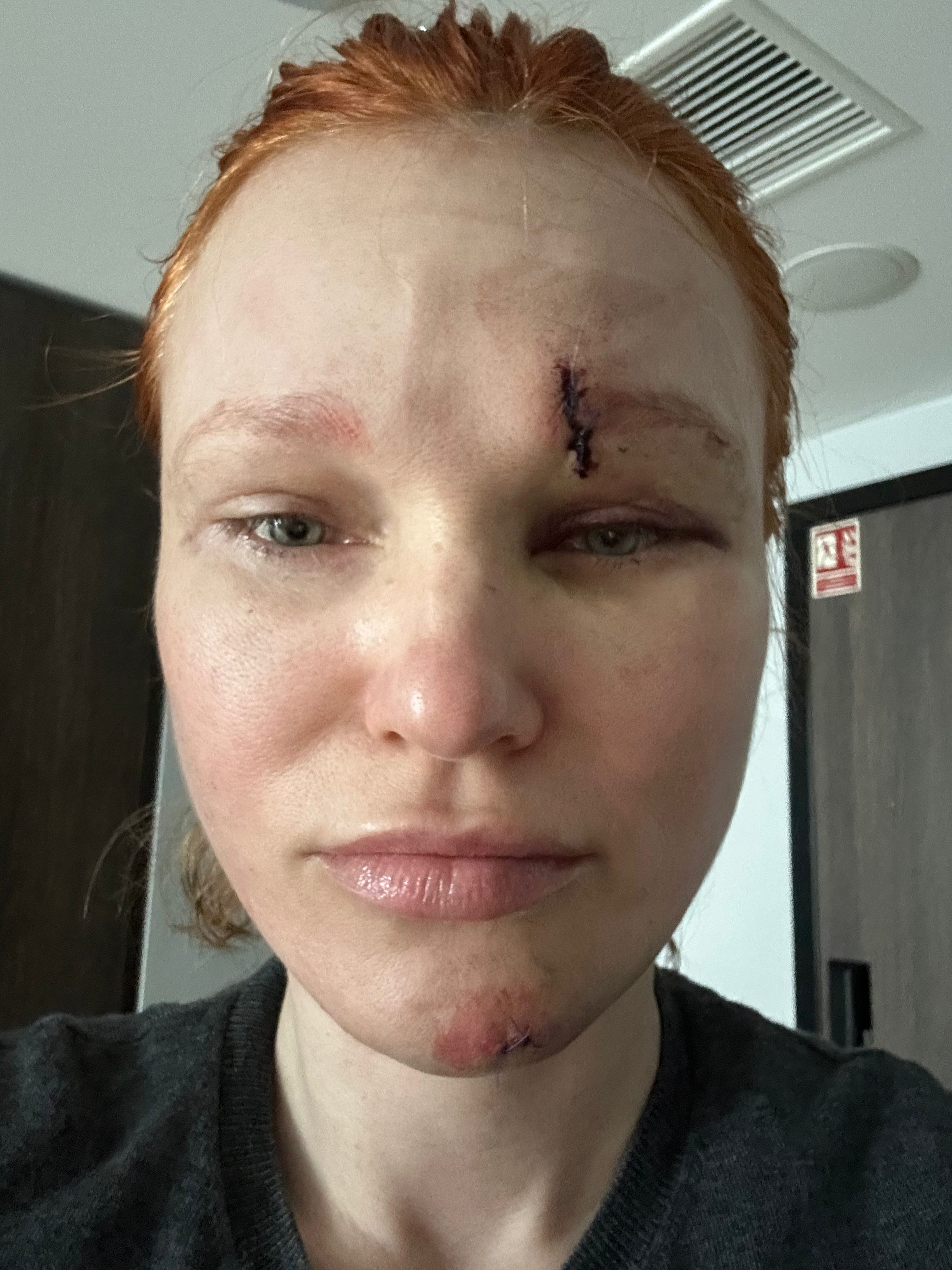
There’s another way I’ve started recognizing the strings: resentment.
For years, I would feel hurt, disappointed, angry or betrayed when people didn’t show up for me the way I showed up for them.
After everything I’ve done for you.
I may not have said it out loud, but I felt it.
And sometimes the other person genuinely had behaved badly. Overgiving doesn’t absolve anyone else of selfishness, indifference or taking advantage of what was freely available.
But I’m beginning to see that sometimes my resentment was also telling me something about my own giving.
I had given something that looked unconditional while quietly hoping for a return.
Attention for attention.
Support for support.
Seeing you in exchange for being seen.
Loyalty in exchange for security.
The other person may never have known there was a contract.
I barely knew there was a contract.
And perhaps that’s why the disappointment could be so intense. I wasn’t simply disappointed that somebody hadn’t reciprocated.
Somewhere inside me, the entire strategy was failing.
I did everything. Why wasn’t it enough?
That’s the feeling I know so well.
So now I’m interested in resentment rather than ashamed of it.
Maybe sometimes resentment is the receipt from self-abandonment.
It tells me to look back at the transaction and ask:
What did I give that I didn’t really want to give?
What was I hoping to receive in return?
And maybe most importantly:
What did I need that I never actually asked for?
That’s uncomfortable.
But it’s also much more useful than telling myself I need to become even more generous, forgiving or evolved.
I don’t want to become less generous.
I love seeing people. I love encouraging them. I love helping. I love being there for people I care about.
I also don’t want to start keeping an emotional spreadsheet to make sure everybody has returned precisely the amount I’ve invested.
That would be the same transaction with better accounting software.
I want to know whether the giving is free.
Would I still want to give this if I knew it couldn’t buy me security?
Would I still listen?
Would I still help?
Would I still rearrange myself?
Sometimes the answer will be yes.
And sometimes, perhaps, I’ll discover that what looked like generosity was a frightened part of me saying:
Please see me.
Please value me.
Please need me.
Please choose me.
Please don’t leave me.
I don’t want to shame her for that.
She thought she’d found a way to make love safe.
She just didn’t know that love couldn’t be made safe that way.
I asked myself recently:
If I weren’t useful, what would someone love me for?
I couldn’t answer.
I still can’t.
My mind immediately wants to produce a list.
My intelligence.
My humor.
My curiosity.
My courage.
But that’s just another résumé.
Another attempt to explain why I qualify.
The truth is much more uncomfortable.
I don’t understand how someone can love me without utility.
I don’t understand how I can be completely unnecessary to somebody’s survival, success or emotional regulation, and still be precious to them.
I can understand being needed.
Being freely chosen is much harder.
So that’s where I am.
I’m holding the part of me who doesn’t understand this.
I’m not trying to convince her that she’s lovable.
I’m not giving her affirmations.
I’m not explaining unconditional love to her.
She’s heard the explanations.
She doesn’t speak that language yet.
Maybe she doesn’t need another lesson.
Maybe she needs an experience.
For now, I’m trying something much smaller.
When I notice myself preparing to leave myself in order to secure somebody else’s love, approval or need for me, I’m trying to stay.
I cannot guarantee that another person won’t leave.
I cannot make myself useful enough to eliminate that possibility.
I cannot engineer love so perfectly that nobody gets to choose against me.
But perhaps I can slowly make one promise believable:
I won’t leave myself to make you stay.
And maybe that’s where I begin to learn what love without strings actually feels like.
Thanks for reading! This post is public so feel free to share it.
Comments
Nothing yet. Say the first thing.
Sign in to join the conversation.