
As a parent and educator, my primary goals were to foster a lifelong love of learning and reading within our family. We achieved this through experiential learning—regularly visiting museums, national parks, libraries, and cultural institutions. Seeing my now-adult children continue to seek out these type of excursions on their own confirms that we built a solid foundation for them.
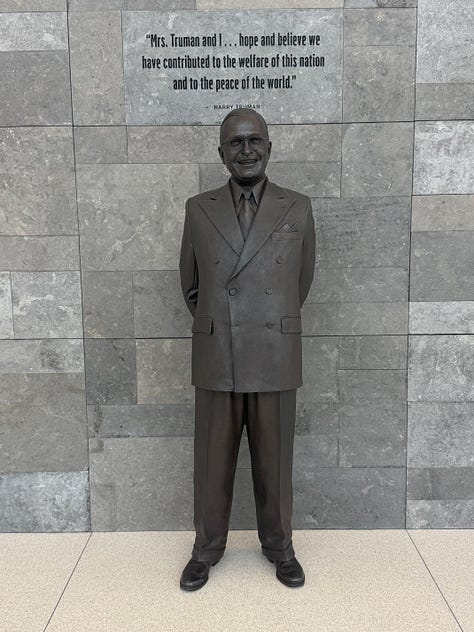
However, reflecting on their upbringing and the current state of affairs in the United States, I realize I could have been more intentional about preparing them for active participation in a democracy. While I prioritized voting in every election and even brought them into the booths, and while our national park visits instilled a deep appreciation for the environment, I missed a key educational opportunity. Until a recent trip to Kansas City, where my husband suggested we visit the Harry S. Truman Presidential Library, I had never stepped foot in one. I now see that touring presidential libraries is a vital, yet overlooked, way to help children engage with the history and responsibilities of our democracy.
For those unfamiliar with presidential libraries in the United States, this system was established in 1939 by President Franklin D. Roosevelt. At the dedication of his library, FDR noted:
"To bring together the records of the past and to house them in buildings where they will be preserved for the use of men and women in the future, a Nation must believe in three things. It must believe in the past. It must believe in the future. It must, above all, believe in the capacity of its own people so to learn from the past that they can gain in judgement in creating their own future."
It wasn’t until 1978 with the Presidential Records Act that all Presidential documentation was property of the National Archives and Records Administration. These libraries partner with Presidential foundations in a variety of models. Prior to FDR, most materials from previous presidents are housed in the Library of Congress. Visit the National Archives site for more information on Presidential Libraries including a list of the existing ones.
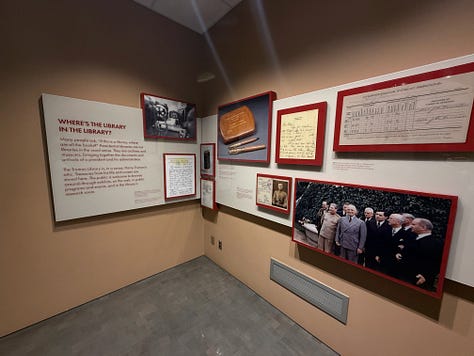
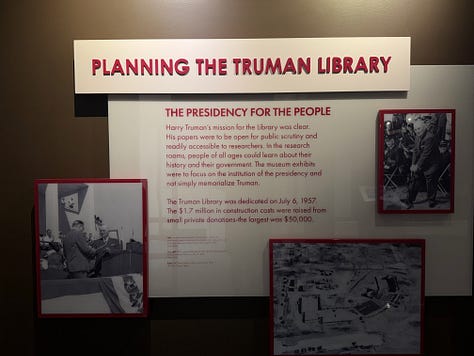
The Harry S. Truman President Library and Museum was a pleasant surprise for me on a recent road trip to Kansas City. I found it to be highly interactive, informative and an important reminder of the multitude of difficult problems he faced during his presidency. The museum covers his early life, presidency, and post-presidency life and does not shy away from controversial topics such as the atomic bomb the United States dropped on Japan. In terms of interactivity, the exhibits were designed for the public to explore. For example, in a section on a haberdashery owned by Truman, one could pull open various drawers to see artifacts. There were also opportunities for visitor to submit reflections and vote on topics via computers at various stages of the museum experience. There was also a section of Truman’s story devoted to democracy.
Some surprising facts: Truman was not a college graduate, but he was widely read. Also, FDR died approximately 80 days into his fourth term, and Truman had only met with him twice during that period of time. Also, upon returning to Independence, MO, after his last term ended, he spent a great deal of time at his library as he lived nearby. He often gave tours and interacted with the public. And, the S as his middle initial didn’t stand for a specific name.
While at the Truman Library and Museum, I noticed that there was a teacher conference happening. I posted about it in this valuable Facebook group for teachers interested in professional development opportunities, and it turns out other group members were actually participating in the conference. They raved about it. If you are an educator, make sure to check out the websites of the existing Presidential Libraries to see if they offer any educational programs.



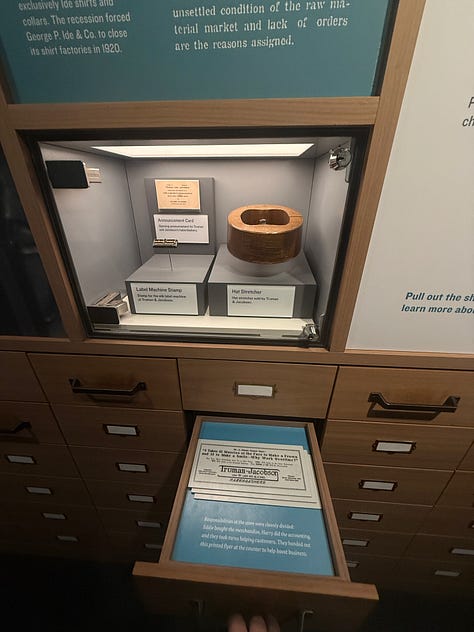
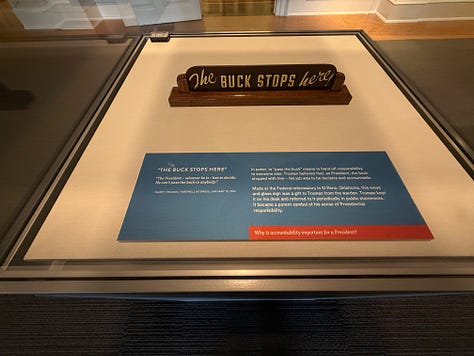
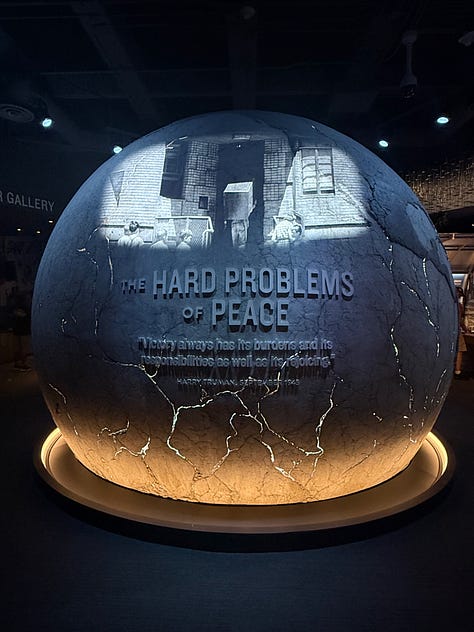
I also happen to visit the Barack Obama Presidential Center two weeks after my first visit to a Presidential Library. The mission of the Obama Foundation is as follows:
Our mission at The Obama Foundation is to inspire, empower, and connect people to change their world. We seek to build an an active democratic culture where people are equipped and motivated to make change in the communities where they live, work, and play.”
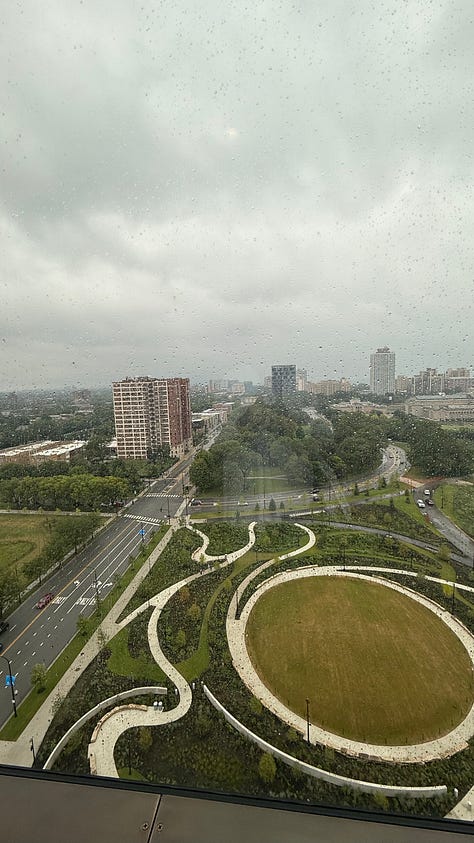
The campus of the Obama Presidential Center has a significant footprint in Jackson Park just south of the Museum of Science and Industry in Chicago. This community center includes an indoor basketball court, playground, fruit and vegetable garden, a restaurant, and a Chicago Public Library branch in addition to an 8-story museum building. This tower overlooks the South Side of Chicago and stands as a pillar of hope, progress, and possibilities.
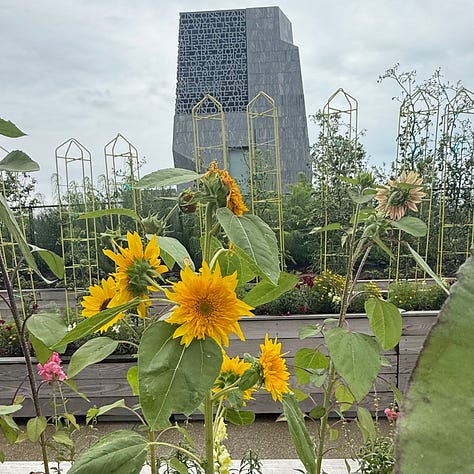

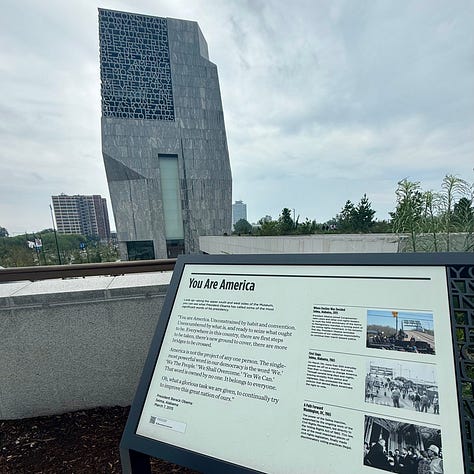

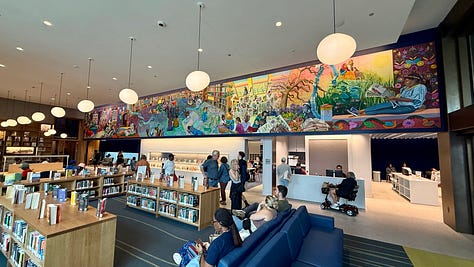

The museum itself starts on Level 2: Toward a More Perfect Union and focuses on Michelle’s and Barack’s early lives along with an overview of community activism. The Presidential campaign is also covered here. A video screen column playing electrifying clips extends from Level 2 to Level 5.


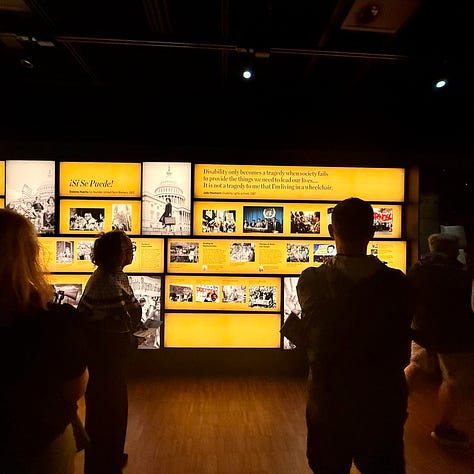
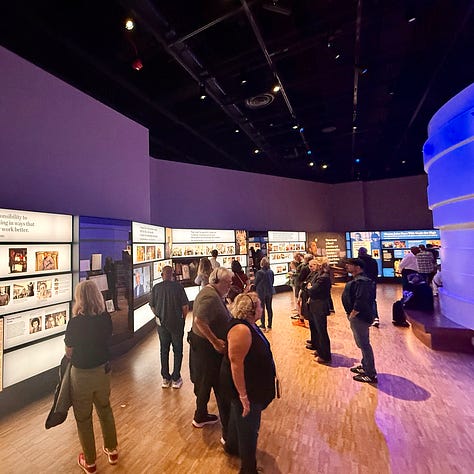
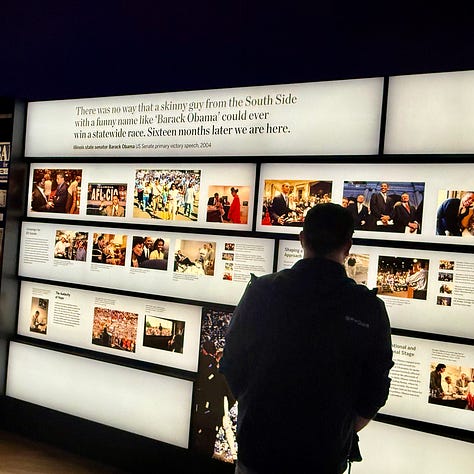


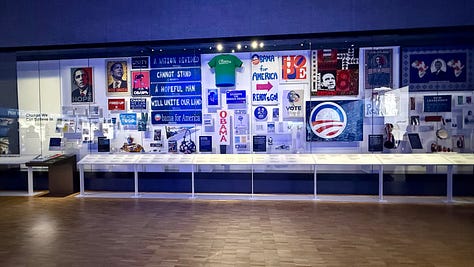
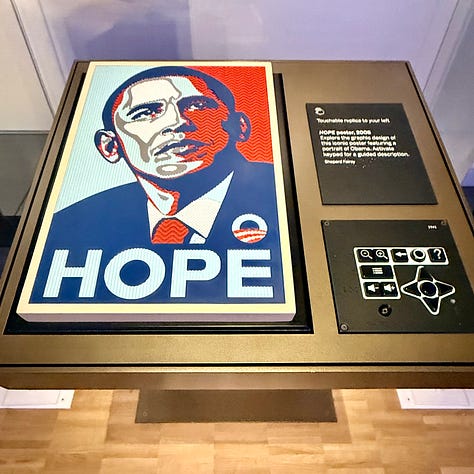
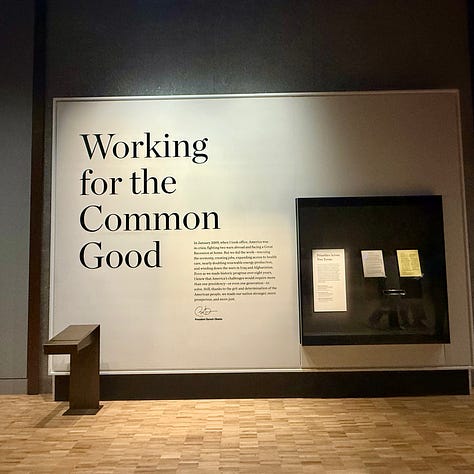
On Level 3: Working for the Common Good, a room is devoted to democracy, just like in the Truman Library, and the remainder of the floor is focused on the issues and accomplishments of the Obama presidency. There is a secluded video presentation on gun violence that I particularly found moving as it featured families of victims of Sandy Hook and other tragedies.
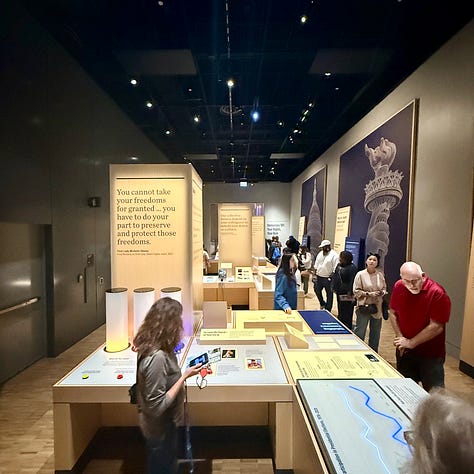
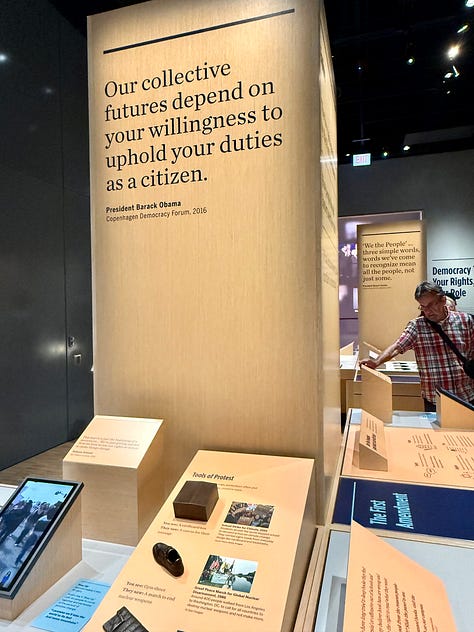
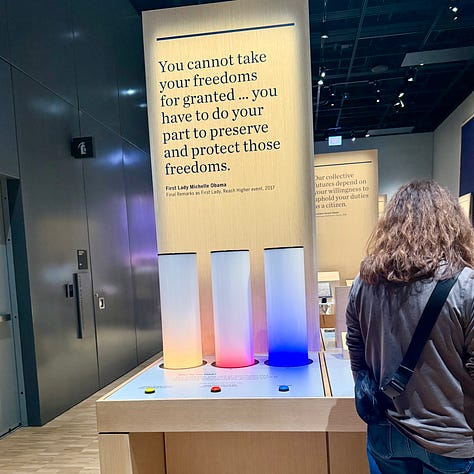
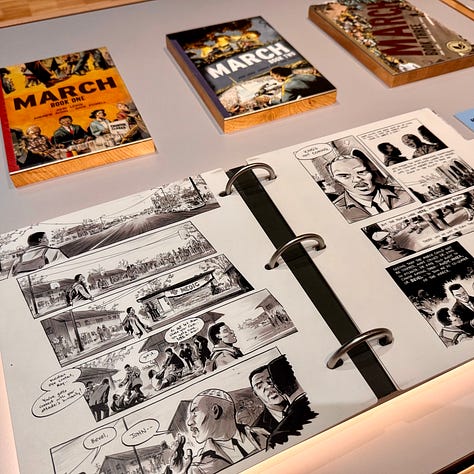


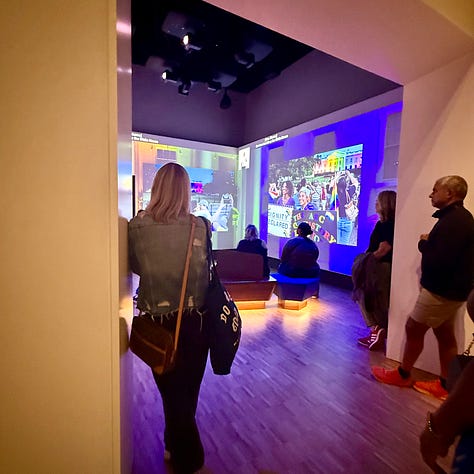
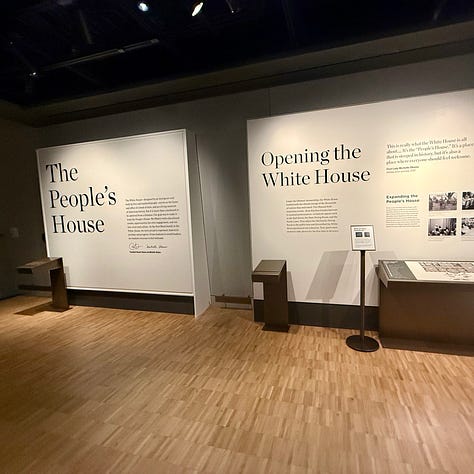
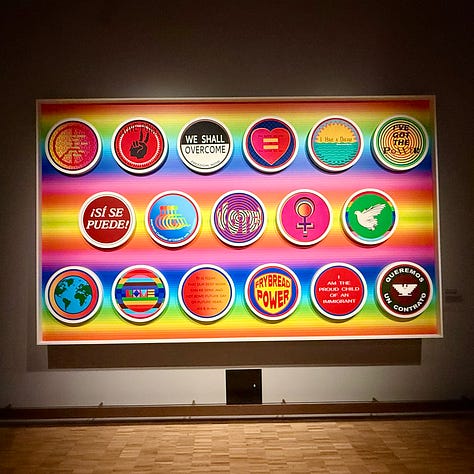
Moving up to Level 4: The People's House, the focus is on life in the White House, complete with a replica of the Oval Office where one can have their photograph taken. This floor includes exhibits on Mrs. Obama’s careful and deliberate use of fashion and the role of sports and the arts in White House initiatives.
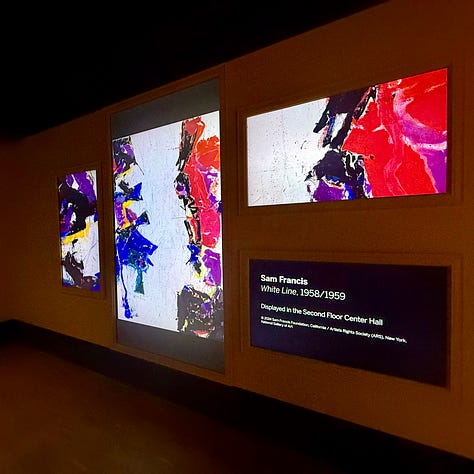


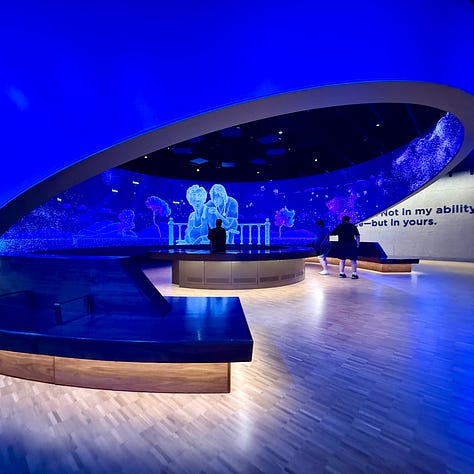
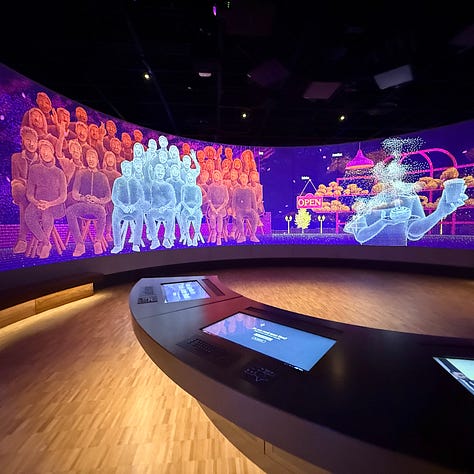
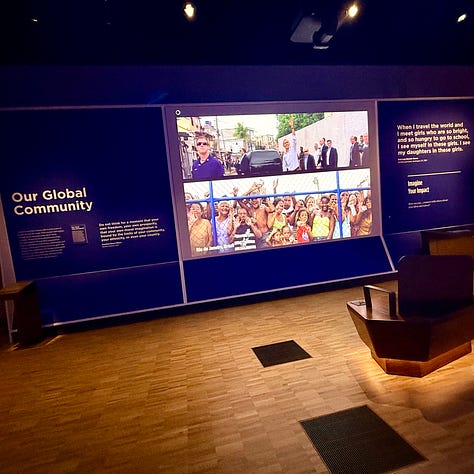
On Level 5: We the People, I gasped when I glimpsed this glowing and mesmerizing art piece, All Together by Jules Julien. The videos below do not do it justice. Level 5 is devoted inclusion and equality as well as science at the White House.

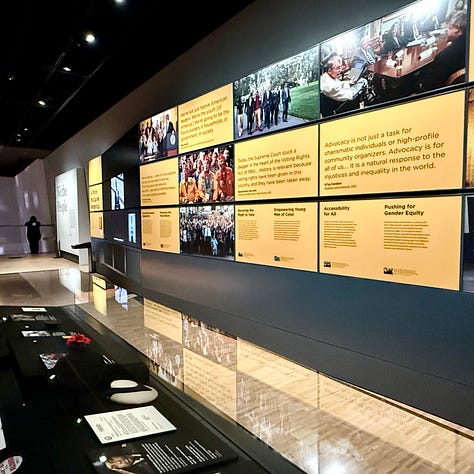

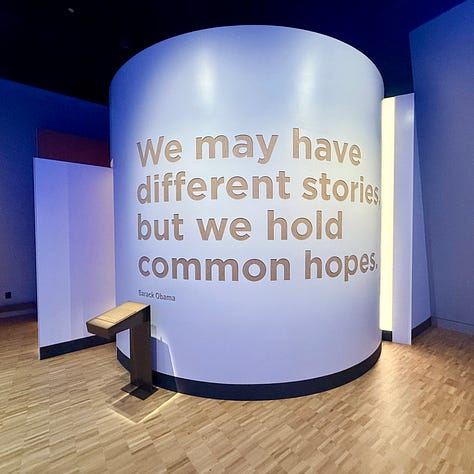
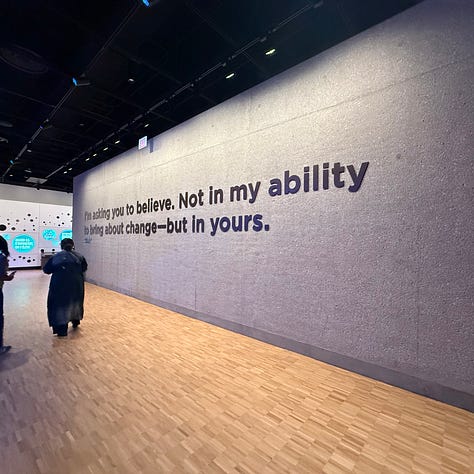
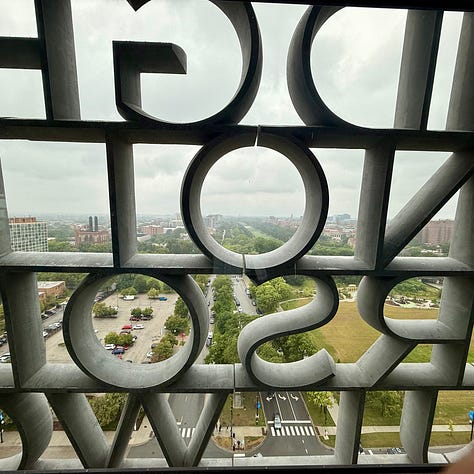
I suspect levels 6 and 7 are reserved for staff offices, so visitors proceed directly by elevator to Level 8 to experience the Nelson Mandela Sky Room. This space offers stunning artwork and panoramic views of Chicago through the concrete letters of the building’s exterior—a perfect conclusion to a journey through President Obama’s formative years, his presidency, and his core ideals.


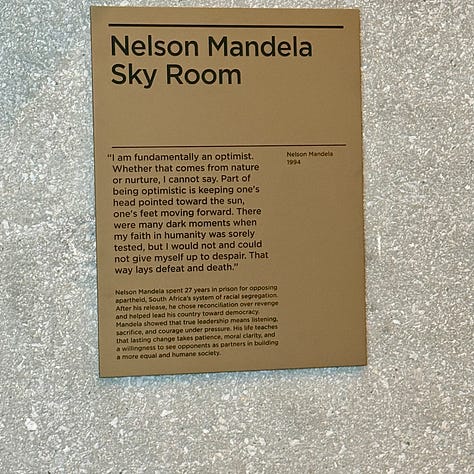
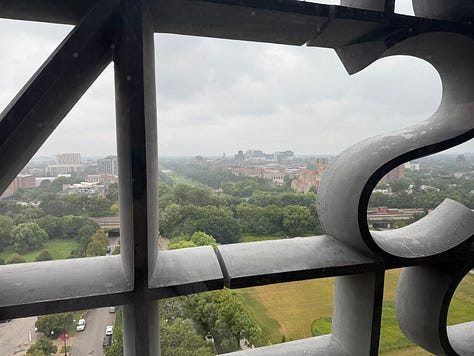
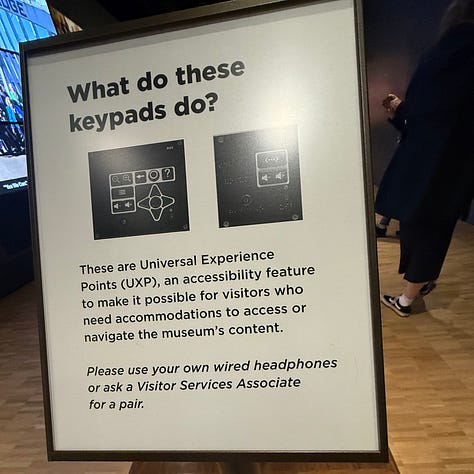
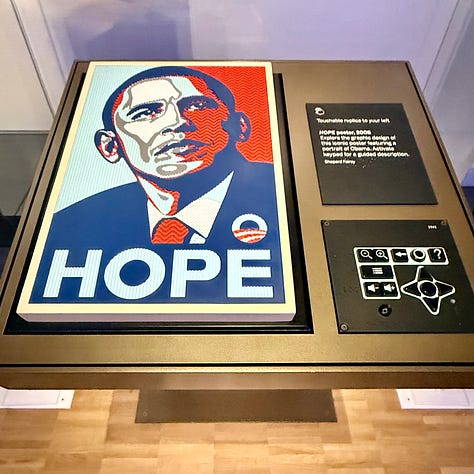
A few final tips for your visit to the Obama Presidential Center: it is truly awe-inspiring. I recommend setting aside more than two hours to fully explore both the grounds and the museum exhibits. The center’s timed-entry ticketing system is excellent—it effectively staggers visitors, ensuring a comfortable, crowd-free experience as you move through the galleries. Finally, I was particularly impressed by the site’s commitment to accessibility; every exhibit features Braille descriptions, raised-line images, and portable Braille floor maps to ensure an inclusive experience for all guests. You can read more about their extensive accessibility efforts here.

As an Illinois resident, I’m proud to have the Obama Presidential Center in Chicago and look forward to frequenting this vibrant community space. I am eager to see how the Center evolves and expands its public programming, particularly for students and educators.
Looking ahead, I’m already planning my next presidential library visit: the JFK Presidential Library and Museum in Boston. Conveniently, my annual trip to the ISTE Live conference will take me to that same city next year—and perhaps this time, I’ll invite my children to join me for the experience.
Comments
Nothing yet. Say the first thing.
Sign in to join the conversation.