
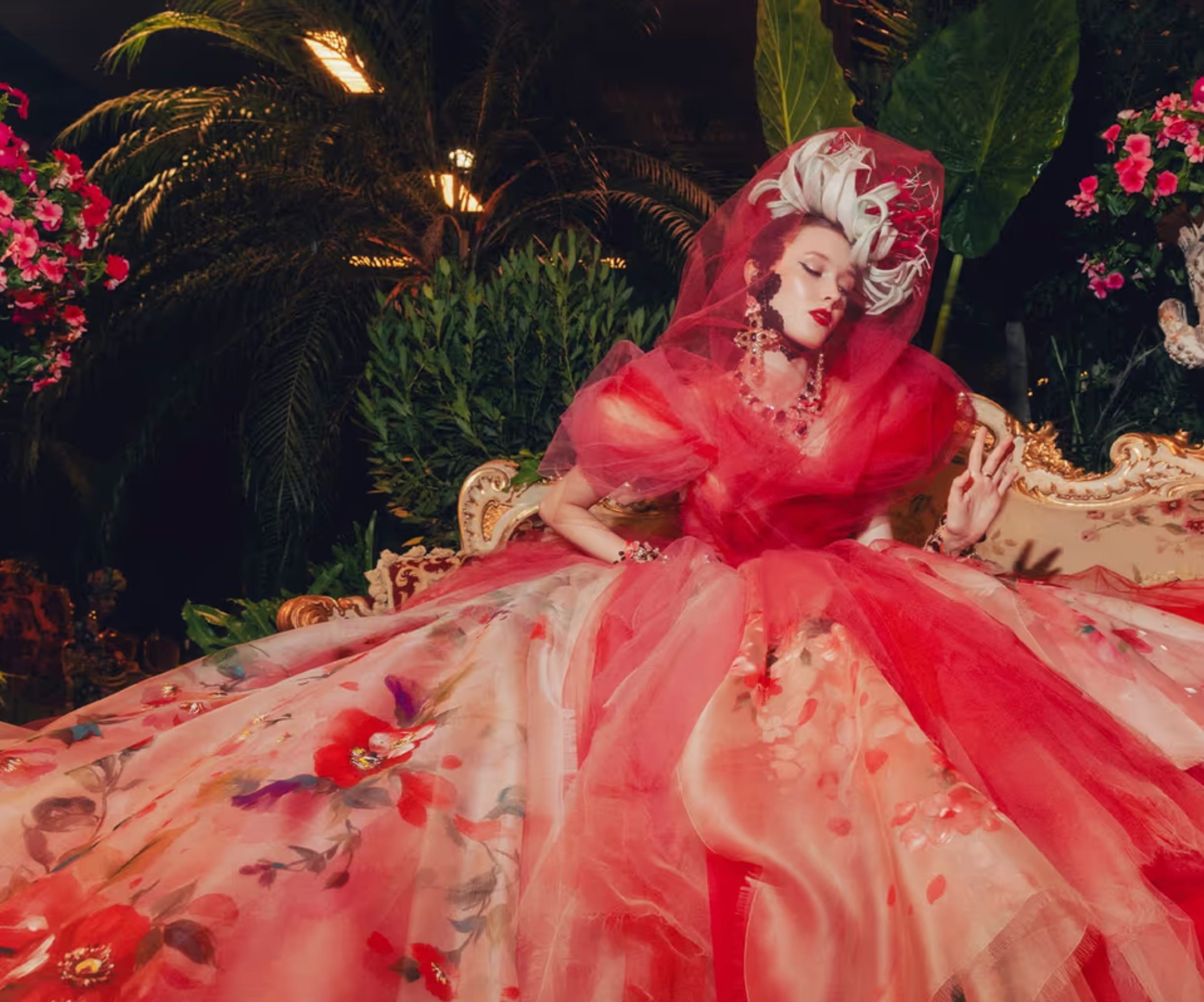
There are certain works of art that seem to bypass analysis altogether. They do not ask to be understood so much as they ask to be remembered, and the experience of encountering them is strangely disorienting because nothing before you is familiar, yet something within you responds as though it has known this language all along. I have spent much of my life trying to understand why some works leave me intellectually impressed while others seem to rearrange something much deeper. Beauty alone has never been enough to explain it. The pieces that stay with me do something else entirely. They awaken a feeling that I am not discovering anything new, but returning to something I have already known.
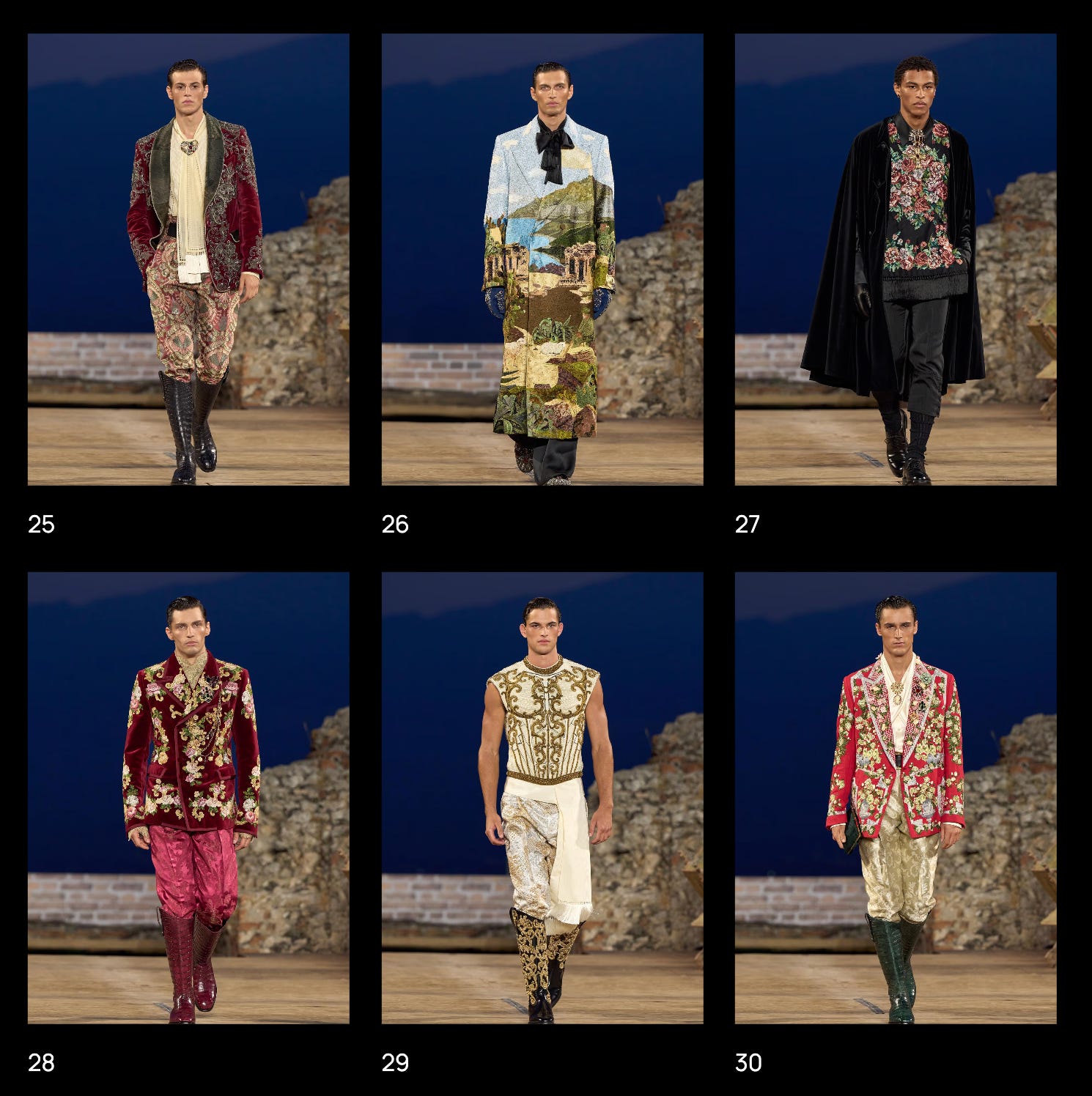
That happened to me this week while watching the Dolce & Gabbana Alta Moda and Alta Sartoria collections from Taormina, Sicily.
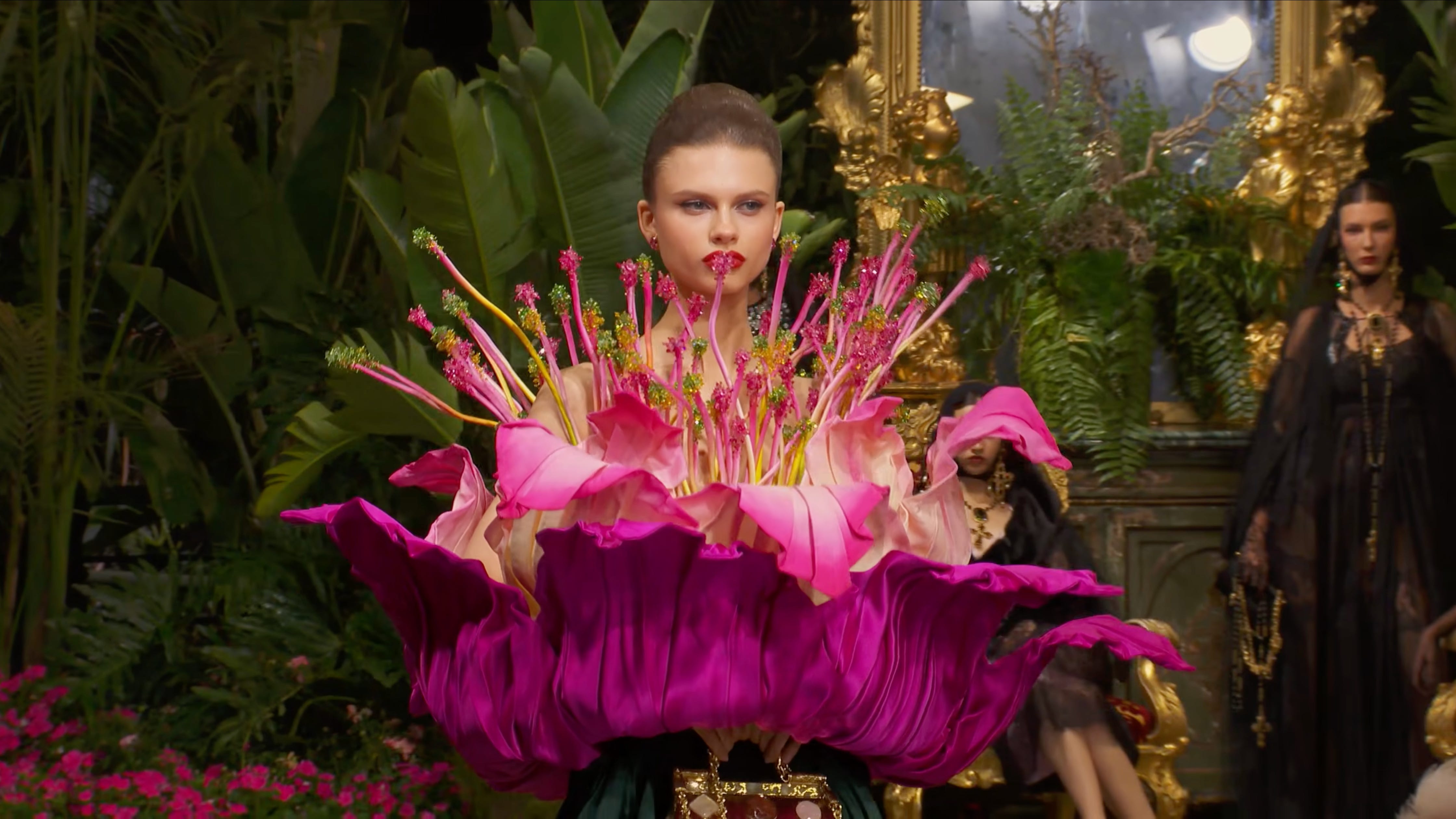
I expected extraordinary craftsmanship. I expected garments that blurred the line between fashion and art, embroidery so intricate it bordered on impossibility, and the unapologetic maximalism that has become inseparable from Dolce & Gabbana’s visual language. What I did not expect was to find myself unexpectedly emotional, trying to understand why a fashion show had reached into parts of my memory that I had not consciously visited in years.
The answer, I eventually realized, had very little to do with fashion.
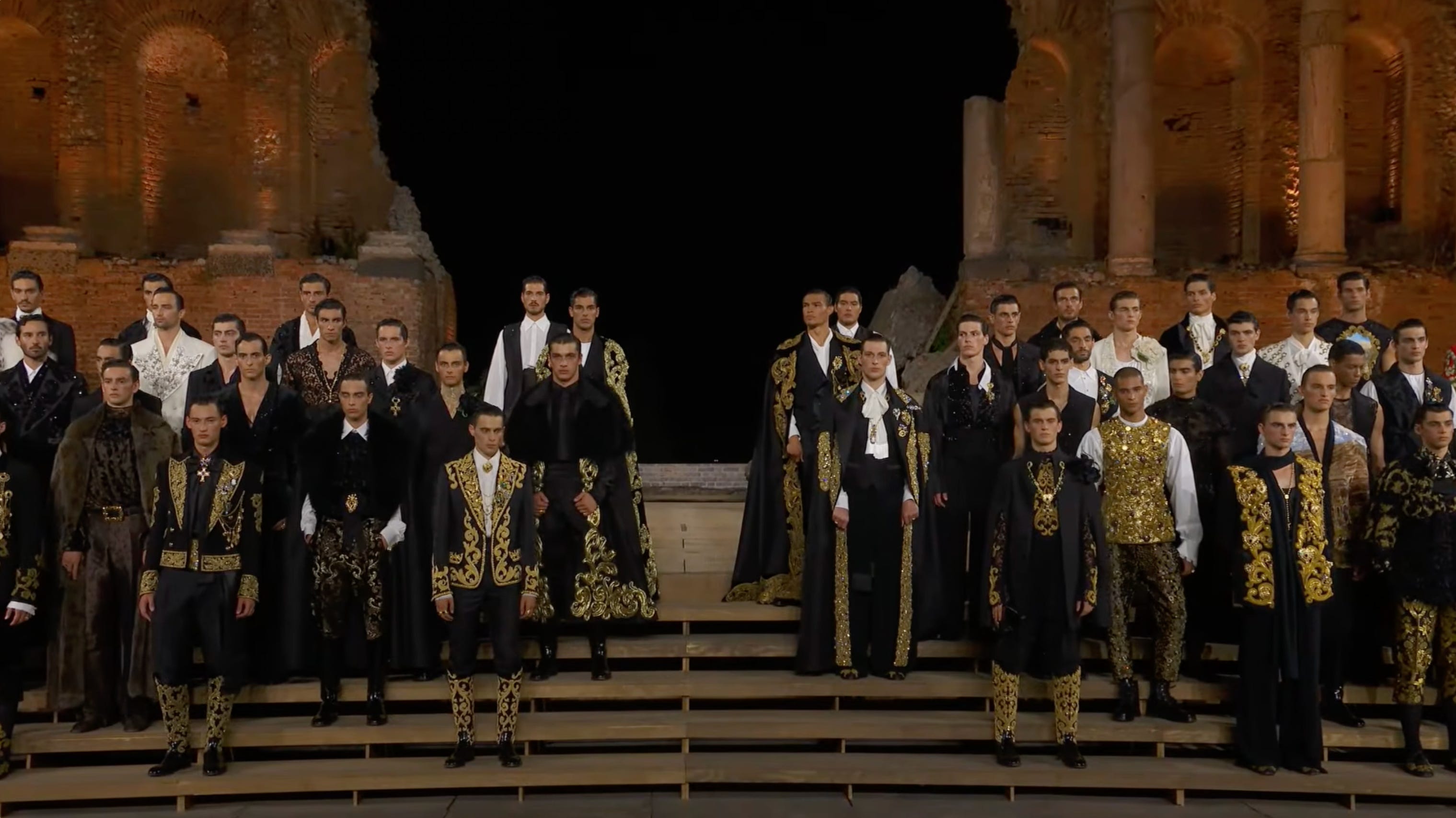
The women’s collection unfolded beneath Tchaikovsky, moving from the 1812 Overture into selections from The Nutcracker. The men’s collection began not with a runway, but with the opening scene from Pietro Mascagni’s Cavalleria Rusticana, performed inside the Ancient Greek Theatre overlooking the Ionian Sea. Before a single model appeared, opera had already established the emotional landscape in which the collection would exist. Later, a Catholic procession descended slowly through the amphitheater, participants carrying rosaries with their heads bowed in reverence before the evening concluded with the soaring Intermezzo from Cavalleria Rusticana.
Nothing about those choices felt ornamental. The music was not accompanying the clothing, nor was the theater functioning as a picturesque backdrop. Opera, architecture, ritual, and fashion were all participating in the same conversation, each carrying centuries of history into the present. Rather than borrowing from one another as aesthetic references, they seemed to reveal what had always connected them, inviting the audience into a cultural memory that felt less observed than experienced. Watching that unfold unexpectedly transported me somewhere entirely different.
I found myself remembering a moment from college that, in retrospect, quietly shaped almost everything I have gone on to do. I was studying Communication while moving through an eclectic liberal arts education, spending my days between media production, drama, philosophy, art history, and language studies. Until then, I had approached each discipline as though it occupied its own intellectual territory. Then, somewhere in the middle of the first semester of my junior year, something shifted. I don’t remember the lecture or the assignment that sparked it. Memory has a habit of preserving revelations while quietly discarding logistics. What I remember is walking across campus, and looking up at the sky with the sudden realization that none of those disciplines were actually talking about different things at all.
Each possessed its own vocabulary and its own medium, yet beneath those differences they were engaged in the same enduring pursuit: understanding what it means to be human. The philosopher wrestled with questions the playwright embodied through character. The painter explored ideas the novelist translated into language. Communication was not separate from storytelling any more than storytelling was separate from history. They were all participating in the same conversation, each revealing another facet of the human experience.
I don’t think I had the language for that realization then, but I have spent the rest of my life following it.
Once I recognized those invisible relationships, they seemed to appear everywhere. Architecture began speaking to music. Literature illuminated design. Cities felt like living works of theater, carrying stories within their streets that could not be understood through history alone. The boundaries I had once accepted between artistic disciplines dissolved until they felt less like categories than different dialects spoken by the same civilization.
That, more than anything else, is what I recognized in Dolce & Gabbana’s shows in Taormina.
The collections were not borrowing from opera, Catholic ritual, mythology, or Sicilian history as aesthetic references intended to make beautiful clothing appear more sophisticated. They understood that these traditions already belonged to one another because they had emerged from the same cultural imagination. Opera was not decorating fashion any more than the ancient theater was decorating the opera. Music, architecture, craftsmanship, ritual, history, and fashion became different expressions of the same inheritance, each enriching the others without asking to become the center of attention.
I suspect part of what I was experiencing was also deeply personal.
As someone with Italian ancestry, there are aspects of these collections that felt less like cultural references than emotional lineage. Long before I began helping people give shape to ideas through publishing, design, and creative work, I had spent 20 years inhabiting many of these artistic languages myself—through growing up studying dance, choir, musical theater and some opera—long before I ever had words for why they mattered. Those experiences were never simply extracurricular activities. They became the way I learned that music, movement, architecture, costume, lighting, silence, and story are never separate disciplines but different expressions of the same human longing.
Hearing Tchaikovsky beneath the Alta Moda collection wasn’t simply an inspired curatorial decision; it awakened memories of having lived inside that music myself. Watching Cavalleria Rusticana unfold before Alta Sartoria carried the same feeling. These weren’t artistic references I recognized intellectually before I recognized them emotionally. They belonged to a part of me formed years ago in rehearsal halls, backstage, and onstage, which is perhaps why they reached me long before I had the words to explain why.
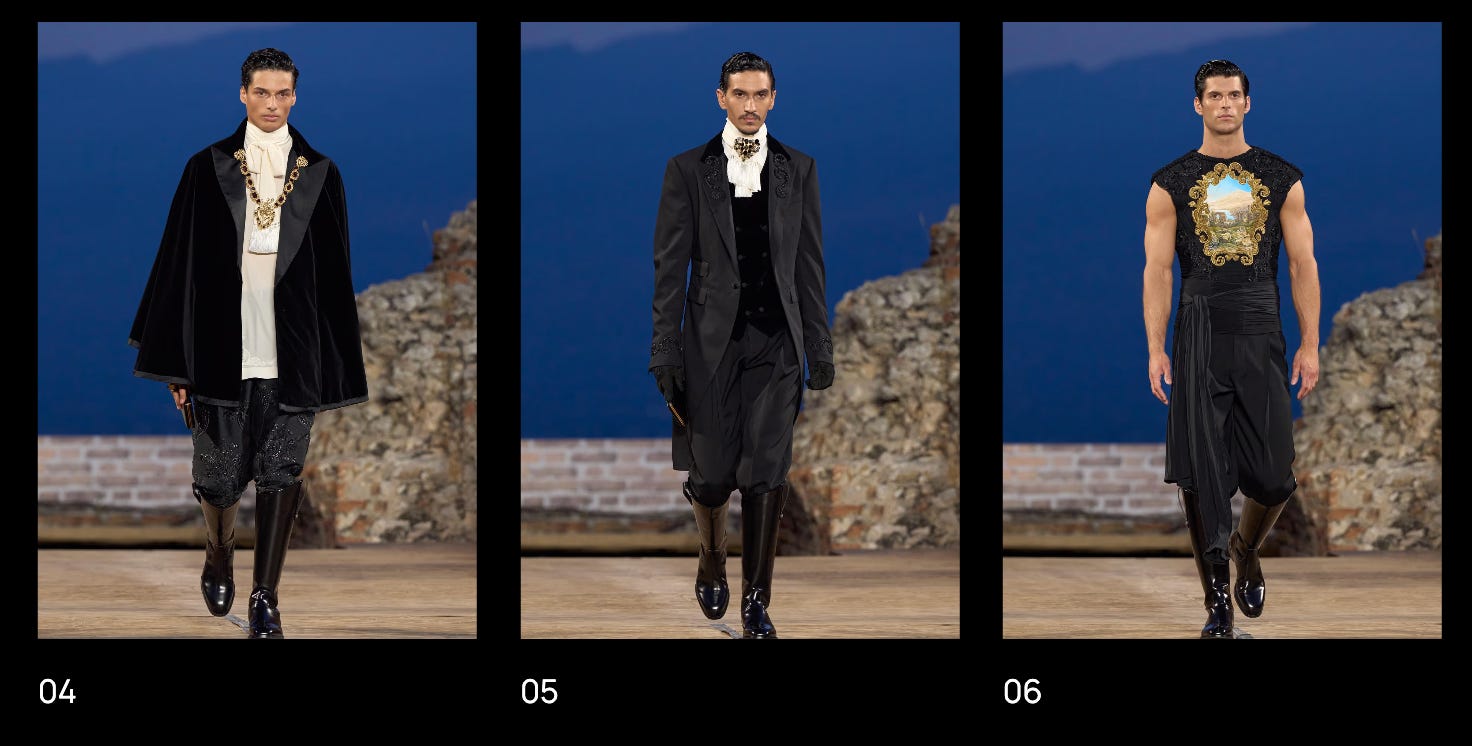
Since streaming these shows into my living room, a phrase has continued returning to me: emotional ancestry.
We tend to think of ancestry as something biological, measured through names, places, and family trees, but I have come to believe we inherit emotional languages as well. Music, ritual, architecture, craftsmanship, and stories shape us long before we have the vocabulary to explain why they matter. The greatest works of art do not always introduce us to something entirely new. Sometimes they awaken something that has been quietly waiting within us all along.
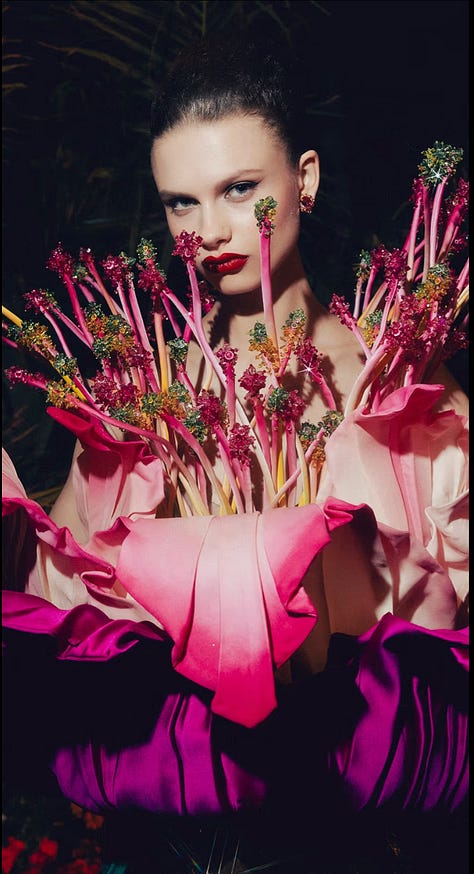
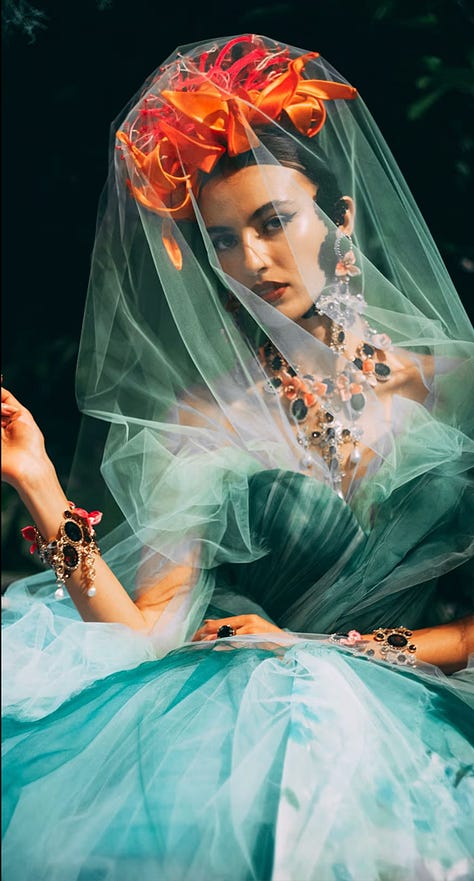


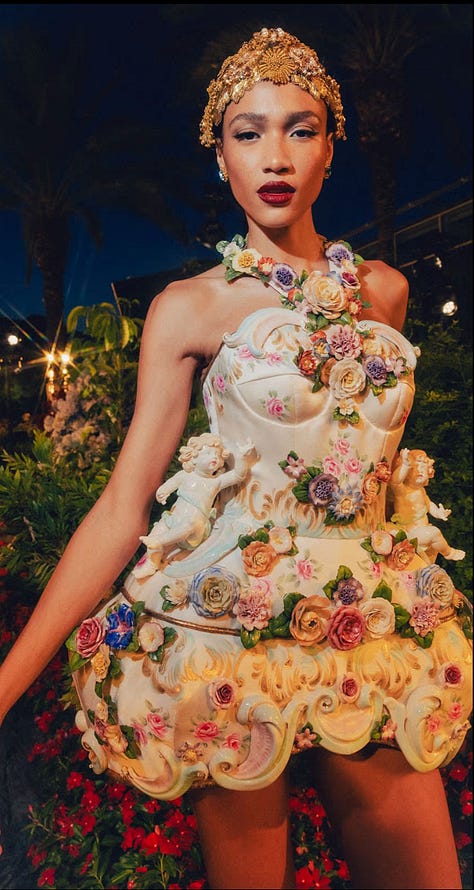

Through processing what I saw within these collections, I have realized that memory alone wasn’t what moved me. It opened the door to another realization, one that had far less to do with opera or fashion than with the kind of life I hope to build.
The image that has remained with me is not a particular gown or a favorite look from either collection. It is the quiet composure of the people wearing them. The women stood in garments so elaborate they seemed to belong somewhere between a cathedral and a garden, while the men appeared in velvet, brocade, and tailoring executed with extraordinary precision. Everything surrounding them was expressive, theatrical, and unapologetically ornate, yet the people themselves remained remarkably restrained. They never seemed interested in competing with the beauty around them because they understood they were participating in it.
That tension has stayed with me because it gave shape to something I have been learning, often imperfectly, for much of my adult life. Restraint is often mistaken for suppression when it is really an act of intention. It does not ask us to feel less deeply. It asks us to steward those feelings carefully enough that they deepen our judgment rather than dictate it. Somewhere along the way, I stopped believing authenticity required expressing every thought the moment it arrived. Increasingly, authenticity has come to feel less like unfiltered expression and more like discernment.
Parenthood has only deepened that understanding. Every day Dan and I are helping two small people learn how to navigate emotions that often feel much bigger than they are, and in doing so we find ourselves learning the same lesson alongside them. Our hope is not that they become less emotional. We hope they always remain curious, compassionate, expressive, and alive to the beauty and heartbreak of the world. What we are trying to teach them is that restraint is not the opposite of emotion. It is one of the ways we honor it. It creates the space between feeling and action, between reaction and intention, and in that space is where character quietly begins to take shape.
The same principle has quietly reshaped the way I think about creative work. The older I become, the more I am drawn to people whose confidence creates space for others rather than competing with them. The collaborations and partnerships that have brought me the greatest joy have rarely been defined by the loudest voices or the strongest personalities. They have been built on trust, generosity, humility, curiosity, and the shared conviction that the work deserves to remain the center of attention. Increasingly, those are the people we hope to spend our lives building alongside.
That understanding has quietly reshaped the way I approach every project. Whether I am editing a magazine, helping an organization articulate its purpose, or writing an essay like this one, the responsibility feels remarkably similar. The work is not to simplify complexity until it becomes easily consumable, but to preserve its depth while making it generous enough for someone else to enter. Distillation, at its best, reveals essence rather than removing it.
I think that is what moved me so profoundly watching the collections in Taormina. Neither show asked opera to become less operatic, history to become less historical, or ritual to become less sacred in order to make itself more accessible. Instead, each trusted that beauty could still ask for patience, contemplation, and reverence in a culture increasingly organized around speed and immediacy. That kind of confidence feels increasingly rare, and deeply necessary.
Perhaps that is what I have been trying to articulate all along. The more I create, the more I have come to believe that every act of creation is also an act of stewardship. Whether we are artists, parents, leaders, or simply people trying to leave the world a little more beautiful than we found it, we are constantly deciding what deserves to be carried forward, what deserves to be protected, and what deserves to be passed on.
When I first began writing, I thought this essay was about fashion. Then I thought it was about opera, or Italy, or memory. I understand now that it is really about the responsibility of making beautiful things without losing sight of the truths that made them beautiful in the first place. The most enduring work rarely asks us to admire its originality. It asks us to recognize something we already knew, carrying it carefully enough that someone else might remember it too.
*all of the images and videos in this essay are screen captures from DolceGabbana.com.
Comments
Nothing yet. Say the first thing.
Sign in to join the conversation.