
What if the most meaningful work we do is measured not only by what we produce, but also by the atmosphere we create around us?
For my entire life, I’ve been deeply attached to my grandparents’ home in Connecticut. The same is true of the house I grew up in in San Antonio, even though my parents no longer live there. In recent years, particularly since my grandmother’s passing, I’ve begun to understand how much those attachments were shaped by creative legacy and by the way these spaces held us.
These homes were not remarkable because they were formally designed or assembled all at once, but because they evolved over time. A patchwork of creative finds, personal history, and instinctive choices, shaped by point of view rather than trend. In resisting what was current, they became quietly timeless — and in that way, inadvertently trendsetting.
There was an instinctive attention to tone and rhythm. A sense of care that did not need to be announced. Life unfolded with intention, but without performance.
Only later did I understand what that way of living offered.
It formed an internal sense of value that did not rely on external measurement. A capacity to notice and enjoy small moments the outside world does not reward or quantify. A steadiness shaped by repetition and presence, rather than recognition.
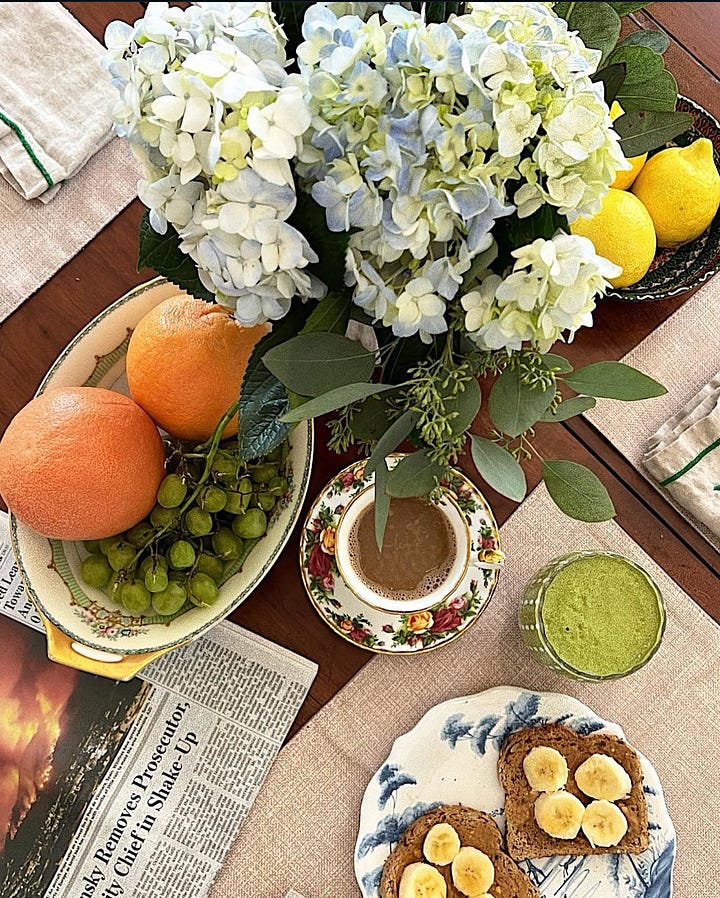
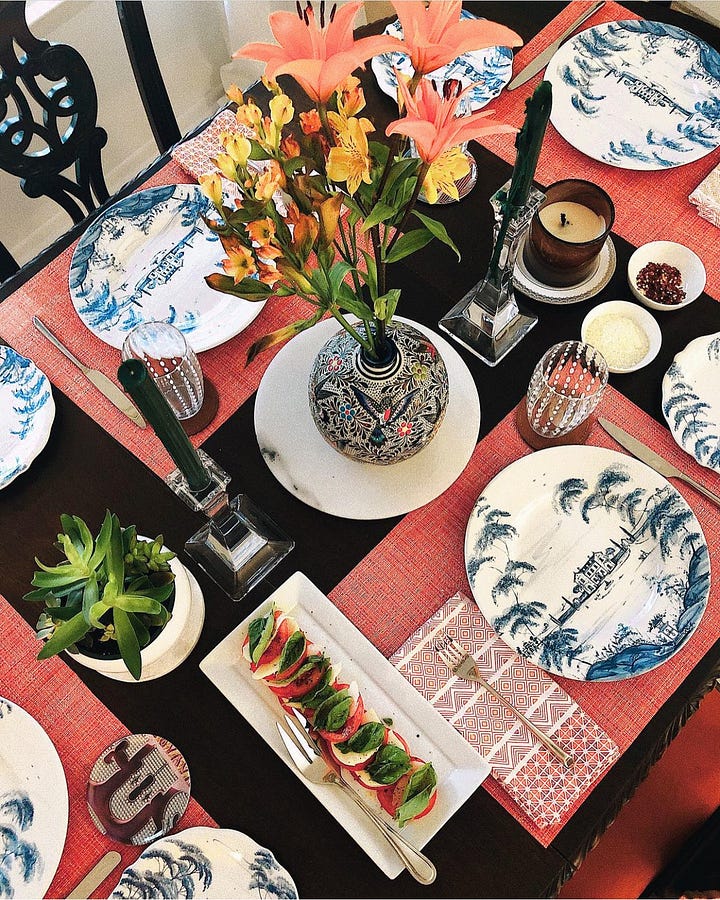
Since leaving the traditional workplace ten years ago, I have been tending a different kind of practice. What I later came to call Life Is Art began as a way to steady my nervous system and make space to create full time. That year, I was newly married, learning how domestic life and creative life might unfold side by side rather than in competition with one another. Much of my work has happened from home ever since.
Over time, I found myself paying attention not only to the work of creative figures, but to the way they lived. Designers, artists, and cultural leaders whose output felt inseparable from their daily rhythms. I noticed how they structured their days, how they moved between work and retreat, how beauty extended beyond the object and into the atmosphere of their lives.
This sensibility was never foreign to me. My grandmother and my mother lived this way instinctively. A household was run. Meals were made. Creative projects took shape alongside responsibility. Life moved forward with care, even when it appeared ordinary from the outside. None of the women in my family are ordinary.
Motherhood, however, tested my relationship to this inheritance. When I first became a mother, the blurring of lines felt unsettling. At times unavoidable, at times resisted. I tried to reassert boundaries between work and home, convinced that separation was the only path to balance and creative output. Now, with two young children, it has become clear that balance is not the goal. Coexistence is.
The only way this season works is by allowing the layers to braid together. Much of my work still happens at a desk. But just as much arrives in the in-between moments. Ideas surface while stepping away to change a diaper, tidy a room, make dinner, or bake something new. Attention shifts, then returns. The work continues because it is carried forward by living itself.
This realization feels especially “in vogue” now, as tributes to fashion giant Valentino Garavani continue to pour in after his passing today in Rome, at the age of 93. Again and again, what people return to is not only the beauty of his clothes, but the way he inspired others to move through the world. His legacy is spoken of as much in terms of atmosphere as achievement. The tone he set. The attention and extravagance he brought to daily life. The example he offered in how to live with beauty, intention, and restraint.
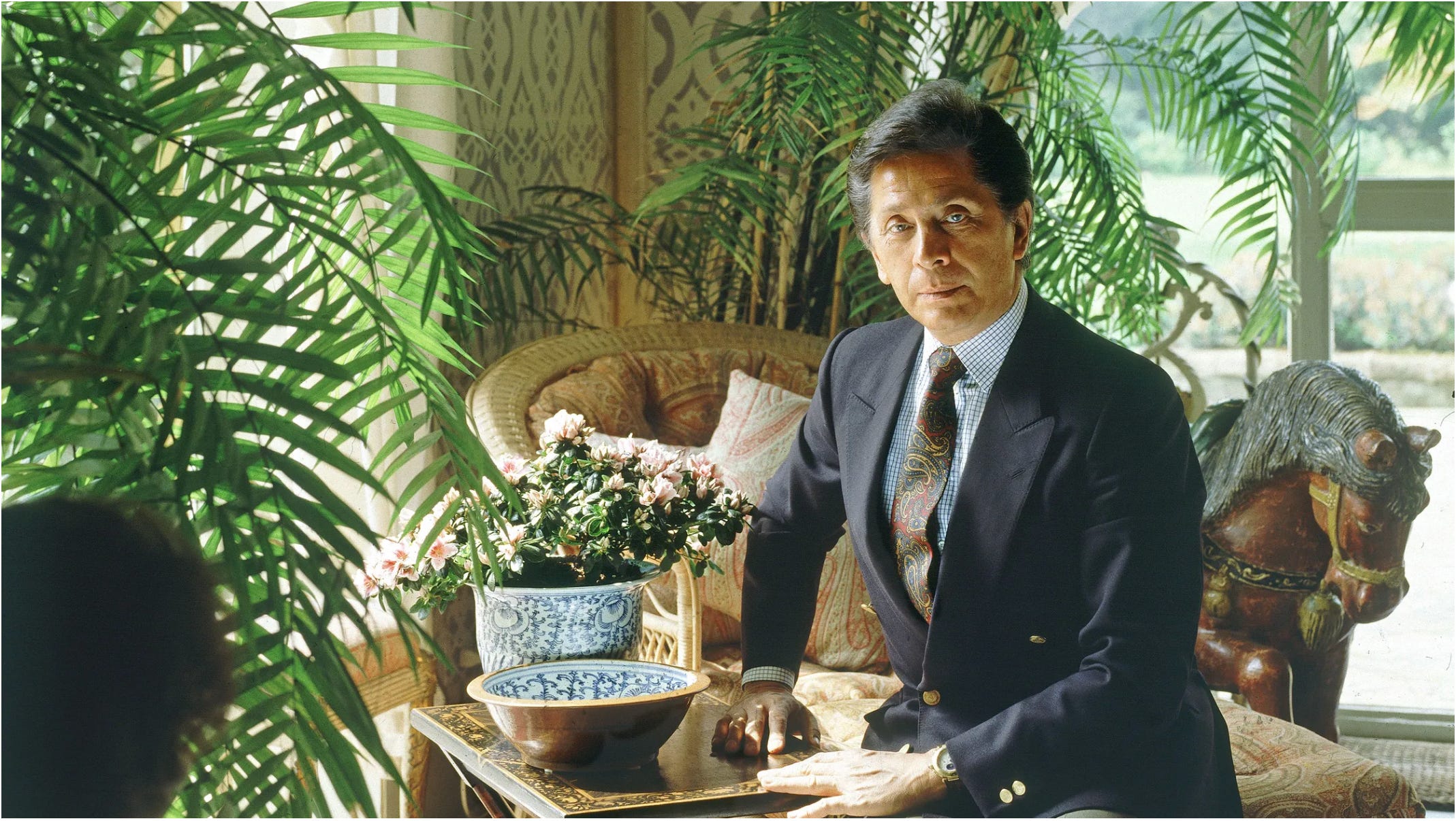
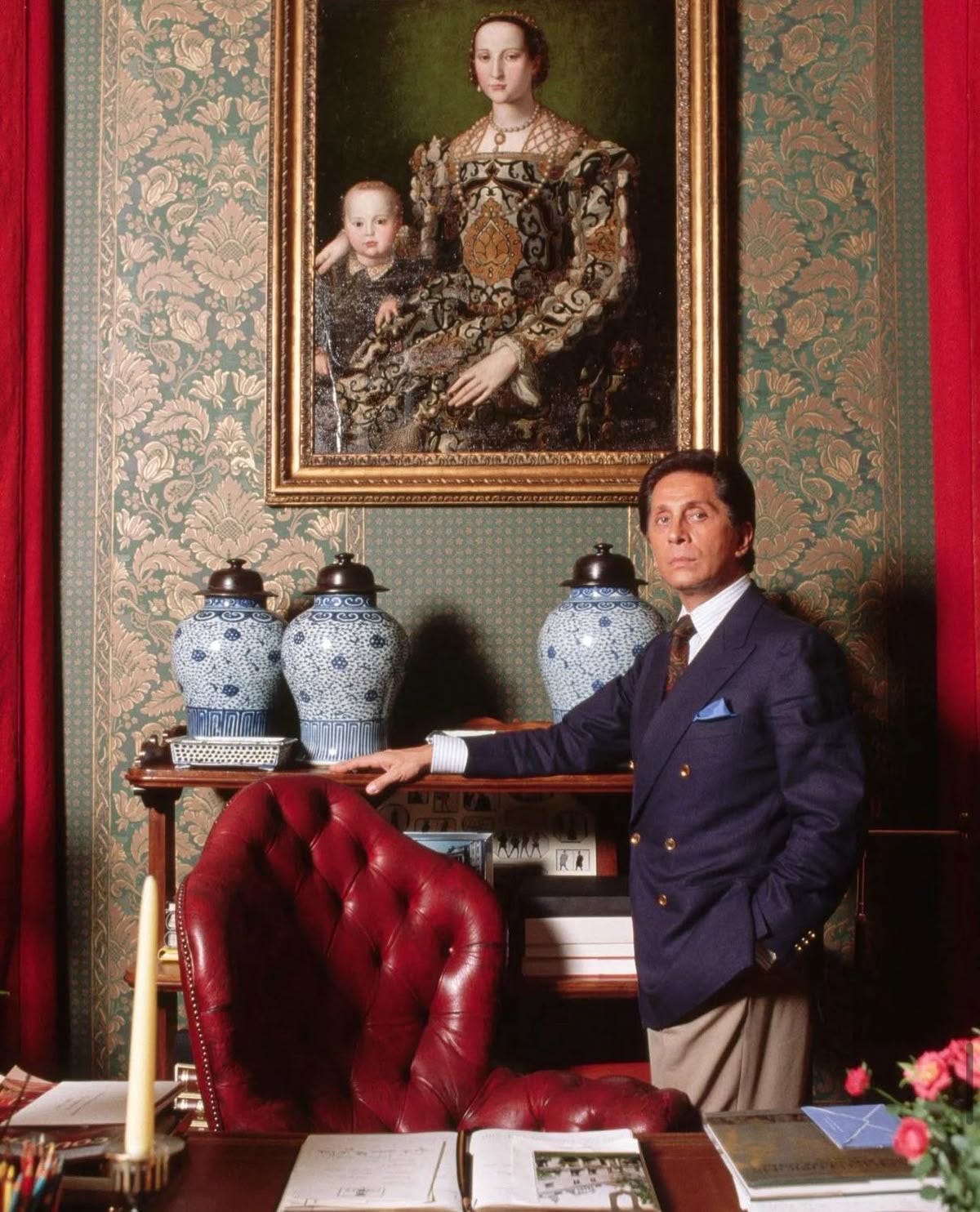
In a culture increasingly driven by speed, output, and visibility, that kind of influence feels quietly enduring. What lasts is not only what is produced, but the way a life is lived alongside it.
This has become clearer to me with time. Whether running a couture house, a business large or small, or a household filled with children, the principle is the same. Attention shapes experience. And over time, experience becomes legacy.
As a mother now, I find myself allowing this way of life to mother me in return. I don’t try to replicate my grandparents’ home or my childhood exactly. Instead, I let the instincts they shaped guide me. In how I create space. In how I move through the day. In how I attend to moments that accumulate into something lasting. The irony is that this lineage is so deeply imprinted that my own spaces have unfolded with a similar sensibility, almost without effort.
This is the sensory lineage I choose to honor. Not something handed down explicitly, but something absorbed. A way of being in the world that values feeling over performance and presence over polish. What may be interpreted as refined or carefully composed in its final form often comes from a quieter, simpler intention entirely.
This is the most important legacy I can offer my own children. Not a particular aesthetic or tradition, but an atmosphere. A way of inhabiting life that feels grounded, attentive, creative, and deeply human.
The work will always continue, and expectations will remain. But beneath it all, there is a home base. Perhaps this is the truest form of creative work. Not only what we make for others to consume, but the world we shape around us as we make it.
Comments
Nothing yet. Say the first thing.
Sign in to join the conversation.