
The dog days are supposed to restore us. Leaders may want to check in this year.
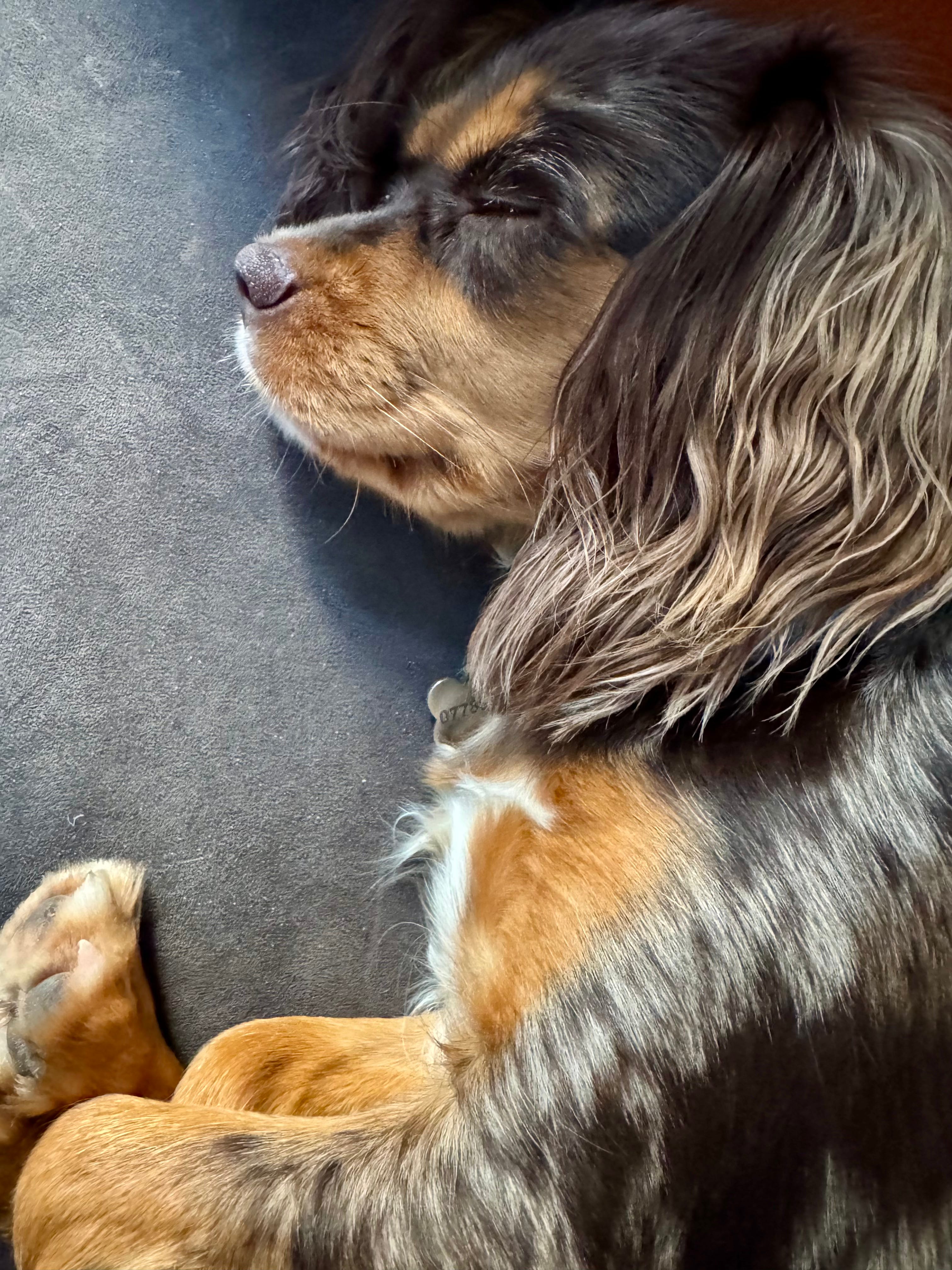
My dog Tigger is very good at sleeping.
She does it without guilt, without a wearable, without consulting her calendar and certainly without wondering whether she ought to be answering emails instead. When she is tired, she lies down. Often magnificently. The photograph above captures a creature apparently entirely confident that restoration is a legitimate use of time.
Dogs do longevity rather better than we do.
The dog days of summer are drawing to a close. Across Europe, workers are drifting back from beaches, mountains and out-of-office messages, and employers might reasonably hope they are returning rested, restored and ready for the autumn push. Perhaps beautifully tanned, culturally enriched and enthusiastically reunited with their inboxes.
There is just one problem. They may not have slept very well while they were away.
This has been another record-breakingly hot summer across Europe. An unusually early heatwave arrived in May, followed by intense heat across much of the continent in June and again in July. June 2026 was the hottest June on record for western Europe and the second-hottest for Europe as a whole, with temperatures 3–5°C above average across France, Germany, Spain, Italy and the Benelux countries. France recorded its hottest June ever, while Germany and the Netherlands had their second hottest. Many countries also broke daily temperature records. And it wasn’t only the daytime heat that mattered: unusually warm and tropical nights made it harder for bodies — and bedrooms — to cool down and recover.
That matters because hot nights interfere with one of the body’s most basic recovery mechanisms: sleep. A systematic review of real-world research on ambient heat and sleep found that higher indoor and outdoor temperatures are generally associated with poorer sleep quality and quantity. A 2026 review focused specifically on heat-exposed workers reached much the same conclusion: heat consistently impaired both sleep quality and duration.
So much for the restorative summer break.
This isn’t simply a personal wellbeing issue. Sleep is emerging as one of the most underestimated pieces of longevity infrastructure — for individuals, certainly, but also for the organisations hoping to sustain productive people across increasingly long working lives.
Comments
Nothing yet. Say the first thing.
Sign in to join the conversation.