
Inspired by the oh so very literary focus of Substack, I’ve decided to do a new series of posts in which I review cookbooks (or books about food and cooking).
The idea is I’m going to start posting them on Sundays.
Because Sunday is a good day for leafing through cookbooks, it feels like. To me, at least. I also think Sunday is well-suited to longer, slower contemplations about smaller, perhaps less vital subjects than the ones we grapple with all week.
Giving our full attention to the more mundane daily actions we perform can be an act of self care. A meditation, even. —Me, being right
So slow down with me today, this second official Sunday of the newly-minted era of The Sunday Cookbook Review. Long may it run!
kick in a buck or two for Ed's 5G bill
Settle in, grab yourself a gussied-up coffee drink in a proper glass or mug, and read a blog post about reading a book. Then maybe you’ll be in the mindset to grab a cookbook of your own and make a lovely Sunday dinner for you and yours. Or maybe not, but regardless, you’ll surely benefit just from slowing down and contemplating.
That’s the idea, at least. Come join me!
I'm constantly reading reviews of the latest and the greatest cookbooks on various blogs and foodie sites, but no one seems to be paying much attention to the old classics. That's too bad, because there are just hundreds of great old cookbooks rattling around out there at used book stores (both brick and mortar and online), and you can stock up on wonderful food writing for just a few bucks a shot. Don't wait for re-issues. Go back to the originals. They're great.
I had a serious used-bookstore addiction during my line cook days and my books got shuttled around in boxes for a while until I had enough shelf space to accommodate them.
Some are classic, in the true old-school French sense, some are funny in the 60's-70's what-were-they-thinking sense, and some are just as on point and topical today as they were when they were written. This review falls into that latter category.
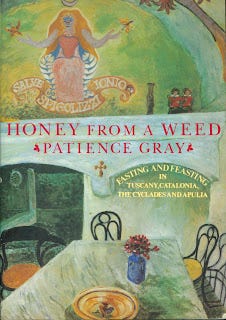
Honey from a Weed; Fasting and Feasting in Tuscany, Catalonia, The Cyclades, and Apulia, by Patience Gray.
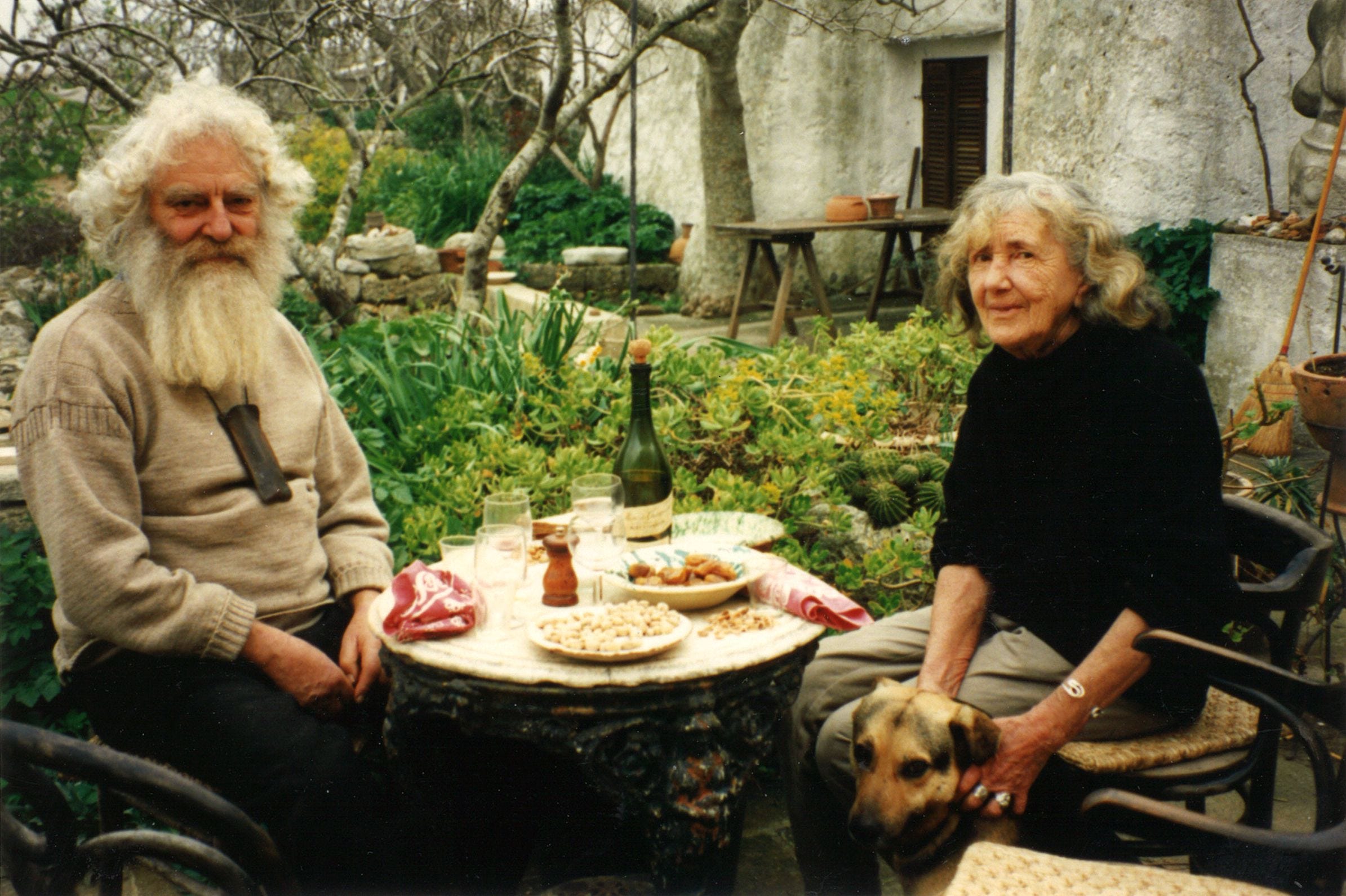
This book was originally published in 1986, and it details twenty years of the author's life that she spent living in various locales while accompanying her sculptor husband as he traveled to work where he was able to find certain types of stone;
"It is of course entirely owing to the Sculptor's appetite for marble and stone," she writes, "that this work came into existence in the first place, and that I am held in the mysterious grip of olive, lentisk, fig, and vine".
Gray is British and the book chronicles her experiences eating and cooking while mostly living in very rustic areas during the 60's and 70's, far from any sign of tourism or modernity. She often cooks over open fire, without the benefit of refrigeration, and describes some very challenging situations.
The food, therefore, is unrefined and typical. It's the everyday fare of the peasants, farmers, fishermen, and others who she encounters, and, for this reason, the book is not only a cookbook, but a reminiscence of the people she meets and gets to know.
Even moreso, it’s a document of their culture, the more traditional lifestyle, which, even 30-40 years ago, Gray was insightful enough to recognize was in danger of being forgotten as more and more harbingers of modern, industrial life crept in.
Poverty rather than wealth gives the good things of life their true significance. Home-made bread rubbed with garlic and sprinkled with olive oil, shared--with a flask of wine--between working people, can be more convivial than any feast. My ambition in drawing in the background to what is being cooked is to restore the meaning. I also celebrate the limestone wilderness.
If I stress the rustic source of culinary inspiration, it is not in opposition to the scientific...
In my experience it is the countryman who is the real gourmet and for good reason; it is he who has cultivated, raised, hunted, or fished the raw materials and has made the wine himself. The preoccupation of his wife is to do justice to his labours and bring the outcome triumphantly to table.
In this an emotional element is involved. Perhaps this very old approach is beginning to once again inspire those who cook in more urban situations.
In my view it was not necessarily the chefs of prelates and princes who invented dishes. Country people and fishermen created them, great chefs refined them and wrote them down.
This book is way ahead of its time.
Gray presages recent trends of nose-to-tail eating, seasonal cooking, foraging, locavoreism, and pickling/preserving. Of course, that's because these "trends" aren't really new or trendy at all, but are simply an indication that within our modern urban enclaves, we've become so removed from normal, centuries-old building blocks of food preparation, that the re-introduction of them by current chefs within the context of contemporary restaurants appears novel or trendy.
It's a painstakingly thorough book as well. There are ten or twelve chapters dedicated to specific dishes or foodstuffs ("Beans, Peas, and Rustic Soups", "Edible Weeds", "La Polenta"), but there are also chapters that focus on equipment ("Pots and Pans") or technique ("Chopping and Pounding"). There's also a massive bibliography and a great cross-referenced index. Just a ton of information here.
And it's good stuff, but the real lure is Gray's lush, celebratory prose, which really serves to get at the root of these cuisines, to allow the reader to understand terms like cacciatore and marinara in terms of where they came from, and how the dish evolved directly from what the people who prepared it were doing all day.
Classic French provincial cuisine, Tuscan cooking, Catalan cuisine--these culinary traditions all came directly from centuries of people living and working in these regions, harvesting their natural bounty.
Thanks for reading. This post is public and free, so please consider sharing it with folks you think will enjoy reading it too.
Patience Gray lived and worked among these folk and relished in their customs and traditions. She somehow intuited that these were dwindling endeavors in a modernizing world and that someone needed to document it all for the ages.
Gray writes about Mantua in the Lombardy region of Northern Italy:
The princely life of the Mantuans has been obliterated by time, malaria, and the Austrian occupation, leaving only its shell.
Oblivious to this, farmers from the countryside come into town and are found imbibing a dense bean soup at ten in the morning in the trattorie underneath the arcades of the Palazzo della Ragione which towers over the marketplace.
The shops are stuffed with gigantic hams; every kind of smoked and fresh sausage; coppa, smoked loin of pork in the form of a large sausage closely bound with string; bondiola, a smoked boiling sausage round in shape; musetti con lingua, made from pig's snout and tongue; lardo, salted pig's fat cut from its rump; capelli dei preti also called triangoli, small triangles of stitched pork skin stuffed with sausage meat, then smoked, for boiling; and nuggets of smoked pork strung together to be flung into the soup.
In agricultural areas where communications are spasmodic, the pig figures as the winter saviour of mankind. Its products can be kept at hand without deterioration, and, if not of domestic manufacture, can be acquired on weekly trips to town.
The fact that pork is indigestible gives a greater significance here to game in autumn. It also throws vegetables into a relief, the green leafy ones, spinach, spinach beet, cicoria 'Catalogna'; the astringent artichoke and cardoon; and most particularly, those root vegetables whose virtue lies in a certain bitterness--root chicory, salsify, scorzonera, and black radishes. All are ritually prepared to offset the ill effects of the delicious products of the pig. One can cultivate a better acquaintance with these roots by growing them.
Tossin’ a little homespun folk wisdom into the stew as well! This is the long-held belief that tempering the rich fattiness of pork products with astringent bitter greens aids digestion.
Bitterness is often thought to stimulate bile or gastric enzyme production which many believe helps the body more easily break down heavy, fatty meats. This is why Italians often drink a bitter aperitivo or digestivo before or after the meal.
At its heart, this book is a more of a monument to a simpler lifestyle than it is a condemnation of our modern, current-day lives crammed with our everything-all-the-time excess.
But as someone living in a large city, eating in ever more impressive restaurants, and especially with the advent of the internet broadcasting (and selling) the biggest and best of everything 24/7, it's hard to read about these simple rustic ways and not come to wonder if this sort of excess (and excess to the point that we've become inured to it) isn't detrimental to our physical and mental well-being.
Gray touches on this phenomenon as well, which, even then in the 1980’s, had already begun to rear it's modern head.
Late in the book, she alludes to the trend stare bene--the concept of living well--as being more associated with income than quality of life, and noting with wonder the availability of out of season vegetables and "industrially reconstituted protein.” In her mind, after living among the humble laborers and becoming a part of their culture for these years, Ms. Gray viewed this newfangled stuff as Marie Antoinette-level over-the-top indulgence.
And, as in much of the book, she manages to distill this idea down to one pithy local saying. In the midst of her "parting salvo" about the current and future state of food, Gray recounts an anecdote about Spigolizzi, a remote town in the deepest heel part of the boot of Puglia.
Visitors coming to summer in Spigolizzi can be heard to exclaim:
'Qui c'e un vero paradiso' (Here is a real paradise)And the locals reply 'Ma l'inferno purtroppo e tanto piu comodo!' (Yes, but Hell is so much more convenient!)
Classic, wry pastoral vs. urban humor. Takes you a minute, right?
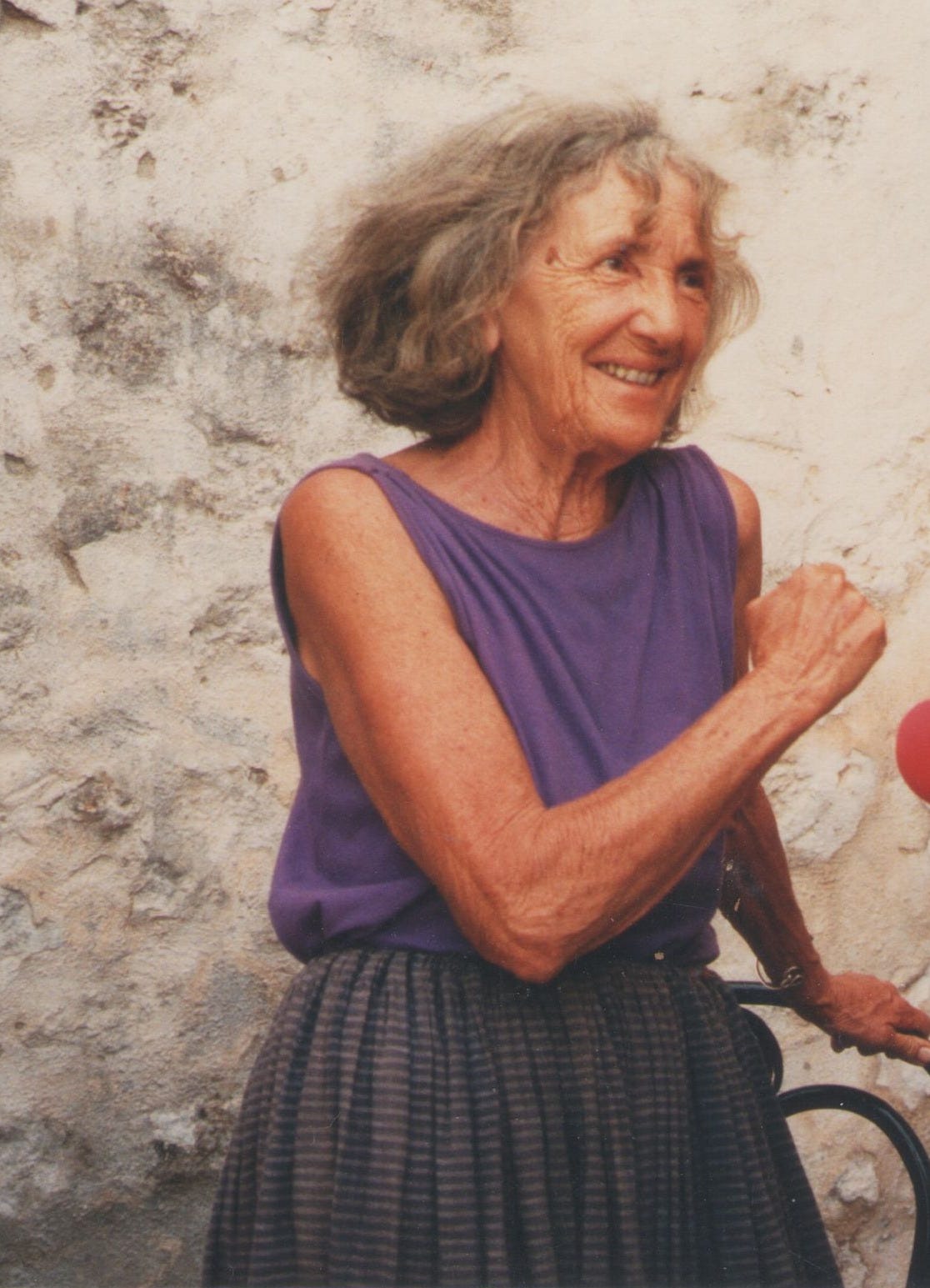
Patience Gray died in 2005, but she left behind an amazing and timeless memoir, cookbook, and treatise on food in the form of Honey from a Weed. Buy it instead of that Rachael Ray book you might impulsively grab the next time you're at the bookstore.
Comments
Nothing yet. Say the first thing.
Sign in to join the conversation.