
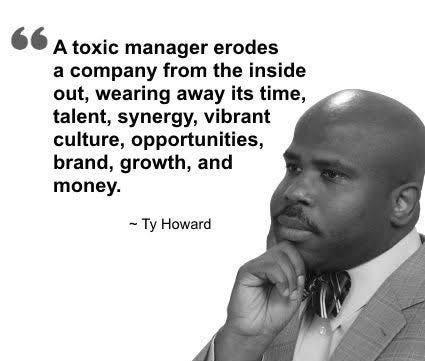
Have you ever had a manager who it seems like handles a crisis well? They’re always ready to jump into ‘triage’ mode, to problem-solve, to do whatever is needed to get us through this difficult time?
There’s just so much extra work! But don’t worry, they say, boss. Don’t worry, team. They’ve got this. They’ll pick up the extra slack caused by the emergencies that seem to always be happening around them and get’er done.
Constant employee turnover? They’re a rock throughout. Steps in crucial processes being dropped regularly? Employees not following instructions well? Running out of supplies at the worst possible time? Equipment breaking? Problems with vendors and third party partners.
They just power through all of it.
If you’re the owner or the general manager of this workplace, you think to yourself, boy, I sure am glad I have Maelstrom Manager. There’s no way I’d be able to navigate all this constant chaos and upheaval without them.
But where is all the constant upheaval and chaos originating? Why is there constant employee turnover?
Is the manager training employees properly and empowering them to confidently use the new knowledge they learned about how to do their jobs? Or is everyone walking around afraid to do their jobs because they don’t want to get in trouble?
Why are crucial steps in our processes being dropped or missed so often? Why does our product not come out consistently to the standards we demand? And why do we accept mediocrity when we see it and know good and well that we could be doing better?
Well? What happens when an employee leaves their work area messy or turns in inferior work? Is the response to those failings consistent or does it depend?
Is inferior work product that doesn’t meet our standards routinely accepted into the workflow and used? Or do we discard the product when that happens? What are our benchmark standards? Does anyone in the organization even know? Or is it dependent on the whims and subjective judgement of whoever is there at the time?
A good manager of people teaches. Information is treated as if its a part of the essential equipment required for the employee to do the job.
I can’t mix up a salad dressing for you if I don’t have a bowl, a whisk, oil, and vinegar. Along those same lines, I can’t make your house salad dressing correctly to your established standards without the recipe.
Despite working in restaurants for 40 years now, I can’t close a station down correctly at the end of my first shift unless you tell me what “correctly” means for this particular station in this particular workplace at the particular time of day or night I’m closing it. I can guess. And I will do my best if you don’t instruct me. But if I just have to guess and figure everything out myself, I will soon conclude that there aren’t any standards here and begin doing whatever works best. For me.
The problem is that Toxic Maelstrom manager will not tell you their expectations clearly, because they gatekeep that information. It gives them power and flexibility. It keeps employees anxious, confused, and afraid. They never know what the right thing to do is, so are always second-guessing themselves. It’s utterly crazy-making and exhausting for earnest, well-intentioned employees and so it creates a lot of burnout and employee turnover churn.
This works just fine for the Toxic Manager, though, because this is what guarantees that they’ll always be needed to rush in and save the day. They’re like a fireman that secretly commits arson slowly planting smoldering coals over time to ensure they can swoop in and be the savior when things eventually burst into flame. Under a Toxic Maelstrom manager, a workplace will never be stable, drama-free, or efficient because the TMM doesn’t actually want things that way.
Here’s a list I found on LinkedIn that does a nice job of running down some of the phenomena that are often observed in Toxic Maelstrom managers (I’ve edited the copy significantly in places).
Instead of setting clear goals/expectations for employees, toxic managers will at times watch and control an employee’s each and every movement. Micromanaging will leads to distrust in both directions, as the message relayed is that employees will only follow procedures and policy when under direct supervision.
Even worse, Toxic Maelstrom managers will often present a combination of micromanagement and neglect. They’ll disappear or be completely hands-off and non-communicative for weeks, giving no indication of any problems or issues with the employee’s work output, then suddenly re-engage and come down hard on the micromanaging like a ton of bricks. It’s the unpredictability that’s so toxic and de-stabilizing.
Toxic managers that call out employees in public ways, so that other employees are sure to see the rebukes, are accomplishing multiple toxic goals. They’re humiliating and embarrassing the employee, sending the message that they should strive to avoid the manager’s wrath in the future, they’re broadcasting to other employees that you’d better watch it, this could be you I’m humiliating in front of the group next, AND they’re creating and fostering a group dynamic of abuser/abused, forcing employees to choose to either enable the inevitable ongoing abuse or suffer it.
Managers that share screenshots or evidence of employee screw-ups, place reminders of their mistakes on their stations/desks or in conspicuously out of place spots so everyone will “see what they did”, make a point of having loud dressing-down sessions in front of other employees, or who share information about these situations by gossiping backchannel are playing mind games with the self-esteem and emotional well-being of employees as a part of their personally-motivated manipulation tactics. None of this is helpful or productive for the workplace or organization.
Toxic managers can always find fault. This is easy due to the fact that there aren’t any consistently-enforced standards. What was acceptable yesterday may not be today, if Toxic Maelstrom manager has decided you’re on the naughty list for whatever reason.
Even though employees may spend hours putting 100% earnest effort into the work they do, TMM won’t usually supervise and correct mistakes in the moment. Instead, they’ll come in later and complain about a small imperfection or missed detail (in a public way, so everyone hears about it) while completely ignoring the effort the employee put into the work as well as the fact that they were never properly trained in the first place and were forced to just “figure it out”.
Working for a manager like this, eventually even the most confident seasoned professionals will begin second-guessing their own abilities, skills, and judgement. Undermining the confidence of employees and keeping them always spinning in place like this is no way to run a productive workplace. But it accrues to the TMM’s benefit, power dynamic-wise.
Good managers want employees to succeed, and that good intention is illustrated by using praise and constructive feedback instead of criticism. Non-constructive criticism often takes the form of phrases like “someone like you should know better than that” or “we thought you had higher standards”.
Constructive criticism is more like “ok…maybe nobody showed you how we do it here, but this is how we break down the steps of this process…” There is no need to attack a person’s character, humiliate, or make employees feel less than. Just explain the expectation and encourage them to “please do it this way from now on”.
Toxic managers love to give vague directions and force employees to try and read their mind or make executive-level decisions that they’re neither qualified or being compensated to make. This forces employees to spent a lot of time mentally trying to figure out how best to go about doing a given task with the motivation of covering their own ass. Doing the work most effectively to the organization’s (or employee’s own) standards takes a backseat to the more existential goal of avoiding the wrath of the manager so as to be able to continue to be employed.
Good managers challenge employees with appropriate training and preparation followed by communicating high but achievable expectations. They set workers up for success by providing them with all the tools and information needed to accomplish their tasks.
Toxic managers will set completely unrealistic goals, often including things that are outside the employee’s skill set or job description. They also fail to provide employees with the training, equipment, and support they need to achieve those goals. This creates a lot of stress, internal conflict, and ultimately burns out and breaks employees, as they’re too afraid to say no to the boss, but not capable, properly trained, or properly equipped to successfully meet the expectations.
The way a Toxic Maelstrom Manager criticizes employees is often rude, personal, and hurtful. It’s meant to be spirit-breaking. Usually done in front of others in a passive-aggressive way that can be played off as “Oh, I was just joking” or “don’t be so sensitive” if the person takes issue.
In workplaces with TMM’s, there are always favored and disfavored employees. Someone is usually “in the doghouse” while others are love-bombed, being given special treats, privileges, complimented by the manager, or assigned more enviable tasks/stations.
Often new employees will be showered in incidental perks/privileges to build initial rapport. One restaurant I worked at, the TMM was always having little impromptu wine-tasting sessions with the preferred in-group of employees. They’d stand around (usually in the way of those trying to actually do work) swirling their wine in huge balloon glasses, sniffing, taking sips, staring off at the upper corner of the wall feeling all self-important and sophisticated. “Wow, this is so cool, I’m learning about wine and having drinks with my boss while I’m on the clock! “
Often, this would go on while more senior or experienced employees would be scrubbing a countertop or taking out garbages, wondering why they weren’t also invited to be in on the wine tasting session.
“Well,” the toxic manager would respond if asked, “you have a mouth, don’t you? I assume that if you wanted to be included in the wine tasting, you would ask.”
But a toxic manager trait is ignoring some and playing favorites with others to pit people against each other, so asking wouldn’t have done any good anyway. The employees who were included didn’t have to ask. They were invited in a grandiose way as part of the Toxic Maelstrom manager’s manipulation tactics.
Bad managers won’t stand up for their team; instead, they trash the team members to their superiors, throwing them under the bus to try and make themselves look good. They feel they must play the dirty interpersonal games of narcissism and backstabbing to make themselves look good, cover their own mistakes, and ensure their continued employment.
In times of normal operations, the TMM will be a flurry of activity when their boss is present, chattering on about all the Important Work they’re doing, moving things rushedly from one place to another as if to look super-busy.
Failing to properly train or equip employees of course ensures that there will also always be plenty of times when things aren’t operating smoothly. That will be blamed on employees.
But at some point an owner or a GM has to wonder why the toxic manager always has so many poorly performing employees on whom to blame all these problems that never seem to resolve no matter who we plug in. Isn’t it the manager’s job to FIX the problems? To create systems that work regardless of which people we plug into which roles? Just changing out the names/faces of the employees won’t cut it because they’re not the problem. The Toxic Maelstrom manager is the problem.
Imagine that situation when you pitched in a new idea and your manager rejected it or just said “hm”. Later he presented the idea to the higher ups to get applauded. Power grabs happen in corporate structures as it is made in that way. Don’t get disheartened; just get a new boss.
Some people generally lack empathy, and I am sorry if your boss is one among them.
toxic workplaces = Ed in poverty
Admitting fault or blame — owning your mistakes — costs nothing. Only a little pride that must be swallowed. The benefits of a manager admitting to making a mistake are massive. Respect and trust levels from employees go through the roof when a manager owns their errors or transgressions the same way they expect employees to do.
But the TMM feels the need to always be right. They will never admit to making a mistake, even when it’s clear that they did. Instead, employees are blamed, excuses are made, it’s blamed on “communication breakdowns”, etc.
In this case the Toxic Manager’s feelings of insecurity/lack of confidence create trust and respect issues among the employees they manage, undermining their relationship with them and their own ability to manage staff effectively.
When someone is dealing with a person they know will never admit to making a mistake, they change the mindset with which they engage that person. It alters the dynamic in a way that the focus becomes surviving the manager’s unpredictable whims rather than trying their best to do the work most effectively.
Oh, the eye-rolling! The heavy sighs! It is hard for employees to digest such gestures and unprofessional comments, but what can they do? It’s their boss. The choices here are either try to decode that communication (which forces you to engage in mind-reading) or to ignore it (which the manager can then say was a failing on your part because the eye-roll or sigh was their way of giving feedback).
Past employees are portrayed as villains or “bad”. Certain current employees are cast out as “less-than”. The TMM creates conflict between the favored-group employees and the other-group in order to foster unhealthy competition. Hours are often doled out accordingly, possibly benefits as well. This keeps the favored-group always step-n-fetching for the TMM for fear that they’ll fall out of favor and one day find they’ve become the bad guys in the narrative that the manager is always villainizing.
Toxic Maelstrom managers are usually narcissists. As such, they are insanely talented at honing in on a person’s most vulnerable aspects and understanding how to use emotional triggers and personality type to either demean them or build them up, showering them with praise. They have an innate ability to sense an employee’s biggest needs and give it to them, but then also to cut them to the core with a single look of disapproval or biting remark.
Toxic managers never follow established work culture, norms or ethics. They often disregard the rules for their own benefit without hesitation, even in front of others, as if to communicate that the rules they’re enforcing on others don’t apply to them. They are not there to further the goals of the organization, they are there for their own self-interest and self-preservation. If they haven’t cheated or stolen that you’re aware of, it’s only because they’ve calculated that it’s not in their best interests to do so. Yet.
The Toxic Maelstrom manager will make an employee (or even an owner or superior manager) feel like they are the central issue that’s causing all the problems here. But every time a “problematic” employee leaves or is terminated, the problems never seem to resolve.
To get control over an employee’s self-esteem, a toxic manager will call out things to make employees doubt their abilities or judgement. As a result, the employee will feel that maybe they just are not good enough, or aren’t good at objectively judging their own work.
They will lose the ability to objectively critique their own production and relegate all evaluation to the manager, becoming completely beholden to them for validation. This is why employees with a lot of confidence and a strong sense of self do not usually last long under these type of managers. Confident, competent workers with experience and skills who know they’re doing a good job do not stick around long when they’re being told otherwise.
But, again, the TMM doesn’t want confident, competent workers with experience and skills. They want malleable, vulnerable, broken people they can psychologically manipulate and keep beholden to them.
Toxic Maelstrom managers change their character like chameleons. They are totally unpredictable and the workplace’s mood rises and falls with theirs, so they’re always in complete control of the vibe. One strong indicator of this is when everyone is usually in a great mood on the TMM’s day off.
Does this Employee Archetype jive with someone you’ve known in a work situation? If so, I’m sorry. It’s difficult and frustrating.
Maybe you ARE a Toxic Maelstrom Manager and you recognize yourself in this long dissertation? That’s uncomfortable, but, hey, the nore you know, right? Let’s discuss it in the comments.
As always, thanks for reading and thinking along with me.
Comments
Nothing yet. Say the first thing.
Sign in to join the conversation.