
In reality, science is a disciplined back‑and‑forth between the world as it is and the models we build to explain it. We measure, propose a model that predicts those measures, test it at the edges, where it breaks in some places, and then refine, extend, or even replace it. Over time, our understanding tends to layer rather than leap. New models rarely erase the old ones. They narrow or extend the domain of validity of the older model.
Physics gives the clearest illustration. Newton’s classical mechanics describes most of the motion we experience with astonishing precision. Then came Einstein’s relativity, which explained anomalies at very high speeds and in strong gravitational fields while leaving everyday predictions of Newton intact. In other words, relativity didn’t so much refute Newton as locate him: it told us where Newton works and where he doesn’t. Scientific progress, seen this way, is the steady mapping of where each model fits.
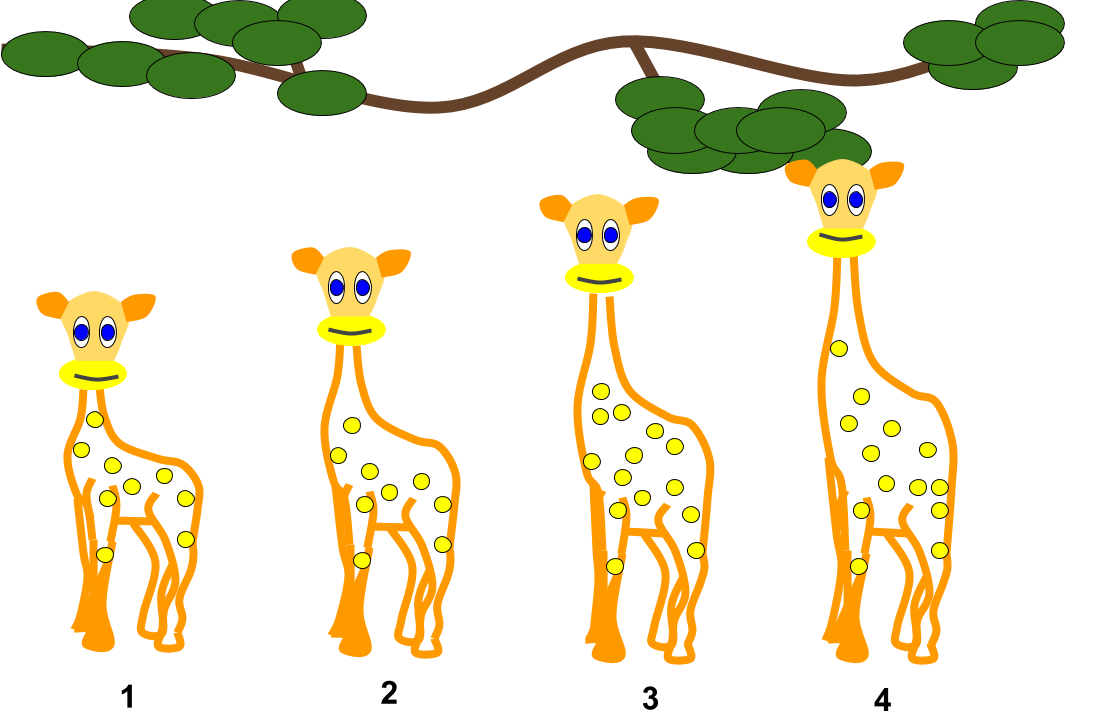
Because the process is exploratory, science also generates wrong turns. Jean‑Baptiste Lamarck famously proposed that giraffes lengthened their necks by stretching during their lifetimes, and then passed those acquired traits on to their offspring. We now know that is not how inheritance works. And yet even discarded models leave traces in how we think, teach, and design systems. They shape metaphors and defaults long after their empirical moment has passed.
Learning sciences have evolved in the same layered way. In the early twentieth century, behaviorism offered a powerful, testable lens: learning as a change in observable behavior shaped by positive reinforcement and punishment. Within its domain, it remains useful, especially for building routines, shaping feedback, and designing clear contingencies. A fair challenge, however, is not that “punishments don’t work” or that “rewards are bad,” but that their effects are narrow and fragile. They lift short‑term performance on well‑specified behaviors yet transfer poorly to novel contexts, decay when contingencies are removed, and can crowd out autonomy and curiosity if they become the main currency of the classroom. Timing and schedule matter (immediacy, variability), but so does meaning: students interpret rewards and sanctions as signals about trust, status, and control. For open‑ended, conceptual, or creative learning, a purely behaviorist frame tends to under‑specify the goal and over‑specify the path—producing compliance without durable understanding or self‑regulation.
Other models added layers. Sociocultural and constructivist approaches emphasized that knowledge is not just stored in individual heads but co‑constructed through language, tools, and participation in communities of practice. The unit of analysis shifted from isolated behavior to learner‑in‑context, with the teacher’s role moving from controller of stimuli to designer of rich interactions and supportive norms.
Functional MRI and related methods increasingly allowed researchers to peek inside the black box of learning. Neuroscience did not replace behaviorism or sociocultural theory. It reframed them. Findings about executive functions, attention, and inhibitory control helped explain why some instructional routines work better than others and why adolescence is such a pivotal period for self‑regulation. At the same time, methodological debates have kept the field honest, reminding us that brain images do not automatically translate into classroom impact. The most responsible work integrates multiple levels of analysis, from brain to behavior to culture, and tests whether insights travel beyond the lab.

If you zoom out, a pattern appears. Across a century, learning science has moved from surface behavior to social interaction to the underlying control systems that make learning possible. Each layer adds explanatory power and suggests different levers for practice: contingencies and feedback schedules, collaborative structures and cultural tools, cognitive control and metacognition. None of these models is the whole story. Together, they map the terrain more faithfully.
Like the microscope and the MRI before it, AI changes what and how we can observe. Unlike them, it also changes the tasks themselves. When models can draft, translate, simulate, evaluate, and converse, they don’t just speed up old workflows; they rearrange what is worth knowing and practicing at school. Some capabilities that once lived exclusively in human heads become ambient in the environment. The scarcity of knowledge shifts. That forces us to ask, with new urgency: which capacities will remain scarce and therefore most valuable for learners to cultivate?
This is the animating question of Education Futures. Our podcast episode with Grégoire Borst explores one crucial layer of that answer: how cognitive control, attention, and metacognition develop, why they matter for creativity and reasoning, and how schools can design for them rather than against them. No one can predict the future, but we can clarify which models still fit, where they crack, and how to extend their domains of validity in the age of AI.
If you work in education, consider this a framing move, not a verdict. The next sections will translate this layered view of science into practical design choices for systems under pressure, and into a short playbook you can start using this term.
Listen to the first episode of the Education Futures podcast on Spotify, Apple Podcast or watch it on Youtube.
Sources :
Kuhn, T. S. (2012/1962). The Structure of Scientific Revolutions (50th Anniversary ed.). University of Chicago Press. https://www.columbia.edu/cu/tract/projects/complexity-theory/kuhn-the-structure-of-scien.pdf Columbia University
Encyclopaedia Britannica. Relativity (overview; Newtonian limits and why Einstein was needed). https://www.britannica.com/science/relativity Encyclopedia Britannica
Encyclopaedia Britannica. General Relativity (why Newton’s theory breaks and where it still works). https://www.britannica.com/science/relativity/General-relativity Encyclopedia Britannica
Encyclopaedia Britannica. Lamarckism (classic giraffe-neck example of a discarded model). https://www.britannica.com/science/Lamarckism Encyclopedia Britannica
University of California, Berkeley. Early Concepts of Evolution: Jean-Baptiste Lamarck. https://evolution.berkeley.edu/the-history-of-evolutionary-thought/1800s/early-concepts-of-evolution-jean-baptiste-lamarck/ evolution.berkeley.edu
Encyclopaedia Britannica. Behaviourism (scope, strengths, limits). https://www.britannica.com/science/behaviourism-psychology Encyclopedia Britannica
Ryan, R. M., & Deci, E. L. (2000). Self-Determination Theory and the facilitation of intrinsic motivation, social development, and well-being. American Psychologist. https://selfdeterminationtheory.org/SDT/documents/2000_RyanDeci_SDT.pdf Théorie de l’auto-détermination
Ryan, R. M., & Deci, E. L. (2020). Intrinsic and Extrinsic Motivations: Classic definitions and new directions (updated overview). https://stial.ie/resources/Ryan%20and%20Deci%202020%20self%20determination%20theory.pdf stial.ie
Levy, A. et al. (2016). A quantitative review of the overjustification effect. Perspectives on Behavior Science. https://pmc.ncbi.nlm.nih.gov/articles/PMC5386788/ PMC
Encyclopaedia Britannica. L. S. Vygotsky (sociocultural theory, ZPD). https://www.britannica.com/biography/L-S-Vygotsky Encyclopedia Britannica
Fleming, S. M., & Dolan, R. (2021). Metacognition: ideas and insights from neuroscience and education. NPJ Science of Learning. https://www.nature.com/articles/s41539-021-00089-5 Nature
Loosen, A. M., et al. (2025). Revisiting the role of computational neuroimaging in real-world behavior. Neuropsychopharmacology. https://www.nature.com/articles/s41386-024-01946-8 Nature
UNESCO (2023, last updated 2025). Guidance for Generative AI in Education and Research. https://www.unesco.org/en/articles/guidance-generative-ai-education-and-research UNESCO
OECD (2025). What should teachers teach and students learn in a future of powerful AI? https://www.oecd.org/en/publications/what-should-teachers-teach-and-students-learn-in-a-future-of-powerful-ai_ca56c7d6-en.html OECD
OECD (2025). What should teachers teach… (full PDF). https://www.oecd.org/content/dam/oecd/en/publications/reports/2025/05/what-should-teachers-teach-and-students-learn-in-a-future-of-powerful-ai_4578ec74/ca56c7d6-en.pdf OECD
OECD (2024). Governing with Artificial Intelligence: Are governments ready? https://www.oecd.org/content/dam/oecd/en/publications/reports/2024/06/governing-with-artificial-intelligence_f0e316f5/26324bc2-en.pdf OECD
World Bank (2024). AI Revolution in Education (Brief No. 1). https://documents1.worldbank.org/curated/en/099734306182493324/pdf/IDU152823b13109c514ebd19c241a289470b6902.pdf World Bank
No posts
Comments
Nothing yet. Say the first thing.
Sign in to join the conversation.