
I get some wild leads because I write Edit History. A lot of the most interesting things I’ve written (superhero drama, Pitchfork scandal, the status of chili at Chili’s) are the result of people reaching out to me. Some of the leads I’ve received are relatively straightforward, while others I’m still pursuing and attempting to understand.
The latest1 came via Substack direct message, from “former stan” Monia Ali, who wrote to me:
the wiki for Queer As Folk (2000) lists episode titles that ARE NOT REAL! I was in the fandom for QAF US back in the day so i know there’s no episode titles. i own the DVDs and there are no titles. the titles are made up, and i believe came from a german reviewer back in the 2000s that wanted to use titles and they got adopted as the real thing. it’s a genuinely maddening thing to see wiki list untruths but also a great reminder that it cannot be trusted.
Now, this is my exact kind of story but I’ll admit that I was initially somewhat skeptical. Not that I thought Ali was lying. But it seemed like one of those things that could be what people call “the Mandela effect.” Or perhaps something where episodes had both names and numbers.
Also, I know nothing about Queer as Folk. Or at least I did know nothing. Now I know some things. Over the last two months, I’ve spent a lot of time learning about Queer as Folk.
Among the things I’ve learned:
Queer as Folk was originally a UK television show consisting of ten episodes across two seasons2 from 1999 to 2000.
It was adapted into an American series in 2000, which ran for five seasons until 2005.
The original UK version starred two actors I like: Littlefinger, aka Carcetti, aka the CIA agent from the opening scene of The Dark Knight Rises, aka Martin O’Malley. Also the Sons of Anarchy guy. I guess both those guys are British?
The American series was rebooted for Peacock in 2022; it lasted one season.
And most importantly: as Ali told me in her message, every episode in the American series Queer as Folk (2000-2005) does not have a title beyond season number and episode number.
Or, at least, that seems to be the case.
So why does Wikipedia and almost every other mainstream source on the internet tell me otherwise?
I’ve spent an extraordinary amount of time googling this. Going down rabbit holes. Seeing what various websites say about it. Digging through revision histories and edit histories. Trying to understand it.
I’ve learned that there are two competing truths.
Truth #1: Every episode of Queer as Folk has a long title, usually containing a pun or cultural reference (or both.) For example, the first episode of the second season, according to most of the internet, is “Home Is Where the Ass Is.”
Truth #2: The episode titles are simply numbers. As in, season one opens with the title “Episode #101” and season two opens with “Episode #201.” At other times these are denoted as 1.01 or S1E1. Regardless, this truth holds that there were never titles beyond the numbers themselves.
I list Truth #1 first because that is the prevailing truth across the internet. However, according to Ali and other various Queer as Folk fans, Truth #2 is the true truth.
Here are the places where Truth #1 prevails:
Wikipedia
IMDb
The Queer as Folk wiki on Fandom
Grokipedia
TVGuide.com
Metacritic
Rotten Tomatoes
Plus a lot of other more minor websites
When I googled queer as folk episode titles at the beginning of my attempt to understand this, Google’s stupid AI overview told me that:
The US version of Queer as Folk (2000-2005) is known for its long, often conversational episode titles, especially from Season 2 onwards. Key episodes include the pilot “Queer, There and Everywhere,” “Liberty Ride,” “You Can Lead a Girl to Pussy,” “Ben Gets a Guy,” and the series finale “We Will Survive!”
Now, remember, AI is only as good as its training data (and even then it’s usually not good.) If Truth #2 is the true truth and not Truth #1, then this is a classic example of AI getting something wrong because of flaws in the training data (see the above list of websites), not because of a hallucination. (See screenshot below.)
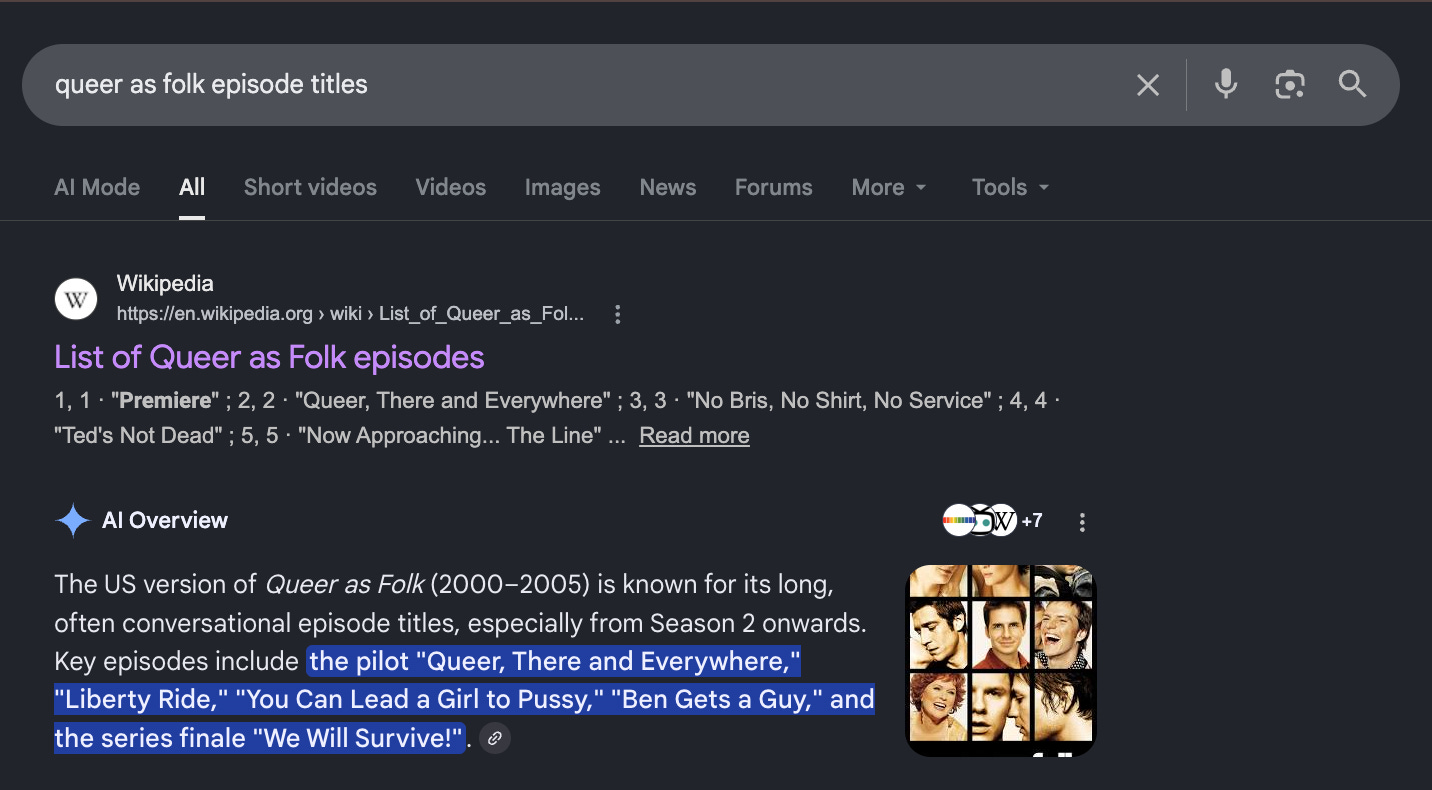
Google did not hallucinate this. It is pulling this information from Wikipedia, IMDb, the Queer as Folk wiki, etc. Reliable sources, right? (That’s a joke.)
Let’s get closer to the horse’s mouth. The streaming services themselves, where one can watch Queer as Folk. You can currently watch Queer as Folk on a lot of different streaming services. They’re available with a Paramount+ with Showtime subscription or you can buy them on places like Amazon Prime, Apple TV, all those other places you can buy TV episodes.
Here are all the ways you can watch this show:
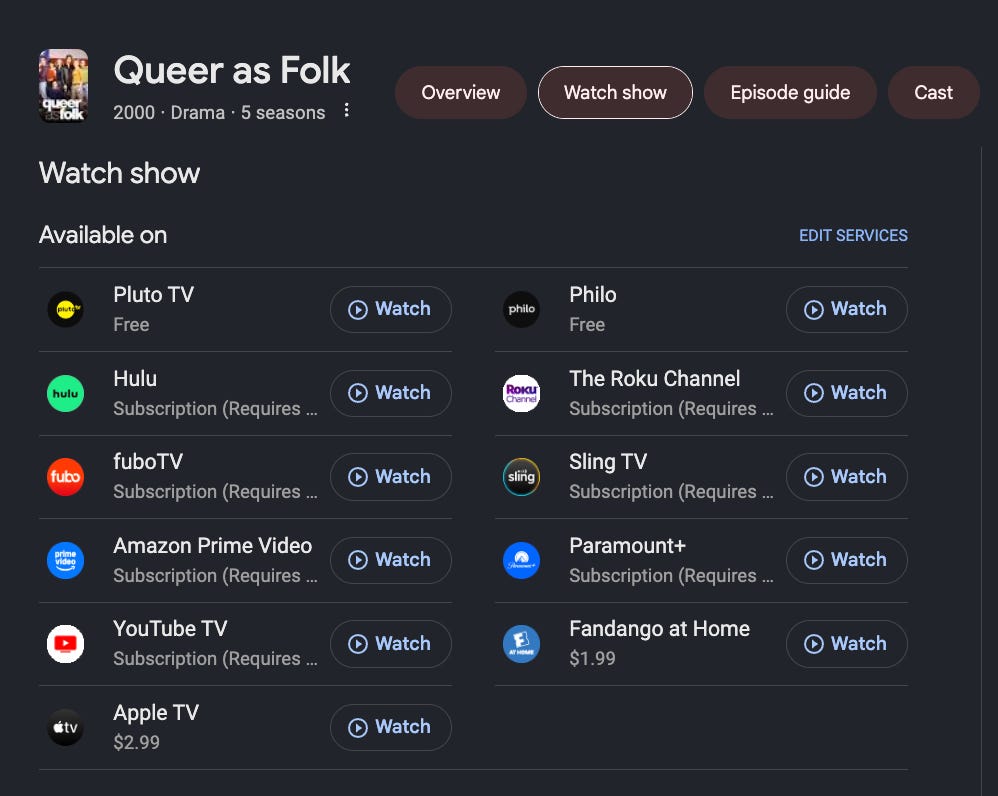
For one example, this is how Hulu presents the episodes for season one of the (first) US adaptation of Queer as Folk:
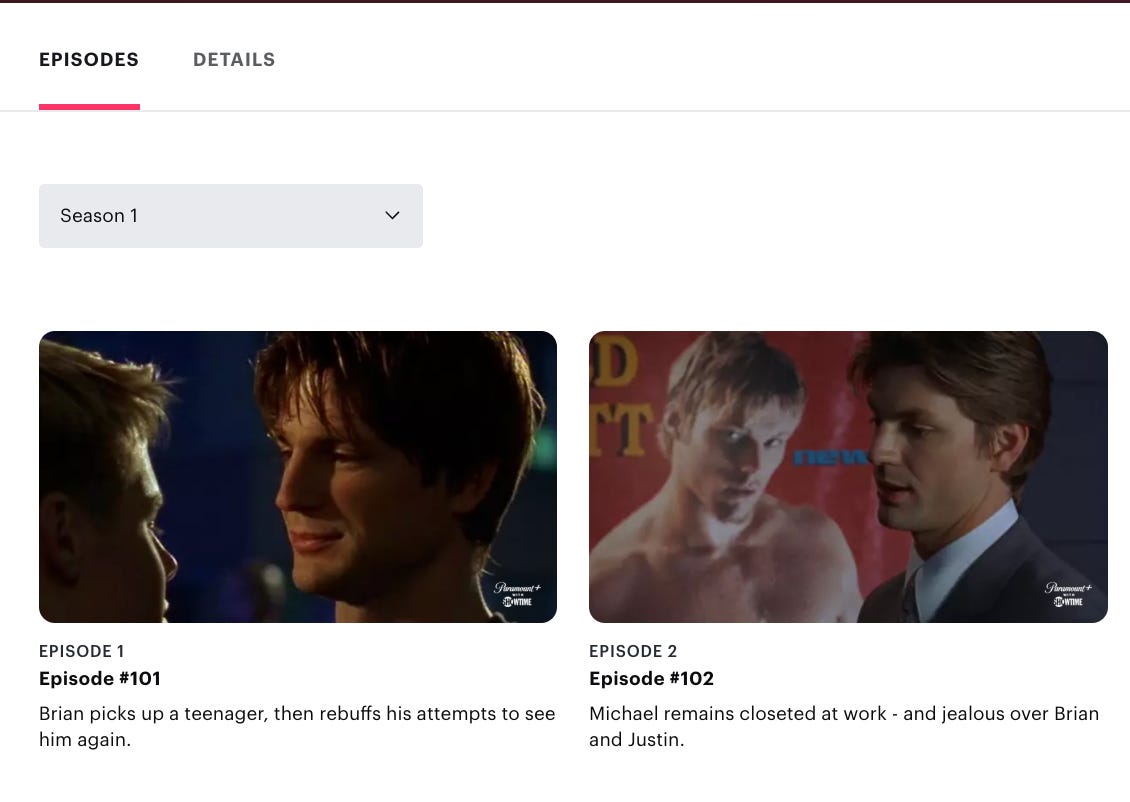
And here’s season 2:
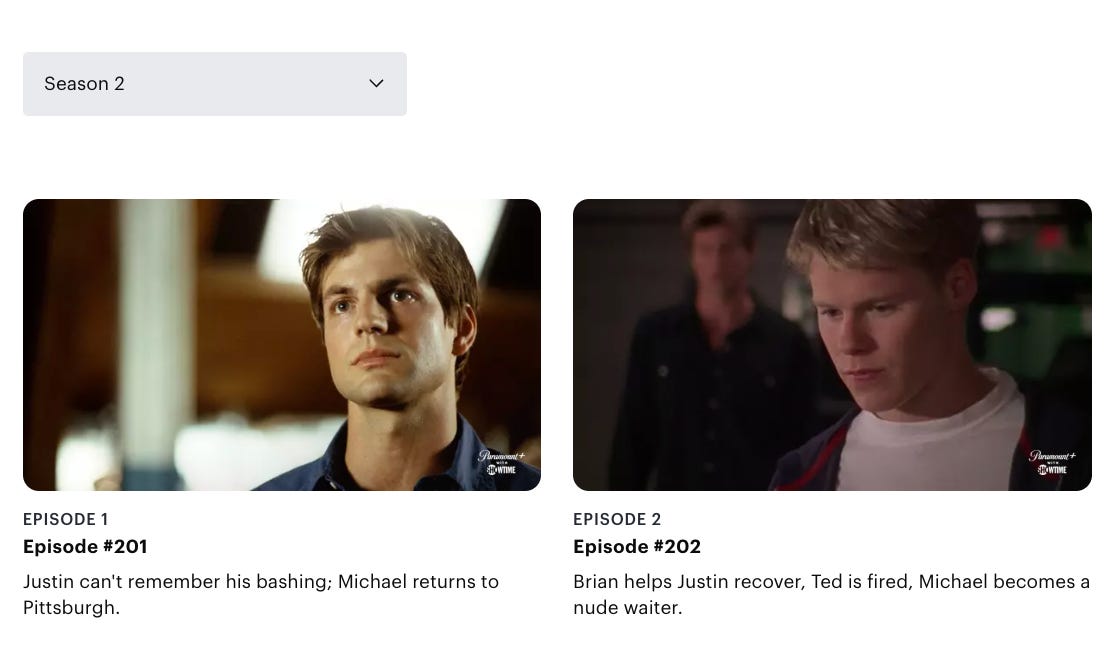
You can see the same thing on Paramount+, Amazon Prime, etc.
Initially, I thought this was as simple as:
The user-generated content and knowledge aggregators say that Queer as Folk had cheeky episode titles, but
The streaming services and other more official entities know that Queer as Folk episodes only had numerical titles.
Which led me to think the case is closed… until I saw how Apple TV lists the episodes.
Because Apple TV shows us this:
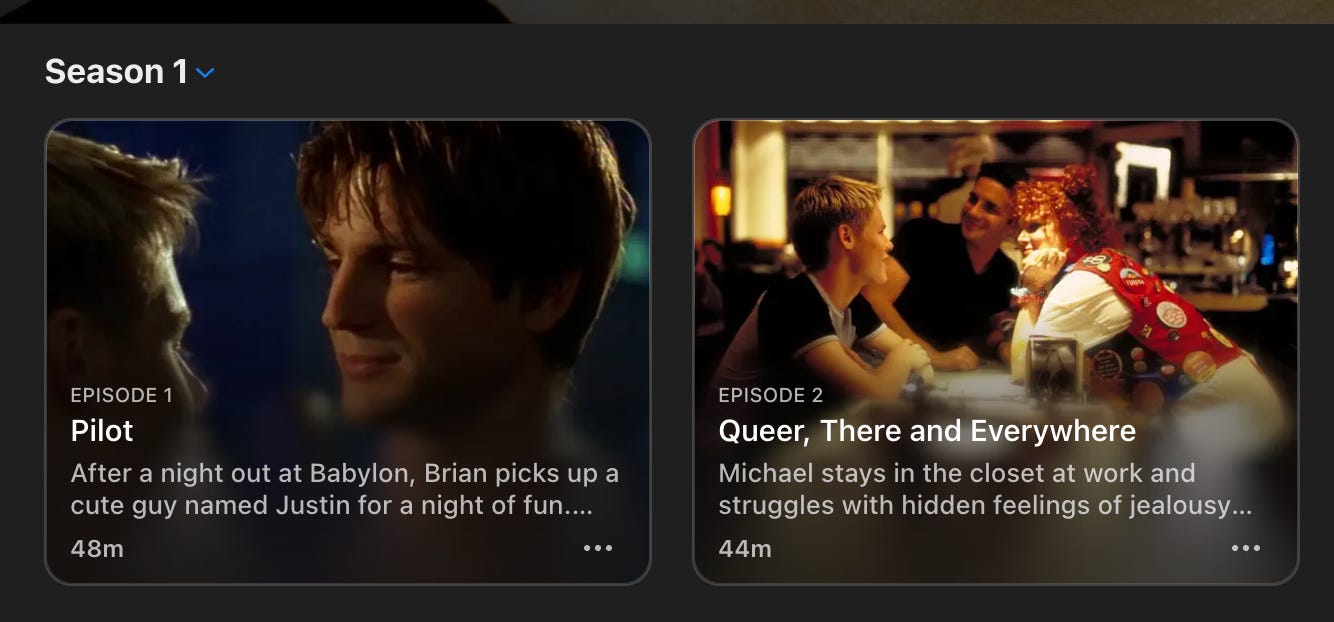
And it’s not the only one. Apple TV, FuboTV, Pluto, Roku and Sling are all streaming services that, for example, list “Queer, There and Everywhere” as the second episode of season one, instead of “#102” or “1.02.”
Here’s a screenshot of a spreadsheet I made that tracks where the two truths currently exist:
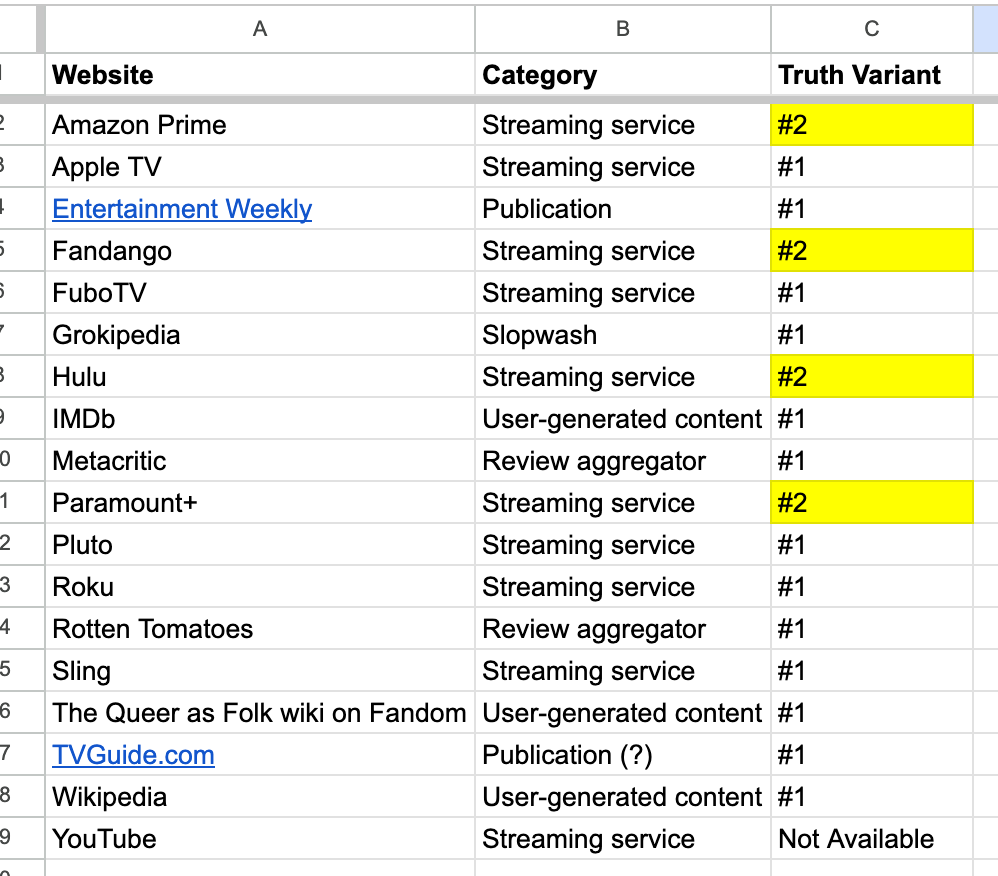
Here are some other important things I learned while working on this:
Showtime doesn’t have its own streaming service, but exists within Paramount+.
Showtime doesn’t even have a website anymore.
The closest thing to official Showtime websites are these two sites
https://www.paramount.com/about/brands/showtime
https://www.paramountplus.com/brands/showtime/
There are no episode titles for Queer as Folk listed on Paramount dot com. But, as mentioned above, they are listed on Paramount +, which is the closest thing to being an official Showtime streaming service.
And yes, on Paramount+, these episodes are listed as Truth #2, not Truth #1.
So, case closed?
But while all of this seems to answer the question of what, none of this really answers the remaining questions: how and why and who? I don’t understand yet who created the alternate episode titles and why they created them and how this truth, while apparently false, became so widespread.
There are several Wikipedia articles related to the Queer as Folk ecosystem.
Here are the all the major relevant Wikipedia articles:
And yes, three characters from Queer as Folk have their own articles, including:
Within this ecosystem, every article contains episodes referred to by their Truth #1 names except for the articles “Queer as Folk soundtracks” and “Queer as Folk (2000 TV series).”
Here is what the References section looks like on the main article for this topic, “List of Queer as Folk episodes.” You’ll see that one website is doing the heavy lifting in those references. This website, sho dot com, was once the official Showtime website. Now it exists as a redirect to Paramount Plus.
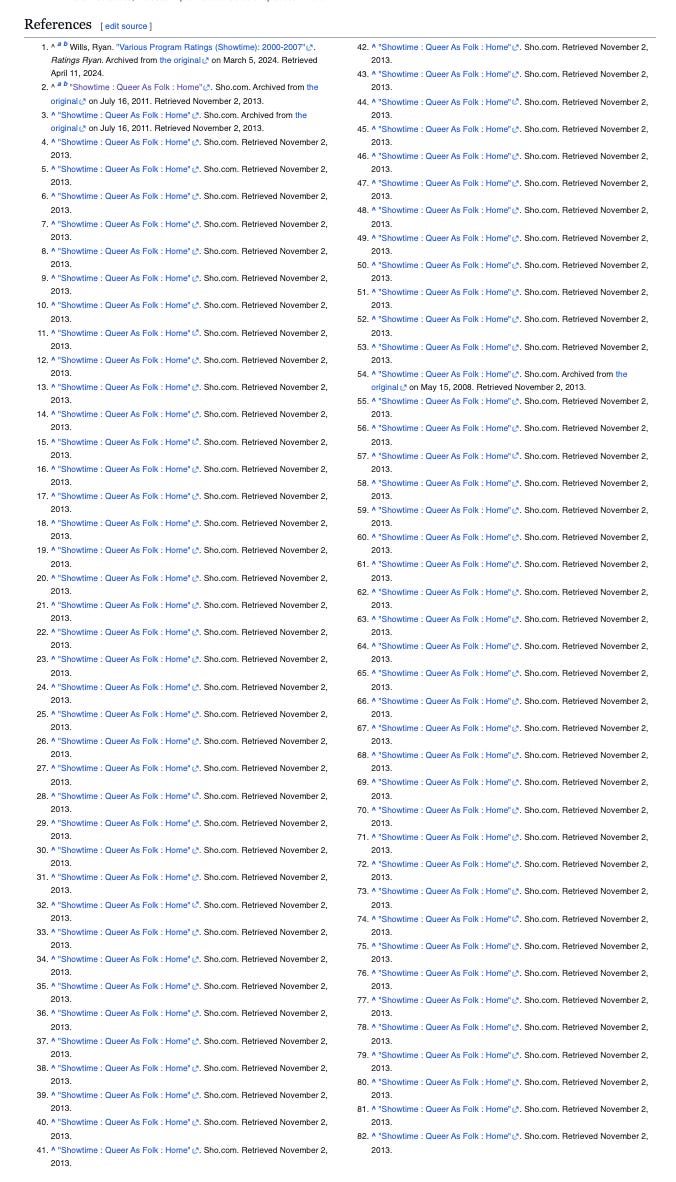
While the archived URLs still remain, if you click them you will find no mention of the word-heavy episode titles. They look like this:
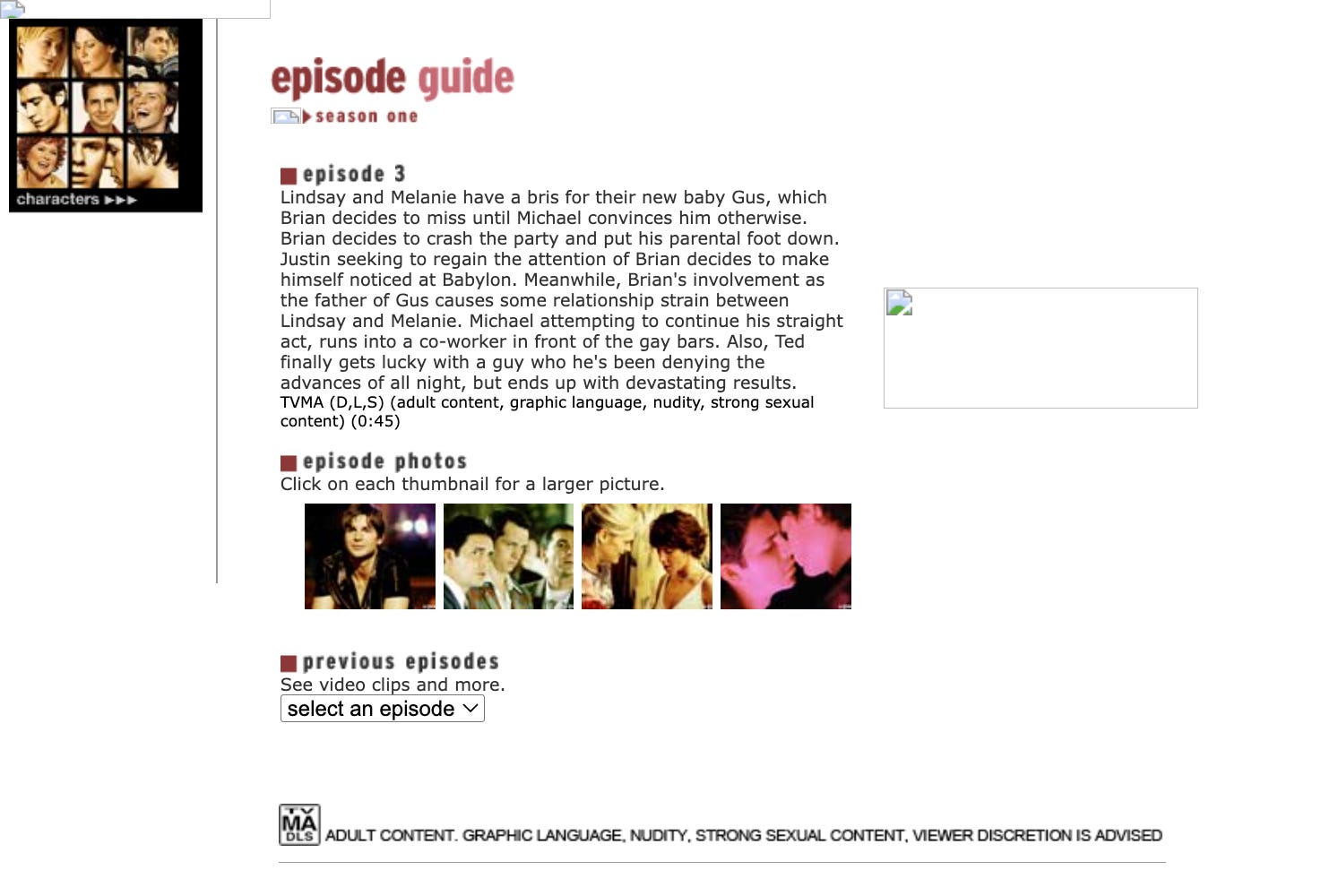
So, why is Wikipedia citing these as its only references, while said references do not contain the information being provided on Wikipedia?
Good question. I don’t know. But I did find this edit from 2010, in which we first see the Truth #1 variant, although in a much different version than how it exists now:
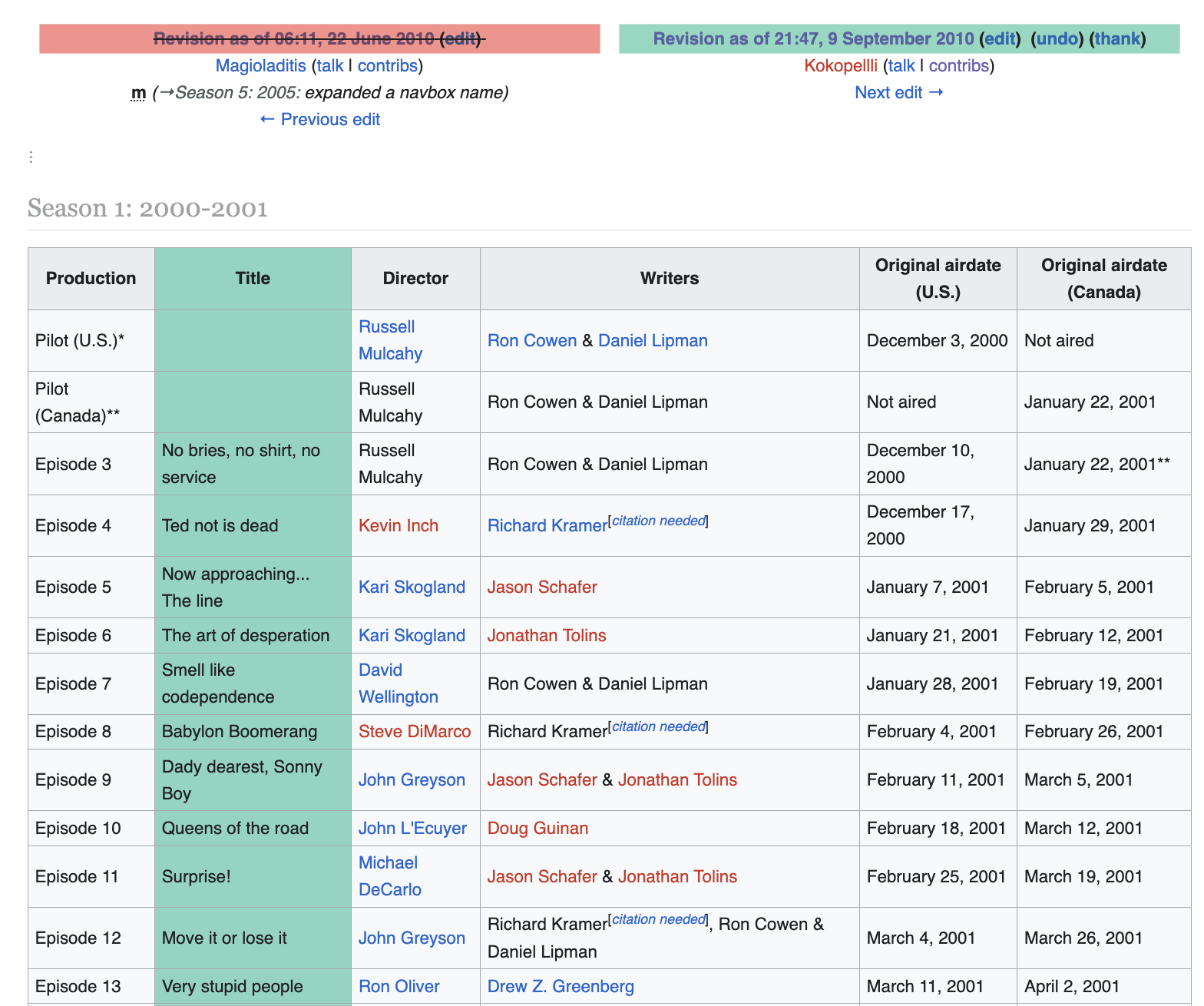
On 9 September 2010, editor Kokopellli added a new column to the table on the article. The column is named “Title” and contains unsourced episode titles. While not following any conventions around title casing, these titles do look largely similar to the episode titles that one can find on Wikipedia and in other various places today.
A little over a month later, two different unregistered editors jumped in and apparently spent some time cleaning up Kokopellli’s edits, mostly correcting typos and casing issues:
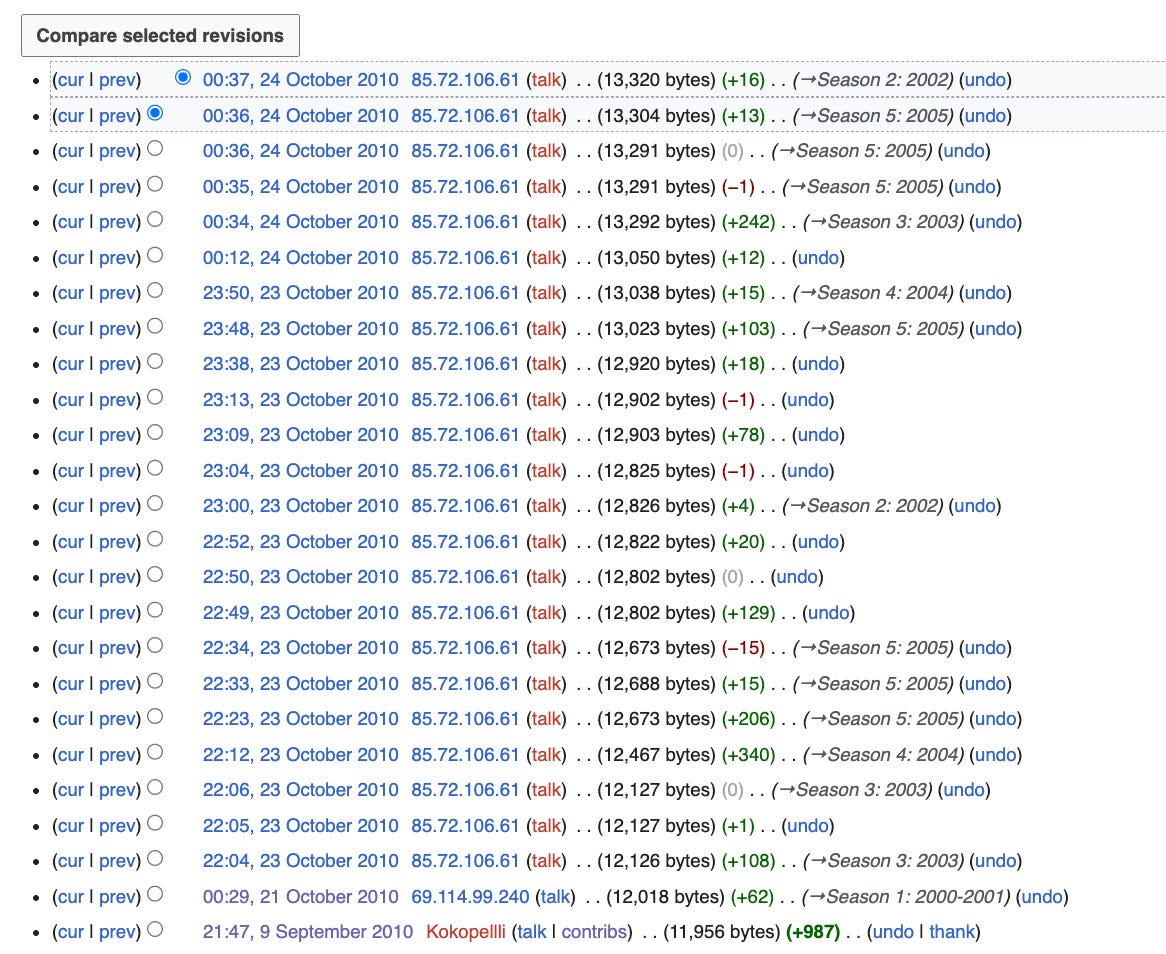
Since then, no one has challenged the narrative of these titles, at least not within the world of Wikipedia itself. I’m not entirely sure if this is where the myth of the episode titles began—and to make matters worse, Live Journal appears to be in the process of going under, killing some of the blog posts I had previously found related to this.
But as best as I can understand it, these episode titles began as someone’s shorthand or maybe even the titles of blog posts recapping episodes, and at some point they transcended into official internet canon. And I’m fairly certain the time such a thing occurred is when a few editors on Wikipedia made these edits and no one ever questioned them.
At this point, I’m accepted Monia Ali’s initial message and point-of-view as being accurate, while accepting that it’s a form of accurate that might not matter when so much of the internet’s weight is on the other side of the scale.
How would one even change this? Edit the Wikipedia article to remove the false titles? If so, how would one prove that they are false, given that so much of the internet says otherwise? Keep in mind that Edit History, being a self-published publication, does not meet Wikipedia’s standards. These words cannot be used to edit Wikipedia.
But I’ll admit that I still wasn’t satisfied at this point. I needed a smoking gun. Real proof one way or the other. So I felt as if I had no choice but to reach out to the Queer as Folk writing team.
This wasn’t my first time deciding I needed to email someone to find out what’s true and what isn’t. I scoured the internet trying to figure out if any of the Queer as Folk writers kept active online presences, would be likely to check their fan email, and would consider replying to an email from me. I decided the most likely was probably Shawn Postoff, as he appeared to be one of the younger and more online of the original Queer as Folk (US) writers.
On May 12, 2026, just before midnight, I emailed Shawn Postoff the following:
Mr Postoff,
I write a newsletter/blog about how truth exists on the internet and I was recently told by a fan of QaF US that all the titles listed on Wikipedia (and almost everywhere on the internet) are fabricated.
As I dig into this, it looks like beginning somewhere in 2008 or so, false titles for the Queer as Folk episodes began to incept their way across the internet. Hulu, Amazon and Paramount+ all list them as #101, #102 etc but Apple TV and Sling list the (false?) titles instead of the numbered titles.
If I’m not mistaken, you were a writer for Queer as Folk for several of the seasons. I think you’re even referenced in this conversation here: https://queerasfolkfans.livejournal.com/2843308.html
Are you able to confirm or deny if the titles like “The Art of Desperation” or “Queer, There and Everywhere” are fabrications on the part of the internet that have somehow become considered truth over time, even by Apple TV itself?
I am hoping I can shed some light on this bizarre story and also potentially correct this mistake across the internet.
Thank you,
David (D. F.) Lovett
p.s. here is a link to my Substack where I publish this kind of thing, if you’re interested and also trying to figure out if I’m legit or not: https://edithistory.substack.com/
About a day later, he responded. Here is what he said:
Hi David,
Thanks for your unusual question.
I can confirm that episode scripts emerging from the writers’ room did not have titles associated with them. Scripts were identified by their season + episode number (i.e. #101, etc).
Episode titles seem to have been applied in later years by an avid fan-base and/or ambitious marketers. I’m not sure whether the titles were generated, endorsed or approved by Showtime Networks, the original producer. Regardless, these titles seem to provide a kind of shorthand/gloss by which fans can contextualize plot elements amid seasonal arcs. I wouldn’t necessarily call them “false” titles, as I suspect they’re generally accurate in how they encapsulate each episode. Instead, perhaps the titles should be understood as semi-official, community-sourced additions to the canon.
I hope that helps...
Best,
Shawn
We each sent one more email, during which he consented to the above email being shared.
And… huh. Did I reach out to a writer for Queer as Folk seeking validation, only for him to suggest that my entire line of questioning is maybe a little bit unnecessary?
For years, I have advocated for a Barthesian view of books and movies and television shows, particularly through the lens the Barthes’ “The Death of the Author” empowers fan theorism and encourages people to focus on the text and not the things that a text’s creator says about a text.
In this case, I found myself being reminded by one of the writers that maybe the fandom’s contribution to the episode titles might have merit and not be, as I had previously said, “fake” or “fabricated.”
But I’m still left wondering: how did all of this happen? I believe what we have here is a case of streetsharking and citogenesis. But unlike Jordan Minor’s original act of streetsharking, it’s hard to find the patient zero and the streetsharked reality has, in most corners of the internet, overtaken the original.
Should this be corrected? Considering that Wikipedia cites no legitimate sources for the Queer as Folk episode articles, I do think the Wikipedia articles themselves should be updated.
But will I be the one to make said updates? I don’t think so. It took me long enough just to write the article you’re currently reading. Diving into an edit war in the Queer as Folk fandom is not what I need to do next.
So what did we learn? Well, this whole thing was a nice reminder that the internet is weird. In my case, I decided to go re-read Roland Barthes. I also ended up thinking about my favorite David Lynch moment, which is what I’ll leave you with:
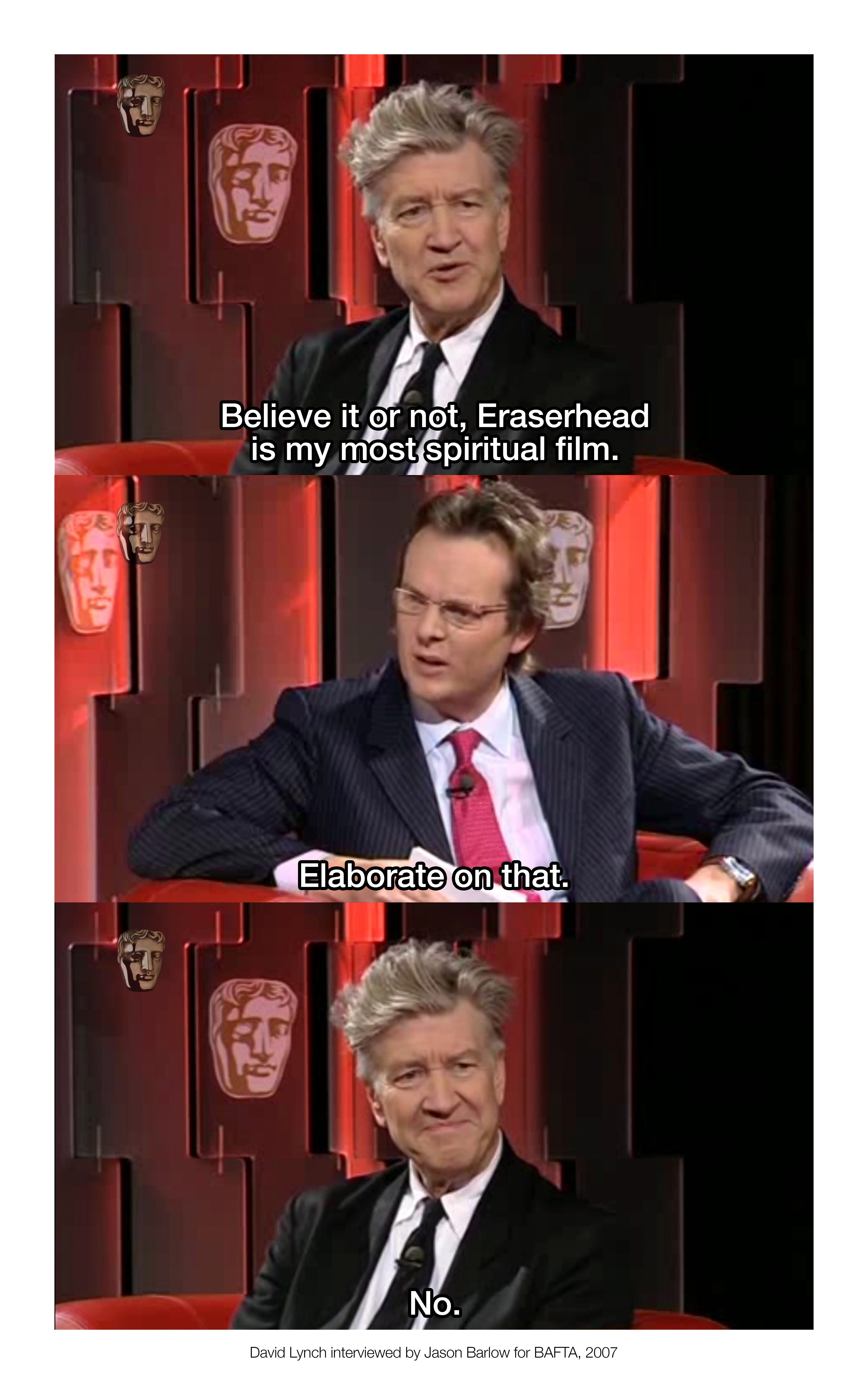
And if any of you are inclined: sure, go ahead and try to edit the “List of Queer as Folk episodes” article on Wikipedia. Let me know how it goes and I’ll happily write a followup.
UPDATE:
I reached out to Monia Ali, who originally tipped me off to this mystery, to see if she thought I missed anything or had anything else to add. She specifically had a thought on what might be causing the streaming services (Apple, Sling, etc.) to be using the non-official episode titles:
the streamers that have titles are probably using a metadata service like Gracenote which itself has incorrect information. I wouldn’t be aware of this if I didn’t work in television myself and the companies I was with hadn’t used services like these. Even when we didn’t, the metadata fields often need to be filled out to avoid errors, and the norm being titles and not numbers would lead to us seeking out the information online... and we know what the online information says.
Which makes me think we are all trapped in one big citogenesis slop loop. Time is a flat circle.
Or, at least, the latest that I’ve finished researching and writing about.
They call seasons series in the UK, which still confuses me.
No posts
Comments
Nothing yet. Say the first thing.
Sign in to join the conversation.