
中文版往下翻👇
Notice: Starting from this week, I’ll be posting my holdings, watch list, performance, and next week’s forecast for paid subscribers every Friday after the market closes. For live trades, you may join the Tianyi Sect for free or the Club 500 as a founding member.
As always, never blindly trust the mainstream media and what the politicians are about to say. Watch closely what they did and what they prepared to do next.
Here are the conclusions. The reasoning is as follows:
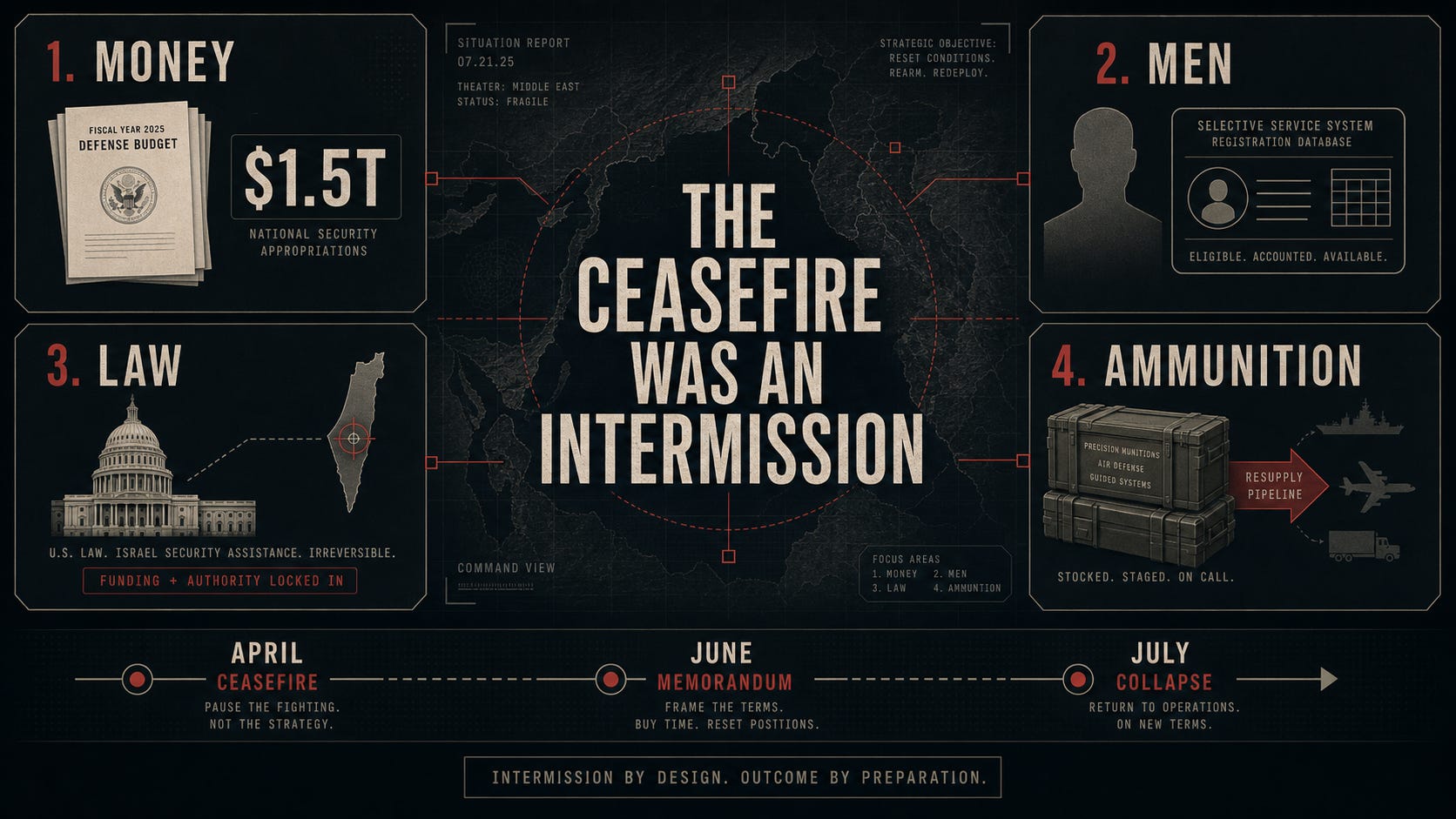
1. The ceasefire was an intermission. The war began on February 28, 2026 (”Operation Epic Fury”). A ceasefire held from April; a 60-day memorandum followed in June; it collapsed in July. President Trump has now formally notified Congress that the war has restarted, and the naval blockade is back on. This is not a wind-down. The next phase is being built to be bigger than the first.
2. During the five-month pause, Washington built four fronts for a larger war.
Money: a $1.5 trillion FY2027 defense request — the largest since World War II.
Men: Every American man aged 18–26 enters the draft pool automatically on December 18, 2026 — no sign-up required.
Law: a U.S.–Israel military-integration provision passed the House, and Congress has now proven twice that it cannot stop this war.
Ammunition: the White House says the supply is “unlimited” — while its own budget asks for billions to refill stocks it admits are “depleted.”
3. The bond market has already priced a long war, not a crisis. The 10-year Treasury yield jumped from under 4% before the war to above 4.6% — its highest since January 2025. Brent crude crossed $100. And markets are pricing in the odds of a Fed rate HIKE (although, as always, my observation is that they are not going to hike, but rather keep the rate where it is). That is the exact opposite of the flight-to-safety a short, contained war produces.
4. This week is the tell. Netanyahu meets Trump at the White House on Tuesday, July 28 — their first sit-down since the war began. What they say afterward decodes the next phase, and the signals run backward from intuition:
Loud threats = the SAFE signal.
Silence = worrying.
Both sides talking peace = most dangerous of all — because this war’s documented pattern is negotiate, then strike.
Below the line: the reasoning behind every one of these conclusions, the exact signals to watch after Tuesday’s meeting, and how I’m positioning my portfolio.
P1 — What to watch after Tuesday’s meeting?
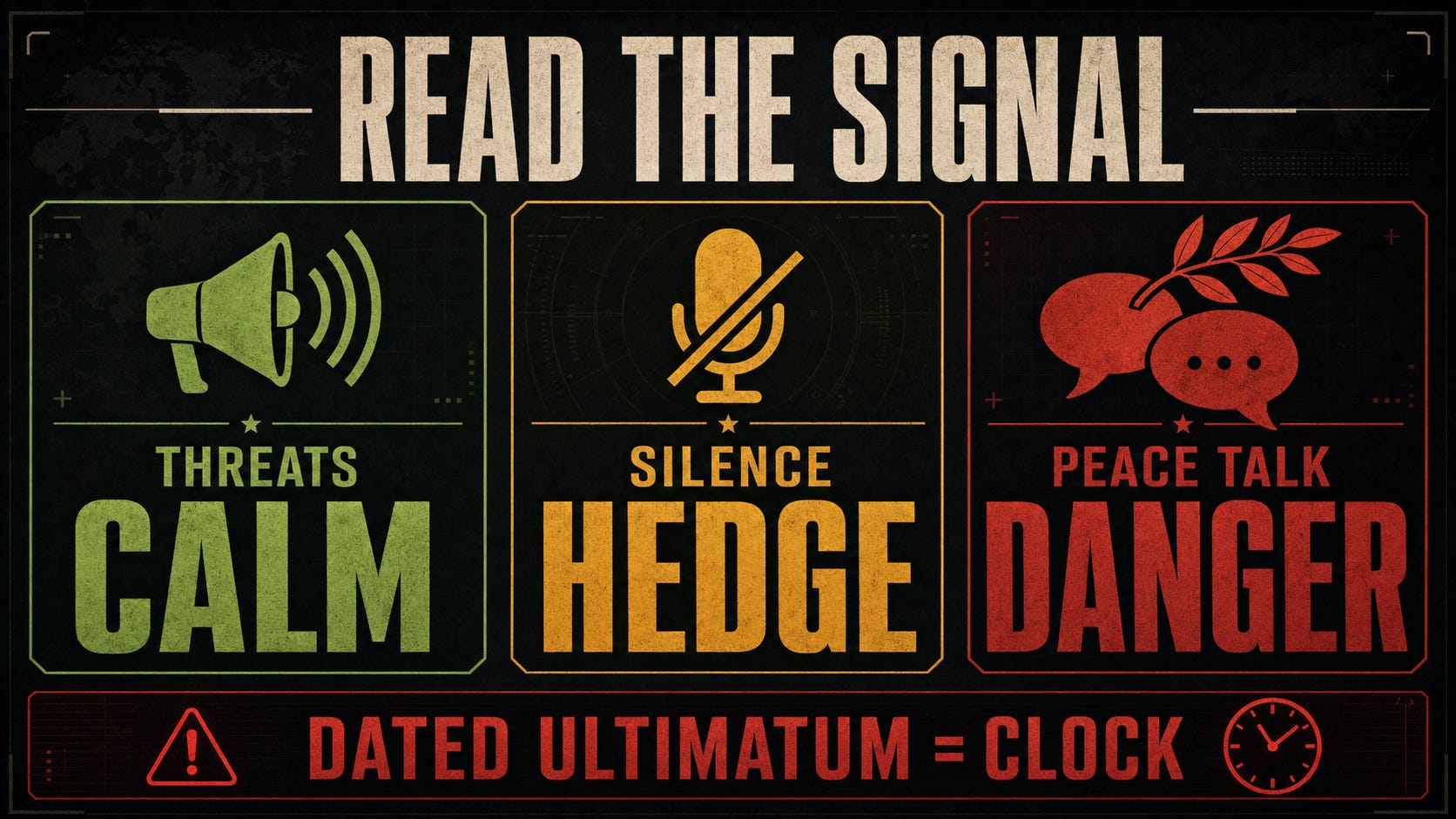
Watch the tone, not the words — and remember that in this war, warm and diplomatic is the dangerous setting, not the safe one.
Netanyahu departs for Washington on Monday, July 27, at Trump’s invitation. He meets Trump at the White House on Tuesday, July 28 — his seventh visit since Trump returned to office, and his first face-to-face with the president since the war began on February 28.
The same day, he attends the memorial service for the late Senator Lindsey Graham. Ukraine’s Zelensky is also expected. Netanyahu departs on Wednesday.
Notably, there are no journalists on his flight — an unusual choice that limits leaks.
On July 24, Trump said the U.S. military is “prepared to escalate” strikes against Tehran if necessary.
Now, the part that matters for your portfolio. After the meeting, you will get a signal. Here is how to read it.
Comments
Nothing yet. Say the first thing.
Sign in to join the conversation.