

(as the apocalypse rolls on and on, slowly building in intensity, with us hapless humans dutifully adjusting to slow strangulation by unknown, unseen, dark forces (cuz what’re you gonna do about it?— after all, we’ve all got lives to live before we all go off the cliff like the lemmings that, sadly, we truly are), more and more of us are starting to figure out that all is not what it appears to be, nor has it been for the entirety of our history. more and more of us are questioning the wisdom of those steering the great locomotive of modern mechanized (and now digitized) humanity. yet very few of us are willing to face the real beast in our midst: us, we ourselves. the magnificently dastardly and deadly murderous villains of our past (and present) that have plagued us over and over again with their b.s., they couldn’t have done what they did without our whole-hearted, committed and willing help. what this means is that we, the great majority of human beings on planet earth, are not in possession of ourselves. someone else controls/owns our minds, and by natural extension, our very lives. we faithfully take in the god-concept poison, as our parents did, and feed it to our own children. this has been going on, increasing in severity of self-destruction little by little, for 7,000 centuries now. give or take a millennia or two.
pretty much every writer on Substack (and elsewhere) who purports to be part of the ever-burgeoning “expose the man behind the curtain” movement, who speaks to the conspiracy crowd, or the gun-toting, christian-minded survivalists, or the “return to functioning democracy” folks, or the constitutionalists, or the anarcho-capitalists, or the luddite-type “back to the basics” quasi-religionists, all of these speak as if there is a chance that power-minded, power-addicted, power-drunk people haunted by eternal fear of losing their power can be reformed, made to “see the light” and come to know the error of their ways. all we have to do is rise up and speak out in sufficient numbers and all power-minded, occult magicians will magically come to their senses, call off their attack dog/soldiers and police, fall to their knees before “we, the people” and allow us free access to the levers of power because after all, aren’t they human beings too, with sons and daughters and grandchildren?
with this view, we imagine ourselves as saintly, even christ-like beings anticipating an outcome where we, the magnanimous majority, embrace the odious and the insidious— those misguided souls helplessly trapped by “the dark side” and so have become insane with power madness. we will hold them gently in our warm and motherly-sweet lovin’ arms while everyone tearfully rejoices in a kind of mass redemption ritual sort of like Darth Vader in that crappy Star Wars episode where he lay dying, repents, and reveals his “kindly grandpa” face expressing sweet, sad remorse.
aka “The Great Kumbaya”, as i’ve termed it. an admittedly nice story, but that ain’t how it works, folks. it takes a very, very, long time to dig down into ones’ “dark side” and get at the deeply tangled roots of ones’ poisoned mind. just because one is able to see the madman “out there” does not mean that he has stopped controlling you from within.)
Inflation - The Invisible Thief
Like an insidious incubus, it enters through every crevice and invades every sanctuary. Once inside, it consumes the sustenance of its’ victims with such stealth that the impoverished know only their condition and not its’ cause. This demon cannot be caged. No defense can limit its’ destruction. Survival demands that it be totally destroyed. It goes by the name, inflation. Of all the different ways that intervention can destroy markets and an economic system, none hold a candle to inflation for pure means of absolute destruction.
What is inflation? In a word, counterfeiting, fiat increase of the money supply. (“fiat” = credit, non-existent buying power forced by law into existence in the form of worthless metal tokens or fancy printed paper that nobody in their right mind would use if these tokens did not come by means of a gun to our head, i.e., gov’t force and coercion). Cause: An individual or group of individuals legally or illegally printing paper currency or issuing bogus coins. Or, the Federal Reserve Bank can cause inflation by manipulating the money supply by other onerous means. Effect: Devaluation of dollars already in circulation, i.e., redistribution of wealth, consumption of inventory and capital goods without replacement, prohibition of long-term planning, general apprehension, confusion, chaos, and market destruction.
All true. Yet, by myth and misconception, inflation is believed by most to be a necessary part of the market and receives support and praise for its’ “saving quality” from nearly every quarter. (quarter, as in “station” or “lodging”, rather than the cupronickel token of the same name). Disagreement centers on “too little” or “too much”. This is the totality of their excuse for failure. The usual argument “justifying” inflations is that if the money supply does not keep pace with the output of goods, the goods will not be sold and the “economy” will become depressed, businesses will fail, unemployment will increase, etc. After a given increase in the money supply by “monetizing debt” (magically turning a liability into an asset via arbitrary declaration), “fractional banking” (banks lending money they don’t have), etc., the amount of money in circulation at any given time is controlled by the Fed buying or selling “debt securities” (the biggest compounding rollover scheme ever devised). The money manipulation is called “stimulating the economy” or “fine tuning”.
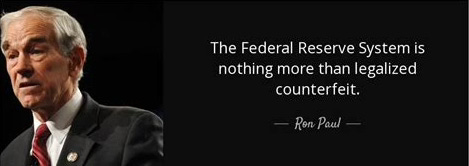
For obvious and sound reasons, counterfeiting is forbidden to John Q. Citizen, however, it is an official duty of the Federal Reserve System.
Herein lies the rub. If a large bucket of water is dumped on a small wood fire, the fire will be extinguished. Regardless of who dumps the bucket of water, how many times it is done, the end result is always the same. I know of no one who has ever challenged this truth. Same cause = same effect, is principle, the sine qua non of all truth and all knowledge. Yet, monetarists claim that the act of counterfeiting results in two different effects, depending on who commits the act.
This is most disturbing. If this is true, that the same act committed by different people results in different effects, what we have is a flexible and therefore unknowable and unpredictable objective reality. Or, we have persons who believe that objective reality is flexible and yet still knowable. They believe that they can pour water on a fire, and then by governmental decree completely reverse the extinguishing effect of water that would happen if John Q. Citizen poured the water on the fire.
Knowing that objective reality is not subject to alteration by the subjective wishes and beliefs of humans is of little encouragement. Minds that hold such absurdity as unquestionable truth necessarily derives these beliefs from sacred and revered illusions which is a psychological defense of such magnitude that one is not likely to penetrate it. Nevertheless, considering what is at stake, I will try:
In an effort to dispel the illusions that the minds of believers use to turn inflation the destroyer into inflation the universal benefactor, let us closely and thoroughly examine and analyze market and money— first at root level, the progressively up to an through the current level where inflation is an ever-present thief.
In a pure barter system of market, there is no money and therefore no possibility of inflation. Undistorted by monetary manipulations, the principles illustrated will serve as references by which to recognize and evaluate elements of the current economic system influenced by an arbitrary and variable money supply.
In any market, personal preferences and personal valuations are ever-present variables. In a free market (there is actually no other kind of market because once a market is subject to manipulation by force it ceases to be a market at all and becomes systematic thievery) one voluntarily gives up something he/she values less for something he values more. It follows that market, i.e., voluntary exchanges, exists and functions only by differences in valuations of the buyer and seller as regards the value attributed to a particular good or service.

The identity of the human individual, observation, and practice establishes that value is subjective and not objective. Value is attributed by the mind of an individual and is not objectively discovered. Value is non-quantitative, therefore, non-measurable. Every voluntary exchange indicates a difference in valuations by the buyer and seller and never does it set a value on the item exchanged. These are the essence and principle of market. Any concept or theory of economics in conflict with these principles is in conflict with reality. Any attempted applications of such concepts or theories will invariably produce end results exactly opposite of consciously declared intent.
In a barter system, a trader may exchange two bananas for one coconut, three apples for two oranges, a canoe for a hut, and so on. In general, the ratio of supply and demand influences valuations, but at no time is there a fixed value for anything. Most importantly, in a barter system, there is no central determinant that coercively ties all business together. A change in the supply and demand of bananas or coconuts does not necessarily drastically affect the value of apples and oranges. If the banana business fails, the proprietor may find salvation in a flourishing apple enterprise. But if they are all tied together in some fashion that the failure of one venture tends to bring down all the rest with it, the banana proprietor has no place to go and the extended forecast for all is gloom and doom.
As implied, in a barter system, any theft must be direct and the thief and victim are easily identified. Consumption by theft without replacement production, while not approved by most, is visible and can be factored into the economic equation. One does not count a coconut not held nor imagine an apple to exist that has already been eaten. Also, a debt and repayment in kind, or unlike kind per agreement, while always subject to market variables is not subject to external and arbitrary declarations of increases or decreases in value. This means that if an individual borrows, repayment requires an increase in production (valued work) or a decrease in standard of living (collateral property exchange). There is no fiat forgiveness of debt.
A primary and exceedingly important fact discerned from a barter system is that money is not a fundamental element of market. Money is only a tool of market convenience. The logical implication is that the concept, money, defined, understood, and applied in accordance with its’ identity shows money to be neutral to market. This is not to say that the concept, money, cannot be corrupted and used to destroy the market. Indeed, there is overwhelming evidence of this. Exposing this corruption and the illusions that support it is precisely the task at hand.
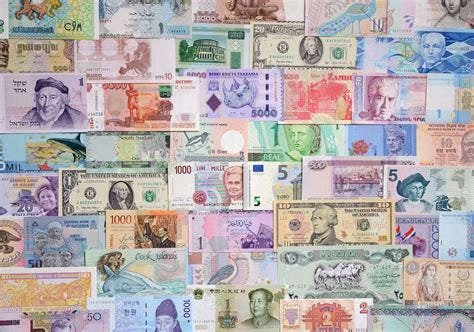
What is money? Most, if not all, agree that it is a medium of exchange. Beyond this is the argument that what is or is not money is determined by common usage; and since the term, common usage, is somewhat vague, what is or is not money is likewise uncertain. This confuses bookkeeping with the items being counted. Money is an abstract concept of standardized units and therefore of linear ratios. In other words, money is an abstract concept applicable to indirect exchanges for the purpose of registering individual differences in valuations. In all probability, some physical material has always been used in implementing the idea of money, but the origin of money is the mind, and is inextricably entwined with the reality, subjective value; which necessarily precludes any logical attachment to or dependence upon objective quantity. Metal tokens, ink on paper, etc., are merely means of accounting; a way of physically unitizing for the purpose of record keeping. In fact, given adequate memories and honesty, monetary units can be held in the mind only, and transferred from mind to mind as dollars are now transferred from hand to hand.
The significance of this fact is that money, being totally abstract, is by origin and character, non-causal, i.e., neutral with respect to the market. The unlimited fiat expansion of the money supply is proof in itself of the abstract nature of money. Yet, monetarists would have us believe that they can, by nothing more than an increase in the money supply, cause a creating of goods and thereby improve the “overall economy”. I agree that the intervention has an effect, but it is not the effect that they claim nor from the cause they imagine.
Let’s assume a market system with a fixed money supply is held in varying amounts by the market participants. In this market are the usual factors that participants must take into account in dealing with each other, but they do not have to worry about all the adversities of a variable money supply subject to the whims of persons who obviously know nothing about the market. There are some ups and downs, successes and failures, but by and by, most are doing just fine. Wealth is accumulated and provides time and materials for research and development of new items of value or increased production efficiency in various fields. Here, an increase in efficiency and production tends to bring prices down and there is beneficial ripple throughout the market system.
A fixed money supply affects and holds a “balance” between money and goods/services bought and sold. The market reflects the choices of the traders. With a fixed money supply and use of the complete supply, if the prices of some things go up, others must come down or else not sell. It’s a matter of elementary arithmetic and ratio. Limited buying power and consequent priorities informs the traders of their preferences and valuations. An item popular with buyers tells the maker and seller that they made the right decisions. An item not selling well, or not at all, sends the opposite message. One venture fails, others succeed. The alternative is centralized economics (non-market) where all fail.
In this fixed money supply system, the monetary unit travels throughout the system in step with valuations and exchanges of the participants. Each increases or decreases his holding of money units in correspondence with production, personal preferences, and market choices. The purchasing power of each unit is determined solely by the variable market factors. The proportional value does not change because counterfeiting and increase is non-existent. Except by direct theft, there is no means of redistribution via a fixed money supply. All factors converge upon the truth that money is neutral with respect to the market.
Since understanding the role of money in the market is of utmost importance, it behooves us to clarify the relationship between money and market with such definitiveness that there remains no doubt. By reference to this relationship, one may better see the distortions and illusions of the monetarists.

In the days of open slavery, a slave, by threat of punishment or death, was obliged to work and produce. The slave owner then took and consumed whatever he wished of the slaves’ production. There was no place for money in this relationship and none was used. Goods changed hands, but not by voluntary (market) exchange; rather, by coercive force was the producer compelled to give up his/her production to be consumed by someone else. The point is, and no point is more important in philosophy or economics: Where there is coercion, there is no market. In definition and practice, coercion and market are mutually exclusive. Whether it is a slave owner taking from his slave, a burglar in the night, an armed bandit in broad daylight, or the Fed creating and circulating counterfeit, the act is theft, not market. The only difference between the acts is visibility. “Legal Tender” is a constitutional declaration of intent to defraud. Inflation is its’ ultimate fulfillment.
The base of buying power is exchangeable goods. The total supply is always limited and is distributed in varying amounts among the market participants. Likewise, the total money supply “corresponding” to the total supply of exchangeable goods is distributed among the market participants. Although the use and movement of the money supply is determined by the infinitely variable choices and valuations of the traders, the unit ratios of money, representing buying power, is fixed by the totality of the money supply. Any increase (loans, credit, subsidies) in the total supply of money necessarily decreases the buying power of each unit as the units make their way into the marketplace. I know of no one who denies that buying power is transferred from the old money to the new in proportion to any increase in available monetary units. So, I see no need to elaborate. The critical issue is the alleged justification for increasing the money supply and redistributing the wealth.
As stated earlier, buying power is limited in total, and per individual. Limited buying power cannot support unlimited enterprises. Priorities are a foregone conclusion. If a good or service is not selling, it is because the participants in the market choose not to allocate buying power to this item. Unfortunately, monetarists reach a different conclusion. They conclude that the item is not selling because there is not enough money in existence. So, to “stimulate the economy”, in defiance of market decision, they increase the money supply (fiat, credit, loans, i.e., counterfeit).

Naturally, the new money provides a means of consuming without the requirement of exchange and replacement (labor, production of goods/services). Follow this premise to its’ final conclusion and we see everything consumed and everyone perishing. The direction is clear. How far we go down this road is dependent upon the whims of the legal monetarists. Not a pleasant thought.
We know that the decision to increase the money supply is motivated by something. What? They give as reasons, “to stimulate the economy”, “to fine tune the economy”, “to improve the overall economy”, “to raise the gross national product” and “increase the national wealth” (modern spins on this same thing come in the form of damage mitigation terms such as “bail-outs for banks too big to fail”, and “quantitative easing”). Perhaps in focusing upon their motivation and seeing the fallacy therein, we may come to understand the perpetual failure of monetary policy:
You have heard of the person who “could not see the trees for the forest”. Could it be that the monetarists cannot see the real market participants for the abstract economy? Are they lost in a world of abstracts; a “mind-world” disconnected from the real? A “mind-world” exactly opposite the real one? Would this explain their belief in reversing the effects of counterfeiting? Would this explain the belief that diminishing the parts by counterfeiting somehow increases and improves the whole? I believe it does.
Accounting and abstract calculations mentally applied to the real is of much value to an individual in understanding the elements of household or business finance. By numbers, income vs. expenditure, savings vs. debt, assets vs. liabilities can be known and factored into ones’ personal values and goals. This method of financial accounting has value only because it is part of the total. The figures mean nothing without reference to other money and goods held by others throughout the market system. Economy is an abstract term denoting the existence of an ongoing economic system comprised of real individual participants. These are the objective elements of the market. To presume to “stimulate the economy”, “improve” or treat the “economy” in any way that disregards effects upon real individual participants is to pursue illusion unto disaster.
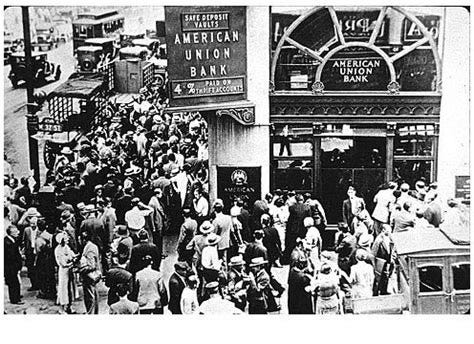
Let’s look at this a moment in terms of the much-revered Gross National Product, which is alleged to be the total output of “the nation” in goods and services in a given time period. This “GNP” is measured in dollars and is expressed and implied to represent value. It is used as an indicator of economic “health”, or conditions in order to determine what action should be taken with regard to the “economy”. What is the quality of this reference serving as justification for market intervention via money supply? Is it based upon fact, or fallacy? You decide.
If you voluntarily trade a banana for an apple, doesn’t this indicate that you value the apple more than the banana, whereas the person with whom you make the trade obviously values the banana more than the apple? Now, instead of a banana, you voluntarily trade a dollar for an apple. By this action, you show that you value the apple more than the dollar. The other trader, by action, shows that he values the dollar more than the apple. The exchange only takes place because of different valuations by each trader. Each person agrees they are getting “more” than what they are giving up or the exchange does not take place. At no time is it expressed or logically implied that the dollar represents a fixed value. Indeed, as just demonstrated, the dollar represents a subjective difference in valuation of two individuals as regards a particular good. So, pray tell, from where or what do the monetarists get the “Gross National Product”? To arrive at a “GNP”, they presume to add up variable subjective differences and arrive at a fixed objective total value for all? Pure myth.
To be sure, one may count the number of dollars changing hands, but what knowledge does this yield except a total of dollars in motion? Naturally, more counterfeiting means more dollars in motion and the greater the “Gross National Product”. What exactly does this total reveal? Answer: Useless history. It tells that X number of individuals spent Y numbers of dollars during time period Z. It doesn’t set a value. It doesn’t measure wealth. And it certainly does not reveal what the counterfeiting and money manipulation is actually doing to ruin the economic system. The GNP is simply an abstract total arbitrarily allocated to an abstract economy. It is completely cut off from the real, having “meaning” only in a mind-world of illusions. Monetarists presume to grasp the whole without knowledge of the parts. They devise plans to improve the whole by destroying the parts, i.e, they cut down individual trees in order to save the collective forest.
A market system is made up of interdependent traders. Though each is free to make independent valuations and exchanges, the interlocking nature of the system means that every action therein has a corresponding ripple effect throughout the entire network. Some actions are positive and some are negative. Some ripples are minor and unnoticeable. Others are major and devastating. To see the origin and cause of a ripple, it is necessary to find the initial source and determine its’ character.

In practice, the Fed usually interjects money (counterfeit) into the system by indirect means; by banks, S&L’s and the like. However, instead of going through all the complex thieving machinations of the banking system, for sake of simplicity, let’s assume a quick and direct link to the Fed. The participants in an economic system often number in the millions and the daily transactions in the trillions, but again, for sake of simplicity, let’s assume a few participants in direct focus with all included by inference:
The effects of inflation travel throughout the system by many routes and are often obscured by time, distance, and assorted beliefs and claims. By reducing all the system elements without losing integrity, the “invisible thief” (monetarists) can be identified and convicted. Begin with a market system and fixed money supply. You manufacture and sell roller skates. Mr. Smith manufactures and sells widgets. Others are engaged in a variety of businesses and forms of employment. Some businesses are thriving, some are doing o.k., some are barely hanging on and some are sinking fast. Your roller skate business is thriving. You spend part of your money and the rest you save. Mr. Smith, on the other hand, is not doing well at all. He is selling some widgets, but not nearly enough to make a go of it. The market decision is that Mr. Smith is in the wrong business. Limited financial resources demand priority valuations. For most, widgets are not on the list. Mr. Smith has no choice but to accept this fact, admit error, absorb the loss and close up shop. Tragic, perhaps, but not fatal.
Mr. Smith may salvage enough to try again with something else. He may entice investors into backing his next venture. Or, he and his employees may find work in one of the thriving and expanding businesses. But before any of these alternatives can be chosen, the monetarists arrive on the scene and observe the plight of Mr. Smith and the impending layoff of his employees and conclude that the only reason Smith Widgets are not selling is because there is not enough money in existence to “keep pace with the output of goods”. From this premise, the “solution” is simple: create enough money to “match” the selling price of the widgets.
Cometh now the Fed printing money believed to be sufficient to keep pace with the production of widgets. What the market rejected, the Fed now embraces. What the consumers refused to buy directly, they are now compelled to buy indirectly - without even receiving the goods. The Fed distributes the new money to selected consumers with instructions to buy widgets. They do as instructed and, lo and behold, what the market rejected is now a thriving business. Salute to the wisdom of the Fed!
Second look: They count the money in motion as dollars are exchanged for widgets. They are pleased to improve the “overall economy” and total the value created. The fact that each exchange depends on difference in valuation and does not set a value is ignored. That the buying power used was stolen is not thought about. That each purchase is consumption without replacement is ignored as a matter of policy. That this act diminishes total goods is beyond their comprehension. All they see is dollars in motion and applaud the economic activity without a clue as to the massive destruction of their act.
In the preceding example, the widgets were, in the market consumer sense, consumed and the Fed has nothing permanent to show for their efforts. They look to other effects as “proof” of money’s “power to create” and improve the “overall economy”.
To wit: The Fed prints $50,000 and gives, loans, whatever, to Individual A. Individual A takes the money, buys materials, and with his labor builds a house with an estimated market value of $100,000. Along come the monetarists and exclaim, “Look! Where there was nothing before, now there is a house worth $100,000. We put in only $50,000. The purchase of materials and employment of construction labor raised the GNP and the national wealth has increased by $50,000.”
Until I see a “nation” standing in a welfare line, I’m obliged to regard their thinking as highly suspect, to say the least. The fact is, the buying power for the materials was stolen from the market participants the same as in the widget example. That Individual A made a house of the materials in no way erases the confiscation or alleviates all the adverse effects described earlier. While monetarists spout silly phrases about an abstract nation, in the real world Individual A does in fact increase his wealth— at the expense of the victims. He, himself, being one of them.
A market tends to adjust to any given money supply. Given sufficient time (though the price of folly must be paid) any increase in the money supply will be discounted and it will be business as usual.
Unfortunately, with the prevailing monetarists’ mentality, this is not allowed to happen. At the bottom of the “natural cycle”, caused, naturally, by the monetarists, firmly convinced that they are right and spurred on by the righteousness of their action, they seek to resolve inevitable problems by expanding cause.
As the buying power of each monetary unit is directly proportional to the total units in existence, any increase in the total supply diminishes the buying power of each unit. Therefore, to transfer the same amount of buying power, the new money must increase proportionally and always exceed the previous increase. A transfer of 10% of buying power requires a multiplying factor of 1.1111 applied to an ever-increasing base. A 10% increase in the money supply leaves unit buying power as 0.90990. Follow this through 10 increases of 10% and the buying power remaining is 0.38555 of the original.
The arithmetic is deceptively kind. Aside from the inflation-caused “need” to increase the rate of inflation as the counterfeiting undermines otherwise sound businesses, the number of “needy” increases as the number of “saving sources” decrease. This means that as the base shrinks, the burden is laid upon fewer and fewer at an accelerated and higher rate. Each business is tied to the other by centralized coercive force. Corrupted money is an indirect and universal means of deceptively applying the coercive force. (Coercion is the cause, not money). As counterfeiting consumes without replacement, the resources of every victimized person and business are diminished. Planned innovations, increased production, increased employment, are aborted for lack of resources, resources consumed via counterfeiting. Instead of expansion, there is contraction. Instead of hiring, there are layoffs. Instead of steadily increasing prosperity, there is perpetual boom and bust. The long-term view reveals steady decline in individual buying power.
Throughout the world, many engage in the buying and selling of money, which is not an objective commodity or real service, but abstract speculations about abstract units. The money manipulations by “governments” trying to gain advantage in the “money market” will eventually come home to roost in the collapse of the international monetary system. Since real economics is officially tied to this insanity, severe adverse effect is a certainty. There are too many unknowns to set a timetable, but that this situation is heading for one big collapse you may be sure. The collapsing banks and the failures of S&L institutions brought to you courtesy of “The Fed & Government” was but a mild preview of coming attractions.

The problem is, as stated in the beginning, a psychological one. Value is subjective. Inflation is counterfeiting. These are elementary. The causal elements involved in the issue are simplistic and highly visible. The denial and rejection of these basic truths in deference to mental constructs, expressed or implied to be real entities, indicates a serious thinking disorder. Or, to put it more palatably, there is an absence of awareness of the principles of knowledge and a lack of self-imposed mental discipline to adhere to same.
The underlying cause of this faulty thinking is taught in an indirect and unconscious fashion. The condition is almost universal. This, in conjunction with the prevailing psychology of yielding the mind to authority in the form of a figurehead or anthropomorphic “public opinion”, leaves little hope for emergence of an attitude of efficacy of self and trust in ones’ own mind.
Any position assigned or accepted in the psychological hierarchy of authority is of no importance. All are imprisoned by the same restraints. A “well-recognized authority” dare not think outside of the proscribed parameters lest he/she lose standing among peers. The “lesser” dare not challenge lest they be considered a fool to imagine their mind to be on par with their “betters”. Thus, by fear of knowing and by silent agreement, vile absurdity is enthroned and revered as unquestionable truth. This is the guardian of “national wealth” and other such nonsense.
(it should be said here, by me, that this author and i disagree on whether or not there is actual malicious intent within the minds of those tiny few human beings who see fit to impose deadly force and coercion upon the entirety of their fellow man. speaking only for myself, i am not able to accept the idea that the sophistication and genius behind banking and gov’t techniques of control/manipulation is the result of well-intended, unconscious choosing based on imagined “truth” or simple lack of awareness of self— as if these people can be likened to innocent kids swinging for the fences in a friendly neighborhood game of baseball but instead wind up smashing the ball through a neighbors’ window, putting the kindly elderly lady inside into the hospital.
psychologically speaking, it could be said that even a murderous psychopathic serial killer does not murder/harm people out of malicious intent, but rather out of a kind of helplessness in the face of inner psychic-emotional urges/impulses of a very compelling nature rising up from their deep unconscious that, because of failed repression, tend to force themselves into conscious awareness via explosive violent acts in order to bring about resolution and make past traumas known and honestly confronted. this may be as good a definition of “evil” as we are ever going to get— that all bullies, big or small, petty or genocidal, male or female or whatever, are caught in a vicious cycle of self-destruction typified by endless inner turmoil and painful isolation that can only be (temporarily) vanquished by lashing out, by dominating others, by inflicting pain, watching the suffering and by this feel within a great sense of power. that is to say, there is indeed malicious intent, but this intent is not of their own making nor is it their choosing.
the grace of this author (grace that i lack, ha), may be that he is “giving them an out” by suggesting that it’s all been just one big misunderstanding, albeit one lasting several millennia and all that needs to happen is that global bully-powers, handed down through the centuries from parent to child, take a good look at themselves, recognize the reality of the misery their well-intended policies have wrought and so learn from their mistakes. you know, it’s all just been one big, long “error”. ooops!
it is then for us, the long-suffering masses, to say:
“hey, no sweat, you guys. some of us just have to learn things the hard way. let’s let bygones be bygones.”
i certainly get that, toward a peaceful, forgive-and-forget type of scenario as a possibility, but realistically? i don’t see it. these are bloodless, soul-less, dead-hearted, monstrous creatures who know precisely what they are doing. if they do go down, they are going to go down swinging. count on it. countless “little people” will be destroyed. but in the end, the bees can, and will, take down the bear that’s been stealing their honey. it will then be up to those few remaining humans to either bury their former masters in silence, having acknowledged their own participation in propping these beasts up and allowing them to flourish and poison greater humanity for so, so long, or descend into a mindless rage bender, string them up in the town square, rip their skin off and set them on fire and, by so doing, learn nothing— thereby we shall repeat the whole sad affair.)
No posts
Comments
Nothing yet. Say the first thing.
Sign in to join the conversation.