

(pleased to meet you! hope you guess my name! just what’s confusing you is the nature of my game!)
Economics, Goods and Services
An individual’s material condition is a matter of economics. Food, shelter, and usually clothing, are things of grave importance to any and all who wish to survive. There are, of course, other wants beyond bare necessities for survival. These too are a matter of economics and involve the same actions or interactions as those required in achieving base survival needs. If an individual lived alone on a desert island where all economic action is totally self-directed and totally self-controlled, understanding ones’ economic situation is an open and straightforward proposition and easy to understand. Even in a primitive rural setting of several individuals where barter is the means of exchange of goods and services, most transactions are direct, immediate, and visibly linked. In this kind of economic system, it is not at all difficult to see what’s going on and to know of supply and demand and how transactions affect ones’ material condition.
In an economic system involving many millions of individuals and where daily billions of exchanges are mostly indirect by money, the ins and outs of this system and how they affect your material condition is not so easily grasped. It is literally impossible to directly trace the influence of even one transaction in such a system. Without some principled references firmly held in mind by which to evaluate the underlying and directive beliefs, premises, and theories that create this system, one may witness effects, oft times adverse, and really have no idea of the cause. Indeed, ill effects are frequently attributed to just about everything except the actual cause.
In the barter system mentioned above, if the exchanges are voluntary, the principle of the market, subjective value, is highly visible. That is, it is a circumstance wherein each individual attributes personal value to a given item of goods or service. The differences in individual valuation between the potential buyer and potential seller are the market activators. This is the free market. Regulation introduces the contrary. This is the end of the free market. It is not that subjective value disappears.
Regulation is a circumstance in which the subjective valuations of one or some are imposed by force upon another or others. Of course, this is done with the actuality kept hidden and in the name of abstract cause and abstract beneficiary.
Boom and bust economic cycles are a matter of record. Some bust periods, “recessions” and “depressions”, have been long, wide, and deep with widespread misery that is always part of the scene. Repetition undeniably reveals that either the cause is unknown or is improperly treated. Some would have us believe that it is just a matter of “normal business cycles”. I find it inconceivable that supply and demand on a nationwide scale suddenly are incompatible because of simultaneous miscalculations of suppliers and consumers, or because there is a simultaneous devaluing of materials and labor. Granted, there are no natural guarantees and at given time any given business may fail because of poor judgment, nature-caused misfortune, or because new technology and innovation has made a product or service obsolete, but should such occurrences affect nearly every business on a nationwide scale? This is hardly likely and is too much to attribute to coincidence.
It is a principle of nature and a foundational premise of all scientific research that from common cause comes common effect, and vice versa. Bear in mind as we seek that common cause, we are not talking about economic deprivation due to natural calamity. Rather, we are talking about a circumstance in which resources are either abundant and labor plentiful, yet fail to combine to fulfill needs and desires. This in itself is a strong indicator that something is wrong at the core of the system.
What is wrong? Answer: Regulation— the enemy of freedom of choice and voluntary exchange, the enemy of the essence of the free market itself. Regulations are always imposed in the name of protection and for the “benefit of all”, but the claim is belied by definition and practical application. Regulation (not protection) is basically one individual imposing his will upon another individual via the governmental system. As one after another seek to escape the imposition, or to gain in like manner, competition in the marketplace and voluntary exchange is abandoned to compete for legislative favor and coercive advantage. In so doing, the market is declared inadequate and unwanted. The future is foretold.
The number of regulations defy counting. Types and methods of implementation are infinite. They travel and interlock with multiple direct and indirect adverse effects; often emerging at great distances and in such form that the cause is not recognized. Recognized or not, regulation has been chosen in negation of the market and this is the disastrous practice now in dominating practice.
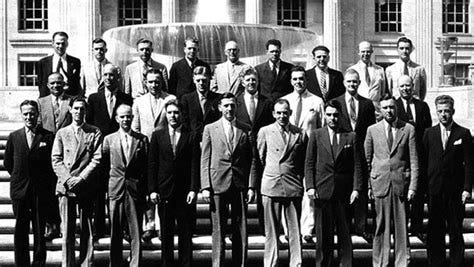
Notwithstanding all of the obscuring rhetoric and word games, regulation is simply the introduction of offensive physical force into the market in denial of the personal preferences of the many traders and consumers. In denying personal preference, i.e., subjective value, the imposition of regulations is always “justified” by the conceptual illusion, objective value— “for the good of the country”, “for the common good”, etc. As all the ill effects are observed, the cause is absurdly attributed to the free market which no longer exists because of the intervention, the introduction of force. Nor is there a mixed economy as you may have heard claimed. Literally, the availability and cost of every good or service in the system is affected in some manner by regulation. Bear in mind that I’m not talking about the prohibition of theft and fraud. The issue is regulation: One or more persons deciding for other individuals and backing up the decision by the use offensive force or threat of it.
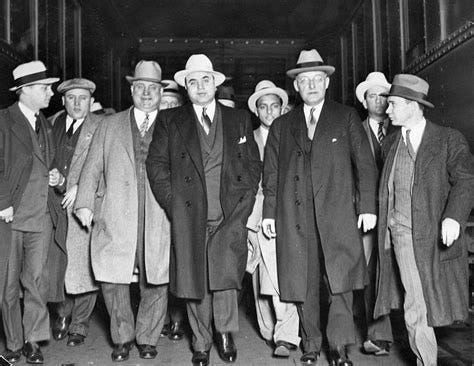
Most go along with the idea of regulation because they have been taught and unquestionably believe that it is necessary for “protection” and for a “fair and sound economy”. There are so many myths entangled with the “justifications” for intervention, a hundred books would not scratch the surface in covering separate and actual instances of intervention and consequent adverse effects. Let’s examine a few basics as a foundation for understanding the whole:
First, take a look at the context in which regulations are created and implemented. The geographical are called the United States is divided up into 50 states and subdivided again into smaller and smaller political districts. On the national (or state) level, every Senator and every Representative is sworn to act for the benefit of the persons in his/her area. In this atmosphere, where there is much verbal condemnation of “special interests”, “special interest” is actually the operational premise of every piece of legislation. Worse yet, most, if not all of these legislators actually believe they are doing “good” and benefiting their constituents. Of course, they don’t think of non-constituents and the fact that the singular purpose of regulation is to benefit some at the expense of others. They never seem to grasp that the consequence of their actions eventually comes full circle.
Taxation is certainly one highly visible form of regulation. The potential for disruption is literally unlimited. Yet, most are concerned only when a tax directly affects their economics. For instance, if a tax is placed upon whiskey and beer, those that do not purchase whiskey and beer are not concerned; indeed, may think that such drinks are the “devils’ brew” and wish to see the users pay dearly and perhaps even be discouraged from drinking at all. Does a tax on liquor affect you even if you neither sell nor buy the beverages? If the tax is high enough on liquor, the price becomes prohibitive and legal liquor sales end. This has an economic effect on every person involved in the liquor business, even down to the persons selling fertilizer for the growing of necessary grain. If regulation instead of economics ends the liquor trade, but demand remains, rest assured supply will come even if it is not legal. There now comes a cost of apprehending and punishing the offenders.
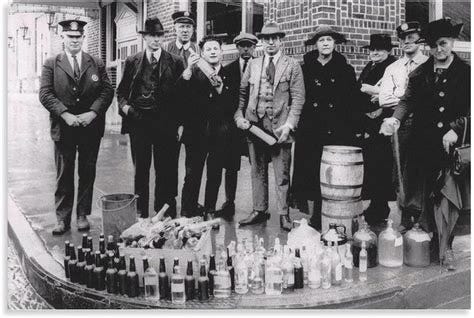
Assuming that the tax is absorbed by the customer, the money paid in liquor tax cannot simultaneously be spent for something else. If that something else is an item that might have been purchased had there been no liquor tax, the decline in purchases felt by the producer of that item tends to raise the price of it as production costs are allocated toward fewer items produced. Even if the item directly affected is not one that you ordinarily purchase, within the interlock, sooner or later, the effect will be felt on whatever you purchase. The liquor tax simply shifts the allocation of some buying power while consuming other buying power in non-productive legislation and enforcement.
Each individual has limited buying power and must make choices as to how that buying power is allocated. The only way for an individual to increase buying power is by increasing production and trading ability in a free market. There are ways to steal buying power, but stealing is not increase, and is anti-free market. An official decree will neither increase buying power nor decrease the cost of production. The correlation of cost of production and price charged as related to buying power of given consumers is completely overlooked by the regulators. Apparently, they believe that natural law, in this case the natural law of economics, will yield to their beliefs and wishes.
Let us have a look at a simple and theoretical example of classic market intervention:
Since the free market is against the law, we are left to envision it in theory to illustrate the adverse effects of initiation of force and coercion. Assume that in a free market situation, milk is generally priced at one dollar per gallon. Some can afford and some can’t. To purchase milk, either those that can’t afford it must increase their buying power, or the producers must find a profitable way to lower the price. No matter what their desires might be, they cannot produce milk at a loss for an indefinite length of time. Profit must be maintained for continued production and also for research and development of ways to decrease production costs. There are certain laws of economics dealing with production and sales that cannot be abridged without serious consequences. Indeed, any attempt to oppose these laws will inevitably cause end results exactly opposite of the declared intent.
The kindly disposed Senator DuGood is not aware of this and sets out to help his poor constituents by having the price of milk set at fifty cents per gallon. Getting his bill made into law requires some vote trading. Tariffs and taxes appear with regard to steel, gasoline, wheat, corn, clothing, etc. Also, at fifty cents per gallon, small producers are driven out of business and the large ones can’t afford to expand at the non-market, officially set price. So, just as prices decline and demand goes up, production goes down and there is not enough milk to go around. Of course, Senator DuGood can fix this. He gets another bill passed to subsidize (gov’t funded) milk production. Follow these actions throughout the economic interlock and you will see that the price of milk forced down by law not only favored the larger producers by forcing the smaller competitors out of business, it also set off a price increase chain reaction through the whole economic system. This is in addition to the cost of creating the regulation and enforcing it. Taxes, tariffs, and regulations altering the market raises the price of corn, potatoes, beef, pork, chicken, and literally every item of produce. When the dust settles, Senator DuGood’s poor constituents are worse off than before, having less buying power than they did before he “helped” them. Naturally, they ask for more help.
Enemies of the free market rest their case upon the belief that unfettered competition would lead to business conglomerates driving out all competition leaving the consumer at the mercy of the giants of industry. In other words, they fear a “free market monopoly”. First and foremost, mono means one. The one in this instance is the implementers of the governmental intervention that denies the free market and manifests the very monopolistic situation that the intervention is alleged to prohibit. The milk example is a simple but adequate representation of this fact. In open competition, a business may well grow very large— because of customer satisfaction. Indeed, being large often provides a circumstance for maximum benefit of production material by reducing the cost per item of that which is produced. As for “monopoly”, what size is “monopoly”? How does one gain a monopoly when buying power is limited and is attributed on a priority basis? (the “monopoly fear” is based upon the notion that when only one company produces milk, that company, without competition to limit pricing levels and set quality standards, can and will produce poor quality milk and set the price as high as they want, as the only producer of milk. The facts denied by the “monopoly fear” are that unlimited buying power does not exist among consumers nor is there unlimited tolerance for poor quality milk). Whatever the item, its’ price cannot defy the law of economics that spending cannot exceed buying power. Thus a monopoly must necessarily control all buying power in literally every area of purchase and consumption. (credit = non-existent buying power legislated into existence). This omni power is allocated only to the god called government. Herein lies the much-feared monopoly, but in confusion is embraced as the protector against monopoly.
The threat and existence of monopoly and monopolistic enterprises is very real as illustrated above, but it is not of the free market. It is via governmental favoritism. Land grants to open and run railroads, subsidies, bail-outs of businesses, the issuance of licenses, franchises coercively granted to selected utility companies, et al, is monopoly in action. You pay the cost of non-competition whether it is a law prohibiting the import of steel, or a medical regulation that dictates who your doctor can be, or what medicine he/she can prescribe. In these and millions of other instances, the truth emerges that regulation is not protection. It is depriving you of using your own thinking and making your own choices.
The idea of regulation is directly derived from the god concept that psychologically negates the individual and individual choice. The underlying rationale is that you are incapable of selecting your own doctor, grocer, carpenter, mechanic, etc. The rationale presumes that on your own you cannot judge for yourself, nor find a knowledgeable individual to trust in making decisions regarding the various economic areas of your life. If you are so incapable and so incapacitated as implied, by what thinking can you, or do you, judge the character and capabilities of the governmental regulator that is selected for you? The answer is, you don’t. You must necessarily accept it upon faith in the omnipotent and omniscient god called government. Economic regulation is just part and parcel of the whole scene in which real individual is declared ignorant, stupid, dishonest, and totally dependent upon on an omni superior being. Since most buy into the con and go along with the directives, the situation winds up creating the very dependence that is initially assumed. It’s just one more instance of the self-fulfilling prophecies of religious ideology.
There are those who favor regulation, but conclude that regulation has gone too far, that some “deregulation” is now in order. They delude themselves. It can’t be done. A physical structure put up piece by piece can be taken down piece by piece. Not so of an idea. An idea has no parts that can be separated to create a “lesser idea” of the same idea. It either is manifest or it isn’t, and if it is, the consequence of the idea is a constant factor and not subject to arbitrary alteration as pertains to effect. The idea, regulation, is implementation of initiation of force and coercion for the purpose of favoritism. Whenever and however employed, this idea in action always favors some at the expense of others.
A “deregulation” is simply another regulation of favoritism, but with the reverse twist always found in the god concept. Actually, a “deregulation” is a means to centralize wealth. As a brief illustration, imagine ten truck drivers regulated by licenses, taxes, load limits, etc. Now imagine one truck driver deregulated. The removal of restriction gives the one trucker a distinct financial advantage. Follow the actions and reactions and you will find that money is funneled throughout the economic interlock to the deregulated trucker. In the economic interlock, “deregulation” constitutes a reversal that tends to concentrate wealth. In other words, “deregulation” is just another one of the many myths found in the gods and governments philosophy.
No posts
Comments
Nothing yet. Say the first thing.
Sign in to join the conversation.