
It’s been a while since my last post. I hope to get back into regular postings, providing you with stories that matter most and giving you a boost of morning inspiration.
Imagine for a minute it’s your first day at a new school. You’re nervous and about to walk into your fourth-grade class.
As you take your seat, you feel the eyes of the class staring at you. And I don’t mean a simple glance — but a long STARE. Some of the kids point and whisper, as if to say, “Oh my God, look.” Others smirk and laugh as you squirm awkwardly in your seat. All morning, minute by minute, hour by hour, the spotlight is on you.
All eyes, glaring — judging — laughing.
By recess, they begin calling you names — weird, dumb, and ugly, and start bullying you. By the end of the day, you are crying, desperately wanting your chair to suck you up into an oblivion like a black hole.
and think about how you would feel.
Seriously. Think about it. Put yourself in that exact scenario. Imagine the feelings you’d have if kids were laughing at you, calling you strange, ugly and dumb. And remember, you’re only nine or ten years old.
Or… think about how you’d feel if YOUR CHILD were treated that way.
I know I probably wouldn’t be able to handle it emotionally. I’d feel like there was something majorly wrong with me. I’d feel hated, rejected, worthless, and like I did not belong in this world.
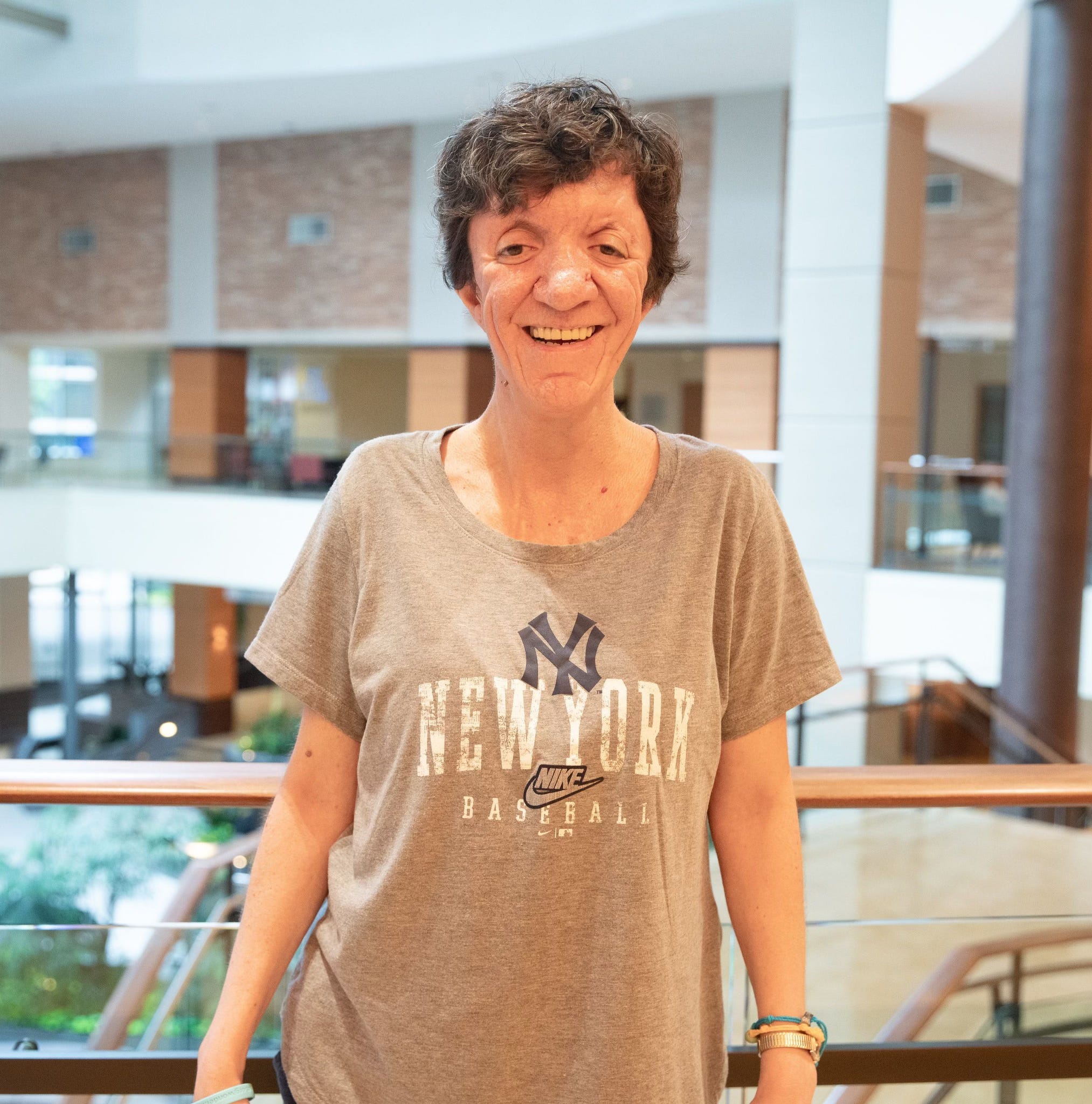
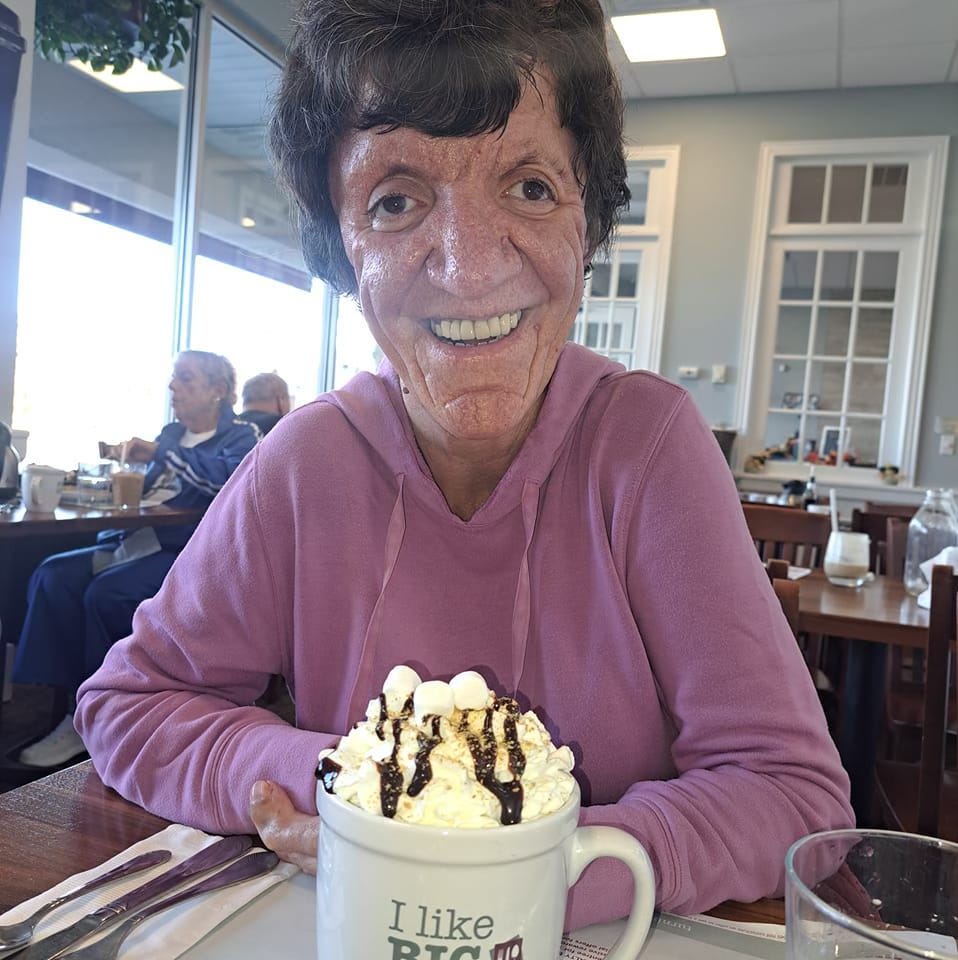
That’s what Chrissy experienced on her first day in the fourth grade. And then the fifth grade, the sixth grade, and so on.
Every year growing up, she was bullied and abused — emotionally and verbally.
Whenever she’d go out into public, like a grocery store, a restaurant, a gas station, a church, the mall, you name it, she’d get the…
And this has gone on her whole life.
Yes, her appearance is different, but she’s a normal person in every other way. She’s not physically or mentally handicapped. She has body parts that are different than the average person — that’s it.
Chrissy is smart, kind, clever, compassionate, and wise, and has a unique beauty — just like we all do.
You see, Chrissy has a rare genetic condition she was born with called Apert Syndrome. In simple terms, the bones in the skull, face, hands, and feet develop differently while growing in the womb.
So, her condition has nothing to do with her. Neither she nor her parents did anything to make it happen. She was born that way.
Apert syndrome
It is a rare genetic condition where some of the bones in a baby’s skull close too early, affecting the shape of the head and face and sometimes causing pressure on the brain. Many people with Apert syndrome also have fused fingers and toes.
It is caused by a random change in the FGFR2 gene, which helps control bone growth — not by anything the parents did.
Common features can include a tall-shaped head, prominent eyes, mid-face differences, dental issues, hearing or breathing problems, and fused fingers or toes. Symptoms can range from mild to more complex medical challenges.
Source: Google. Children with Apert syndrome are at a higher risk for intellectual disabilities and learning delays, but mental or intellectual limitations are not guaranteed. Roughly half of these children have normal intelligence, while others may experience varying degrees of mild to moderate learning difficulties or cognitive delays.
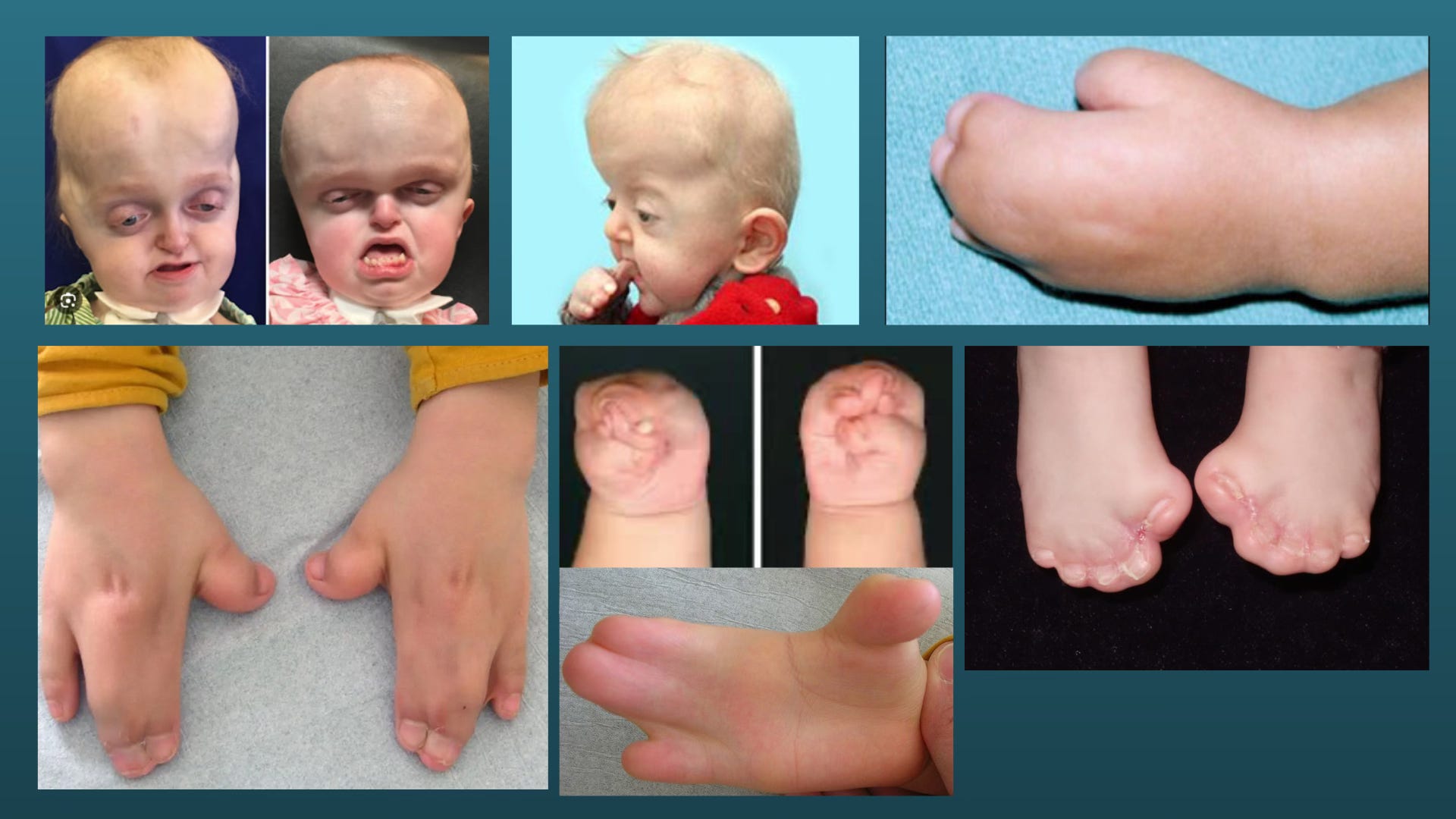
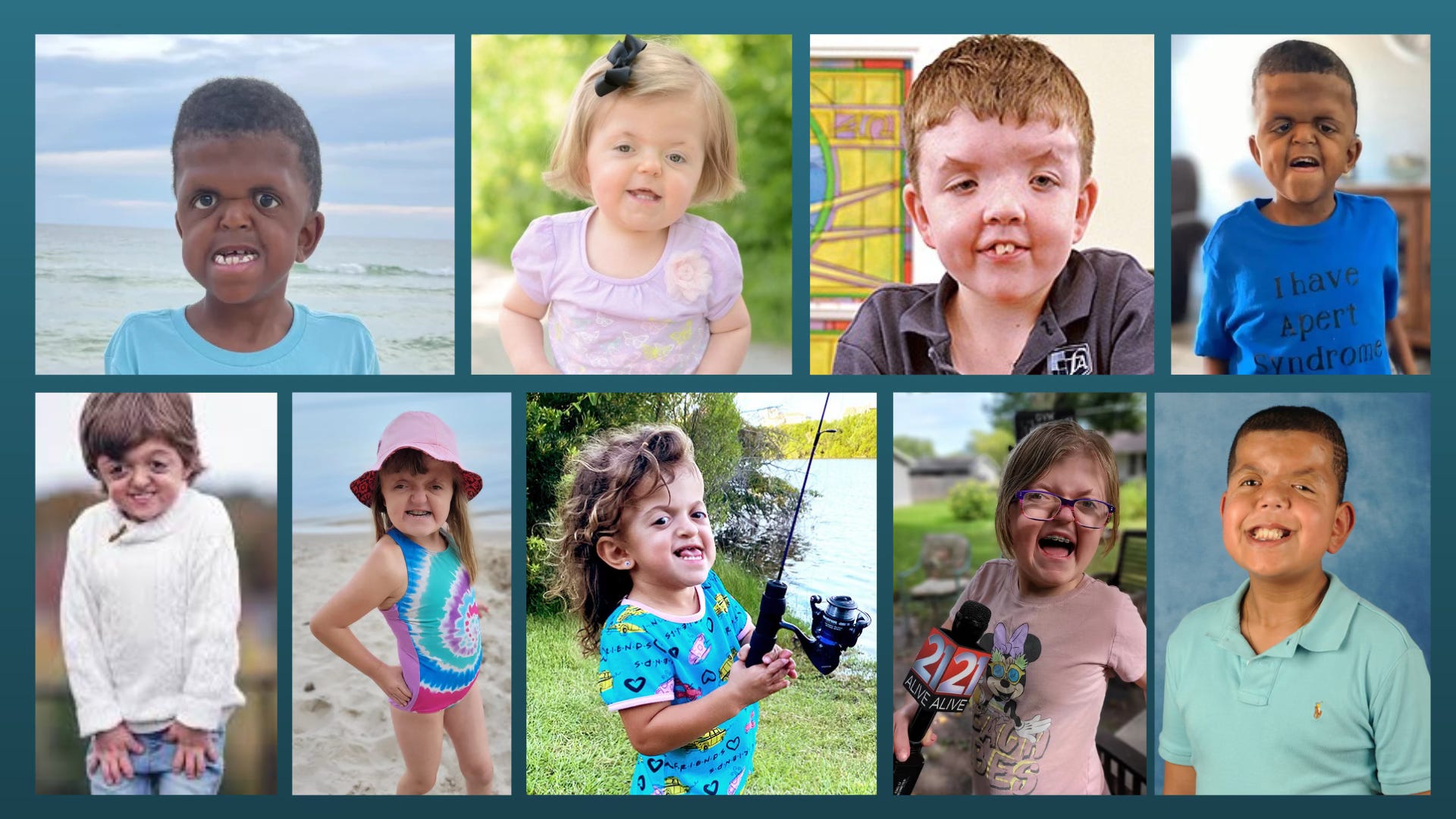
Various conditions can hinder basic functionality for daily activities. For example, one common trait is fused fingers, as you can see above. It’s hard for a child to be independent when their fingers are fused together, so parents seek out surgery options.
The results are amazing and very beneficial to the child — and the family. Below is a before-and-after surgery image. You can see how it can help with basic everyday activities, including something as simple as brushing teeth or holding a fork and spoon, making a child more independent.
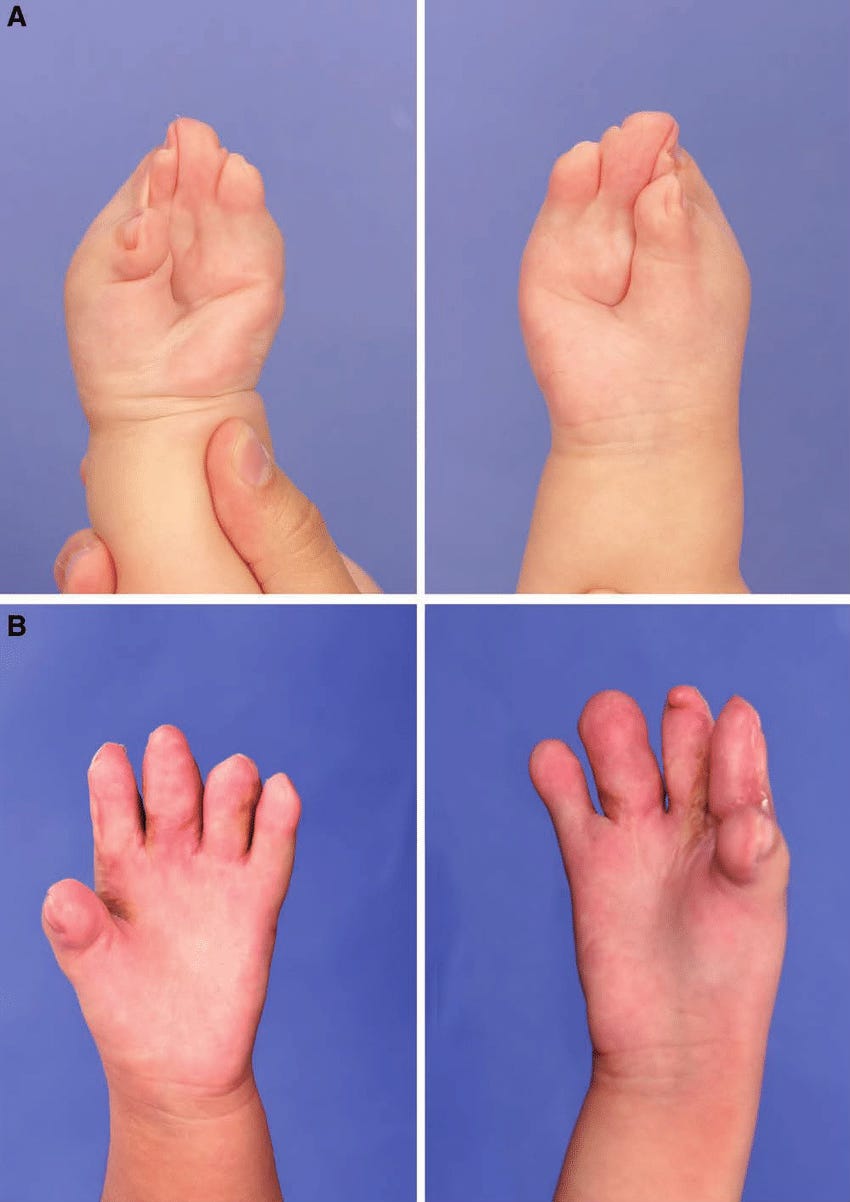
Surgery for kids with Apert Syndrome is critical, especially when they have fused fingers and physical issues with their head. Prior to the recent US and state governmental changes, families received financial and medical help for surgeries through various Medicaid services for people with disabilities.
That support has, in many cases, been cut. Eliminated. This year’s cuts to Medicaid/Medicare and services for people with disabilities have affected so many people like the ones you see above. It’s sad. No, it’s more than sad. It’s disgraceful!
Now — I’m going to tell you what led me to write this.
I saw a post on a friend’s Substack that Chrissy had posted regarding an experience she had on a dating site.
Chrissy had been on a dating site and had been in conversation with a guy that was going pretty well.
I have oftentimes been looked down upon because of my physical appearance, and that should never have to be.
One time I experienced a stranger’s rejection was when I joined a dating website years ago, and the guy I was talking to wanted to see a picture of me. I, of course, was hesitant to do this because I wanted him to be able to get to know me as a person, and not perceive me for how I looked. After some persuasion from him, I uploaded a picture to the dating website.
He looked at the picture, and then he wrote:
“If we ever met, I would be staring at you too much to enjoy your company.”
That truly hurt me to my very inner core!
I have never contacted him again or pursued finding someone on any other dating websites.”
It’s as if I could feel her pain.
Her rejection.
Her sense of not being attractive enough.
Of not being good enough.
Not belonging.
After reading her post, I reached out to Chrissy, wanting to get to know her and learn more about Apert Syndrome and how it has affected her and all areas of her life, including socially.
Basically, outside of the horrendous abuse and emotional rejection, Chrissy’s life is pretty good. She’s a college graduate, has written a book (memoir), and stays busy at her church, mostly teaching Sunday school to kids, and is also involved in the Children’s Craniofacial Association (CCA).
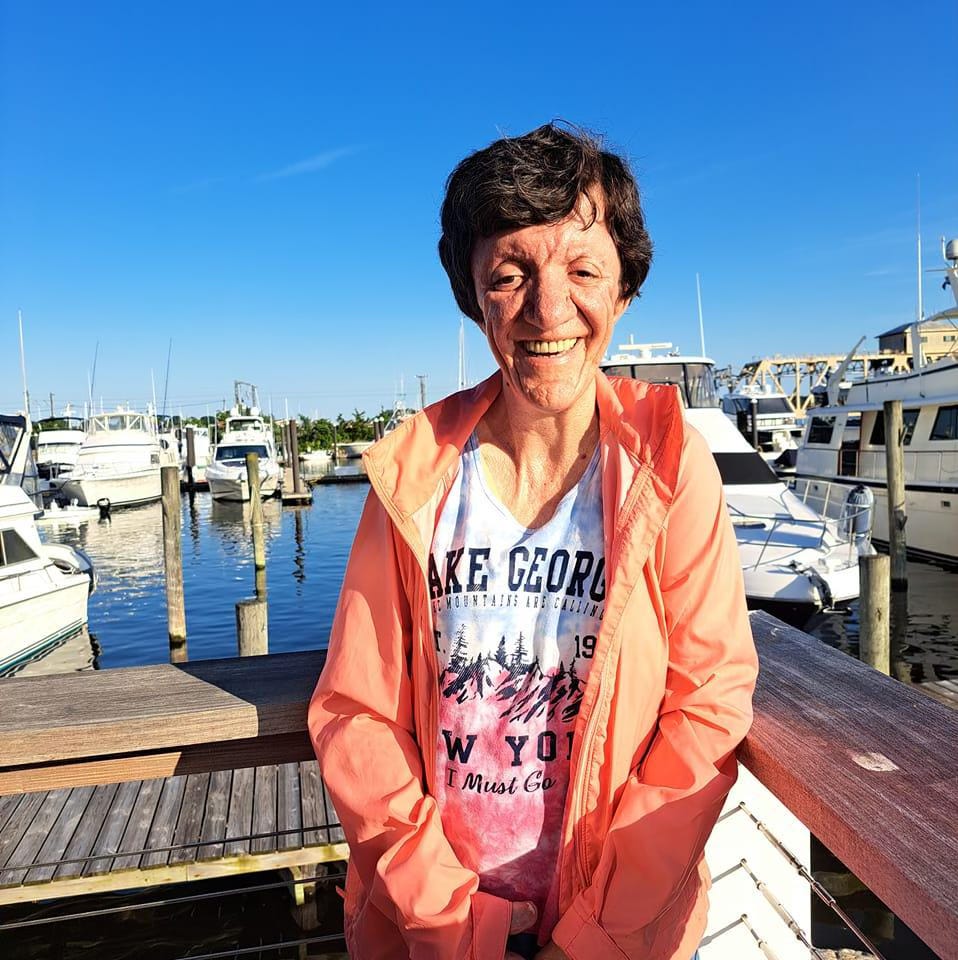
Chrissy is an average person who happens to have a rare genetic syndrome that affects her appearance.
All Chrissy really wants is to be treated normally, like everyone else.
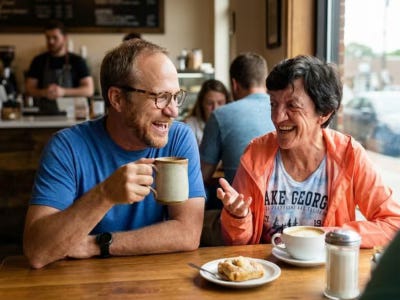
She knows she looks different, but she also knows that everything else about her is normal in every way.
Belonging.
It’s a basic human need listed on Maslow’s hierarchy, ranking just below food and shelter. We all want to feel a sense of belonging.
One of my motives in researching and writing this post is to learn how to best interact with someone who is different than me in a mutually respectful manner. And I’m sure there’s a lot of you out there who want the same thing. That goes for the entire range of handicaps, disabilities, gender identities and so on.
I’m a kind, empathetic and compassionate person, just like each of you reading this probably is. But let’s face it. When we encounter someone in public who is different from us in any way, we don’t quite know what to do or how to react, which leads to ignoring them or pretending we don’t see them.
Personally, I would rather pretend and ignore than feel uncomfortable and react the wrong way. My guess is that most of you reading this fit into that category.
Over the years, I’ve learned to simply ask.
Ask the other person what they want and need in engagement and communication.
We were never taught this in school or at home (most of us, anyway).
In interviewing Chrissy, I asked her a lot of questions in hopes of learning more about her and how she and others with Apert Syndrome prefer to be interacted with while in public.
While the answers are somewhat general and obvious to people like us, it was still helpful.
Here’s one question:
Her answer: “I would prefer that they ask me questions about my appearance. It can be done in a compassionate, decent, polite, respectful, and tasteful way. If someone comes at me and is obnoxious and rude with how they approach me, or respond to me, there’s a very good chance I’m not going to answer their questions, or want to be around them. However, if they approach me respectfully, there’s an excellent chance I will interact with them. It’s all in how I am approached.
She says kids are innocent and curious, and when they see her, they wonder why her hands or face look different. She says that their innocent engagement is always welcomed.
But with adults, it’s different. She hates it when they are rude and obnoxious. She also understands when people who don’t mean harm lack understanding or knowledge of how to act or react to her when, say, at the grocery store.
She added:
“Treat me like everyone else. I appreciate when people want to get to know me for the person I am, without just considering my physical appearance as the main goal. Once I get to know someone and feel comfortable enough with them, then I will be more open to answering any questions that they may have.”
Her so-called happy place is being a part of the Children’s Craniofacial Association (CCA). She says, “I love that I’ve made so many wonderful friends at CCA, and that I am able to share my own experiences with families with young children, who are just starting out on the craniofacial journeys.”
She also loves being at church. People know her, and she loves helping with the kids’ Sunday school classes.
While churches tend to be close-knit and safe spaces, she says that sometimes other adults will still treat her badly and look down on her. They think she has a physical or mental handicap. She remembers an instance where she was to lead her nephew’s group at a Vacation Bible School program. Another parishioner overpowered her and took over the responsibility, creating a situation where Chrissy essentially did nothing all week. It turned out that the parishioner was spiteful toward her and thought she was not physically capable of the job. There was no discussion at the time to clear up any doubts or questions.
Her strength, her tenacity, her courage to keep on keeping on is beyond me. She’s certainly one of my heroes! And I mean that with everything in me. Every cell.
Something that comes to mind is the fact that Chrissy had no control over her situation. Yet, all her life, she has had to pay the price of looking different with many years of abuse. She has every reason to feel like a victim, yet has pushed on and overcome.
My newsletter is titled “Stories That Matter” for a reason. I love meeting and interviewing people who face challenging situations and overcome them through some sort of transformation, and also those who have some sort of psychic change, spiritual experience, or spiritual awakening.
We all have mountains to climb and cross over. Rivers of Samsara, as the Hindus call them, or monsters, as I call them. Mine are not exactly like yours, and yours are not exactly like Chrissy’s. But most of them have a common thread of identification. Something we can all identify with, like basic self-centered fears related to the Ego. And fear of not belonging at some level touches all of us.
In essence, Chrissy’s fears are just like my fears, and your fears. We want to feel a sense of belonging, of being loved and valued.
When we judge others, we blind ourselves to the divine within them. But when we seek to understand, the veils begin to lift, revealing the gold that was there all along.
Next time you see someone who looks different than you, try engaging with them as a person first — not as a condition, disability, or appearance.
Because beneath all our differences, most of us want the same thing:
To feel seen.
To feel valued.
To feel like we belong.
Comments
Nothing yet. Say the first thing.
Sign in to join the conversation.