
Myeongho Seo (@myeonghoseo)
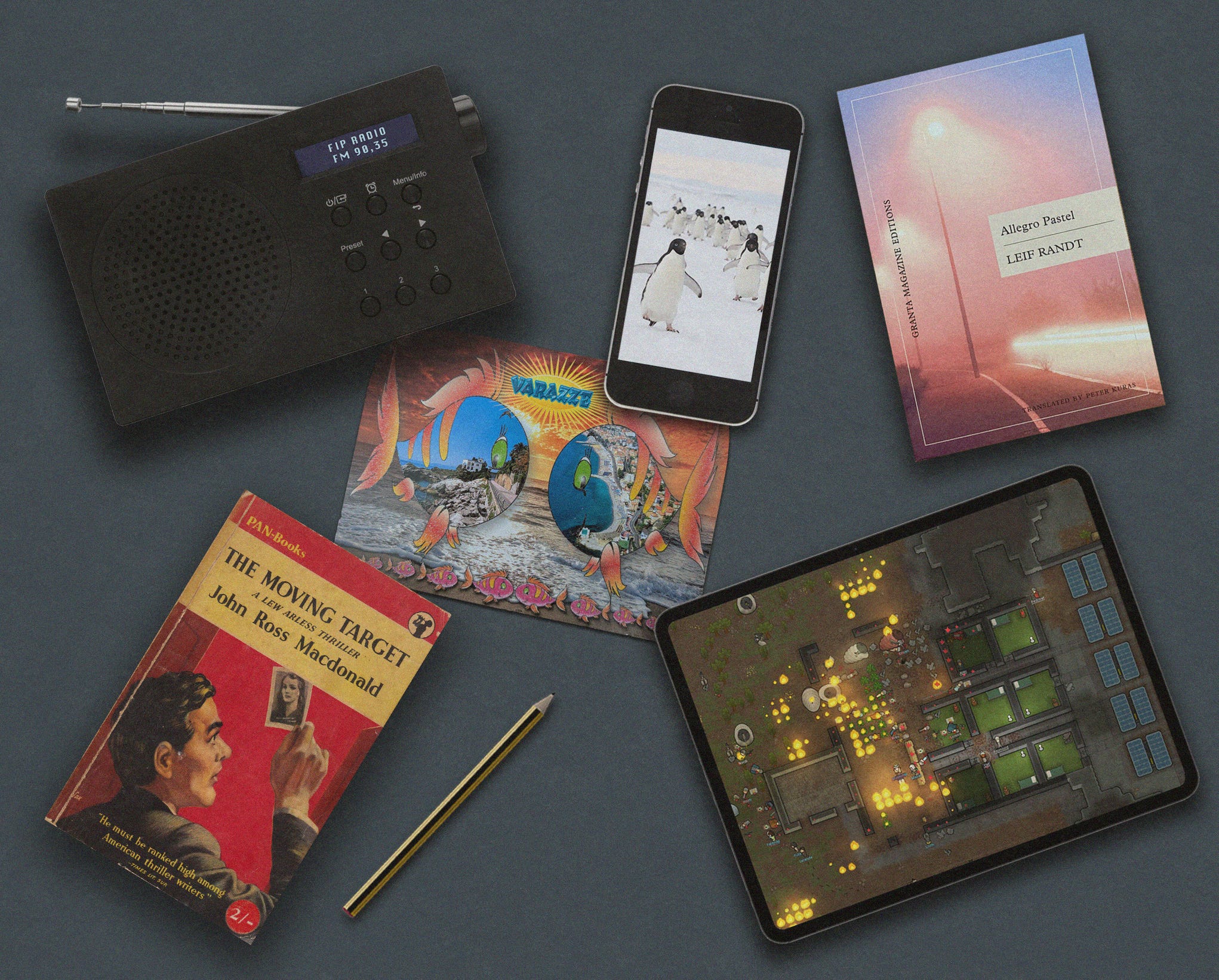
I can only assume that the Antarctic is either so safe that a polar safety coordinator has nothing to do, or so dangerous that it’s not worth him trying. Myeongho Seo, who possesses this job title, instead spends his days filming the penguins there and posting them to his Instagram account. Unlike the rest of the accounts that try to elbow their way onto my feed, he has never tried to sell me anything, or steal my personal data, or make an ill-advised political pivot. Instead he simply sets his camera against the great white continent, or hovers his drone above the turquoise of a melt pool, and films the animals in situ.
His penguin of choice is the Adelie, a small, curious, charismatic bird that seems to spend almost all its time running: to the sea, from the sea, away from wallowing seals and in a charming ritual known as a feeding chase. In this theatrical routine, young chicks chase their parents in circles around the ice begging for food, supposedly so that the adults can assess how hungry they really are. Penguin Instagram is by and large a depressing place, riddled with reposts and zoo-bound birds, but Myeongho Seo’s waddles — the most charming of several collective nouns for penguins — are one of the few justifications for keeping the app on my phone.
FIP
You will only ever hear two things on French radio station FIP: brilliantly curated playlists that span rock, pop, jazz, electronic and folk from across the world, and incredibly well-spoken Parisian women introducing them. Songs are linked by common samples, or words in their titles, or their use of the hurdy-gurdy — but nothing ever less than fantastic taste and immaculately pronounced French. I’ve heard everything from Angelo Badalamenti’s Twin Peaks theme to Cud’s 1987 cover of You Sexy Thing, interspersed with smatterings of bossa nova and occasionally bearable French hip-hop. Fair warning, at 6pm a jazz programme begins and you may accidentally hear a man speak if you don’t switch to another station quickly enough, but that’s alright because I finish work at 6pm anyway.
Ross Macdonald
“Without in the least abating my admiration for Dashiell Hammett or Raymond Chandler, I should like to venture the heretical suggestion that Ross Macdonald is a better novelist than either of them,” writes Anthony Boucher in the New York Times Book Review, and on the back cover of Macdonald’s 1949 debut, The Moving Target.
Inside the book, the author writes: “The wrinkles formed at the corner of my eyes, the wings of my nose; the lips drew back from the teeth, but there was no smile. All I got was a lean famished look like a coyote’s sneer. The face had seen too many bars, too many rundown hotels and crummy love nests, too many courtrooms and prisons, post-mortems and police lineups, too many nerve ends showing like tortured worms. If I found the face on a stranger, I wouldn’t trust it.” Enough said.
Rimworld
Rimworld’s title screen does not describe the 2013 sci-fi simulator as a video game — it describes it as a story generator. Which is a diplomatic way of saying that your imagination is called upon to fill in the gaps between the unembellished circumstances you will bear witness to. Beyond the very basic premise that you must control a set of colonists crashlanded on a procedurally generated planet in the outer reaches of space, the narrative of each playthrough is one of a kind. The game mechanics give you the building blocks of characters, settings and random events; very quickly, though, you will find yourself ascribing motives and explanations to whatever they lead to. Controlling the characters but also searching for rhyme and reason where the game provides none, you are both writer and actor in a story that ends either with your successful escape or a mass-casualty event. The result is sometimes banal, sometimes hilarious and usually ends in tears; the journey to get there is always infinitely entertaining.
Conventionally unattractive postcards
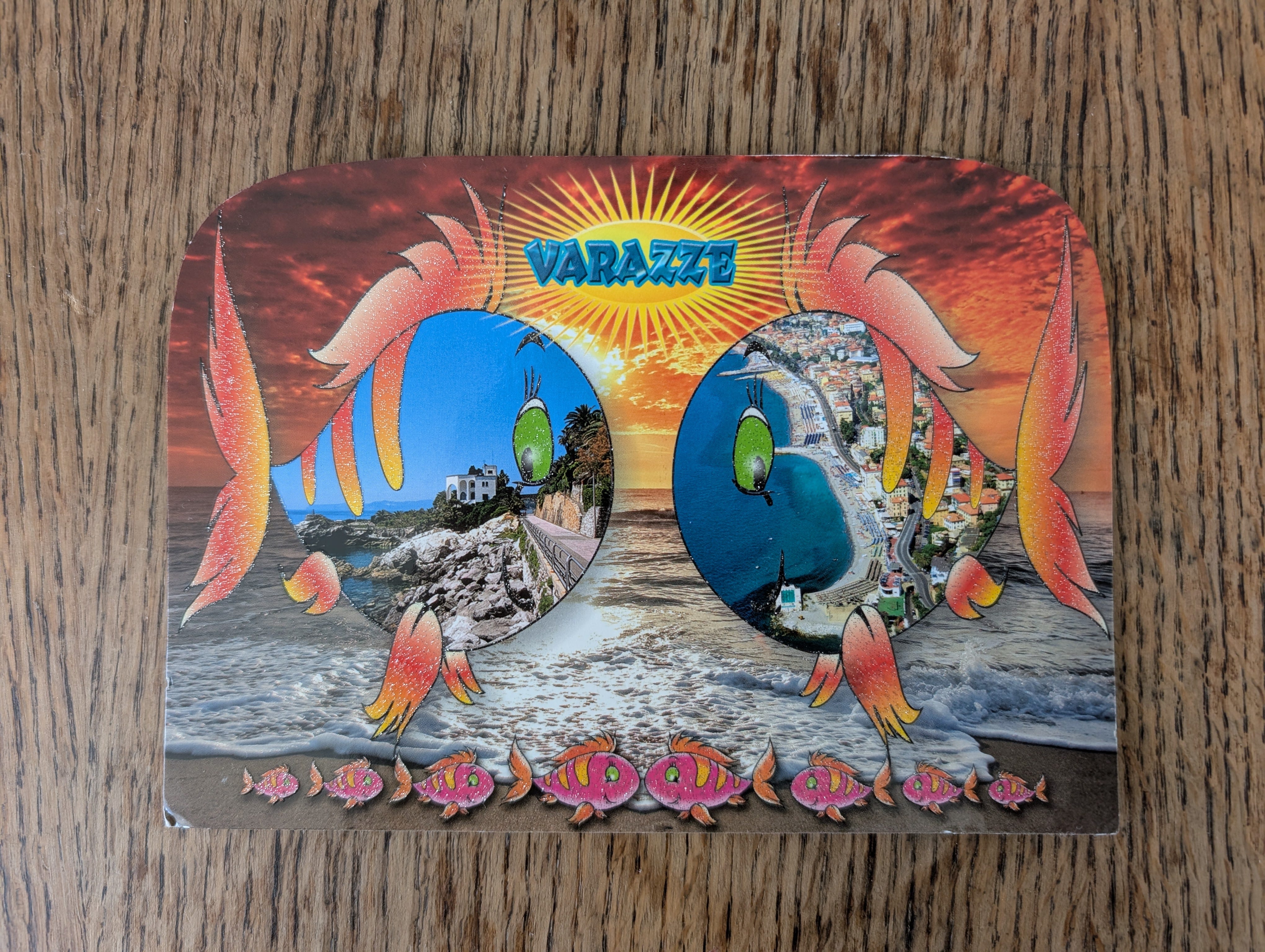
There are only two types of acceptable postcard: the first is a single, tasteful, daytime photograph of a city or a landscape accompanied by a caption identifying the place in a font that you’d be comfortable using for your CV. The other is the kind of technicolour fever dream that can only be found in the kind of old-school newsagents and souvenir shops still resisting the temptation to sell Harry Potter and Minions merchandise, whose owners look at you funny when you try to ask them if they sell stamps. The images — of locations entirely redeveloped since the 1990s, or of car parks that really ought to be — are cropped neither rectangularly nor square, but in the shape of fish or cars or parasols; colour and contrast come in forms you thought had been lost to the early 2000s; there is typography that would make your school PowerPoint Wordart blush. Every kind of postcard in between these two is superfluous.
Millennial lit
There are constants in the recent works of Vincenzo Latronico, Leif Randt and Elaine Castillo, all of whom were born a year apart at the vanguard of the millennial generation: barrages of cultural references that characters wear like armour, narrators plagued by the kind of introspection and self-doubt that social media thrives on, and, if you too are of a certain age, the uncomfortable sensation that the authors are looking squarely at you as they write. If you’re one of those people who complains when people reply to your very opinionated and very public social media posts, you’re best off giving books like Perfection and Allegro Pastel a miss. Otherwise, stare into the millennial mirror and don’t be surprised when it stares back.
Chris Allnutt is a writer, critic and subeditor at the Financial Times. Follow him on Bluesky
No posts
Comments
Nothing yet. Say the first thing.
Sign in to join the conversation.