
You can’t know your own language without having at least tried to read or speak another. Perhaps that’s why the most perfect articulation of what makes English such a special language comes from a Spanish-speaker: the Argentine writer Jorge Luis Borges. The argument Borges makes this clip, from his 1977 appearance on William F. Buckley’s Firing Line, hits all the important notes: English’s different etymological registers, the strange things you can do in English with prepositions.
For what it’s worth, I remain slightly suspicious of Borges’s claims about the superiority of English in this video. Yes, English gives you a huge arsenal of etymologies and an unusually supple grammar — but it also forces upon you all kinds of taboos and injunctions about using them. Serious English writers are obsessed with being too florid or wordy or purple. The contemporary literary novel contains far less in the way of grammatical experimentation than the average billboard (“Organic Your Summer!”; “Live Your Fierce!”). Sometimes, after a long day with my own tortured attempts in prose, coming back to Borges’s Spanish can feel like finally being allowed to breathe.
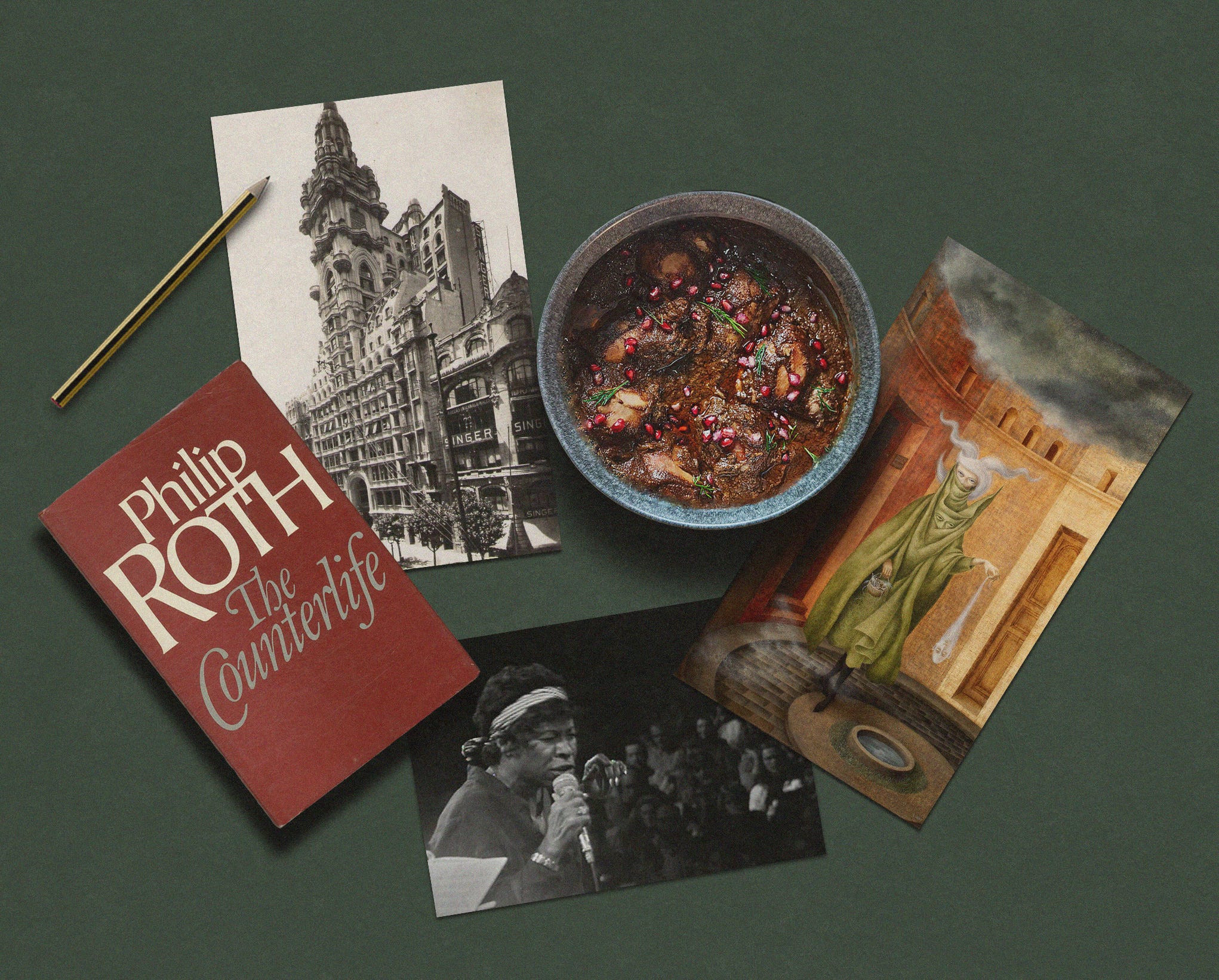
Palacio Barolo is not my favourite building aesthetically — depending on my mood, that accolade might go to one of Le Corbusier’s Assembly building Chandigarh, or Westminster Cathedral, or the Duomo di Monreale, or the Nakagin Capsule tower — but no other building has lodged itself quite so firmly in my soul. I first visited it in 2018, while I was living in Buenos Aires. Someone mentioned to me that a few blocks from the drab neoclassical Congressional Palace resided the former tallest building in South America, designed by a mad Italian architect to accord with the cosmology of Dante’s Divine Comedy. I had to go.
Palacio Barolo is wonderful enough from the outside: it has a mad, Art Nouveau energy that reminds me, bizarrely, of Brussels. But its interior is even better. Its lobby is lit by orange-glowing pits that are meant to look like Hell’s lowest circles; there are statues of monsters, gargoyles, and pretty much every doorway has some kind of masonic symbol on it. Because labour is cheap in Buenos Aires, the place is also massively and confusingly over-staffed: there are uniformed people buzzing around you, ushering you into clanking iron lifts and up astonishingly decorated staircases whether you ask them to or not. At the top of the building is a completely pointless lighthouse beacon, included for the sole purpose of seeming divine and celestial, and one of the best views of Buenos Aires you’ll ever see.

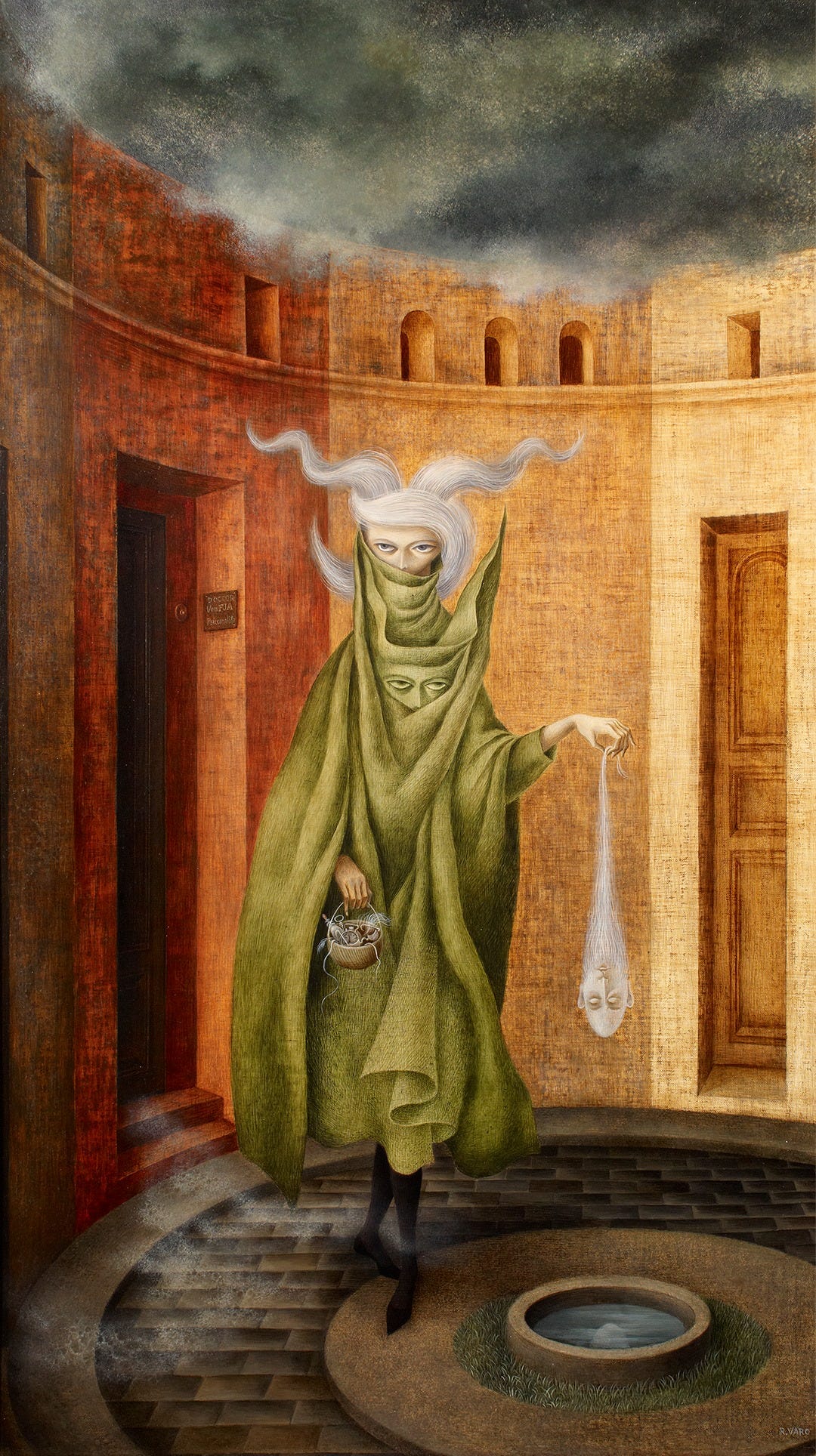
If I had to put money on which artists will ascend to canonicity in the few years, I would choose Leonora Carrington and Remedios Varo. Given the fact that they both lived in Mexico for long stints, they inevitably draw comparison to Frida Kahlo, but to my mind, they are far more accomplished, and certainly more resistant to charges of kitsch. Of the two, Varo is my favourite. At her best, in paintings like this one, “Mujer saliendo del psicoanalista (podría ser Juliana)”, she is every bit as witty and terrifying as Goya in his Caprichos.
I am very suspicious of music writing. The whole exercise just seems impossible to me. You can write well about music in general, I guess — Kit has managed it, and so has Schopenhauer — but the moment you try to capture the quiddity of a particular piece of music things get very tricky. I was very tempted to pick the prelude to Wagner’s Lohengrin, or part of Schoenberg’s Gurrelieder, but I realised I would just end up writing words like “transcendent” and “profound” and “haunting” — or worse, talking about things like atonality and Sprechgesang about which I know nothing.
So I’ve chosen someone who lived in the era of video recording, so that you can simply watch yourself: Betty Carter. She has, quite simply, the most beautiful voice I have ever heard. Here she is onstage in Norway in 1978; she’s singing alongside John Hicks — one of the greatest jazz musicians of the century in his own right — but Betty gives such a tour de force that I’ll forgive you for not even noticing him.
The most delicious thing you’ve never eaten. Fesenjoon is Persian, and remarkably difficult to source in the UK, which is deeply unjust, because it is exactly the kind of warming, spicy, tangy gloop that makes you forget about things like bad weather and post-imperial decline. The main ingredients are ground walnuts, pomegranate molasses, and at least one whole chicken. It’s best served with a buttery wedge of something called tahdig rice — which you should also try, if you haven’t already. The other thing I like about fesenjoon is that it’s remarkably edible. Over-indulging on a good Tuscan peposo will ruin your entire afternoon; a well-made cassoulet can prompt a visit to the emergency ward. But fesenjoon goes down clean: you could eat it every day, and once you’ve tasted it, will probably want to.
The Counterlife, by Philip Roth
When I was younger, I decided I wanted to be a great Jewish novelist. Unfortunately, my mother informed me that we were not just not Jewish, but half-Muslim — and this, she insisted, must be considered a pretty strong disqualification. But of course, the thing about Roth is that he somehow manages to be for everyone, despite possessing an extremely idiosyncratic roster of interests. He is a master of taking something very particular — glove-making; baseball; Newark, New Jersey — and making it seem utterly universal, as though it were the hidden key to understanding the history of America, or the world.
The Counterlife is as good as Roth gets. It is funny, intelligent, heartbreaking. It also manages to pull off a number of postmodern mid-century tricks without ever seeming arch or trivial — something that Pyncheon, DeLillo and Foster Wallace never quite manage. I wonder if Roth had Pirandello’s Sei personaggi in cerca d’autore in mind while writing (I seem to remember his mentioning it in one of his autobiographical efforts): both texts manage the rare feat of convincing you of the unreality of their characters, only to make you feel sorry for them as a result. Yes, the characters in the novel are fictions, trying to wrench themselves into reality, Roth seems to say. But so are you. So am I.
Thomas Peermohamed Lambert is a writer who divides his time between London and Oxford. His first novel, Shibboleth, was published by Europa Editions in May 2025. He is currently a DPhil Candidate and Clarendon Scholar at the University of Oxford.
No posts
Comments
Nothing yet. Say the first thing.
Sign in to join the conversation.