
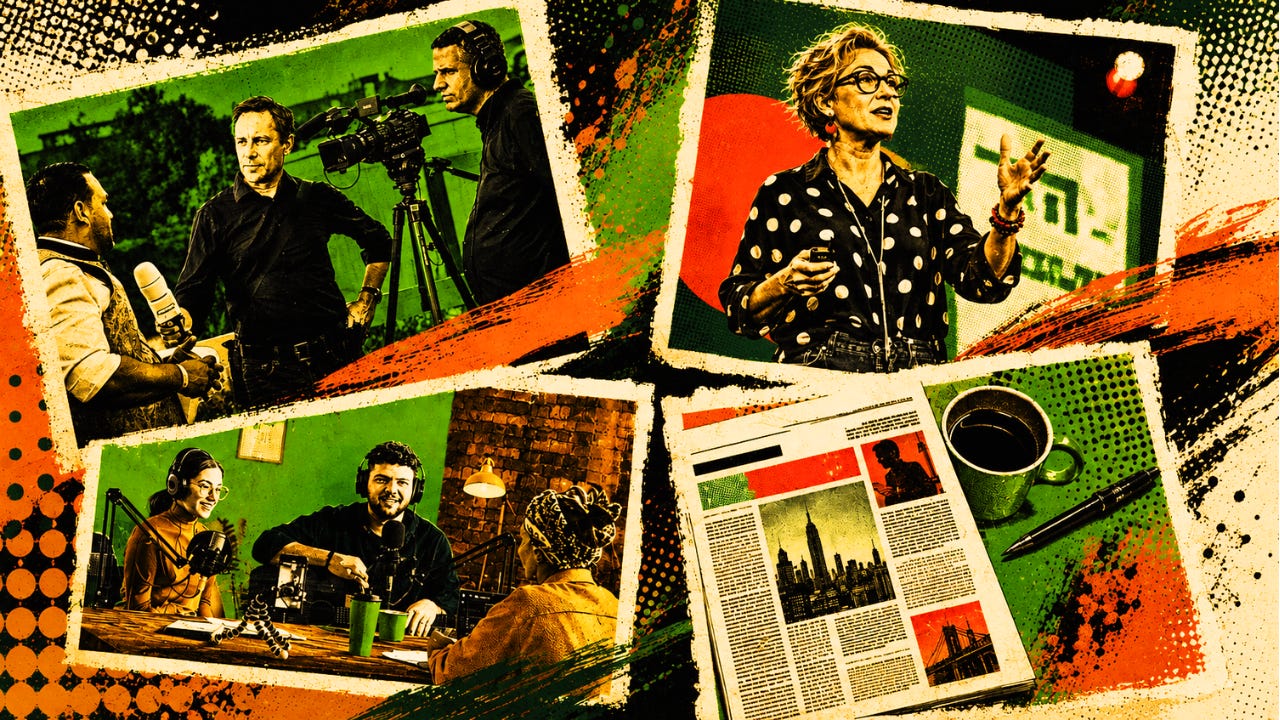
Earned media is a powerful way to extend your reach and credibility by leveraging other people’s audiences.
In essence, it is any coverage or editorial exposure you generate via independent third-party channels. You don’t pay for it, and you can’t fully control it either.
Sometimes earned media happens organically, without you lifting a finger. Other times you pitch your story or idea directly to the outlet and it lands.
Either way, once the coverage runs, you have earned it.
Once upon a time, earned media meant one thing: getting a story in the newspaper or being interviewed on radio or the nightly news. That was the goalpost for visibility and credibility.
And it still matters.
But earned media today is so much more, and it’s never been more powerful for building trust, influence, and reputation for business and personal brands.
We’re not consuming media like we used to. We’re not all sitting around watching the 6pm news bulletin or flipping through glossy magazines. And newspapers, while they still play a key role in our society, are not as dominant or influential as they used to be, and this is unlikely to change any time soon.
For example, younger audiences are far more likely to get news through social media, search, and creators than by going directly to newspapers or news sites: Reuters found that 40% of 18–24s say social media is their main way of accessing news online, versus just 14% who go direct to a news website or app.
These days, we scroll. We binge podcasts. We subscribe to Substacks. We check out Instagram Reels or TikTok videos. We dip in and out of YouTube, LinkedIn, Reddit, and Twitter/X. Our habits have changed as the media ecosystem has evolved.
So if you’re a founder, a solo business owner, an expert advisor, or a thought leader building your professional brand, take note. Earned media is evolving, and if you understand how to leverage its power, it can do a lot of heavy lifting for your personal brand.
With this in mind, let’s segment the media channels that are available to us. I see there are four categories, and the lines between them continue to blur.
Traditional media covers newspapers, radio, television and established editorial magazines, whether print or digital.
New media (for want of a better term) covers YouTube shows, live streams, blogs, podcasts, and brand- or creator-led digital publications.
Social media covers X/Twitter, LinkedIn, Facebook, TikTok, Threads, YouTube Shorts, and Instagram. Some media strategists don’t include social channels under the earned media banner, but I do: if someone organically shares your content, tags you, or writes about you in a post on their own feed, that is valuable exposure you have earned.
Live events cover conferences, meet-ups, webinars, online summits and industry seminars. Again, not everyone categorises events as earned media, but I do; the ‘stage’ is the media, and if you’ve been invited to speak, it’s because you’ve earned the right to do so.
A growing share of coverage now overlaps between the various media channels. This is a truly exciting development, it’s where a podcast host might write up your interview for LinkedIn, or a webinar clip might run as a standalone YouTube segment.
So, while the concept of earned media has evolved, the basics of it still haven’t changed: you still need to be credible and relevant, and do something interesting or worthy enough for someone to share on their channel.
a journalist needs to believe your story is worth covering
a podcast host needs to believe you have something interesting to say
a TV news producer needs to believe your comments are going to make a story more compelling
a conference organiser needs to believe you’re going to provide value for their audience
a Substack writer or editor needs to believe you have something valuable to say in their publication or conversation
a YouTuber needs to believe that mentioning you will be useful or interesting for their audience
If you think the above simply happens because you’re good at what you do, you’re kidding yourself. You may be the best operator in your niche but if you’re professionally invisible, if you’re not a known quantity outside the bounds of your network, then it’s going to be difficult to gain extended editorial exposure without first putting in the effort to share your insights, ideas and expertise with the broader world.
Being seen in the media (again, taking the full media mix into account, not just traditional print and broadcast media) does six things for your professional personal brand:
You reach new audiences who might have interest in your story and your message, which increases visibility
You gain a perceived third-party endorsement, which enhances your credibility and professional standing
You grow your following on owned and social channels, because coverage sends people looking for you
You gain social proof for your website and bios, the “as seen in” line under your name
Coverage tends to lead to more coverage, and this is where the loop of authority begins
Editorial exposure can fuel sales of books, programs, events, products and services, which lifts revenue
You get earned media in one of two ways.
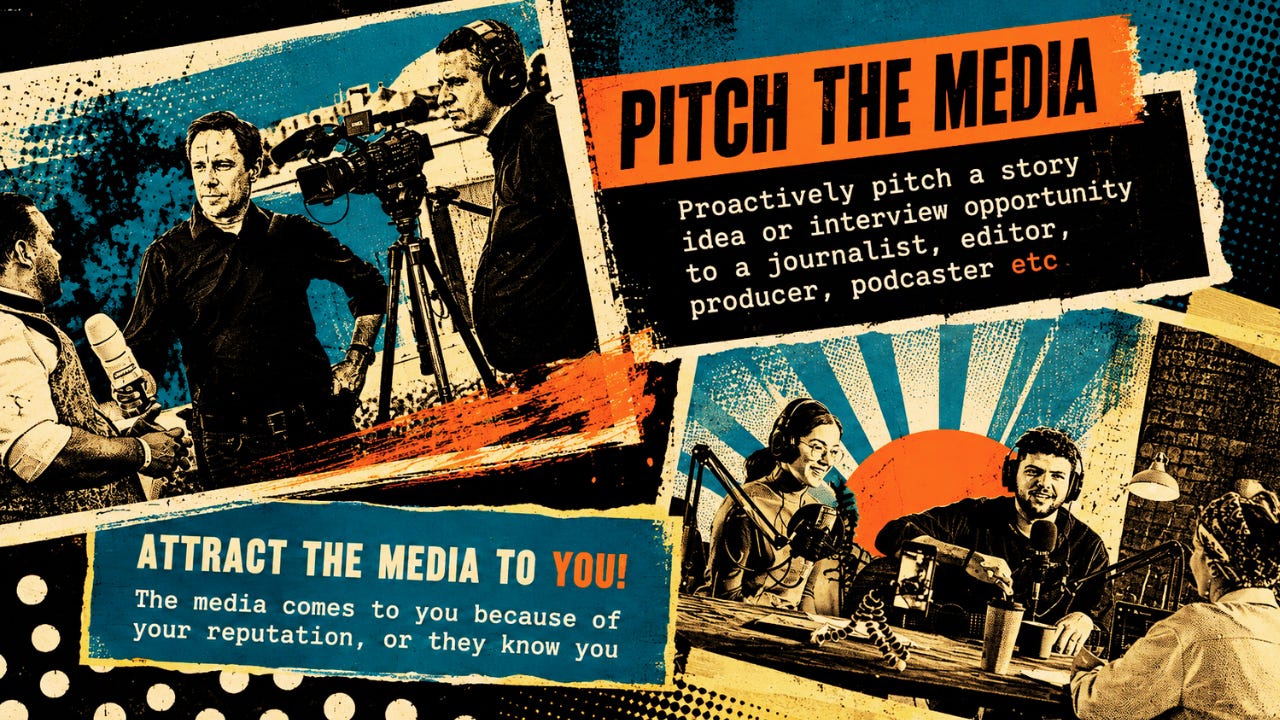
Firstly, you pitch the media, proactively offering a story idea or interview opportunity to a journalist, editor, producer, podcaster, YouTuber, or LinkedIn ‘influencer’.
Or you attract the media to you - this is where the opportunity comes to you ‘out of the blue’ because of your profile and reputation, or because the outlet already knows you exist.
Neither path is superior - one’s proactive, the other is reactive.
Most entrepreneurs and professionals who build a strong media presence over time go down both paths, often at the same time. The more media coverage you achieve, often the more opportunities for exposure will come your way.
None of this comes free. Pitching or appearing in the media can feel intimidating, particularly the first few times.
The work is time-intensive, and preparation for a single interview or article requires effort. And there are no guarantees. A pitch you are certain will land might go nowhere, while a throwaway comment on an industry panel might turn into your best piece of coverage all year.
Three myths deserve to be put to bed when it comes to earned media.
Firstly, you don’t need a publicist or PR agency to pitch a story to a journalist, editor or producer. Yes, they can be useful if they’re proficient at what they do, and can certainly save you time, but they do come at a significant cost.
You do not need to be famous before the media pays attention to you, but you do need to have a ripper of a story, and/or be credible, discoverable, and verifiable.
And you do not need front-page, tier-one coverage before earned media becomes worthwhile. A niche podcast with a thousand engaged listeners in your field will often do more for your reputation than a passing mention in a newspaper masthead nobody in your industry reads.
So what does an journalist, producer or podcast host actually look for when they choose a commentator or interview subject? Four things:
Deep domain expertise.
A good story to tell (relevant to a specific angle), built around a unique message or point of view.
Sound communication skills.
A degree of self-confidence.
Notice what is missing from that list?
Social media follower count is not on it - having a large audience might be helpful for certain media outlets because they’re also in the business of clicks, but it’s not as important as your credibility and ability to provide value.
Neither is a big-name employer. Yes, being a high-ranking executive with an Apple or Amazon might hold sway for certain stories with some media outlets, but again, it’s not a given if you’re not great talent, as they say in the media industry. The world is full of high-profile expert media commentators and interview guests who are not from the big part of town.
Firstly, owned media is foundational to building a credible reputation via earned media.
Owned media - your website, blog, podcast, email newsletter or Substack publication - these channels are perfect for publishing insightful long-form editorial content that demonstrates you know what you’re talking about, that you are an expert in your space and have a unique perspective on relevant topics and issues (bonus points if your take is contrarian or provocative).
YouTube and LinkedIn newsletters/articles are also useful in this regard.
Not only does being active on owned media (amplified via social media, although in some cases, if you’re huge on TikTok, this too can work in your favour, depending on your audience) build your profile and reputation, but it also ensures you’re visible and discoverable.
This is important because anyone who is going to interview you, or ask you for detailed comments or a quote, is going to check you out. What will they find? Will it do the professional you justice?
REMEMBER: Your job, through your content, is to ensure you come across as a low-risk, credible proposition for a journalist or editor or producer or podcast host or event organiser.
Which leads us to …
If the seismic shifts that have occurred in the media over the past 20 years or so weren’t enough, we now have to factor in generative AI.
A recent Muck Rack analysis reported that earned media accounted for 84% of AI citations across ChatGPT, Claude, and Gemini.
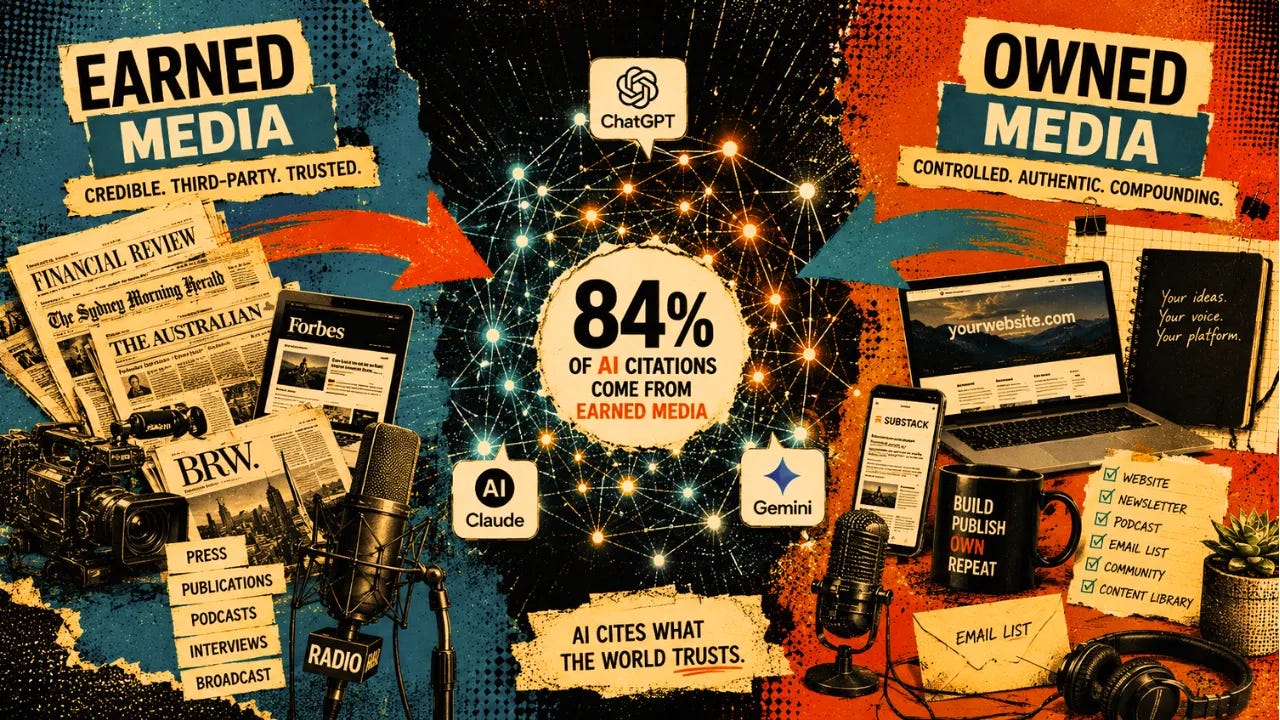
Earned media now matters for a second reason, arguably a bigger one: AI systems increasingly retrieve, summarise, and cite public web content when answering questions, and editorial coverage forms part of the public record these systems can draw on.
In other words: your earned media - those mentions, quotes, interviews, and citations - are not just reaching people, they’re training the machines that influence the people.
When someone asks an AI tool who the leading voice is in your field, it is more likely to rely on documented, independently published proof than on your own website copy alone. That makes earned media one of the strongest signals you can feed into AI-driven discovery and verification.
The outlet you were featured in is no longer writing solely for its immediate readers; it is creating the indexable material that AI systems will later summarise, rank, or recommend.
This changes the stakes, not the fundamentals. You still need the domain expertise, the story, the communication skills and the confidence. AI has not replaced any of that groundwork. What AI has done is extend the shelf life and reach of every piece of earned coverage you generate, long after the original readers have moved on.
Next time, we build your earned media foundations, the groundwork you need in place before you pitch a single journalist or accept a single interview request.
Onwards!
~ Trevor
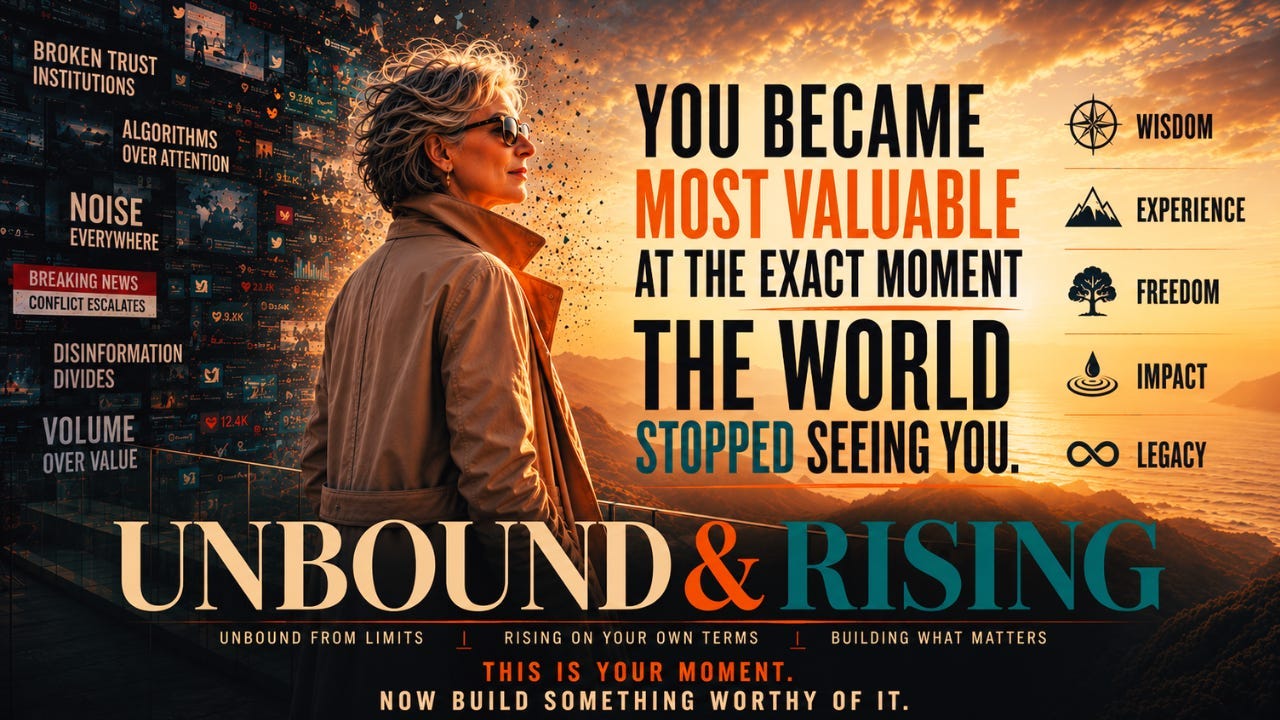
It’s called Unbound & Rising - here’s the blurb:
You became most valuable at the exact moment the world stopped seeing you. For those in midlife not done yet, turning hard-won wisdom into influence, income, and a life by design. Unbound from limits. Rising on your own terms. Building what matters.
CHECK OUT THE UNBOUND & RISING MANIFESTO.
Comments
Nothing yet. Say the first thing.
Sign in to join the conversation.