
Won't Get Fooled Again on Apple
In 1971, the revolution, whatever of it remained, was on in the ICU on life support. The Ohio National Guard killed four people on the campus of Kent State the year before. Altamont happened the year before that, which basically means all the “let’s get together and be beautiful and nothing bad will happen ever” counterculture vibe essentially died at the same time as concertgoer Meredith Hunter did, except the cameras were rolling and the Rolling Stones were playing. That and Vietnam was still going on, Walter Kronkite dutifully reporting draft numbers and the day’s daily death tolls.
Across the pond, Pete Townshend is slowly or maybe rapidly losing his mind, as he’s plugged himself into a synthesizer and trying desperately to pen lyrics to a rock opera he barely understood himself, despite the fact it was his brainchild. Lifehouse was going to preempt the Internet and The Matrix, and could have conceivably positioned Townshend on the same sci-fi podium as Phillip K. Dick, Asimov, and Clarke. This is not, however, what maximum R&B bands are destined for. Lifehouse collapsed under the weight of Pete’s lofty ambitions while trying to follow up the career-making triumph of Tommy.
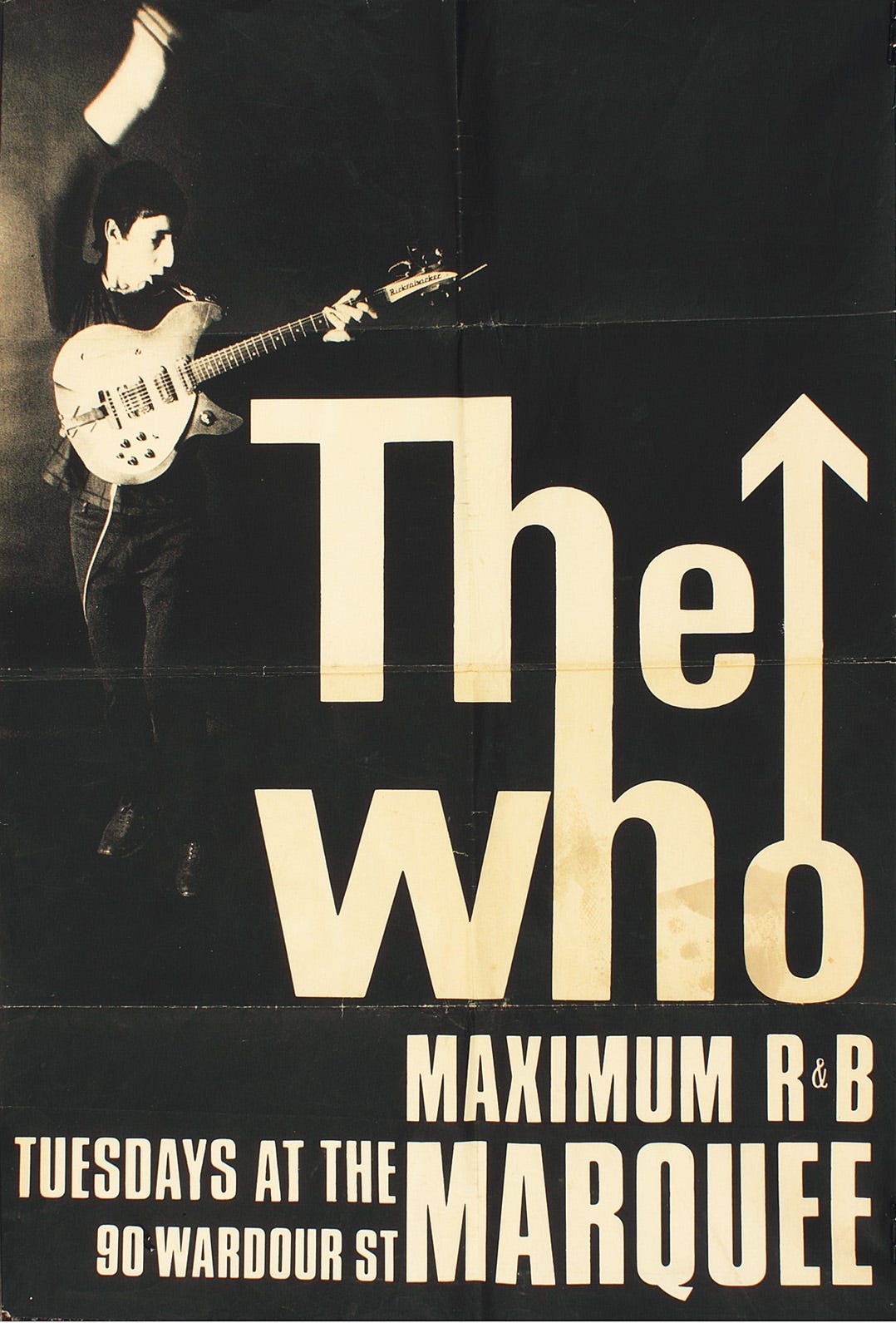
He watched all of it happen from across the ocean, Kent State and Altamont and Vietnam and the slow-motion collapse of a decade that had promised itself something better, and instead of writing a song that said let’s try again, but maybe harder and with more intent, he wrote a song that said trying again wasn’t going to fix a fucking thing, because the guys in charge were never really the problem. The problem was that there are guys in charge at all.
That’s the largest plot point of Won’t Get Fooled Again, and The Who back it up with an arrangement making the same case in instruments that Townshend is making in syllables. The synthesizer is the piece of the song that nearly no one discusses, but it’s the single most important piece of the alchemical equation because it gives Keith Moon a riverbank. For the better part of a decade, Moon played his kit like it owed him money, beating the hell out of it and filling every conceivable inch of space with tom rolls and cymbal crashes because that was the job he’d built for himself inside the band, the human explosion sitting behind three guys who were, relatively speaking, disciplined. He detonated in every direction all at once, which is why I maintain The Who were the first rock band with a lead percussionist.
Throughout Who’s Next, for the first time, something external is setting the pace instead of his own instincts, and rather than neutering him, it’s the thing that finally lets his aggression point somewhere, beginning with what is essentially an overture on Baba O’Riley straight through to Won’t Get Fooled Again. Moon still floods every inch of space he’s given. He just isn’t given infinite space anymore, and the result is the most controlled chaos the band ever recorded. His combustion propels forward in focused demolition throughout Who’s Next rather than uncontrolled rampage over and through songs. On Who’s Next, Keith Moon became a rocket ship fully prepared to enter outer space and left his pinballing in the rearview, and in doing so, took The Who to a different galaxy altogether.
Maximum R&B with a drummer who played like he had eight fucking arms, so wild and outlandish the road crew often had to duct tape his headphones to his skull, one of the singularly iconic bass thumpers of the era, standing as tall and rigid as Nelson in Trafalgar, an all-time wordsmith and power-chord aficionado with a big, thick fat Gibson Les Paul strapped to his torso like a six-string bazooka, and a physical middleweight of a man who, with a mic in his hand, carried himself like the heavyweight champion of the world.
The politics are just as focused, and they arrive with the same hard-earned patience.
The first verse sets up violence in the streets, kids invariably caught in the middle of it, and the men who spurred everyone on sitting in judgment while, in Townshend’s words, the shotgun sings the song. That’s the revolution’s starting line. That’s the part everybody’s excited about, the part that shows up in the movie trailer version of history, fists in the air, banners waving, the old regime finally getting what’s coming to it.
Then the chorus happens, and the chorus is where Townshend commits the single most devastating character move in the song. The narrator doesn’t celebrate. He doesn’t join a parade. He tips his hat to the new constitution. He takes a bow for the new revolution. He smiles and grins at the change all around him, and then, and this is the part that gets me every fucking time, he picks up his guitar and plays just like yesterday. Nothing has changed for him. The regime changed. His day did not. Then he gets on his knees and prays that he, personally, doesn’t get fooled again.
A protest song tells you to go and do something, anything, get mad, throw something, shout something. This song is about a guy who has already watched enough regime changes to know the only thing he can actually control is whether he, individually, as a man, falls for the same trick a second time. Everybody else can go get swept up in it if they want. He’s staying skeptical, the cynic with that big, fat Gibson on his knees because he’s seen this show before and he already knows how it ends.
The second verse doubles down. We were liberated from the fold, Townshend writes, that’s all, and then immediately undercuts it: the world looks just the same, and history ain’t changed, because the banners have all flown in the last war. Every revolution thinks its banners are new. Historically speaking, they almost never are. Somebody already flew a version of that banner. You just weren’t around for it, or you forgot, or you were a kid, or you weren’t born yet.
The bridge is where the song gets uncomfortable in a way I don’t think gets talked about enough. I’ll move myself and my family aside, Townshend sings, if we happen to be left half-alive, and that is not the voice of a man confident the revolution is going to work out for him. That’s a guy quietly planning his exit strategy in the middle of the song about the revolution, because he’s already assuming there’s a decent chance he ends up half-alive, which is another way of saying half-dead, once the dust settles regardless of who wins. Then he says the hypnotized never lie, and asks, point blank, “do you?”
That question is aimed at the listener, and it’s aimed at every person who has ever gotten fully swept up in a cause, a candidate, a movement, a guy on a stage promising things are finally going to be different this time. It’s aimed at me, and honestly, it’s aimed at you too, because everybody has been hypnotized by something at some point, and the hypnotized genuinely believe they’re seeing clearly. That’s the whole nature of hypnosis. You don’t know you’re in it while it’s happening to you.
And then, finally, the line, the most quietly devastating and defeating moment in the entirety of the album era: meet the new boss, same as the old boss.
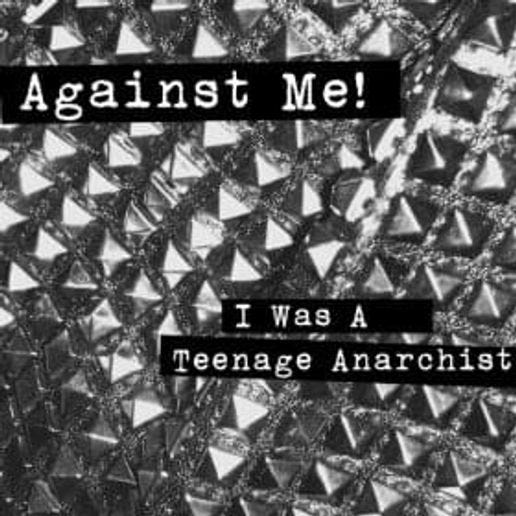
There doesn’t exist a more efficient sentence in the entire history of rock music. Eight words undo every promise every revolution has ever made about itself, and none of it reads as cynicism for the sake of being cynical. It’s earned. Townshend watched a decade of people promising the world was about to fundamentally change, watched the world decline to fundamentally change, and wrote a song about the distance between those two things instead of pretending the distance wasn’t there. Those eight words would remain without equal until 2010 when Laura Jane Grace served up “The revolution was a lie,” from I Was a Teenage Anarchist.
There’s an argument that Lifehouse collapsing was the best thing that ever happened to this particular song, because Lifehouse wanted answers. It wanted to explain the whole system, the grid, the way music and technology and human connection were all supposed to braid together into something Townshend could see coming and nobody around him could quite follow. Won’t Get Fooled Again doesn’t explain anything. It refuses one specific lie, over and over, with a full band behind it instead of a concept nobody in the room, Townshend included, could fully articulate. Sometimes the failed version of the big idea is exactly what clears enough room for the smaller, truer idea to land.
The reason the song still holds up more than fifty years after Keith Moon slammed through those tom fills for the last time with the band is that the gap Townshend identified never closed. Every generation gets its own version of the new boss. Every generation gets convinced, at least for a minute, that this particular new boss is going to be different. Townshend’s whole argument, delivered across eight and a half minutes of the most disciplined musicianship The Who ever committed to tape, is that the boss was never really the problem. Wanting a boss is the problem. And until that changes, you’re going to keep needing a song like this one sitting on your shoulder, asking you, gently but insistently, whether you’re the hypnotized one this time.
Afterword
In 1978, The Who arrived at Shepperton in late May, ready to show out for about 300 close friends and fans, including members of The Pretenders and Generation X. Film director Jeff Stein was there to capture The Who’s performance for his rockumentary The Kids Are Alright. What no one knew at the time was this would be the very last time Keith Moon would take the stage with his mates after 14 years of unadulterated mayhem. That’s just me being a writer. Here’s what I want to say: if you want to rock star, THIS IS HOW YOU ROCK STAR. THIS IS WHAT THE FUCK YOU DO WHEN YOU WANT TO ROCK STAR.
No posts
Comments
Nothing yet. Say the first thing.
Sign in to join the conversation.