
Today let’s decode beta blockers. The point of this article is not to say they are a bad treatment, they are not, but they are prescribed reflexively for PoTS in a way that does not always account for the fact that PoTS is not one condition. The same drug that rescues one patient can sink another, and understanding why requires understanding what beta blockers actually do and which PoTS mechanisms they do and do not address.
What beta blockers do
Beta blockers work by blocking beta-adrenergic receptors, the sites on the heart and blood vessels that respond to adrenaline and noradrenaline. When these receptors are blocked, the heart beats more slowly and with less force. The excessive heart rate on standing, the defining feature of PoTS, is reduced.
There are two main types worth knowing. Non-selective beta blockers, such as propranolol, block both beta-1 receptors (predominantly in the heart) and beta-2 receptors (in blood vessels, airways and elsewhere). Cardioselective beta blockers, such as bisoprolol and metoprolol, preferentially block beta-1 receptors. This distinction matters because blocking beta-2 receptors can cause peripheral vasoconstriction, bronchospasm in asthmatic patients, and metabolic effects that are absent with cardioselective agents.
In PoTS, propranolol is the most commonly prescribed and the most studied and bisoprolol is frequently used in the UK as an alternative.
What the evidence actually shows
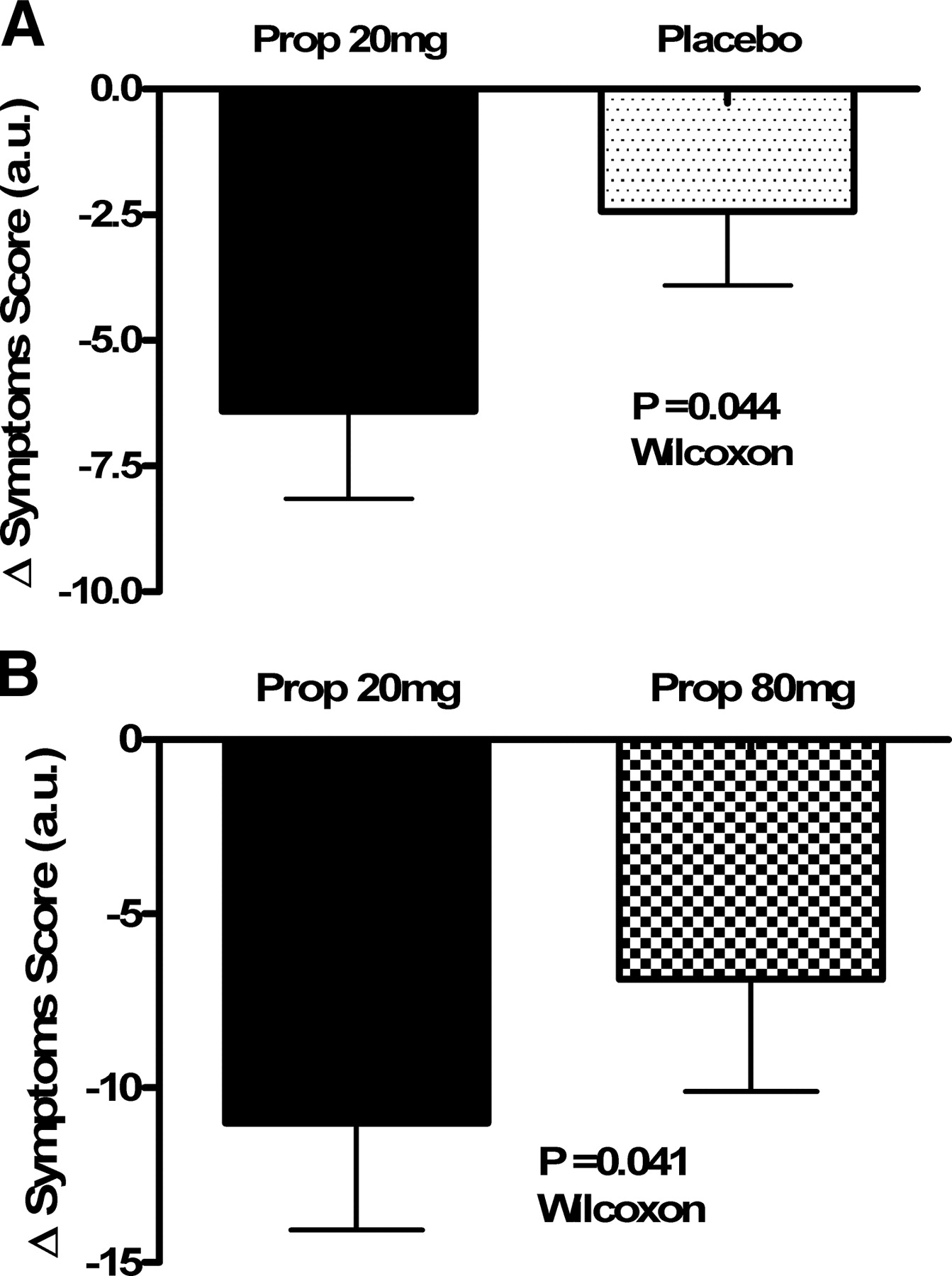
Vanderbilt University, one of the leading autonomic research centres globally, conducted a placebo-controlled trial showing that low-dose propranolol (20mg) significantly reduced standing heart rate and improved symptoms in PoTS patients. Crucially, they found that low doses worked better than high doses. High-dose propranolol lowered heart rate effectively but did not improve symptoms and in some cases made exercise capacity worse. This is a finding that has not been widely communicated to prescribing clinicians.
A 2018 Korean randomised clinical trial compared propranolol, bisoprolol and pyridostigmine directly in 77 PoTS patients over three months. All three groups showed significant improvements in orthostatic intolerance scores, depression scores and quality of life. The beta blockers performed similarly to each other, though the trial was not designed to detect subtle between-drug differences.
A 2025 systematic review in Frontiers in Neurology pulled together 21 randomised trials covering approximately 750 patients across more than two decades of PoTS treatment research. Its conclusion was measured: propranolol, along with midodrine and ivabradine, has the strongest evidence base in PoTS, but the overall evidence is not yet strong enough to firmly establish which drugs should be used as first-line treatments. Large properly powered trials are still lacking.
A 2026 crossover trial compared propranolol, ivabradine and placebo directly in the same patients. Both active drugs reduced standing heart rate to a similar degree. Neither clearly outperformed the other on symptom measures, though ivabradine showed some advantages in quality of life scores. The question of which drug to reach for first remains genuinely open.
When beta blockers can make things worse
This is the part of the conversation that gets left out of most prescribing discussions.
Beta blockers can reduce plasma renin activity, which affects the kidney’s ability to retain fluid. In patients whose PoTS is primarily driven by low blood volume, this effect can reduce circulating volume further and worsen orthostatic intolerance rather than improve it. This connection is mechanistically sound but has not been directly studied in PoTS patients specifically. If a patient’s standing blood pressure is already low, adding a drug that further reduces cardiac output is unlikely to help and may genuinely harm.
Non-selective beta blockers including propranolol also block beta-2 receptors in peripheral blood vessels. In some patients this causes increased peripheral vascular resistance, which can make extremities feel cold and heavy and may contribute to worsening of the livedo-like discolouration some PoTS patients experience in their legs on standing.
Perhaps most clinically important is the hyperadrenergic PoTS picture. Hyperadrenergic PoTS is characterised by excessive sympathetic nervous system activity, elevated standing noradrenaline levels, a tendency for blood pressure to rise rather than fall on standing, and symptoms including tremor, anxiety-like sensations and sweating alongside the usual palpitations and dizziness. On the surface, this sounds like exactly the condition that beta blockers are designed for: block the adrenaline, calm the system, reduce the heart rate.
In practice, the picture is more complicated. The sympathetic overdrive in hyperadrenergic PoTS is often a compensatory response to an underlying problem, whether that is autoimmune autonomic dysfunction, mast cell activation, or central nervous system dysregulation. Blocking the adrenaline addresses the symptom without touching the underlying driver. In some patients this produces acceptable symptomatic relief. In others, particularly those where the sympathetic activation is serving as a compensation for poor venous return, blocking it removes a necessary adaptation and worsens overall function.
Vanderbilt specifically notes that beta blockers can aggravate orthostatic intolerance in patients with a low blood pressure phenotype. The contraindication is not universal but it is real, and it is frequently not considered at the point of prescription.
The dose question
The evidence consistently points toward low doses performing better than high doses in PoTS. Raj et al. at Vanderbilt found symptoms improved more with 10mg propranolol than with 20mg. Higher doses blunted the heart rate more effectively but did not improve how patients felt, and in some cases reduced exercise capacity.
This finding runs directly against the instinct to titrate upward when a treatment is not working. In PoTS, if a low dose of propranolol is not producing the desired effect, the answer may not be to increase the dose. It may be to reconsider whether propranolol is the right drug for this patient’s subtype.
The cardioselectivity question
For patients who have asthma, chronic obstructive pulmonary disease, or who experience significant peripheral side effects from propranolol, cardioselective alternatives such as bisoprolol and metoprolol are the appropriate next step. The head-to-head evidence in PoTS does not show a significant difference in efficacy between propranolol and bisoprolol. The difference lies in tolerability and side effect profile.
What this means practically
Beta blockers remain a reasonable first-line option for most PoTS presentations, particularly where the heart rate is elevated on standing without significant blood pressure changes. Low doses are better supported than high doses. If symptoms worsen, blood pressure drops, or the patient has features of low blood volume PoTS, beta blockers should be reconsidered rather than increased.
If you are on a beta blocker and feel worse than before, that is a valid and documented phenomenon, not an unusual reaction or a failure to tolerate a drug that should work. It is worth asking explicitly which PoTS subtype your clinician suspects you have and whether that subtype is supported by the evidence to benefit from beta blockade.
The most common reason beta blockers fail in PoTS is not that the drug does not work. It is that the drug is being used for a subtype it was not designed to address.
The views and opinions expressed in Dysautonomia Decoded are my own and do not represent those of my employer or any affiliated organisation.
References
Raj SR, et al. Propranolol decreases tachycardia and improves symptoms in the postural tachycardia syndrome: less is more. Circulation. 2009;120(9):725-734. https://doi.org/10.1161/CIRCULATIONAHA.108.846501
Moon J, Kim DY, Lee WJ, et al. Efficacy of propranolol, bisoprolol, and pyridostigmine for postural tachycardia syndrome: a randomized clinical trial. Neurotherapeutics. 2018;15(3):785-795. https://doi.org/10.1007/s13311-018-0612-9
Pierson BC, et al. Oral medications for the treatment of postural orthostatic tachycardia syndrome: a systematic review. Frontiers in Neurology. 2025;15:1515486. https://doi.org/10.3389/fneur.2024.1515486
Raj SR, et al. Canadian Cardiovascular Society position statement on postural orthostatic tachycardia syndrome and related disorders of chronic orthostatic intolerance. Canadian Journal of Cardiology. 2020;36(3):357-372. https://doi.org/10.1016/j.cjca.2019.12.024
JACC: Advances. A randomized crossover trial of ivabradine, propranolol, and placebo in postural orthostatic tachycardia syndrome. 2026. https://doi.org/10.1016/j.jacadv.2026.102795
Thanks for reading! This post is public so feel free to share it.
No posts
Comments
Nothing yet. Say the first thing.
Sign in to join the conversation.