

My editor emailed me at around 3:30 pm today and insisted that I talk with him and his team at 5:00 pm sharp. He said, “it’s good news.” I couldn’t imagine what it would be, but I tried. None of those imaginings were what it turned out to be: The Others, in all of its versions (audio, hardcover, and Kindle) made the New York Times Bestseller list (14 and 15). I was and am, in shock.
Thank you, all of you who helped make this happen. I appreciate your support and kindness, and belief in what we do.
Back to the regularly scheduled program…
The Pesky Persistence of Religion
What if religion is not primarily a system of beliefs, but a fundamental human capacity? What if the world’s religious traditions are diverse expressions of a deeper feature of human nature—one that evolved with us, shaped civilization, and continues to influence our lives whether we identify as religious or not?
A basic assumption of most traditional religions includes the idea that human beings are intrinsically oriented toward experiences of transcendence and the sacred. Far from disappearing in the modern world, this orientation has merely changed its outward forms. Before we explore this idea, we have to confront vestiges from the era known as the Enlightenment that have been slow to fade away. These include the assumption that religion is an evolutionary construct that helped human beings for a while, but is ultimately a superstitious hangover that will eventually disappear.
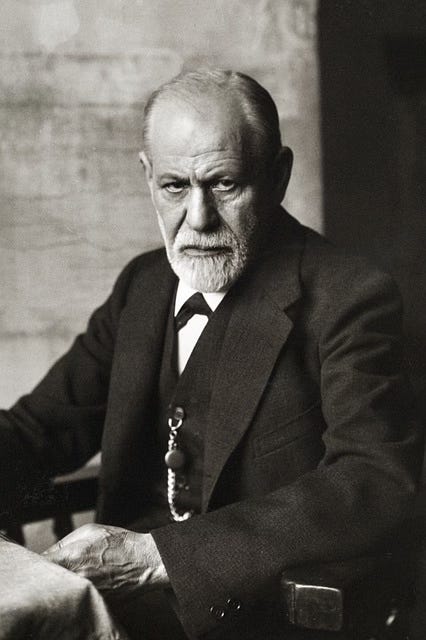
In the late nineteenth and twentieth centuries university professors and intellectuals announced that the end of religion was well within sight. Philosopher A. J. Ayer confidently declared that religious language was meaningless, while scientist Richard Dawkins scoffed, “Faith is the great cop-out, the great excuse to evade the need to think and evaluate evidence.” They portrayed the move from religious to secular institutions, dubbed the “death of God,” as a triumph of evolution and rationality over superstition. For them, this development was inevitable. At the same time, popular icons like science fiction author Arthur C. Clarke and the father of psychiatry Sigmund Freud characterized religion as an irrational relic of the past and a developmental stage in human history that had run its course.
By the late twentieth century and much to the surprise of the critics, nonpartisan research centers found that despite the earlier hype, more people in the world identified as religious than ever before in recorded history (see the research of Dr. Peter Berger). What did Dawkins and Ayers get wrong? Was this an unexpected cultural turn toward irrationality and superstition? As the trend toward religious belief and practice continues, how are we to understand this surprising and unabated adoption of and fascination with religion?
Ironically, the very enterprise once expected to disprove religion, science, has begun to reveal features of the human brain that suggest religion is not only beneficial for human flourishing but also oriented toward aspects of the world that are more than merely comforting illusions. Research from anthropology and neuroscience reveals that the human brain contains structures associated with spiritual experience and when these are activated produce measurable benefits, including enhanced well-being, increased empathy, heightened creativity, and greater longevity. Scientific Atheists and religious practitioners can now agree on this point: participation in a religious tradition confers substantial benefits not only on individuals, but on society. (See the work of Dr. Tanya Luhrmann and Dr. Lisa Miller for this research)
More significantly, however, this research illuminates astonishing implications about the nature of reality (Luhrmann and Miller’s research does not make these claims, but focus on the effects of religious practice). I am exploring the idea that religious practices and doctrines are grounded in something prior to religion itself, an underlying dimension of human experience upon which religious traditions have long drawn. This raises a provocative point: human history is finally approaching the capacity to identify, in empirical terms, a category of experience that religious practitioners have historically described as sacred and divine.
I now present to you, an irony: this is none other than an event from the philosopher A. J. Ayer’s life that best illustrates the stakes involved in the antagonistic transition from Enlightenment certainty to humility in the face of the transcendent abyss. Okay, perhaps I’m being hyperbolic, but I am referring to this great philosopher’s death and apparent resurrection. Okay, maybe resurrect is not the appropriate description, but the man did verifiably die in a hospital, and then come back to life. He experienced a near death experience, an NDE, and it changed his philosophical views.
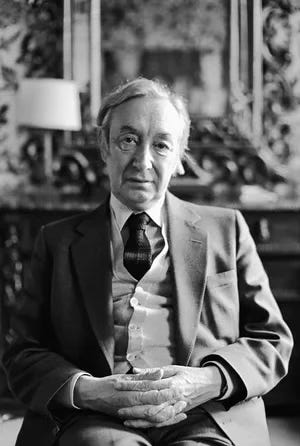
A. J. Ayer was not just a philosopher, but one of the leading exponents of logical positivism and a staunch atheist. He converted a lot of people away from religion to atheism. In his classic work, Language, Truth and Logic, he argued that statements are meaningful only if they are either empirically verifiable or analytically true. Because claims about God cannot be empirically verified, he concluded that they were literally meaningless, not merely false.
This became one of the most influential philosophical critiques of religion in the twentieth century. Religious language, according to Ayer, was meaningless because there was no referent or object to which it referred. When I see a table, you see it too if we are in the same room, and therefore the statement, “See that table?” means something to us. There is a table to which that statement refers. But if I say, “I believe in God, the almighty and transcendent,” Dr. Ayer would probably say, “Where is that God? I don’t see it.” He would probably then say that my statement is meaningless because there is no God there, or anywhere.
Well, that was, until he died, and came back to life.
In 1988, shortly before his death, Ayer had a dramatic medical crisis. He choked on a piece of smoked salmon, his heart stopped for several minutes, and he was later resuscitated. Afterward, he described an unusual experience.
He reported seeing a vivid red light and believing that he had encountered some sort of governing order of the universe. He wrote that he had the impression that he was somehow involved in regulating space or that there were “ministers” responsible for it. He also described becoming aware of the extraordinary brilliance of the light.
Later, upon reflecting on this experience, he said that it had weakened his confidence that death necessarily meant the complete extinction of consciousness. More remarkably, he shifted his philosophical position. Whereas previously he had stated that religious language was meaningless, which means in lay language that there is nothing to which it refers, now, after dying and coming back to life, he retracted that statement and said that religious language was probably meaningful. It had meaning. For a philosopher of language, this is not just a subtle shift, which it might appear to be to non-philosophers. No, indeed, this shift changes everything.
Being a philosopher of language, Ayer was not one to mince words. Here is an essay he wrote about his NDE, which he efficiently titled, What I Saw When I Was Dead.
Although he didn’t convert to any religion and remained an atheist with respect to God (but not to the guardians of the universe, apparently) according to his wife he became a much nicer person.
More soon…
Comments
Nothing yet. Say the first thing.
Sign in to join the conversation.