
Before the Enlightenment, revolutions tended to be more in the spirit of peasant revolts or the rebellion of nobles. All were motivated by parochial economic interests.
The American Revolution paved the way for the American Experiment: Can you establish central government and still yet preserve decentralized exchange and some scope for localized, independent governance? That experiment operationalized the concept of “checks-and-balances.”
Checks-and-balances includes political accountability (by way of elections) and judicial accountability (by way of decentralized, common law process). But, does it work?
The French Revolution merely replaced the royal, centralized administration with yet other centralized administration. But, …
This time administration would be guided by scientific, Enlightenment-era principles.
Indeed, in place of checks-and-balances, the central government would remain largely insulated from either political accountability or judicial accountability, because those things can get in the way of hyper-optimized governance. Parliamentary elections would mostly amount to window-dressing, and judges would be reduced to citing civil code. There would be no scope for “judge-made law” by way of common law process.
The Bolshevik coup of 1917 demonstrated that a cabal of fanatics could seize the levers of government and then impose its enlightened program on an atomized populace. Counter-revolutionaries fought back, and the Russian Civil War imposed a toll on Russia greater than that of the First World War, but the Bolsheviks ultimately prevailed.
Developments in the run up to the Spanish Civil War (1936-1939) constitute merely one example in which parties on the Left perceived the Bolshevik experience as a user manual. In Spain 1936, a cabal of fanatics managed to finesse their way into monopoly of the levers of government and started to implement its enlightened program, but this time counter-revolutionaries fought back and won. The War was the counter-revolution.
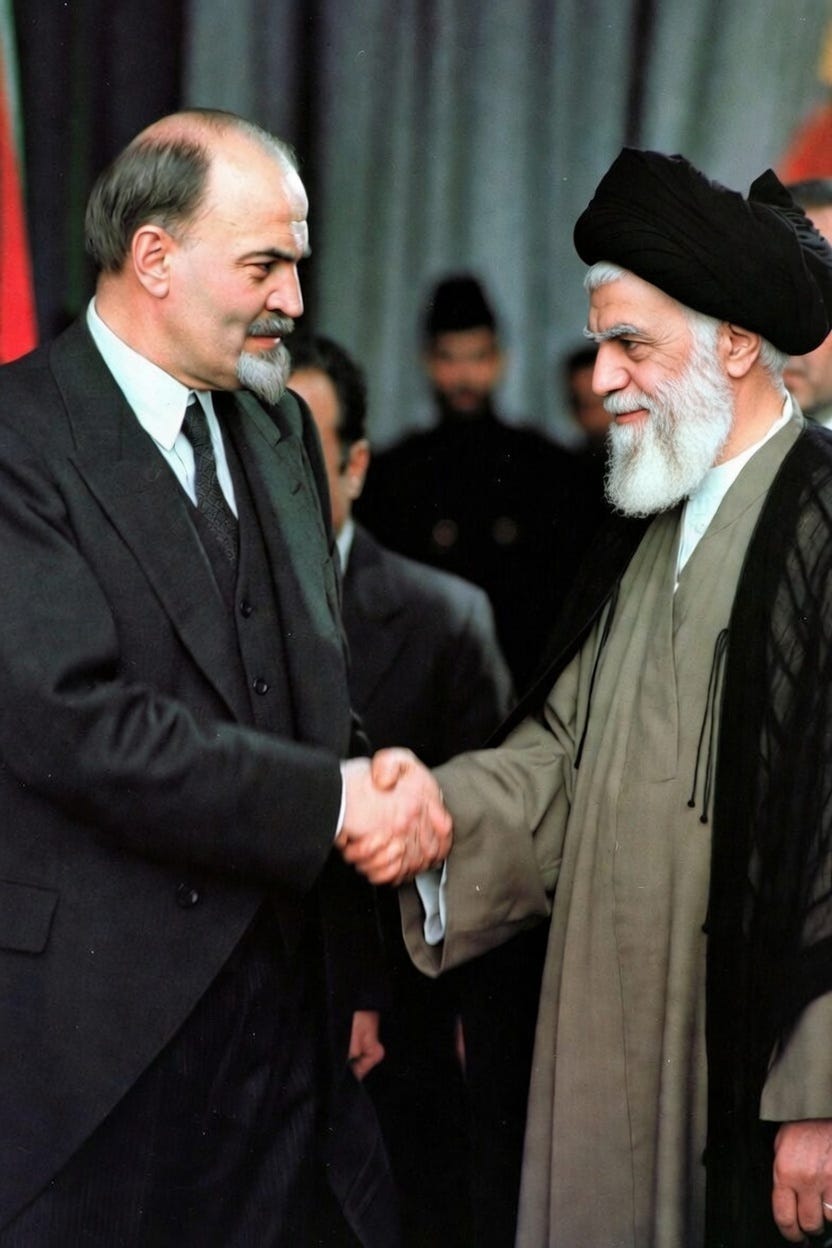
The Islamic Revolution in Iran in 1979 enabled a cabal of fanatics to depose the Shah and institute their enlightened program. There was no effective counter-revolution, and the new regime even went so far as to export the revolution to neighboring Iraq. But, before that program could get off the ground, Saddam Hussein and his people seized the initiative and invaded Iran. Hence the Iran-Iraq war of 1980-1988.
Millennialism ties together the revolutions that followed the American Revolution. These revolutions had their own flavors—Islamic or post-Enlightenment—but all of them justified the centralization of government by appealing to higher principles.
Starting in at least 1775, they stopped making revolutions like they used to.
In the good old days, peasant revolts were often just that: the rebellion of peasants demanding better terms of exchange between themselves (the people who worked the fields and the rice paddies) and the owners of the great estates, latifundia, plantations. Wheat or rice wasn’t gonna harvest itself. Got to get those serfs into the fields of Flanders or the Ukraine or the Midlands or the Mekong delta. Hence developments like the Peasant Revolt of 1381.
No one expects the Peasant Revolt! But, were we to dig into it, we would find (I am guessing) that the English lords were dismayed to find that there just were not enough peasants to go around to work every lord’s estate to capacity. Why? Bubonic plague had taken away something on the order of half the population from the 1340’s through the 1360’s. Smaller population, hence less demand for agricultural produce as well as fewer peasants to work the estates. But there was no reduction in estates and thus no reduction in lords endeavoring to maintain the productivity of their estates! Lords are replenishable with a new cohort of lords.
A simple economic model: Before the plague, labor was abundant. The binding constraint on agricultural production was the land. Indeed, land owners worked hard to relieve that constraint by drawing land of marginal quality into production. Drain a swamp here; turn up all the boulders out of the soil there. Costly investments. But, after the plague, there was an abundance of high-quality land lying fallow. Whole communities disappeared, and was only in the 15th century that populations started to recover and peasants started to recolonize the land. Hence the emergence of surnames like Villeneuve, Villanova or Villaneuva, …“New Town,” … Newtown, Newton?
But, it was 1381, and the Newtons had yet to move into the neighborhood. One can imagine the lords competing for scarce labor. Being on the short side of a market—the laborers in a labor market in this case— can be a good thing, because the other side would be long on bidders for that labor. Land owners would be disposed to bid up the terms for that scarce labor. Better compensation and better deals for laborers all around! … unless the lords start appealing to the older, traditional terms of the feudal contract: But for some number of “freemen,” most of you laborers had been tied to the land. You couldn’t just decamp to another lord’s demesne were that other lord to offer superior terms. We had become lax in policing the traditional terms of the labor contract, but we’re imposing them now! The peasants revolted.
In Native Realm (1968), Czeslaw Milosz illuminates this business of reanimating feudal contract—what he called “recurrent feudalism”—with respect to wheat production in 19th century Poland. Grain markets had globalized to the extent that they tapped into Poland; the noble land owners had been operating below capacity, but now was their chance to maximize output; they required labor to do that, hence the reassertion of older, feudal norms.
Here’s the same story recast in different terms: You have ten factories and ten factory owners. Everyone is producing widgets, and they ostensibly compete to sell widgets in a widget market. But, there is so much demand that each factory ends up operating at capacity, and there is no easy way to expand capacity. So, effectively, there is no competition. Each factory owner operates like a monopolist; no one owner needs to concern himself with how other owners are pricing widgets or with how much other owners are producing. All those other owners are capacity-constrained, and each owner’s optimal program is simply to run at full capacity, dump all produce on the market, and enjoy monopolistic pricing. It’s great!
But, then demand is halved, and there is not enough demand to support all ten factories operating at capacity. Maybe five operating at capacity could supply the market. Or, maybe, all ten factories operating at 50% capacity would be adequate. But, now, factory owners fight among themselves over who gets to maintain higher throughput/capacity utilization, and they resort to gimmicks to tamp down competition between themselves for scarce labor. The laborers form a union and go on strike to demand better terms.
There’s my sketch of the canonical peasant revolt. There might be something to it.
The 18th century rearranged the chess board.
1763. Britain and France settle the Seven Years War. The Seven Years War might qualify as the first World War in that it was fought in Europe, North America, the Caribbean, and India.

The French and Indian War amounted to the North American theater of the Seven Years War. (That theater of war involved our Indians in the West, not their Indian Indians from India in the East.) Many of the combatants from both sides of the American Revolution ended up fighting next to each other against the French and their Indian cohorts. Colonials like a young George Washington fought with British. The British also brought their own Indian cohorts, members of the Iroquois confederation, into the fray. Our Indians fought Their Indians.
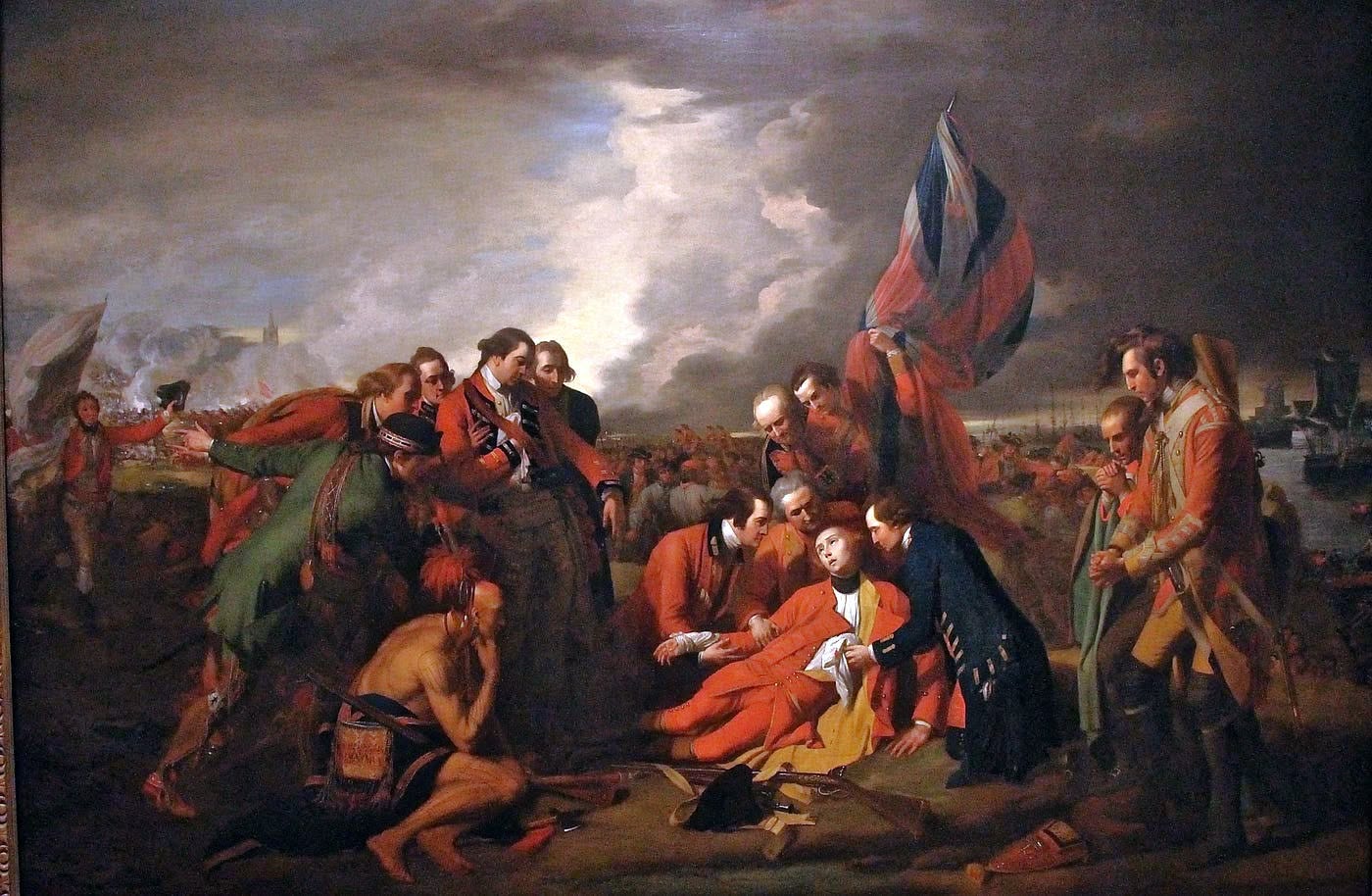
But, 1763. The relationship between Britain and its North American colonies started to sour. Long story short: Britain virtually bankrupted itself in its global war with France. The Motherland had allowed the policing of the Mercantilist Contract with America to go lax for some time, but now there were prodigious debts to be paid. The British started to tighten up that contract and complement it with a raft of new taxes and prohibitions. Among other things, the colonists were forbidden from venturing over the mountains and into the Ohio River Valley, notwithstanding the fact that many of those colonists fought in the war so that they could do just that.
American Revolution (1775-1783), blah, blah, blah … Then the Northwest Ordinance of 1787: The Americans set up formal processes for settling the Ohio River Valley and then converting Northwest territories (eventually) into states in the Union. Then the Constitutional Convention of 1787.
The Constitutional Convention took up the question of how you set up a “rules-based order” that respects individualism, free exchange and individual rights while nonetheless setting up some capacity for the central government to do things … like deliver the mail, wage war, and raise revenue to support the business of delivering the mail and waging war. But, does setting up a central authority merely doom the project of preserving decentralization?
A remedy encompassed “checks-and-balances” as contemplated by the Anglo-Scottish conceptualization of the “separation of powers,” the “tripartite ideal of government organization, wherein all power delegated by the people [had been] … divided neatly between legislative, executive and judicial” (James Landis in The Administrative Process, 1938).
So, the storybook caricature is that the Legislature (Congress) makes the laws, the Executive (the President) enforces the laws, and the courts determine whether or not the laws accord with the Constitution if and when some party with standing challenges those laws.
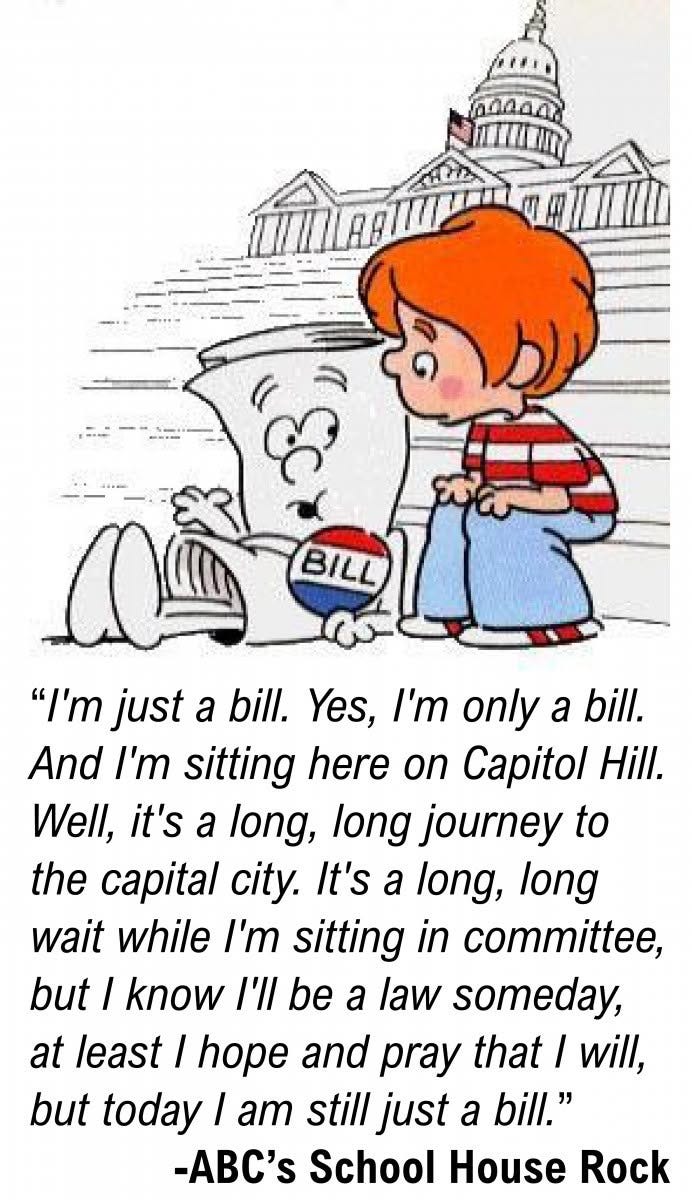
The question of how well the storybook version of “checks-and-balances” accords with practice has been the subject, in passing, of some my essays, but I will not take up that question here. I will, however, introduce checks-and-balances to contrast it with the Continental conceptualization of the separation of powers. And, I think certain contributors are right when they illuminate the connection of it to the “Royal Prerogative,” basically, the idea that the Executive’s agents in the administrative agencies should operate without interference from the legislature, from the courts, and, conceivably, from the Executive itself. Which brings us to The French Revolution.
The French Revolution substituted the Royal Prerogative of the Bourbon Kings with the Royal Prerogative of the Napoleonic Administrative State. The point of la séparation des pouvoirs was to insulate the Imperial Administration from political accountability and from judicial accountability.
(So, what was the point of the Revolution, then? Mostly the culling of the class of aristocrats?)
Before the Iran business blew up, I had been tuning up an essay titled “The Return of Politics,” and I was going to explore—and will yet explore—recent developments in Japanese politics to make the point that political accountability is not a bad thing! It is through Parliamentary elections and Presidential elections that the Administrative State can yet be subject to a non-trivial degree of political accountability. And a point of the essay will be that politics in Japan may finally be emerging for the first time since being buried under Occupation Era (1945-1952) democratic reforms. I contend that those reforms had paralyzed elected officials with so many rules that there was no place for discretion and policy-making to go but into the administrative agencies.
Policy-making thus became opaque and insulated from political accountability, which would help explain why policy-making has become so unresponsive to the preferences of the electorate. (Does this not sound familiar?) Everyone loves policy when they love it, but they hate it when they can’t weigh in and encourage a course-correction when policy deviates from the will of the electorate.
But, back to the Napoleonic tradition. It has two parts. First, cut the administrative agencies loose from the legislature. That’s the legacy of the Royal Prerogative. Second, insulate the administrative agencies from judicial accountability by supplanting common law process with the Codification of Everything. Call it “the Napoleonic Code” if you like.
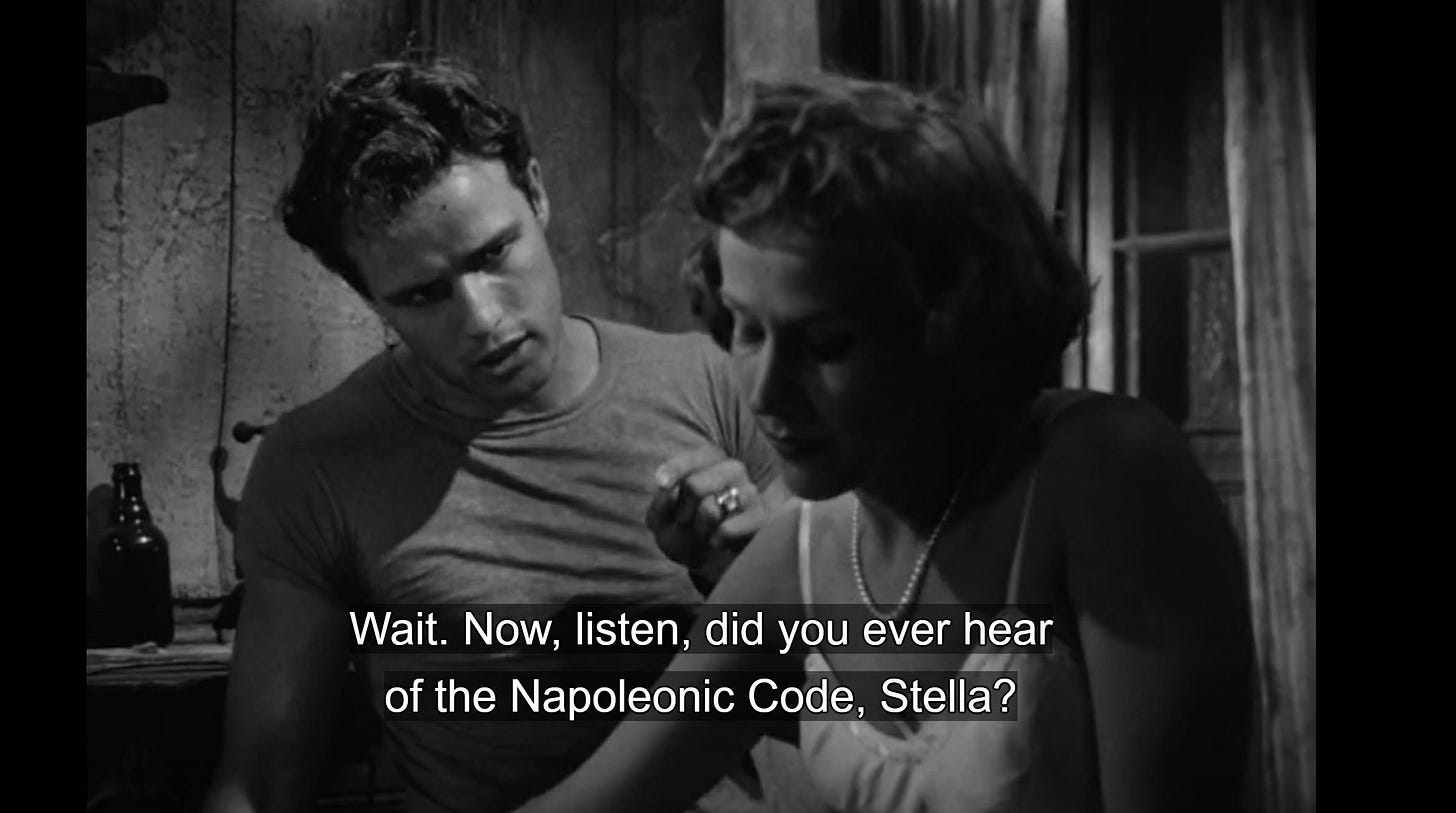
Proposition: The revolutions of Continental Europe merely replaced the overweening Ancien Régime Administrative State with another overweening Administrative State, except this time the Administrative State would operate everything in accordance with finely-tuned, scientifique principles.
Skip forward through the Revolutions of 1848, the Paris Commune of 1870 and right to the Bolshevik coup in St. Petersburg 1917. From Francis Spufford, Red Plenty (2010):
In the chaos and economic collapse following the overthrow of the Tsar by disorganized liberals, they were able to use the discipline of the cult’s membership to mount a coup d’etat—and then to finesse themselves into the leadership of all those in Russia who were resisting the armed return of the old regime. Suddenly, a small collection of fanatics and opportunists found themselves running the country that least resembled Marx’s description of a place ready for socialist revolution.
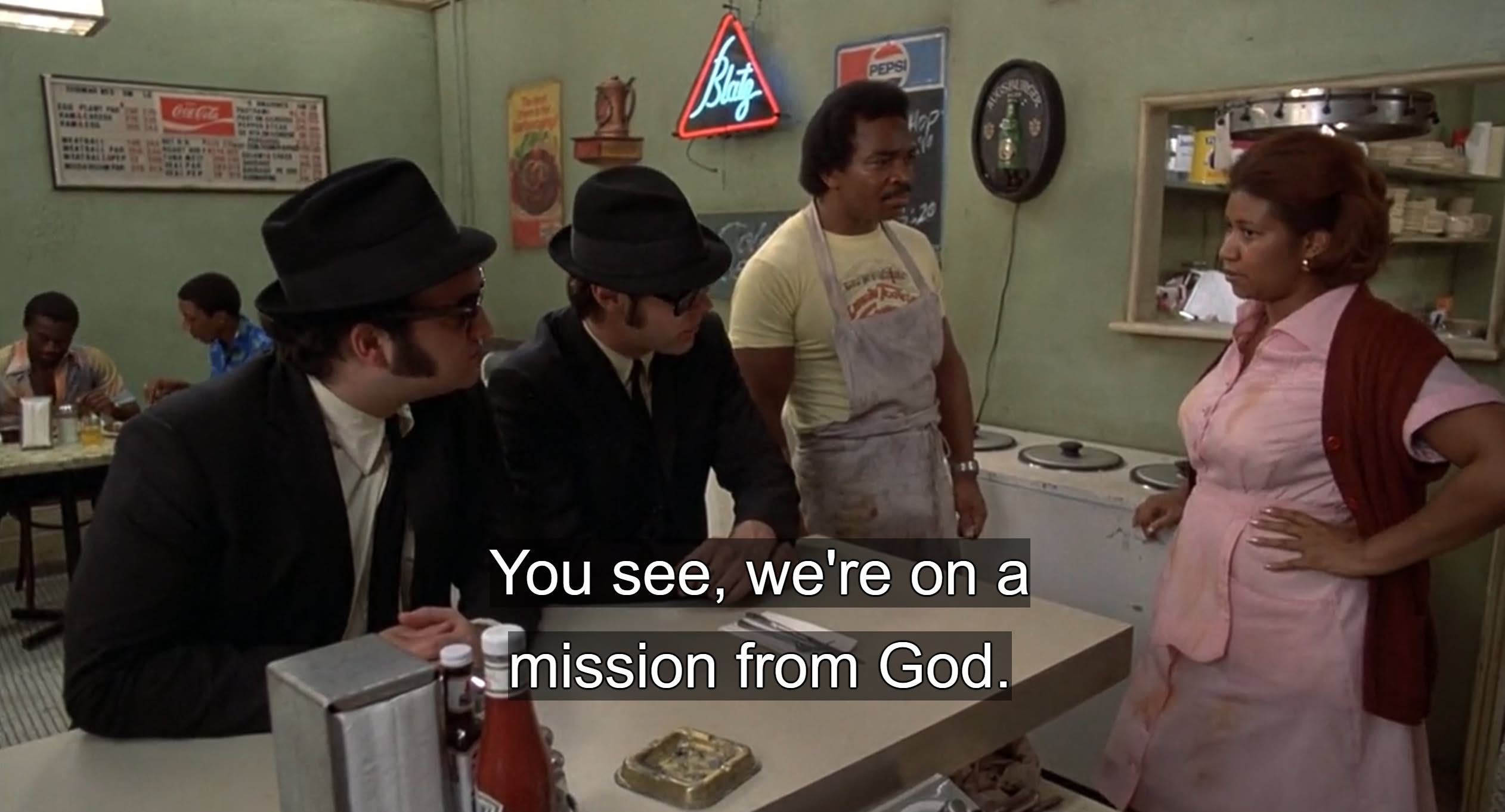
From my (still ongoing) readings about such things as The Spanish Civil War (1936-1939), I get the sense that anti-liberationists look to the Bolshevik experience as a user manual: Never mind democratic process and the hard work bringing people to your cause. Just go in there and seize the levers of government, and aggressively use the levers of government to compel the atomized populace to conform to your program. Install a government of administrative agencies. Populate the administration with experts. Let them run the country unencumbered by either political accountability or judicial accountability; appeal to the Royal Prerogative; ignore the backwards American model of “checks-and-balances.” And, you are right to do this, because you have the right, finely-tuned, scientifique principled, Chiliastic program. You’re on a Mission from God. “Democracy” and constitutionalism are for losers, but feel free to dress up your totalizing program as Our Democracy™.
Recall that it was the Germans who had delivered Lenin to St. Petersburg to organize the Bolshevik coup. Their mission was to motivate Russia’s exit from the Eastern Front of the First World War. The gambit worked.
The Spanish committed to a new constitution in 1931. Constitutions lay out “rules of the game,” but it is not obvious that all parties on the Right or that any parties on the Left were serious about respecting their own rules-based order. Parties on the Left explicitly understood the Bolshevik experience as a model for seizing control of government. They published articles about such a ploy, and they went so far as to stage an insurrection in 1934. The teetering Republic managed to suppress the insurrection, but, two years later, in something of a quiet coup, the Left managed to expel Rightist factions from government. The Leftist faction in government then set about implementing its militant, Chiliastic vision of Heaven on Earth. Certain factions on the Right managed to stage their own counter-revolution, and they prevailed after three years of fighting.
Flash forward to 1979. The French delivered the Ayatollah Khomeini from Paris to Tehran. The purpose was to tip the scale against the Shah’s regime in Iran. That gambit worked. A cabal of fanatics seized the levers of government and aggressively used the levers of government to compel an atomized populace to conform to its Messianic program.
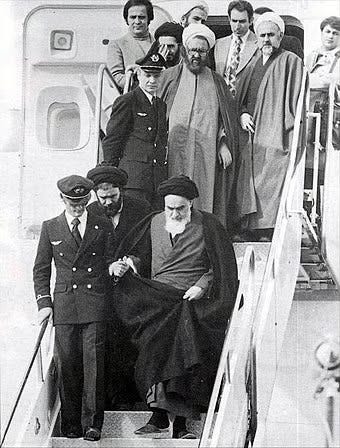
In 1980, the Ayatollah Khomeini broadcast a message by which he encouraged members of the Iraqi military to expel the regime of Saddam Hussein. Hussein’s people did not wait around. They took the initiative and invaded Iran. Better, they thought, to have our Shiites fight their Shiites on our terms rather than wait for our Shiites to extinguish our Sunni regime.
The gambit worked, although eight years of war exhausted both sides.
The Islamic Revolution looks a lot different than the French Revolution, but the one installed a Supreme Leader, and the other installed an Emperor. Both installed government that endeavored to institute totalizing programs. The former would ostensibly involve the strict implementation of Sharia. The latter would involve the implementation of technocratic government informed by science and reason.
Woodrow Wilson was not around, of course, to observe the Iranian experience but he did seem to admire the Napoleonic experiment. In his 1887 essay, “The Study of Administration,” Wilson averred that “the science of administration” could “perfect” the “civil machinery” of public administration. He illuminated administration in Napoleonic France and in Prussia under Frederick the Great as proof-of-concept.
The main proposition of his essay was that the United States could yet raise administration to Continental standards, but the project would have to be more ambitious than those of Prussia and France in that it would have to negotiate the great edifice and obstacle of “modern constitutional government.” By design, constitutionalism had broken the “monopoly” of kingly authorities on government—the “royal prerogative”—and had “enthroned public opinion.” Preoccupation with public opinion gave way, in Wilson’s view, to partisan politics, and it was through partisan politics that public opinion could unduly influence the business of government. The principal objective, then, of a new “science of administration” should be to determine how “Bureaucracy [could be] removed from the common political life of the people, its chiefs as well as its rank and file.”
My next essay on “The Return of Politics” will take up the proposition that “the science of administration” is a mirage and that politics is a good thing. We all complain about politics, but how else do we make government responsive to the policy preferences of the electorate? We do it through politics, and initiatives that supplant electoral processes with, say, processes by which insiders in government merely appoint their own successors makes for unresponsive government by the self-anointed best-and-brightest, of the self-anointed best-and-brightest, and for the self-anointed best-and-brightest.
No posts
Comments
Nothing yet. Say the first thing.
Sign in to join the conversation.