
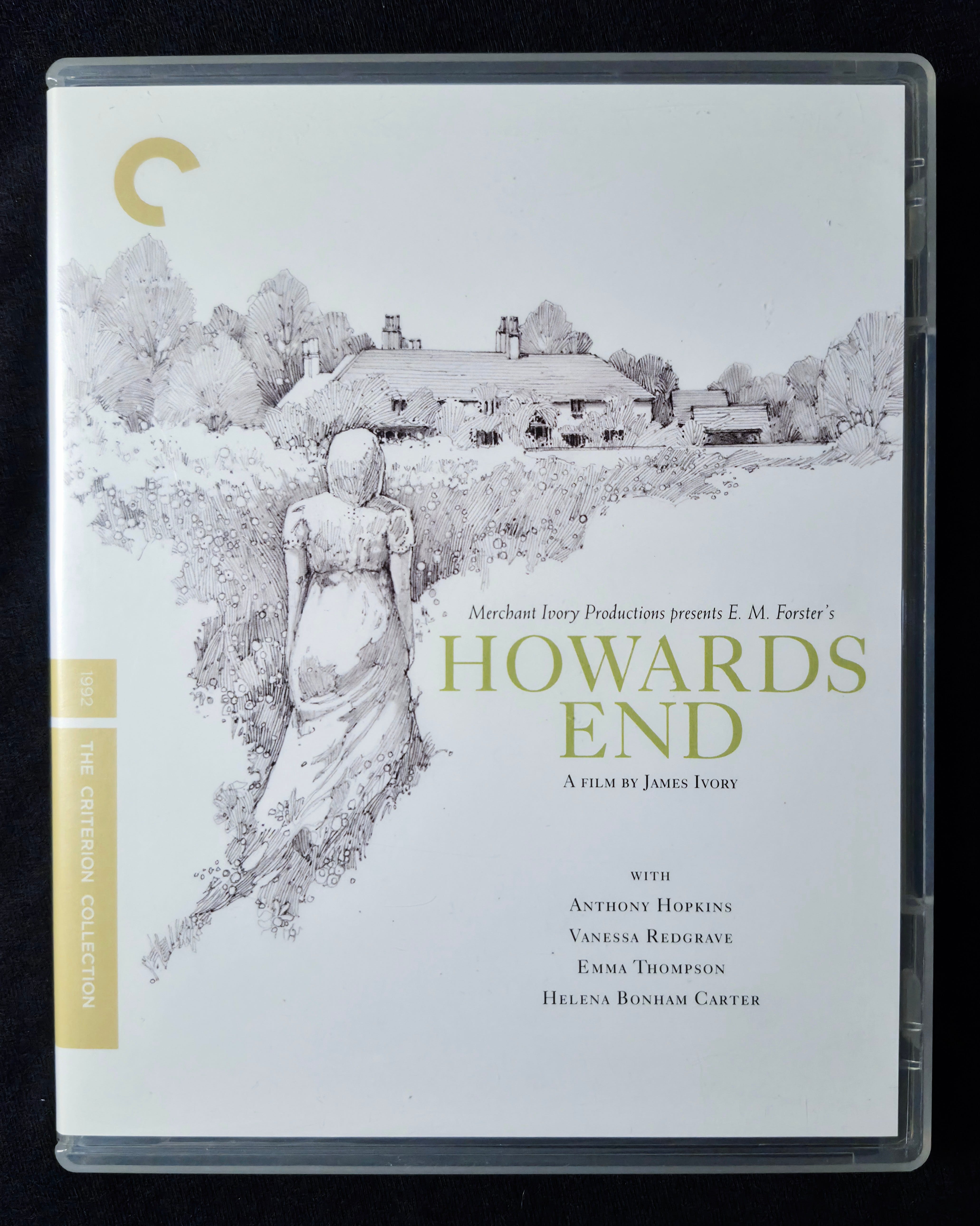
With A Room with a View (1986), the previous film in this double feature of Merchant Ivory E.M. Forster adaptations, I had already read the book and this time around I didn’t have that advantage with Howards End (1992), for my copy of Forster’s Howards End (1910) still remains in one of my three massive stacks of unread books. I wonder, though, if it is an advantage to have read the book before watching the movie. I’ve had a few disastrous experiences of finishing a novel and immediately watching the film only to not actually watch the film but instead meticulously evaluate its faithfulness in plot and tone to its source material.

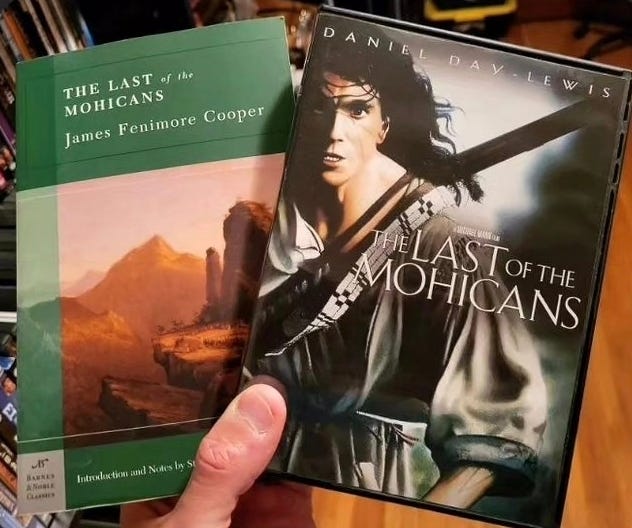
I’ve mostly stopped doing that because it’s usually a miserable ordeal, the worst example of which was the time I read James Fenimore Cooper’s The Last of the Mohicans (1826) and then watched Michael Mann’s 1992 movie of the same name. What I didn’t realize when I started was that The Last of the Mohicans is the second of a series of five books and it’s, well, not a good book. What I also didn’t realize was that Mann’s film wasn’t based directly off Fenimore’s novel but instead was an adaptation of the screenplay for a 1936 film adaptation that departed heavily from the source material. What a mess the whole experience was.
A Room with a View, however, was a book I sincerely loved and I had put a few years between reading it and watching the movie. It also didn’t hurt that the movie is a masterpiece of performance and technical filmmaking that perfectly captures everything I love about British literature from the late-Georgian era up until World War II. Going into Howards End, though, I knew nothing about the narrative aside from the broader aspects of English society and culture in the short-lived Edwardian era. While watching, I was a bit surprised to find a much more sober take on class and aristocratic hypocrisy with far less humor and satire, but I loved it all the same for the exact reasons I loved A Room with a View.
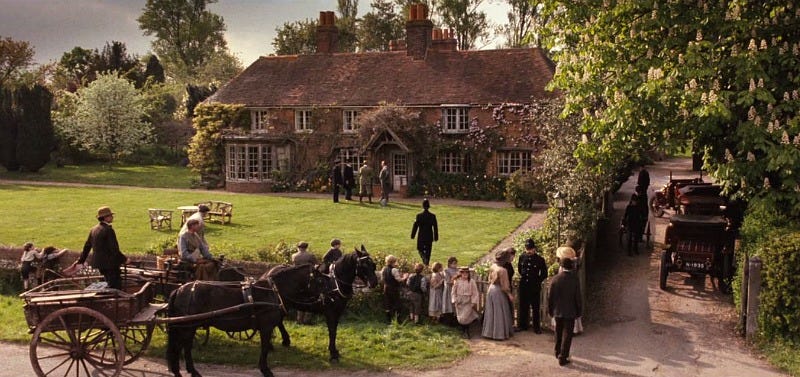
The titular Howards End is a beautiful country home owned by the very upper-class Wilcoxes. The house strangely serves as both the Macguffin and the crown jewel at the center of the very messy, intertwined narrative of the Wilcoxes, the less upper-class Schlegels, and the very working-class Basts. Once the childhood home of the ailing Mrs. Wilcox (played by the great Vanessa Redgrave), it has since become her family’s summer retreat and her most prized possession. The most beautiful cinematography in the film is that of the idyllic, Romantic imagery of the house with its ivy all over—representative of nature reclaiming the brick and mortar—and the surrounding trees and fields of flowers blowing in the wind. There’s also an incredible tracking shot of Charles Wilcox’s car approaching the house and pulling into the driveway that—as I write this—I realize sounds boring and inconsequential, but looks absolutely stunning.
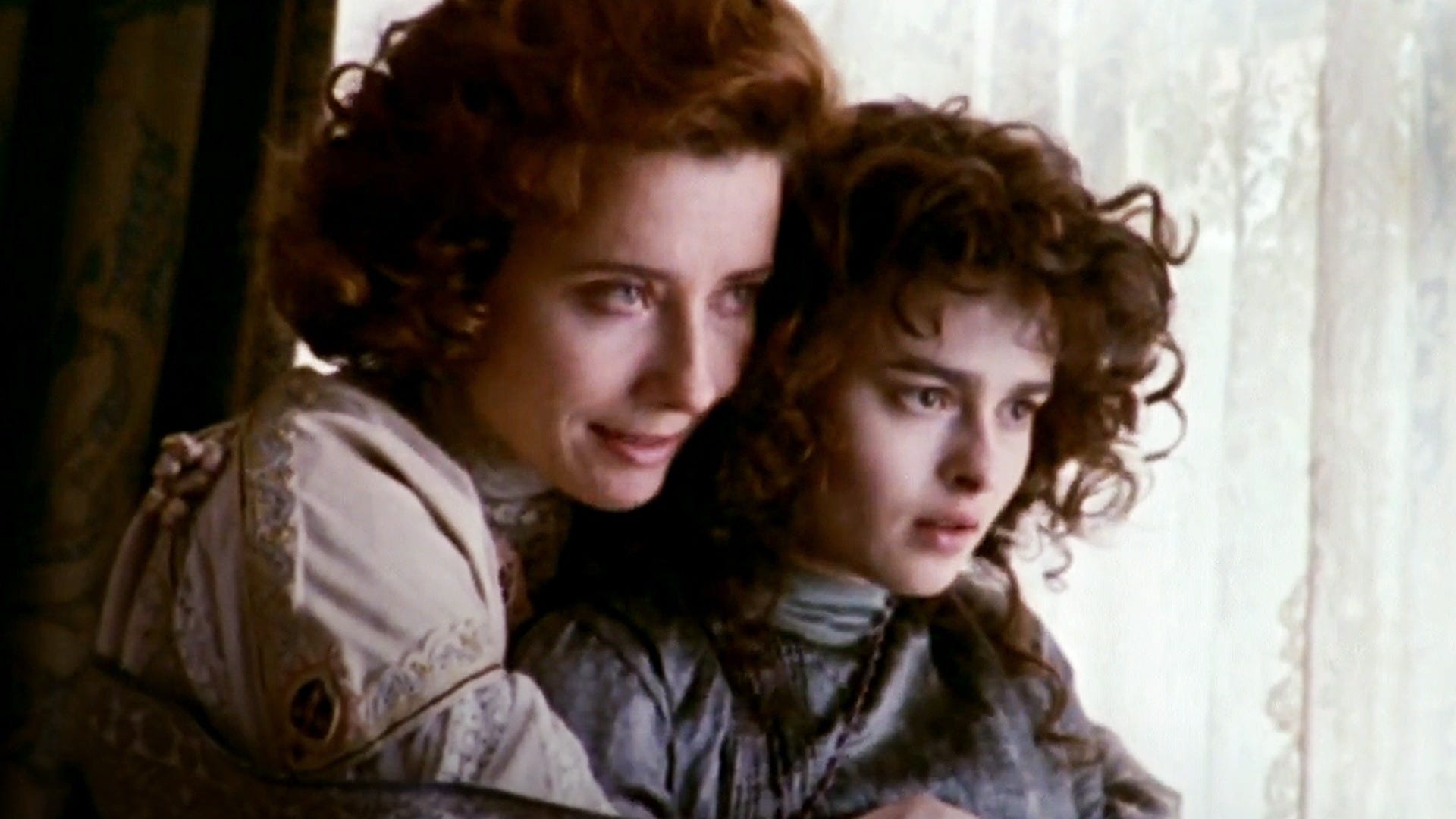
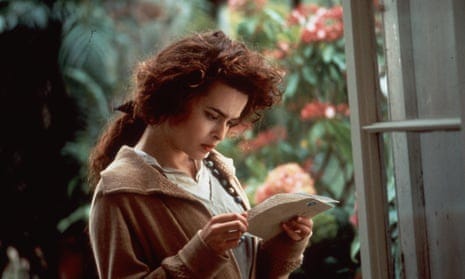
Though she represents a much more conservative generation of women still with one foot in the nineteenth century, there is a sweetness and sincerity to Mrs. Wilcox that sadly doesn’t extend to the rest of her family. The first hint of the Wilcoxes’ lack of basic humanity—especially towards those socially below them—comes in the film’s opening moments while the younger Schlegel sister, Helena Bonham Carter’s Helen, is staying with them at Howards End and becomes engaged to their son who then breaks it off the next morning with a piss-poor excuse and no regard for her feelings.
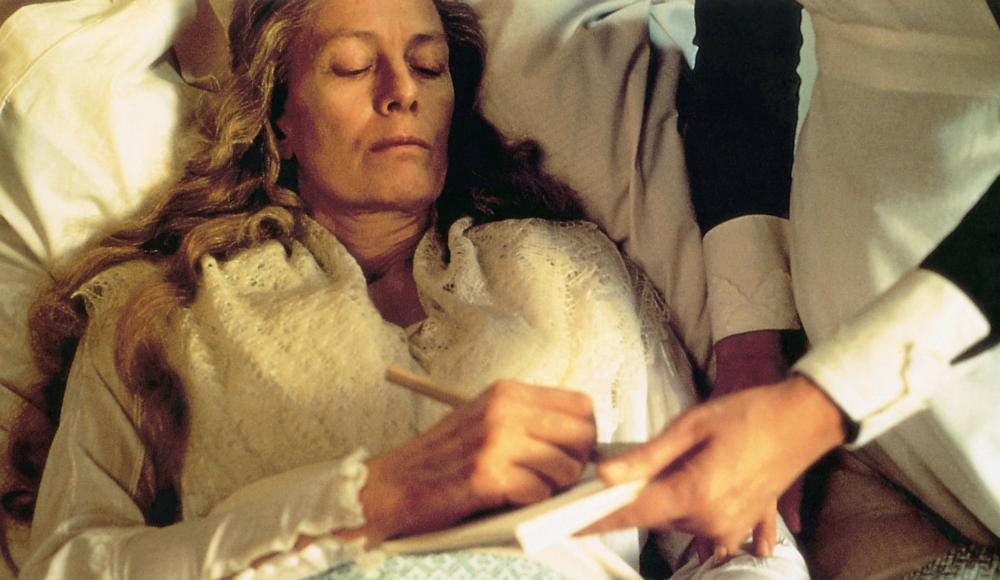
After the passing of Mrs. Wilcox, her husband, Anthony Hopkins’ Henry, consults with his children over a last wish his late wife scrawled in pencil on a piece of stationery held by a nurse and they all decide to destroy the evidence that Howards End was to be left to the close friend of her last months, the elder Schlegel sister, Emma Thompson’s Meg. Between the hastily broken engagement and the distrust of the Wilcox children towards Meg, there is nothing but awkwarkness in every exchange between the two families. There’s also the irony of Mr. Wilcox experiencing what might be a tinge of guilt over dispossessing Meg without her having a clue about it as she asks if her family could rent the country home.
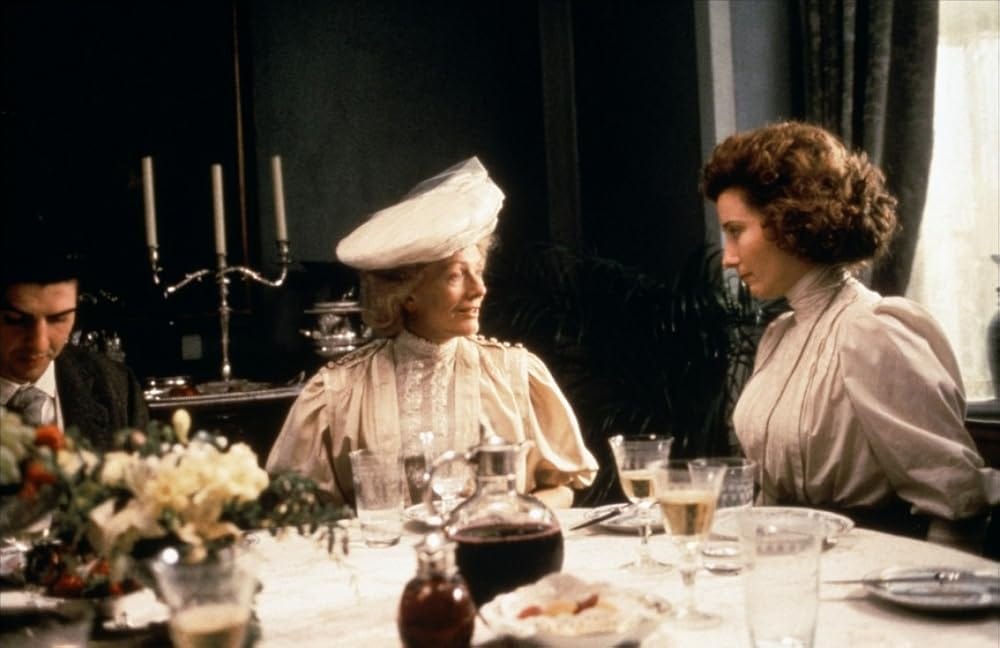
Despite the weird tension, an even weirder age gap love blooms between Meg and the widower Wilcox that leads to marriage and the sundering of the beautiful bond between the Schlegel sisters. In their lower-upper-class situation, Helen, Meg, and their younger brother Tibby grew up as progressive intellectuals steeped in art and literature, the exact opposite of the industrious and shrewd Wilcoxes. This contrast is best shown in a scene in which Henry scoffs at what he perceives to be the folly of women reading literature and studying art while also hinting that he’ll probably have something to say about what Meg reads once they’re man and wife.
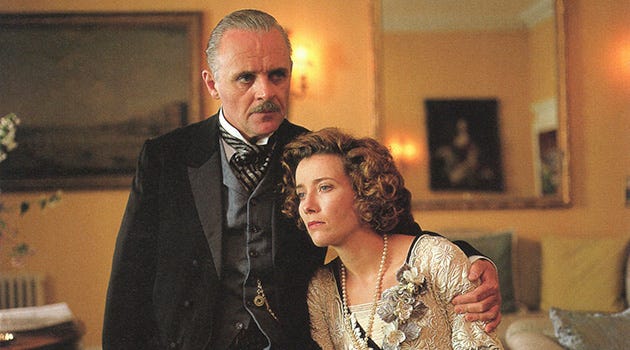
Immediately following Meg’s engagement to Mr. Wilcox, a rift develops between the sisters over the ill-fortune of their lower-class friend, Leonard Bast, due to some badly and hastily given advice from Mr. Wilcox. The harshest blow of Howards End not delivered by the flat side of a German sword is that which shatters the harmony of the Schlegel sisters. All three of the Schlegel siblings are idealists, but each has separate limits to their idealism. Emma Thompson earned her Oscar for her performance as Meg by brilliantly conveying the internal struggle of a woman torn between loyalties to her spouse and her sister.
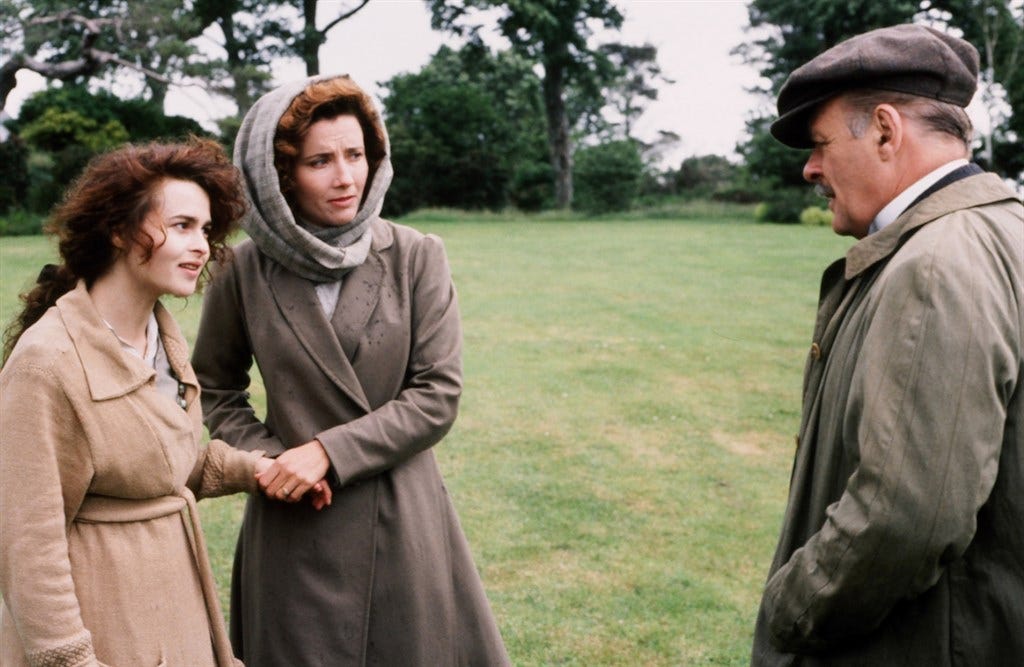
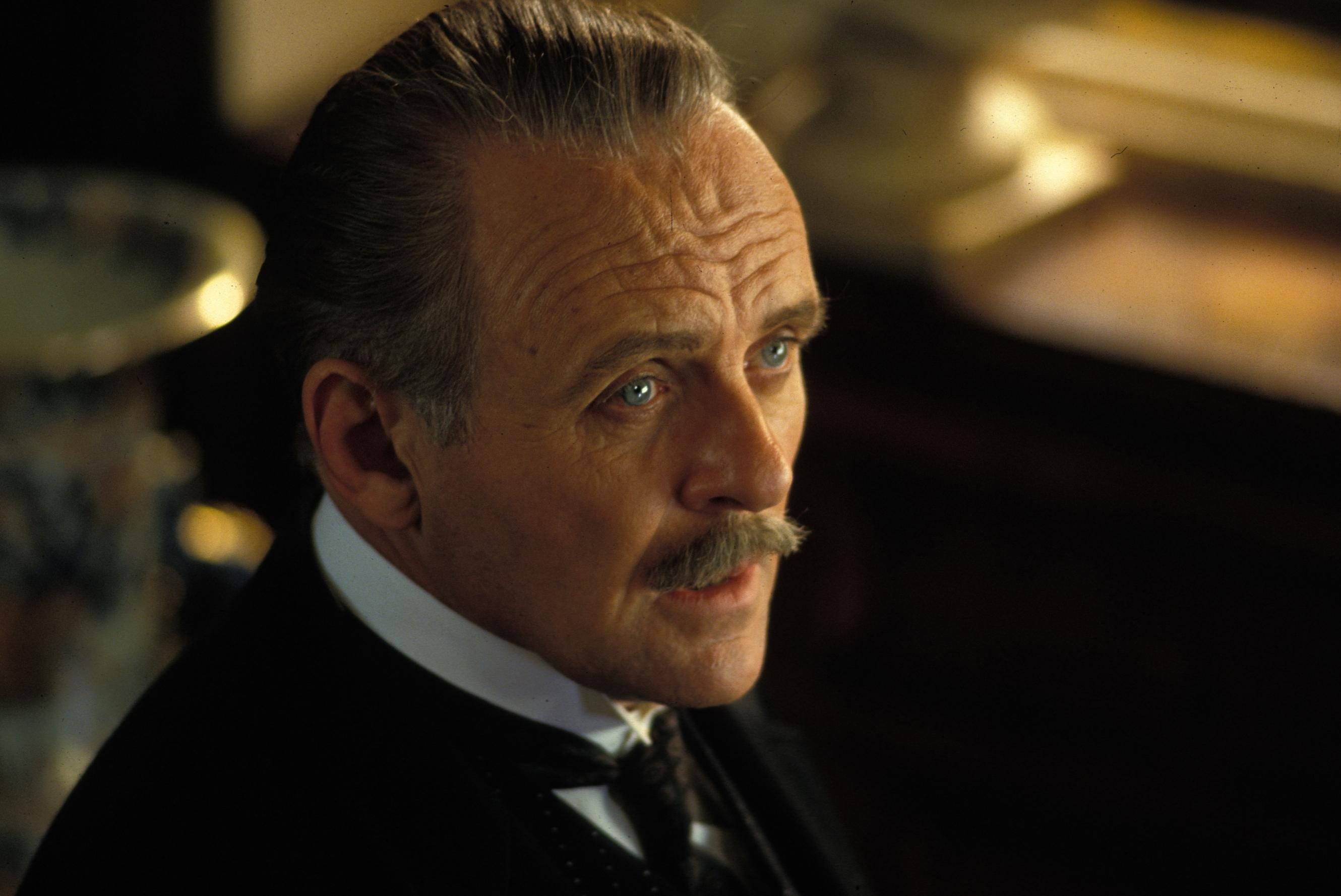
So much of Meg reminds me of many I know who basically absorbed their significant other’s personality and became completely different people and yet despite that I almost fully sympathize with her and don't hate her; that’s the brilliance of Emma Thompson. Sadly, though, Mr. Wilcox reveals himself more and more to be a piece of shit—especially in his dehumanizing “C’est la vie!” attitude towards the poor—and yet he’s not a completely irredeemable piece of shit even after he’s revealed to be a lecherous hypocrite; that’s the brilliance of Anthony Hopkins, I guess.
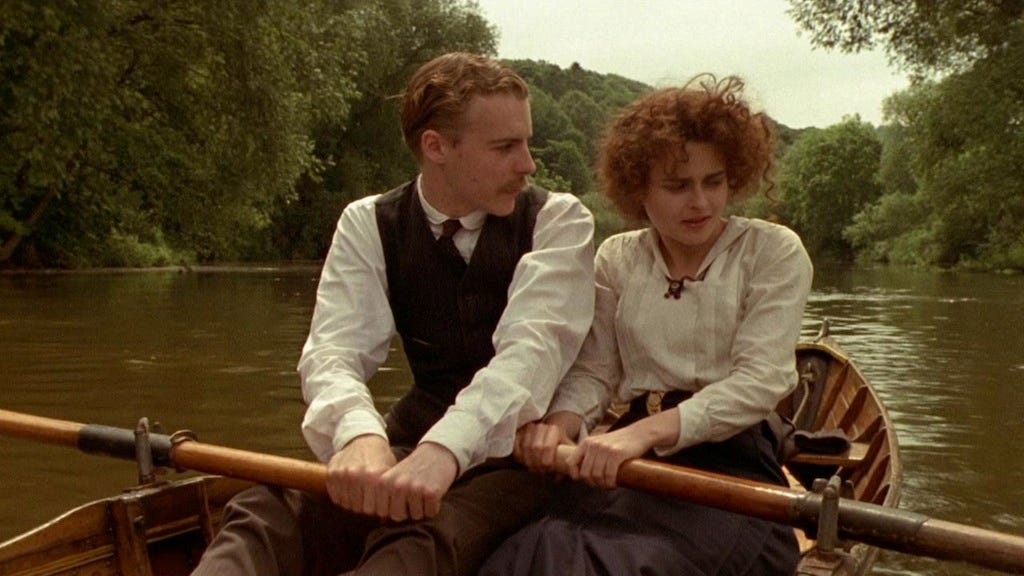
I’ve held off on discussing the aspiring intellectual, Leonard Bast, possibly because his plight feels all too similar to my own. I couldn’t help but relate to him as someone with a love of literature and the arts who’s also unsatisfied with his station in life, feels trapped by an unfulfilling career, and is rebuffed in every attempt to improve his situation. Though their intentions are good, it’s cringey to see the much more affluent Schlegel sisters make a pet project of Leonard only to fuck up his life worse than it was before—and completely beyond repair, mind you. I’m curious to explore Forster’s treatment of him in the book because the film seems to lay out the notion that being an idealist and/or a romantic (at least a lower class one) leads to disaster for the dreamer and everyone around them while also indirectly asserting that those who cling to the tangible and rational world are better off for it, even if it means selling their souls in the bargain.
Without spoiling the ending, the final act of Howards End—specifically the events occurring at the titular country home—made me thankful I hadn’t read the novel because I was genuinely shocked from the first shot of Helen standing up in front of the house all the way through the previously alluded to German sword slapping and now I’m even more curious to see how all of it plays out in text. My only criticism of Howards End is its resolution of the elder Wilcox son’s arc for how optimistic it is in a world where the rich get away with everything, especially when they do it to the poor and especially when there is so much reasonable doubt that could be established around their guilt.
Thanks for reading! This post is public so feel free to share it.
No posts
Comments
Nothing yet. Say the first thing.
Sign in to join the conversation.