
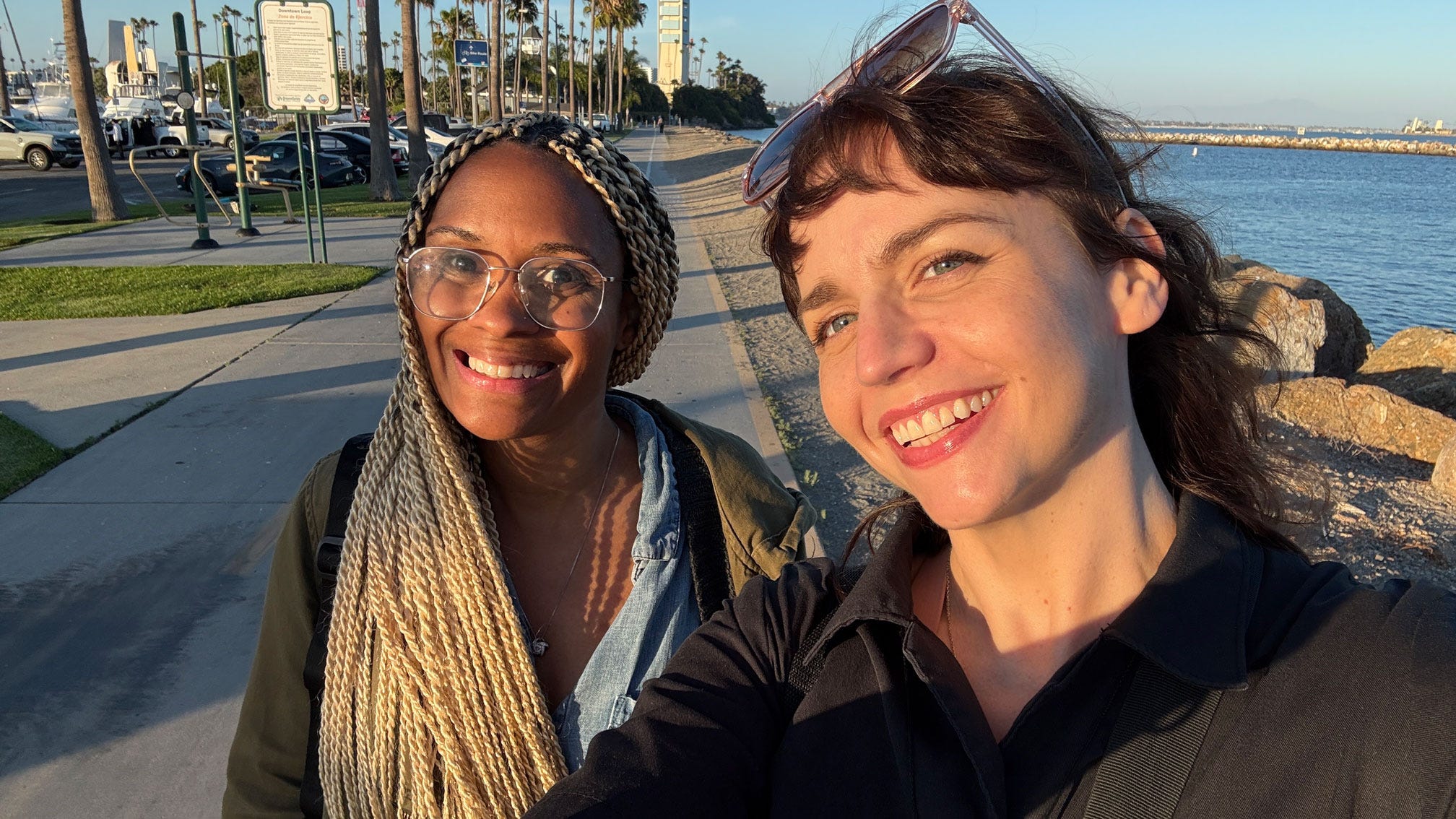
I was sitting next to Lafiya when our work came up on the screen. We squealed a little bit and smiled a lot. Lafiya and I are friends, collaborators, and have been building in the Spectacles ecosystem since ~2021.
We’d walked into Evan Spiegel’s keynote at least partly knowing what would be revealed. Two artists who’ve been learning a new medium (along with the rest of the XR community) through all of the hurdles and hurrahs of this burgeoning industry. Lafiya is now a Specs ambassador and was featured throughout the keynote. Every time she and the rest of the ambassadors flashed on screen I beamed a little for the community. These are people I’ve known (in some cases) for years. I respect, admire, and genuinely like all of them. Then our pieces showed up in the reveal too: Her piece, The Listening Party, was the first project that flashed, then Biophonic, and Ancestor Dance, the one we made together with Dulce. Among many other cutting-edge AR projects.
It was surreal, a little disorienting, but mostly just gratifying. Not in a “look at me” way. In a “look at all of it” way. Years of figuring out a medium almost nobody could see yet, and there it was, twenty feet tall, in front of five thousand people. Lafiya and I have grown into this thing side by side. That’s when a shimmer of recognition hit. I could feel the past, the present, and (a little bit of) the future all tingling at once.
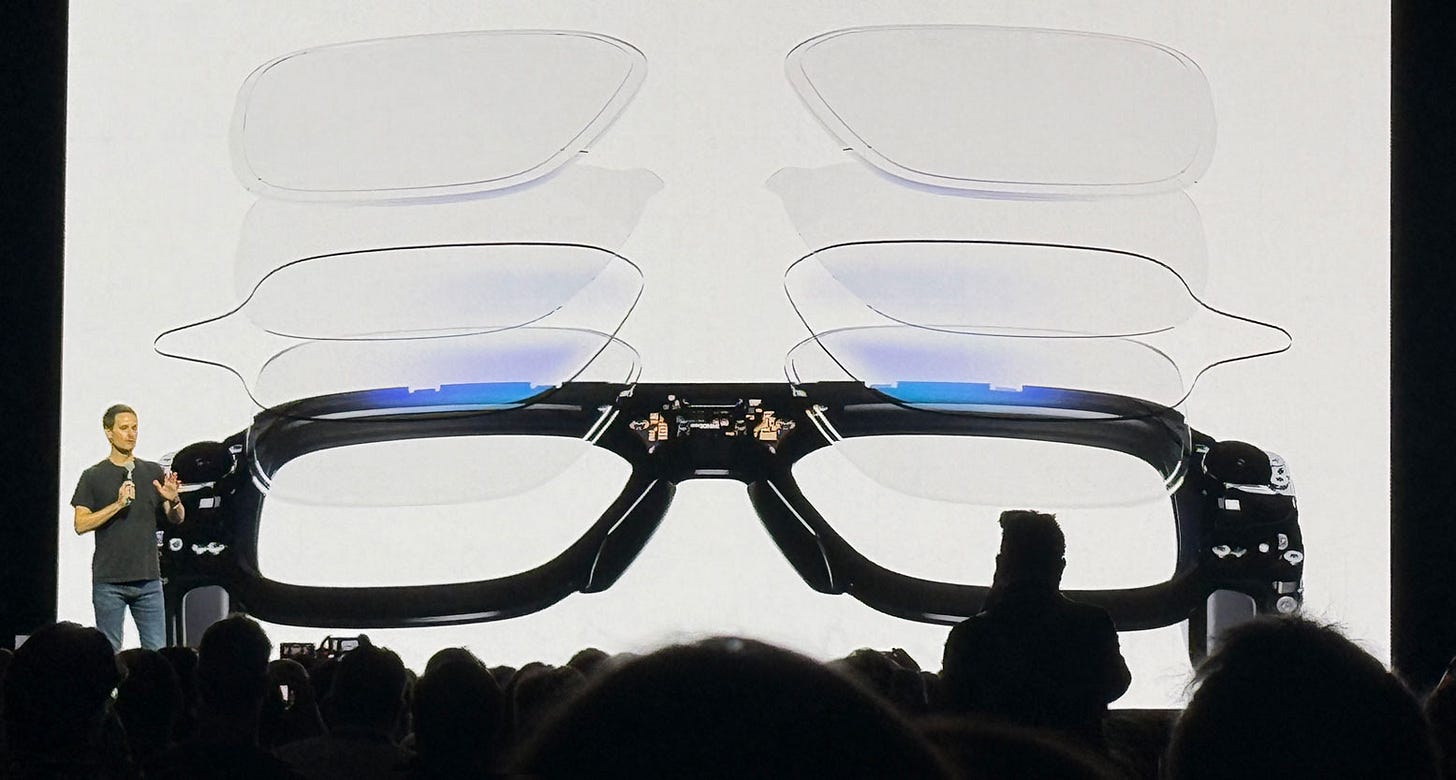
That tingle didn’t have long to settle. Everyone in that room, me included, was still waiting for the other reveal: the actual Specs. This launch had been a long build for the whole community, months of rumors and wishful math, and by the time Evan got to the numbers the suspense was palpable.
Then he showed them. And ever since, every write-up has argued about the same two things: the price and the spec sheet. $2,195. Fifty-one degrees of field of view. Four hours of battery. Too expensive, too heavy, is it the iPhone moment, is it not. All fair.
But for artists like me, the Specs reveal was never about the hardware. It was about accessibility. User accessibility and hardware access.
I work in AR partly because I can’t spend long in a headset myself without getting foggy and a little seasick, and I know I’m not the only one. Glasses that let you stay rooted in the real world allow for a wider range of audience.
Also, for years, the number of people on Earth who could experience the AR work I made was, generously, a few hundred. That’s not a typo. The glasses were a developer device. The audience for an art form I’ve poured years into was roughly the size of a wedding. A smallish wedding.
A consumer release changes that math completely. Not eventually. Structurally. The work finally gets a public. That’s the headline I’m excited about. Other folks are arguing about a product. I’m watching a door open for a whole form of art that’s been waiting in a very small room.
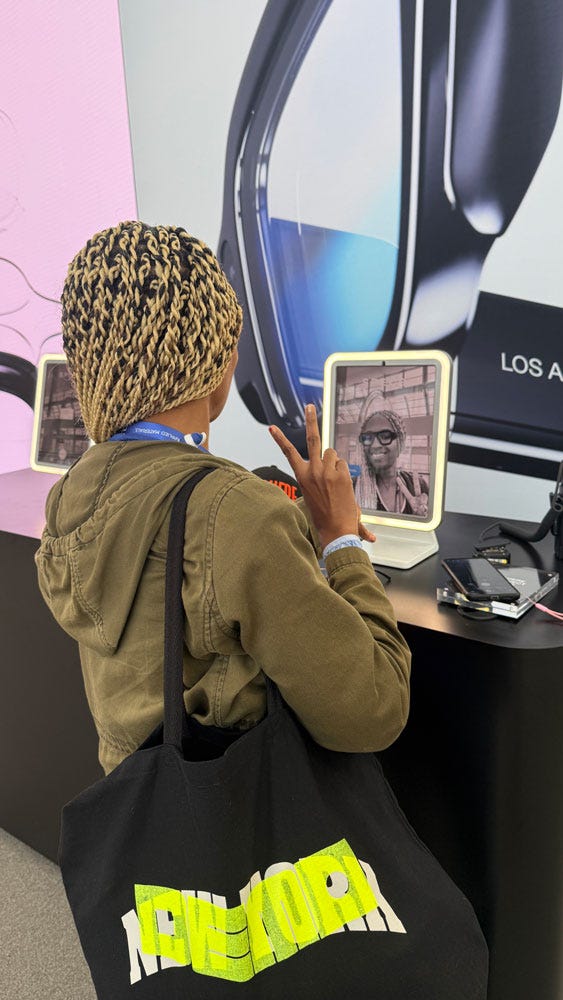
Credit where it’s due, and I mean this as someone who builds on the thing: the backend leaps are real. Bringing over Unity work, the agent tooling, these aren’t cosmetic. They change what’s buildable and how fast. And the hardware is a genuine feat. Getting this much capability into this form factor is not nothing, and the price reflects real engineering, not a markup.
My honest worry isn’t really about these particular glasses. It’s about the whole category. I don’t think price is the deepest problem. I think the deeper problem is that most people don’t yet understand why these glasses would improve their life, or even just entertain them. And that’s a totally reasonable place for a normal person to stand. When the “why” isn’t obvious, $2,195 feels like a lot, because anything feels like a lot when you can’t picture what it’s for. Especially in the current economy.
I say this because I want to see these new mediums succeed. The distribution breakthrough I’m excited about only happens if people actually get access. So the unlock isn’t a better spec (pun intended). It’s making the “why” obvious. Which, conveniently, is something artists are good at.
If the price keeps the glasses out of reach for most people right now, here’s where I’d love access to come from: institutions. Museums, libraries, universities buying small collections of Specs and putting them in people’s hands.
Because the accessibility case here is underrated. They’re controller-free. They don’t seal you off from the world the way a VR headset does, and they don’t make people queasy and disoriented the same way. There’s a whole population of people who feel panicked the second a headset goes on who could slip these on and feel completely fine. That’s not a small thing. That’s the difference between “AR is for early adopters” and “AR is for my mom.”
Fifteen works from around the world, shown in the heart of the expo floor. Biophonic was in it, and it was the only AR piece in a lineup that was otherwise all VR.

A major highlight was speaking to and learning from the other artists. Hearing how they work. What they chased, what broke, what they’d never do again, hearing about the hard work and heart work they put into each piece. There’s a specific kind of isolation when you work at the edge of art and technology. So sitting in a room full of people who are also out there feels especially resonant, like a family reunion of people you’ve never met yet who are very familiar.
Here is a list of the festival artworks and artists. All worth checking out:
Oto’s Planet — Gwenael François, Skill Lab
Crafting Crimes — Victor Agulhon / Aurore Kinzonzi, Targo
D-Day: The Camera Soldier — Aurore Kinzonzi, Targo
Codex of the Future — Elder Manuel Tobar Panchoaga, Orgánica Digital
In The End — Winnie Tsai, TACIT
Wild Sounds of Wales: Life in the Trees — Owain Llwyd, Wild Sounds of Wales
Techno Sapiens — Karina Márquez Caballero, Kulture Intelligente & Studio PHI
Winterover — Nimrod Shanit, Blimey VR Studios Inc
The Palace — Sönke Kirchhof, INVR.SPACE GmbH
Uncanny Lounge: Rifft’s Interlude — Christopher Lane Davis, Deirdre V. Lyons, Stephen Butchko, Ferryman Collective
A Long Goodbye — Kate Voet and Victor Maes, Unframed Collection
Year of the Cicadas — Kimberly Hieftje, Asher Marks, Andrew Schartmann, Bernard Francois, XR Pediatrics at Yale
Biophonic — Heather Dunaway Smith, your author ;)
Reality Looks Back — Anne Jeppesen and Omid Zarei, Superposition XR Studio
The Last Stanza — ReVerse Butcher
Huge thanks to the people who built the festival, Sönke, Jessica, Sonya, and Ori especially. A first-year anything is held together by sheer will. They made a home for this work, and for the people making it.
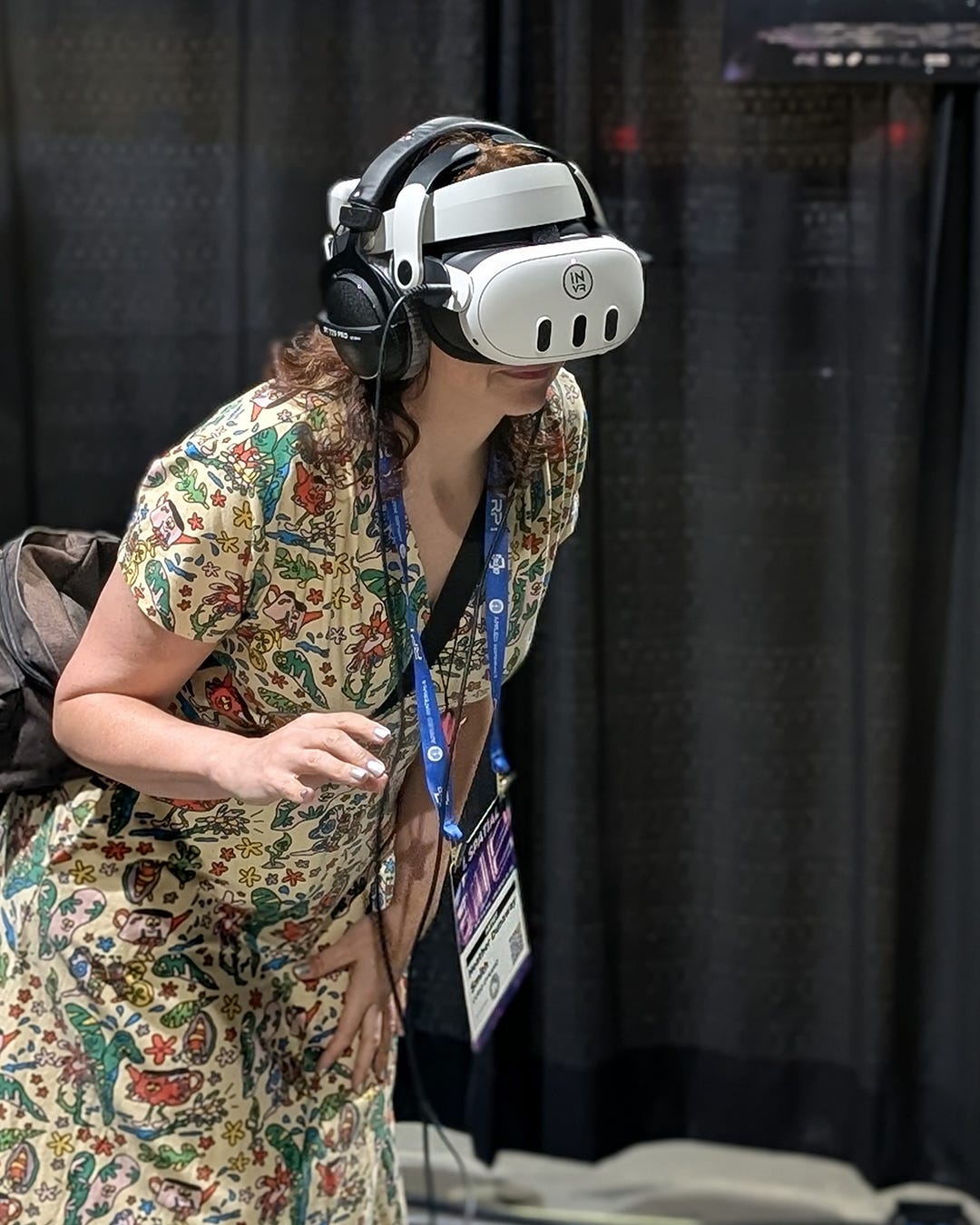
A thing I keep circling, across nearly every XR piece I’ve made or experienced over the years: this medium can do something no other can. It can hand you embodied agency. Let you reach in and change what’s happening. Make you an engaged participant instead of a viewer.
And yet so much of the work I encounter, including some of the work I love most, stays close to cinema. Spatial, gorgeous, but mostly passive. That’s a completely valid way to work, and plenty of it moves me. But my own pull is always toward the new frontier. Toward the pieces that couldn’t exist as anything but XR. That’s the question I can’t put down: what does this medium do that nothing else does, and what happens when we build all the way into it?
Not a verdict on anyone. Just the part of the field I’m most curious about, and one of the reasons I keep showing up.
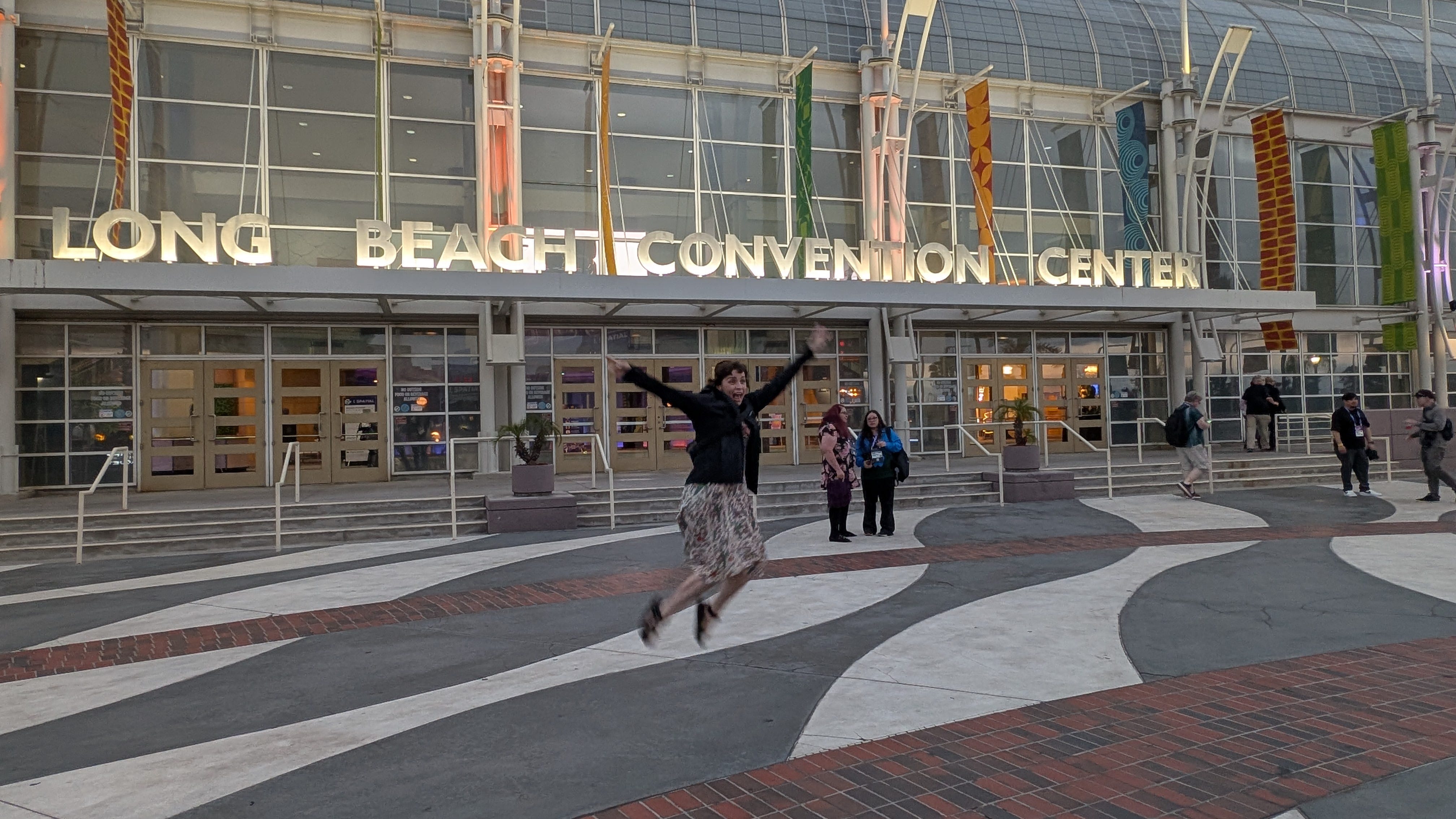
The edge is the most interesting place to work. It’s where the medium is still being figured out, where nobody can tell you you’re doing it wrong because nobody’s sure what right is yet. For a long time that meant making things almost no one could see, alongside a small, scattered crew doing the same.
This year that crew was in one room. The work was twenty feet tall in front of thousands of people. And the glasses that make any of it possible are, at last, about to be something a regular person can put on.
None of that is a finish line. It’s early and expensive and some of it won’t work. But the direction is right: more people in the room, more people able to stand inside the work.
So if you ever get the chance to attend an XR Art Festival, jump right in and take advantage of the rare opportunity. And if you spot me squealing in the audience at some keynote, come say hi.
Heather
No posts
Comments
Nothing yet. Say the first thing.
Sign in to join the conversation.