
By Dr. David Traster, DC, MS, DACNB
Co-owner, The Neurologic Wellness Institute
Boca Raton • Chicago • Waukesha • Wood Dale
www.neurologicwellnessinstitute.com
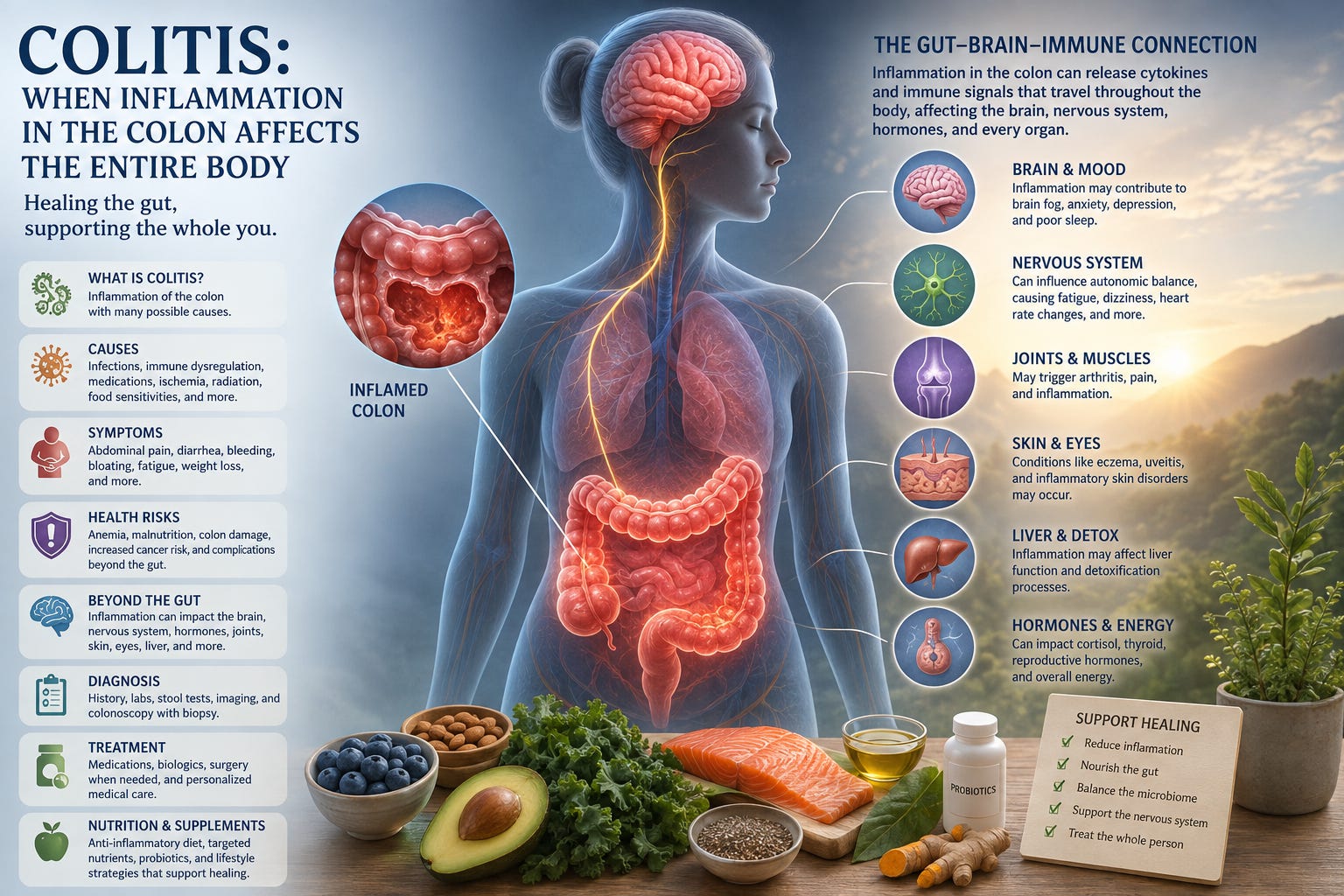
When most people hear the word colitis, they think of diarrhea, abdominal pain, or digestive discomfort. While those symptoms are certainly common, colitis is far more than a disease of the colon. The gastrointestinal tract is one of the body’s largest immune organs, one of its largest endocrine organs, and is intimately connected to the nervous system through millions of neural connections. Inflammation within the colon has the potential to influence immune function, brain physiology, autonomic regulation, metabolism, and even emotional health. Understanding colitis requires looking beyond the digestive tract and appreciating how inflammation in one organ can influence the function of the entire body.
The term colitis simply means inflammation of the colon (large intestine). It is not a single disease but rather a descriptive term for inflammation that can occur from many different causes. Some forms are temporary and resolve completely, while others become chronic inflammatory diseases that require lifelong management. The most recognized chronic forms are ulcerative colitis and Crohn’s disease involving the colon, both classified as inflammatory bowel diseases (IBD). However, infectious colitis, ischemic colitis, microscopic colitis, radiation colitis, medication-induced colitis, allergic colitis, and immune-mediated colitis all have different underlying mechanisms despite sharing the common feature of colon inflammation.
The causes of colitis vary depending upon the specific type. Infectious colitis develops when bacteria, viruses, or parasites inflame the colon. Common bacterial organisms include Clostridioides difficile, Salmonella, Shigella, Campylobacter, and certain strains of Escherichia coli. Antibiotic use, contaminated food, and hospitalization may increase the risk of infection.
Inflammatory bowel diseases such as ulcerative colitis develop differently. Current evidence suggests they arise from a complex interaction among genetics, the intestinal microbiome, environmental exposures, and an inappropriate immune response. Rather than attacking invading pathogens, the immune system begins reacting excessively to components of the normal intestinal environment, resulting in chronic inflammation and tissue injury. No single gene or environmental trigger fully explains the disease, which is why ulcerative colitis is considered a multifactorial disorder.
Microscopic colitis appears to involve abnormal immune activation and has been associated with certain medications, including proton pump inhibitors, selective serotonin reuptake inhibitors, and some nonsteroidal anti-inflammatory drugs. Ischemic colitis develops when blood flow to portions of the colon becomes inadequate, depriving tissues of oxygen. Radiation therapy to the pelvis can injure the intestinal lining months or years after treatment. Food allergies can produce allergic colitis, particularly in infants, while newer cancer immunotherapies occasionally trigger immune-mediated colitis as an unintended consequence of stimulating the immune system.
Although each condition differs, they all ultimately produce inflammation, disruption of the intestinal barrier, altered gut bacteria, and changes in immune signaling.
Symptoms depend on the severity, location, and cause of inflammation. Mild disease may produce intermittent abdominal discomfort and occasional loose stools, whereas severe inflammation can result in frequent bloody diarrhea, dehydration, weight loss, fever, anemia, and profound fatigue.
Patients commonly report abdominal cramping, urgency to have bowel movements, mucus in the stool, rectal bleeding, bloating, nausea, reduced appetite, and unintended weight loss. Chronic inflammation may lead to nutritional deficiencies because inflamed tissue absorbs nutrients less efficiently while increased intestinal losses occur simultaneously.
Many patients also notice that symptoms fluctuate between periods of remission and flare-ups. During remission they may feel nearly normal, whereas flares can dramatically reduce quality of life.
Persistent inflammation damages the lining of the colon. Over time this can lead to ulceration, bleeding, strictures, perforation, toxic megacolon, chronic anemia, severe dehydration, malnutrition, and an increased risk of colorectal cancer in longstanding inflammatory bowel disease.
Children with chronic inflammatory bowel disease may experience impaired growth and delayed puberty due to persistent inflammation and nutritional deficiencies.
Beyond the gastrointestinal tract, chronic inflammation increases metabolic stress throughout the body. Elevated inflammatory cytokines circulate through the bloodstream, influencing vascular function, immune regulation, bone metabolism, and endocrine physiology. Many patients develop osteoporosis, iron deficiency, vitamin deficiencies, fatigue, and reduced exercise tolerance.
One of the most fascinating aspects of colitis is how inflammation within the colon can influence the nervous system. The gut and brain communicate continuously through what is known as the gut-brain axis. This communication involves the vagus nerve, spinal sensory pathways, hormones, immune messengers, and metabolites produced by intestinal bacteria.
Inflammation within the colon increases production of cytokines such as tumor necrosis factor-alpha, interleukin-1 beta, and interleukin-6. These inflammatory molecules can enter systemic circulation and influence brain function. They may alter neurotransmitter production, activate microglia, impair neuroplasticity, and contribute to fatigue, anxiety, depression, cognitive dysfunction, and heightened pain sensitivity.
Patients with active inflammatory bowel disease frequently report “brain fog,” reduced concentration, poor memory, sleep disturbances, and mood changes. These symptoms likely reflect the combined effects of systemic inflammation, altered microbiome signaling, disrupted autonomic regulation, anemia, nutritional deficiencies, and chronic stress rather than direct injury to the brain itself.
The autonomic nervous system deserves particular attention. Chronic intestinal inflammation may alter vagal signaling while simultaneously increasing sympathetic nervous system activity. Reduced parasympathetic tone has been associated with greater inflammatory activity because the vagus nerve normally helps suppress excessive immune activation through the cholinergic anti-inflammatory pathway.
Some patients with inflammatory bowel disease experience symptoms commonly associated with dysautonomia, including orthostatic intolerance, tachycardia, fatigue, exercise intolerance, dizziness, altered sweating, temperature dysregulation, and gastrointestinal motility disturbances. These symptoms may result from chronic inflammation, dehydration, anemia, electrolyte abnormalities, nutritional deficiencies, or altered autonomic regulation.
Although colitis does not necessarily cause primary dysautonomia, it can certainly contribute to secondary autonomic dysfunction in susceptible individuals.
Colitis is truly a systemic disease. Extraintestinal manifestations occur in a substantial proportion of patients with inflammatory bowel disease. Joints may become inflamed, producing arthritis. The eyes may develop uveitis or episcleritis. Skin disorders such as erythema nodosum and pyoderma gangrenosum may develop. Liver disease, including primary sclerosing cholangitis, can occur in certain patients.
Inflammation may also influence endocrine function indirectly through chronic immune activation, altered cortisol regulation, nutritional deficiencies, disrupted vitamin D metabolism, thyroid interactions, and changes in reproductive hormones. Long-standing inflammatory disease places stress upon multiple organ systems simultaneously.
Diagnosis begins with a detailed history and physical examination. Physicians evaluate the duration of symptoms, presence of blood in the stool, medication history, travel exposures, family history of inflammatory bowel disease, recent antibiotic use, and associated systemic symptoms.
Laboratory testing commonly includes complete blood counts to evaluate anemia and infection, inflammatory markers such as C-reactive protein and erythrocyte sedimentation rate, metabolic panels, nutritional markers, and stool studies to identify infectious organisms while measuring inflammatory proteins such as fecal calprotectin.
The gold standard for diagnosing most chronic forms of colitis remains colonoscopy with tissue biopsy. Colonoscopy allows direct visualization of inflammation while biopsy provides microscopic confirmation of the specific type of colitis. Imaging studies including CT or MRI may help identify complications or evaluate disease beyond the colon.
Treatment depends entirely upon the underlying cause.
Infectious colitis may require antibiotics, antiviral medications, or supportive care depending upon the responsible organism.
Ulcerative colitis and Crohn’s disease often require anti-inflammatory medications such as mesalamine preparations for milder disease. Corticosteroids are commonly used during acute flares but are generally avoided as long-term therapy because of significant side effects.
For moderate to severe disease, immunomodulators including azathioprine, 6-mercaptopurine, and methotrexate may reduce immune activity. Biologic therapies targeting tumor necrosis factor-alpha, integrins, interleukin-12/23, or interleukin-23 have dramatically improved long-term outcomes for many patients. Small molecule medications such as Janus kinase inhibitors and sphingosine-1-phosphate receptor modulators have expanded treatment options in recent years.
Surgery may become necessary for severe ulcerative colitis, toxic megacolon, perforation, uncontrolled bleeding, or colorectal cancer. Unlike Crohn’s disease, surgical removal of the colon can effectively cure ulcerative colitis because the disease is limited to the large intestine.
No single diet cures colitis, yet nutrition plays a powerful role in symptom management and overall health. During active flares, many patients temporarily tolerate lower-fiber foods more comfortably because inflamed tissue is sensitive to mechanical irritation. Once inflammation improves, gradually reintroducing soluble fiber may help support beneficial bacteria and production of short-chain fatty acids that nourish colon cells.
Many patients benefit from minimizing ultra-processed foods, excessive alcohol, highly processed meats, and foods that personally trigger symptoms. A Mediterranean-style dietary pattern emphasizing vegetables, fruits, legumes, fish, olive oil, nuts, and minimally processed foods appears to support overall health and may reduce systemic inflammation.
Food intolerances vary tremendously between individuals. One patient may tolerate dairy well but react to spicy foods, while another experiences the opposite. Personalization remains essential.
Several nutritional strategies have supportive evidence when used alongside—not instead of—medical care.
Curcumin has demonstrated benefit as an adjunct therapy in mild to moderate ulcerative colitis when combined with standard medications, likely through multiple anti-inflammatory pathways.
Omega-3 fatty acids may modestly reduce inflammatory signaling, although results across studies have been mixed.
Vitamin D deficiency is common in inflammatory bowel disease, and correcting deficiency supports immune regulation and bone health.
Iron replacement is frequently necessary because chronic blood loss often produces iron-deficiency anemia. Vitamin B12, folate, calcium, magnesium, and zinc should be evaluated when deficiencies are suspected.
Certain probiotic strains have demonstrated benefits in maintaining remission in ulcerative colitis, although not all probiotics perform equally. Their effects appear to be strain-specific rather than a general property of all probiotic products.
Some patients also benefit from soluble fiber supplements such as psyllium during remission, which may help nourish beneficial bacteria and support production of short-chain fatty acids. Supplement selection should always be individualized according to disease activity, nutritional status, medication use, and physician guidance.
Colitis reminds us that no organ functions in isolation. The colon is connected to the immune system, the microbiome, the endocrine system, the autonomic nervous system, and the brain through countless biological pathways. Chronic inflammation originating in the intestine can influence cognition, mood, autonomic regulation, metabolism, sleep, and immune balance throughout the body.
Successful management therefore extends beyond simply suppressing intestinal inflammation. It requires identifying the underlying cause, restoring nutritional status, optimizing the microbiome, reducing systemic inflammatory burden, supporting autonomic regulation, and individualizing treatment to each patient’s unique physiology. As our understanding of the gut-brain-immune axis continues to expand, colitis is increasingly recognized not simply as a gastrointestinal disease, but as a complex systems disorder requiring an equally comprehensive approach.
Ananthakrishnan, A. N. (2015). Epidemiology and risk factors for inflammatory bowel disease. Nature Reviews Gastroenterology & Hepatology, 12(4), 205–217.
Feuerstein, J. D., Isaacs, K. L., Schneider, Y., Siddique, S. M., Falck-Ytter, Y., & Singh, S. (2020). AGA clinical practice guidelines on the management of moderate to severe ulcerative colitis. Gastroenterology, 158(5), 1450–1461.
Kobayashi, T., Siegmund, B., Le Berre, C., Wei, S. C., Ferrante, M., Shen, B., Bernstein, C. N., Danese, S., Peyrin-Biroulet, L., & Hibi, T. (2020). Ulcerative colitis. Nature Reviews Disease Primers, 6(1), 74.
Ordás, I., Eckmann, L., Talamini, M., Baumgart, D. C., & Sandborn, W. J. (2012). Ulcerative colitis. The Lancet, 380(9853), 1606–1619.
Raine, T., Bonovas, S., Burisch, J., Kucharzik, T., Adamina, M., Annese, V., Bachmann, O., Bettenworth, D., Chaparro, M., Doherty, G., et al. (2022). ECCO guidelines on therapeutics in ulcerative colitis: Medical treatment. Journal of Crohn’s and Colitis, 16(1), 2–17.
Rubin, D. T., Ananthakrishnan, A. N., Siegel, C. A., Sauer, B. G., & Long, M. D. (2019). ACG clinical guideline: Ulcerative colitis in adults. The American Journal of Gastroenterology, 114(3), 384–413.
Singh, S., Allegretti, J. R., Siddique, S. M., & Terdiman, J. P. (2024). American Gastroenterological Association clinical practice update on diet and nutritional therapies in inflammatory bowel disease. Gastroenterology, 166(3), 705–717.
Torres, J., Mehandru, S., Colombel, J. F., & Peyrin-Biroulet, L. (2017). Crohn’s disease. The Lancet, 389(10080), 1741–1755.
Turner, D., Ricciuto, A., Lewis, A., D’Amico, F., Dhaliwal, J., Griffiths, A. M., Bettenworth, D., Sandborn, W. J., & colleagues. (2023). STRIDE-II: An update on the Selecting Therapeutic Targets in Inflammatory Bowel Disease recommendations. Gastroenterology, 164(4), 713–726.
Ungaro, R., Mehandru, S., Allen, P. B., Peyrin-Biroulet, L., & Colombel, J. F. (2017). Ulcerative colitis. The Lancet, 389(10080), 1756–1770.
No posts
Comments
Nothing yet. Say the first thing.
Sign in to join the conversation.