
By Dr. David Traster, DC, MS, DACNB
Co-owner, The Neurologic Wellness Institute
Boca Raton • Chicago • Waukesha • Wood Dale
www.neurologicwellnessinstitute.com
Pain is one of the most important protective experiences produced by the human nervous system. It alerts us to injury, encourages us to protect vulnerable tissues, and helps guide behavior while the body heals. In acute pain, this system is usually beneficial. A sprained ankle hurts when weight is placed on it, a burned hand rapidly withdraws from a hot surface, and an inflamed joint becomes sensitive so that it is temporarily protected.
Chronic pain is different. It is generally defined as pain that persists or recurs for more than three months. In some cases, chronic pain continues because tissue damage, inflammation, nerve injury, or disease remains active. In other cases, the original injury has healed, yet the nervous system continues to produce pain. Frequently, both situations occur at the same time.
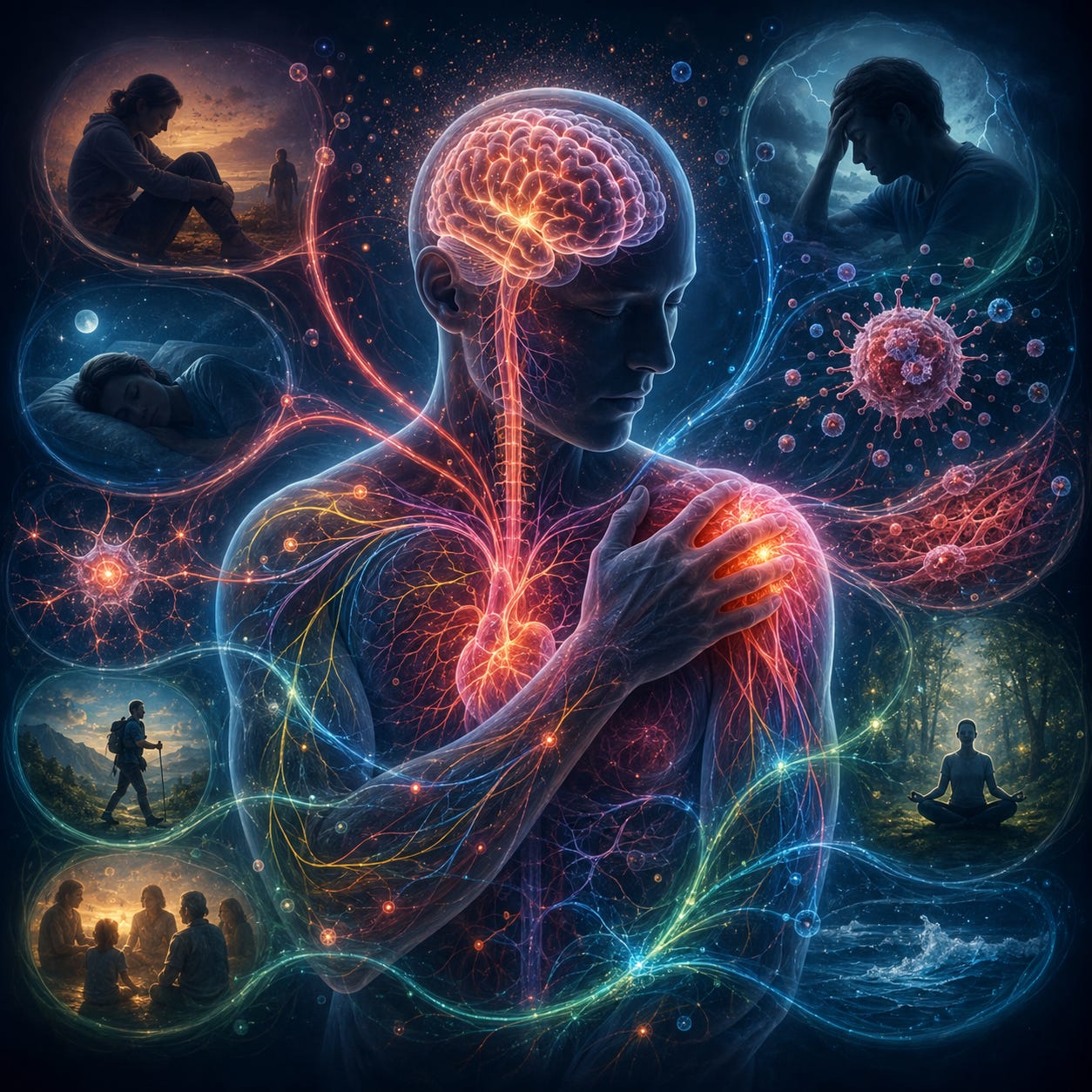
The most current clinical model does not view chronic pain as being caused exclusively by damaged tissue, psychological distress, inflammation, or abnormal brain processing. Instead, chronic pain is understood as an emergent experience created by interactions among the tissues, immune system, peripheral nerves, spinal cord, brain, autonomic nervous system, endocrine system, metabolic health, behavior, environment, and personal history.
Pain is real regardless of which mechanisms are producing it. Saying that the brain participates in pain does not mean that pain is imagined. Every pain experience requires the brain, but the biological reasons the brain produces that experience can differ dramatically from one person to another.
The biopsychosocial model remains one of the most useful foundations for understanding chronic pain. This model recognizes that biological, psychological, and social factors continuously interact to influence the initiation, intensity, persistence, and consequences of pain.
Biological factors include tissue injury, arthritis, nerve damage, inflammation, infection, autoimmune disease, metabolic dysfunction, hormonal changes, sleep disruption, genetics, and altered pain processing. Psychological factors include fear, anxiety, depression, trauma, attention, expectations, beliefs, learned associations, perceived safety, and coping strategies. Social factors include family dynamics, isolation, employment, finances, access to care, cultural beliefs, relationships, litigation, and the response of other people to the individual’s pain.
These categories should not be treated as competing explanations. A patient can have a structural injury, systemic inflammation, poor sleep, autonomic dysfunction, fear of movement, financial stress, and a sensitized nervous system simultaneously. Each factor can influence the others, producing a self-reinforcing cycle.
The biopsychosocial model has occasionally been misused to imply that pain without an obvious structural explanation must be psychological. That is not an accurate interpretation. The modern model recognizes psychology as one influence within a much larger biological and environmental network. Psychological distress may amplify pain, but chronic pain can also create psychological distress. The relationship moves in both directions.
Modern pain science commonly describes three primary pain mechanisms: nociceptive, neuropathic, and nociplastic pain. These mechanisms are not mutually exclusive. Many people have a mixed pain state in which two or all three mechanisms contribute.
Nociceptive pain occurs when specialized sensory receptors called nociceptors detect actual or threatened damage to non-neural tissues. This may result from trauma, mechanical stress, inflammation, arthritis, burns, fractures, muscle injury, tendon disorders, visceral disease, or other forms of tissue irritation.
Neuropathic pain results from a lesion or disease affecting the somatosensory nervous system. Examples include diabetic neuropathy, postherpetic neuralgia, radiculopathy, spinal cord injury, multiple sclerosis, nerve entrapment, chemotherapy-induced neuropathy, and pain following nerve trauma. Neuropathic pain is often described as burning, electrical, shooting, stabbing, tingling, or accompanied by numbness, although symptoms alone cannot establish the diagnosis.
Nociplastic pain arises from altered nociceptive processing that cannot be fully explained by ongoing tissue damage or a lesion of the somatosensory system. The nervous system becomes more likely to amplify sensory information and produce pain. Nociplastic mechanisms may contribute to fibromyalgia, some forms of chronic low-back pain, temporomandibular pain, chronic headache, irritable bowel syndrome, and other persistent pain disorders.
A person does not need to fit neatly into one category. Osteoarthritis, for example, may generate nociceptive input from a joint, neuropathic symptoms from an associated nerve injury, and nociplastic amplification after years of persistent pain.
Persistent nociceptive input remains an important cause of chronic pain. Degenerative joint disease, inflammatory arthritis, fractures that fail to heal correctly, tendon disorders, muscle injuries, ligament instability, repetitive strain, vascular compromise, visceral disease, tumors, and postsurgical complications can continue to activate nociceptors.
Mechanical stress may become excessive because of weakness, impaired coordination, altered gait, poor load distribution, reduced joint mobility, hypermobility, connective-tissue disorders, scar restriction, or repeated occupational and athletic demands. Protective movement strategies can shift stress away from one area while overloading another.
Imaging can help identify certain structural problems, but structure and pain do not always correlate closely. Disc degeneration, arthritis, tendon abnormalities, and other changes may be present in people without pain. Conversely, severe pain can exist with relatively minor imaging findings. A structural finding must therefore be interpreted alongside the history, examination, function, neurological findings, and response to movement or loading.
Inflammation can directly sensitize nociceptors and lower the threshold at which sensory neurons become activated. Prostaglandins, bradykinin, histamine, nerve growth factor, cytokines, chemokines, and other inflammatory mediators can make tissues more reactive to mechanical, thermal, and chemical stimulation.
Inflammation may originate locally from an injury or arthritic joint, or it may be systemic. Autoimmune diseases, chronic inflammatory disorders, metabolic disease, persistent infections, visceral inflammation, obesity, periodontal disease, and other immune challenges may increase the inflammatory burden placed upon the nervous system.
Immune cells also communicate directly with peripheral nerves, spinal neurons, glial cells, blood vessels, and the brain. Microglia and astrocytes can participate in neuroinflammation and influence synaptic transmission within pain pathways. This neuroimmune communication may help explain why pain sometimes persists after the original tissue injury has improved.
However, inflammation should not be assumed to explain every chronic pain condition. Some patients have strong inflammatory drivers, while others show predominantly neuropathic, nociplastic, mechanical, psychological, vascular, or metabolic mechanisms. The goal is to identify whether inflammation is present, where it originates, and how much it contributes to the individual’s pain.
When tissues remain injured or inflamed, nociceptors can become more sensitive. Stimuli that previously produced little activity begin generating stronger signals, and the threshold required to activate the nerve decreases. This is called peripheral sensitization.
Peripheral sensitization can make an inflamed joint painful with gentle movement or cause injured skin to become unusually sensitive to touch and temperature. Changes in ion channels, inflammatory mediators, receptor expression, and local nerve signaling can maintain this heightened state.
In some cases, nociceptors may remain hyperexcitable after visible tissue healing has occurred. Ectopic electrical activity, abnormal nerve sprouting, neuromas, altered sodium-channel function, or persistent local immune activity may continue sending danger-related signals into the spinal cord.
Persistent nociceptive input can change the way the spinal cord and brain process sensory information. Neurons within pain-related pathways may become more excitable, receptive fields may expand, inhibitory control may weaken, and normally nonpainful signals may begin contributing to pain.
This process is often called central sensitization. It may produce hyperalgesia, in which painful stimuli feel more intense, and allodynia, in which normally nonpainful stimuli become painful. Pain may spread beyond the original site of injury or become disproportionate to the remaining tissue damage.
Nociplastic pain is broader than central sensitization. It describes a clinical pain mechanism involving altered nociception when nociceptive and neuropathic mechanisms do not adequately explain the pain. Potential contributors include peripheral sensitization, spinal amplification, altered brain-network function, reduced descending inhibition, increased pain facilitation, neuroimmune activity, impaired sensory filtering, and learned threat associations.
Patients with nociplastic features may also experience fatigue, unrefreshing sleep, brain fog, headache, bowel sensitivity, mood changes, and increased sensitivity to sound, light, odors, temperature, pressure, or movement. These accompanying symptoms suggest that the problem may involve broader sensory and regulatory networks rather than a single painful body part.
The brain does not passively receive pain signals. It continuously regulates sensory transmission through descending pathways that can either inhibit or facilitate nociceptive activity in the spinal cord and brainstem.
Structures such as the prefrontal cortex, anterior cingulate cortex, insula, amygdala, hypothalamus, periaqueductal gray, and rostral ventromedial medulla participate in this regulation. Neurotransmitters including serotonin, norepinephrine, endogenous opioids, gamma-aminobutyric acid, glutamate, and endocannabinoids help determine whether sensory information is dampened or amplified.
In chronic pain, descending inhibition may become less effective while descending facilitation becomes stronger. The nervous system’s internal volume control is shifted toward amplification. Poor sleep, stress, depression, inflammation, previous trauma, prolonged opioid exposure, and ongoing nociceptive input may influence this balance.
Peripheral nerves, nerve roots, the spinal cord, brainstem, thalamus, or cortex can all become sources of neuropathic pain. Injured nerves may generate spontaneous impulses, develop abnormal ion-channel expression, become mechanically sensitive, or form cross-connections with neighboring fibers.
The spinal cord may then amplify this abnormal input. Loss of inhibitory interneuron function, excessive glutamate signaling, microglial activation, and reorganization of sensory pathways can allow nerve injury to create persistent pain long after the initiating event.
Small-fiber neuropathy is another potential contributor. Small sensory and autonomic fibers can be injured by diabetes, autoimmune disease, infections, toxins, chemotherapy, nutritional deficiencies, genetic disorders, or other metabolic processes. Standard nerve-conduction studies primarily evaluate larger fibers and may therefore be normal in someone with small-fiber dysfunction.
The brain must interpret incomplete sensory information and determine whether the body is in danger. It does this by combining incoming signals with memory, expectation, attention, emotion, context, and prior experience.
Modern predictive-processing models propose that pain is influenced by the brain’s best estimate of bodily threat. If the nervous system expects danger, ambiguous sensory information may be interpreted more protectively. This does not mean the pain is imaginary. It means that perception is an active biological construction rather than a direct measurement of tissue damage.
Repeated episodes of pain can strengthen the association between particular movements, environments, sensations, or emotional states and perceived danger. A movement that was painful during an injury may continue to trigger protection after healing. The resulting pain, stiffness, muscle guarding, and autonomic activation can reinforce the brain’s prediction that the movement remains unsafe.
Expectations can influence pain in both directions. Positive expectations and perceived safety can engage endogenous pain-inhibitory systems, while negative expectations can increase vigilance and pain. These placebo and nocebo effects represent measurable neurophysiological processes, not evidence that symptoms are fabricated.
Fear, anxiety, depression, helplessness, anger, and unresolved trauma can alter attention, autonomic activity, muscle tone, sleep, inflammation, endocrine signaling, and descending pain modulation. Catastrophizing may increase the perceived threat associated with symptoms, while fear of movement may promote avoidance and physical deconditioning.
Pain-related attention is also important. The more closely the nervous system monitors a painful region, the more sensory information from that area may enter conscious awareness. Hypervigilance can increase the salience of normal or mildly uncomfortable sensations.
At the same time, chronic pain itself can cause anxiety, depression, irritability, grief, and social withdrawal. These emotional consequences should never be used to invalidate the underlying pain. They are part of the same interconnected system and may require treatment in their own right.
A history of trauma can increase vulnerability to chronic pain through alterations in stress physiology, sleep, immune function, body awareness, perceived safety, and autonomic regulation. Trauma-informed care does not presume that trauma caused the pain. It recognizes that past experiences may influence how the nervous system responds to current threats.
Pain and autonomic function are closely connected. Acute pain activates sympathetic responses that can increase heart rate, blood pressure, sweating, muscle tension, and vigilance. When pain becomes chronic, persistent autonomic dysregulation may interfere with circulation, sleep, digestion, immune regulation, energy production, and recovery.
Conditions such as complex regional pain syndrome demonstrate how pain can occur alongside abnormal temperature, color, sweating, blood flow, edema, and tissue changes. Dysautonomia, orthostatic intolerance, postural tachycardia syndrome, and impaired baroreflex function may also coexist with chronic pain.
Autonomic dysfunction can increase pain, while pain can worsen autonomic dysfunction. This reciprocal relationship may create cycles involving sympathetic activation, reduced movement, impaired blood flow, fatigue, anxiety, and heightened sensory processing.
The hypothalamic-pituitary-adrenal axis helps regulate the body’s response to stress. Persistent pain, psychological stress, disrupted sleep, chronic inflammation, and illness can alter cortisol rhythms and other stress-related hormonal signals.
Sex hormones, thyroid hormones, insulin, growth hormone, and other endocrine factors can also affect tissues, immune activity, nerve function, mood, sleep, and pain sensitivity. Hormonal transitions such as puberty, pregnancy, the postpartum period, perimenopause, and menopause may change the expression of certain pain disorders.
Endocrine abnormalities are not the sole explanation for most chronic pain, but they may lower resilience, slow tissue repair, alter inflammatory signaling, or increase the excitability of pain pathways.
Sleep disturbance is one of the strongest amplifiers of chronic pain. Even short periods of insufficient or fragmented sleep can increase pain sensitivity and reduce endogenous pain inhibition. Chronic pain then makes it harder to fall asleep, remain asleep, and obtain restorative deep sleep.
Sleep apnea, restless legs syndrome, circadian disruption, insomnia, medication effects, autonomic hyperarousal, and pain-related awakenings may all contribute. Poor sleep also influences mood, cognition, appetite, immune regulation, glucose control, and physical recovery.
This creates another bidirectional cycle: pain disrupts sleep, and disrupted sleep increases pain. Improving sleep may not eliminate every cause of chronic pain, but it can significantly change the nervous system’s threshold for producing it.
Nerves and muscles require substantial energy to maintain normal electrical activity, repair tissues, and regulate inflammation. Diabetes, insulin resistance, anemia, oxygenation problems, mitochondrial dysfunction, nutritional deficiencies, liver or kidney disease, and other metabolic disturbances can affect pain.
Deficiencies or imbalances involving vitamin B12, folate, vitamin D, thiamine, copper, iron, magnesium, and other nutrients may contribute in selected patients. Excessive vitamin B6 can also injure sensory nerves. Nutritional findings must be interpreted carefully because supplementation is helpful only when the suspected deficiency or physiological need is valid.
Metabolic inflammation associated with visceral fat and insulin resistance may sensitize pain pathways. Reduced activity caused by pain can then worsen metabolic health, producing another self-reinforcing loop.
Persistent or recurrent infections can cause pain through tissue injury, inflammation, immune activation, neuropathy, or postinfectious changes. Autoimmune diseases may target joints, muscles, connective tissues, blood vessels, peripheral nerves, the spinal cord, or the brain.
Cancer, hematological disorders, vascular disease, gastrointestinal disease, kidney disease, endometriosis, neurological disorders, and other systemic illnesses may also present with chronic pain. Medication effects, chemotherapy, radiation, surgery, or prolonged hospitalization can add additional mechanisms.
This is why chronic pain should never automatically be labeled as central sensitization or psychological. Appropriate evaluation must first consider treatable disease, progressive neurological dysfunction, infection, inflammatory conditions, malignancy, fracture, and vascular causes when the clinical presentation suggests them.
Genetic differences can affect ion channels, neurotransmitter systems, connective tissue, immune responses, drug metabolism, stress reactivity, and vulnerability to neuropathy or inflammation. Genetics can influence pain sensitivity, but genes rarely determine the entire outcome.
Epigenetic changes alter how genes are expressed without changing the DNA sequence. Injury, stress, inflammation, sleep, diet, environment, and life experience may influence gene expression within immune cells and the nervous system. These mechanisms are being investigated as possible contributors to the transition from acute to chronic pain.
The clinical meaning of most pain-related genetic and epigenetic findings remains incomplete. They are best understood as contributors to susceptibility rather than simple tests that prove why a particular person hurts.
Pain changes movement. People naturally guard an injured region, reduce range of motion, brace muscles, or avoid certain activities. These strategies may be helpful early in an injury but become problematic if they persist.
Reduced movement can cause weakness, loss of endurance, decreased cardiovascular fitness, joint stiffness, altered coordination, and reduced confidence. Excessive muscle co-contraction may increase fatigue and mechanical stress. The brain’s maps of the painful body region may become less precise, which can interfere with motor control and sensory discrimination.
Not all pain during movement indicates new injury. However, neither should every painful movement be dismissed as fear. Rehabilitation must determine whether movement is stressing vulnerable tissue, irritating a nerve, challenging an oversensitive nervous system, or combining these mechanisms.
Humans do not experience pain in isolation. Family support, employment, financial security, access to health care, cultural beliefs, social connection, and the attitudes of clinicians can influence recovery.
Invalidation can increase distress and reinforce the sense of danger. Excessive alarm from family members or health professionals can also unintentionally increase fear and dependency. In contrast, appropriate reassurance, clear education, practical support, and a gradual return to meaningful activity may improve self-efficacy and nervous-system safety.
Environmental factors such as unsafe work demands, poor housing, chronic noise, exposure to violence, limited access to nutritious food, and lack of restorative sleep can maintain biological stress. Social determinants are therefore not peripheral to pain; they can alter its physiology.
Some medications and medical treatments can contribute to chronic pain. Chemotherapy may cause neuropathy, corticosteroid exposure may weaken tissues, certain antibiotics and other drugs may affect nerves or tendons, and surgery can occasionally produce persistent postsurgical pain.
Long-term opioid exposure can produce tolerance, dependence, endocrine disruption, sleep-related breathing problems, and in some patients, opioid-induced hyperalgesia. In opioid-induced hyperalgesia, the nervous system becomes more sensitive to painful stimulation despite continued or escalating opioid use.
Repeated procedures can also reinforce fear or expose tissues and nerves to additional injury. This does not mean medications, injections, or surgery are inappropriate. It means that every intervention should be matched to the dominant mechanism, expected benefit, risks, and changing clinical presentation.
Chronic pain often persists because several feedback loops begin supporting one another. Tissue irritation increases nociceptive signaling. Nociceptive signaling increases spinal and brain excitability. Pain disrupts sleep and movement. Poor sleep and inactivity increase inflammation, fatigue, and pain sensitivity. Fear increases vigilance and muscle guarding. Social withdrawal reduces positive stimulation and resilience. Autonomic activation interferes with digestion, circulation, and recovery.
Eventually, the system may no longer depend on one original cause. The initial injury may have been the spark, but multiple biological and behavioral processes keep the fire burning.
This explains why a treatment directed at only one tissue may fail even when that tissue was originally involved. It also explains why reducing inflammation alone, correcting posture alone, processing emotions alone, taking medication alone, or performing exercises alone may be insufficient.
The current international classification of chronic pain distinguishes between chronic primary pain and chronic secondary pain.
Chronic secondary pain occurs when pain is a symptom of an identifiable underlying disease, such as cancer, arthritis, nerve injury, visceral disease, or a postsurgical condition. Treatment should address both the underlying disease and the mechanisms maintaining the pain.
Chronic primary pain is considered a health condition in its own right. It is characterized by persistent pain associated with emotional distress or functional disability that is not better explained by another diagnosis. This classification validates that persistent pain can become a disease process even when no single structural lesion adequately explains its severity.
Primary does not mean imaginary, and secondary does not mean simple. A patient with a clear structural diagnosis may develop powerful nociplastic and psychosocial contributors, while a patient with chronic primary pain may still have measurable biological changes throughout the nervous and immune systems.
A modern evaluation should ask more than, “Where does it hurt?” It should investigate what initiated the pain, what currently provokes it, what relieves it, how it has changed, and which mechanisms appear to be maintaining it.
The clinician should consider tissue injury, inflammation, joint and muscle function, neuropathy, radiculopathy, spinal cord or brain disease, vascular dysfunction, systemic illness, infection, autoimmunity, medication effects, sleep disorders, metabolic health, endocrine function, autonomic regulation, trauma history, mood, fear, attention, movement, work demands, relationships, and the patient’s goals.
The examination may include neurological, orthopedic, musculoskeletal, vascular, autonomic, sensory, motor, balance, and functional testing. Laboratory studies, imaging, electrodiagnostic testing, skin biopsy, autonomic testing, or specialist evaluation may be appropriate depending upon the presentation.
No single questionnaire, scan, blood marker, or physical finding can define the entire pain experience. Clinical reasoning requires identifying the dominant mechanisms while recognizing uncertainty and watching for changes over time.
Although most chronic pain is not caused by a medical emergency, new or changing pain may require urgent evaluation. Concerning findings can include unexplained weight loss, fever, night sweats, a history of cancer, progressive weakness, new bowel or bladder dysfunction, saddle numbness, severe unremitting night pain, significant trauma, loss of pulses, a cold or discolored limb, chest pain, sudden severe headache, rapidly progressive neurological symptoms, or signs of systemic infection.
The presence of nociplastic features does not protect someone from developing a new structural or systemic disease. Every major change in symptoms deserves appropriate clinical reconsideration.
The modern treatment model is mechanism-based, individualized, and multidisciplinary. Persistent inflammation requires a different approach from nerve entrapment, and both require a different approach from predominantly nociplastic pain. Most patients need several mechanisms addressed simultaneously.
Treatment may include medical management of underlying disease, anti-inflammatory strategies, neuropathic-pain medications, carefully selected procedures, physical rehabilitation, graded activity, strength and cardiovascular conditioning, sensory retraining, pain neuroscience education, sleep treatment, nutritional and metabolic support, psychological therapy, stress regulation, autonomic rehabilitation, and social or occupational intervention.
Cognitive-behavioral therapy, acceptance and commitment therapy, mindfulness, and trauma-informed interventions do not imply that pain is psychological. They can change attention, fear, autonomic activation, behavior, sleep, and descending pain modulation. Similarly, exercise is not prescribed because the pain is imaginary. Properly dosed movement can improve circulation, tissue capacity, immune regulation, brain function, endogenous analgesia, and confidence.
The correct dose matters. Rehabilitation that is too aggressive can flare vulnerable tissues or an irritable nervous system. Rehabilitation that is too cautious can reinforce avoidance and deconditioning. Treatment should challenge the system enough to promote adaptation without repeatedly overwhelming it.
There is no single chronic-pain pathway that applies equally to every person. The most up-to-date model views each patient as having an individual network of contributing factors. One person’s pain may be driven primarily by active inflammation and tissue damage. Another may have a nerve lesion with secondary autonomic changes. A third may have healed structurally but developed widespread nociplastic amplification, insomnia, fear of movement, and metabolic dysfunction. Many patients will have elements of all three.
The goal is not to decide whether pain is in the body or the brain. The brain is part of the body, and the entire body communicates with the brain. The better question is: Which tissues, nerves, immune processes, regulatory systems, experiences, behaviors, and environmental conditions are causing this person’s nervous system to continue producing pain?
When chronic pain is understood as an adaptive protective system that has become dysregulated, treatment can move beyond chasing symptoms. The objective becomes reducing genuine threats, correcting modifiable dysfunction, restoring safety and predictability, improving the nervous system’s ability to regulate sensory information, and helping the individual reclaim meaningful movement and participation in life.
Chronic pain is complex, but complexity does not mean hopelessness. The nervous system is plastic, the immune system is dynamic, tissues can adapt, behavior can change, and regulatory systems can become more resilient. Progress often occurs not through one miraculous intervention, but by identifying and gradually changing the interconnected factors that have allowed pain to persist.
Raja SN, Carr DB, Cohen M, et al. The revised International Association for the Study of Pain definition of pain: concepts, challenges, and compromises. Pain. 2020;161(9):1976-1982.
Treede RD, Rief W, Barke A, et al. A classification of chronic pain for ICD-11. Pain. 2015;156(6):1003-1007.
Nicholas M, Vlaeyen JWS, Rief W, et al. The IASP classification of chronic pain for ICD-11: chronic primary pain. Pain. 2019;160(1):28-37.
Cohen SP, Vase L, Hooten WM. Chronic pain: an update on burden, best practices, and new advances. Lancet. 2021;397(10289):2082-2097.
Fitzcharles MA, Cohen SP, Clauw DJ, Littlejohn G, Usui C, Häuser W. Nociplastic pain: towards an understanding of prevalent pain conditions. Lancet. 2021;397(10289):2098-2110.
Kosek E, Clauw D, Nijs J, et al. Chronic nociplastic pain affecting the musculoskeletal system: clinical criteria and grading system. Pain. 2021;162(11):2629-2634.
Kaplan CM, Schrepf A, Vatansever D, et al. Deciphering nociplastic pain: clinical features, risk factors, and potential mechanisms. Nat Rev Neurol. 2024;20(6):347-363.
Edwards RR, Dworkin RH, Sullivan MD, Turk DC, Wasan AD. The role of psychosocial processes in the development and maintenance of chronic pain. J Pain. 2016;17(9 suppl):T70-T92.
Grace PM, Hutchinson MR, Maier SF, Watkins LR. Pathological pain and the neuroimmune interface. Nat Rev Immunol. 2014;14(4):217-231.
Haack M, Simpson N, Sethna N, Kaur S, Mullington J. Sleep deficiency and chronic pain: potential underlying mechanisms and clinical implications. Neuropsychopharmacology. 2020;45(1):205-216.
No posts
Comments
Nothing yet. Say the first thing.
Sign in to join the conversation.