
Of all the measurements that scientists make to chart the changes in the climate and weather systems, perhaps the most important, at least in terms of understanding the underlying problem, is the examination of the Earth’s Energy Imbalance or EEI. It can tell us a lot about the rate of warming, where the energy goes, how much is reflected and radiated back into space, and critically, what needs to happen for the planet to re-stabilise or even cool back down. This helps us examine the potential tools we have available to promote stability and reduce the risks of irreversible tipping points being crossed, some of which could prove to be existential.
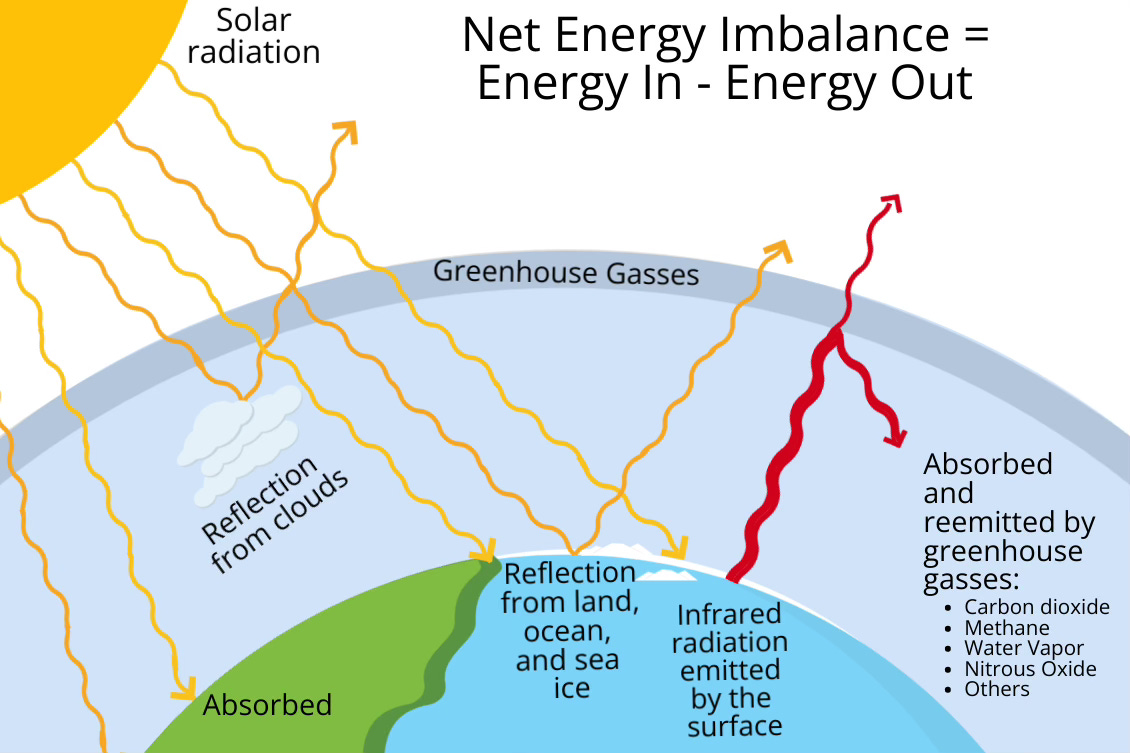
I’ve discussed Earth’s Energy Imbalance (EEI) a lot through Climate Uncovered articles, but in a nutshell: The Earth receives energy from the Sun as short wave radiation. It reflects some of this which bounces back into space from the tops of clouds, from surface ice and in fact any light, relatively reflective surface. That reflectivity, or Albedo, reduces the incoming energy that acts to warm the surface. Responding to this warmth, the surface emits long wave or infra-red radiation back out towards space, balancing the equation of EEI which is Energy In minus Energy Out (figure 1) . Greenhouse gases in the atmosphere trap some of this long wave energy, so to achieve balance, the surface continues to warm, emitting more energy, until a point is reached were the amount of long wave energy successfully leaving the planet balances the absorbed energy coming from the sun. At that average surface temperature the EEI becomes zero and the climate system is balanced.
That all works fine until the level of greenhouse gases in the atmosphere changes. If the level goes down, more long wave radiation makes it out, making the EEI negative. The Earth loses heat, cooling down until the surface radiation drops to a point where the lower level of greenhouse gas can balance the EEI once more. The climate will once again be stable, but at a cooler average temperature. The happens naturally over very long periods of time when natural processes draw down atmospheric CO₂ by sequestering more in the oceans or during periods of mountain building when it is absorbed through rock weathering.
The opposite happens when the level of greenhouse gasses in the atmosphere is increased. This time though, more long wave radiation is trapped, the EEI turns positive and the temperature rises. The accumulating energy warms the surface, which in turn, emits more long wave radiation until a point is reached where it is sufficiently hot that enough long wave radiation can escape the higher greenhouse gas level to balance the EEI. Again, this happens naturally through volcanic venting, ocean de-gassing and other processes, but today it is happening through human activity. By burning massive amounts of fossil fuels, cutting down forests and disrupting ecosystems, we have doubled the effect of greenhouse gases in the atmosphere in a little under two centuries, ten times faster than any previous geological event.
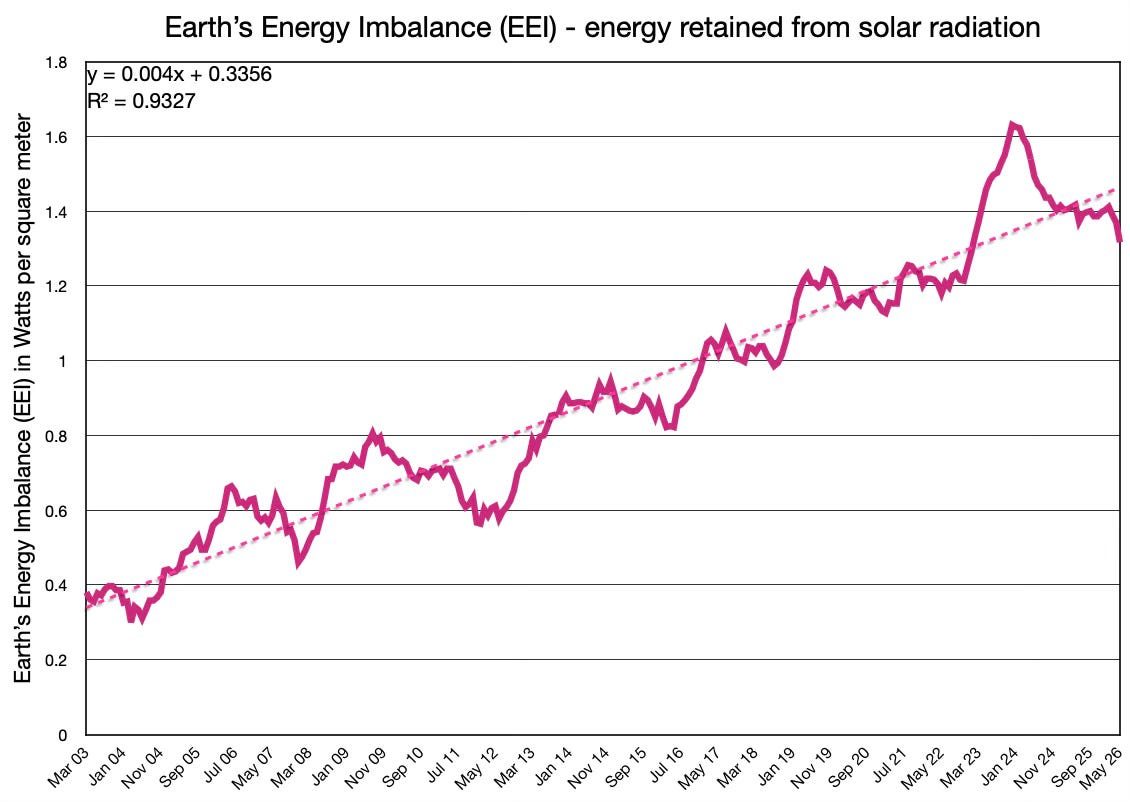
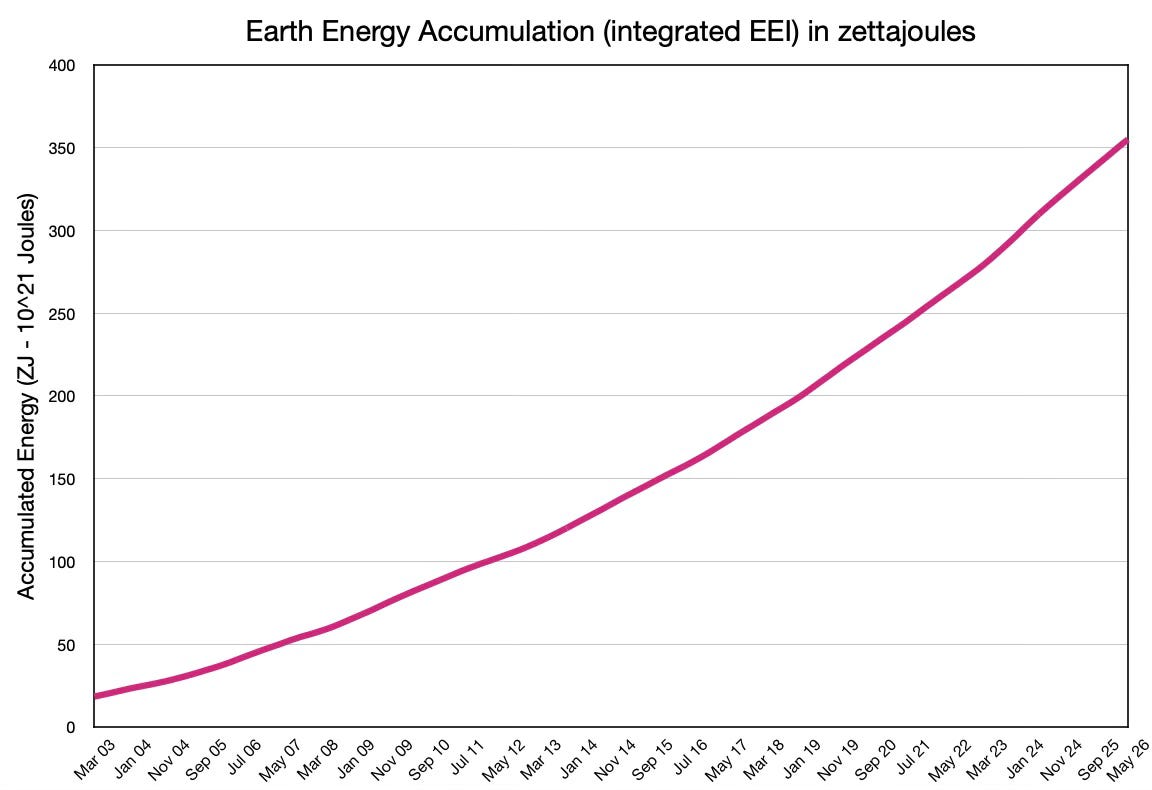
NASA’s CERES project has now delivered over a quarter of a century of data to show exactly what has happened to the EEI as a result. It will come as no surprise that not only is the EEI positive, so leading to the warming we see in every single measure, but it is increasing, leading to the now acknowledged acceleration in every single measure (figures 2 and 3). In fact the EEI has increased by over 400% in just the last 25 years, accumulating almost unimaginable amounts of energy within the Earth’s systems, which are now hunting for a new balance point, a point quite a bit warmer than it has been for millions of years.
Breaking down the CERES data further shows us that the imbalance is not just driven by the accumulation of greenhouse gases trapping the heat, but the amount of short wave radiation being reflected back into space is dropping. The albedo of the Earth is in decline and as a result, the absorbed radiation is increasing markedly (figure 4).
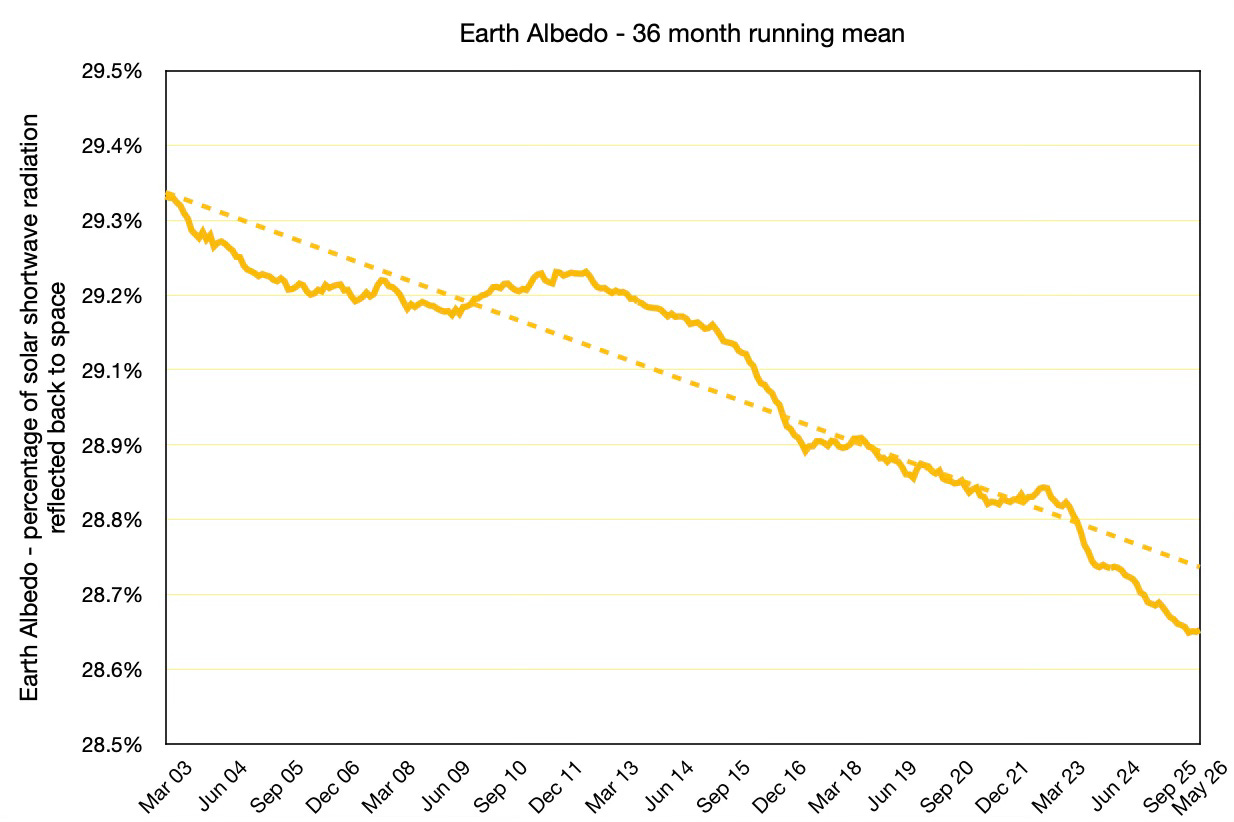
So, why is the Earth dimming? Some of the dimming is due to icy surfaces melting as the planet warms, exposing darker rock or open water beneath. Sea ice extent has been dropping fast, as have mountain glacier and snow-pack area. The main loss in reflectivity however is due to changes in the world’s clouds. They are decreasing in surface area (by an average of 1.5 million square kilometres in 25 years) but also in brightness.
The cloud changes are believed to be a feedback mechanism attached to the warming. As the greenhouse gases warm the climate, fewer clouds are formed, despite there being more water vapour available in the air. Fewer clouds let in more short wave energy and at the same time, the water vapour acts as a powerful greenhouse gas itself, amplifying the warming effect. Cloud cover over the world’s oceans are showing the most abrupt changes, leading to other knock-on effects such as triggering marine heat waves. That’s a whole other story which we covered in The Great Decoupling.
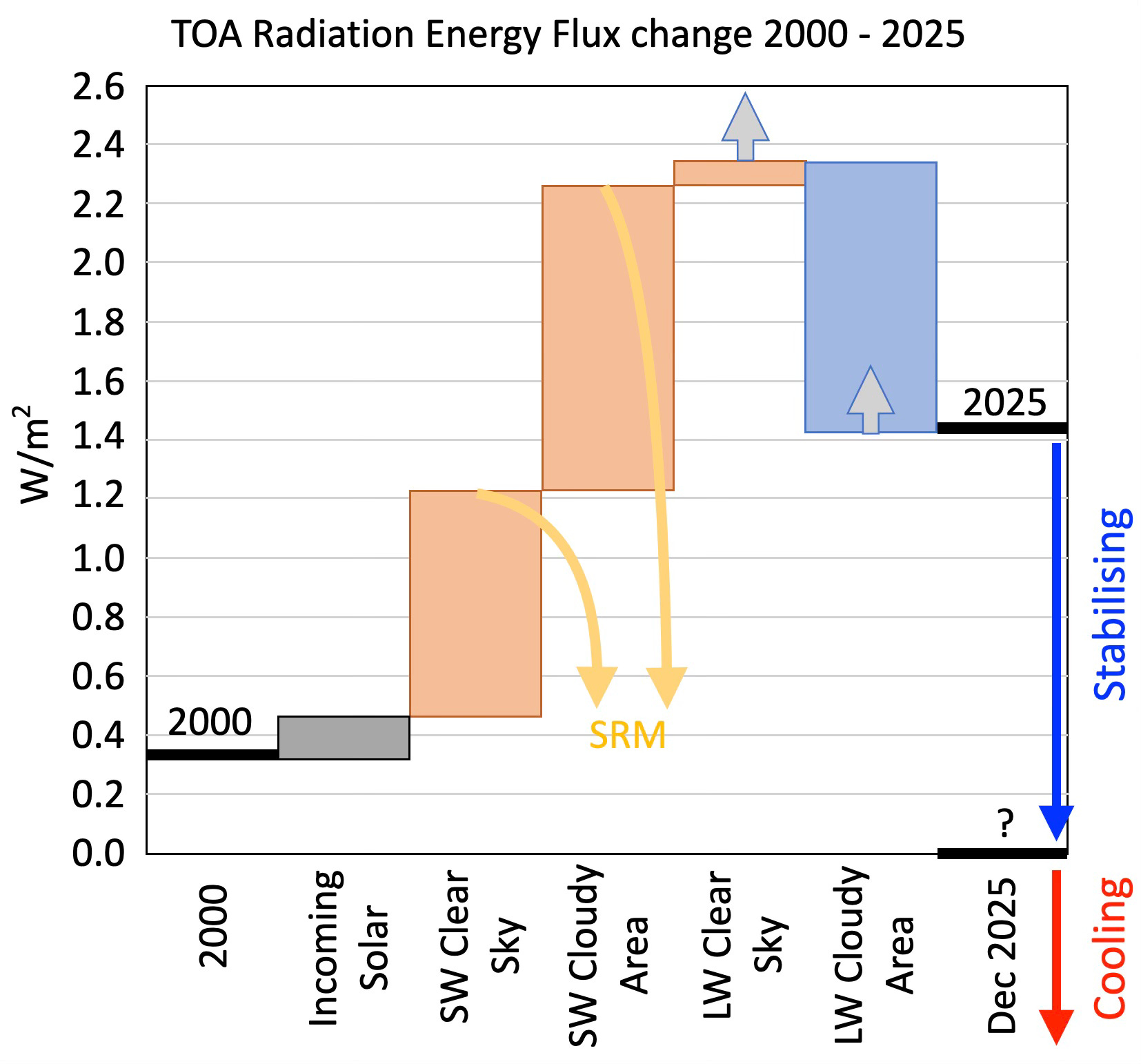
This leads us to the Energy Flux Ladder diagram (figure 5). The diagram shows what has contributed to the rise in EEI between 2000 and 2025. It breaks down the absorbed short wave radiation increase into clear and cloudy sky, and the outgoing long wave radiation in the same way. There has been a slight positive contribution from solar activity through the 25 year period since the Sun’s brightness goes through an 11 year cycle and it just so happens that the 25 year period has contained more peaks than troughs. The net impact however is negligible.
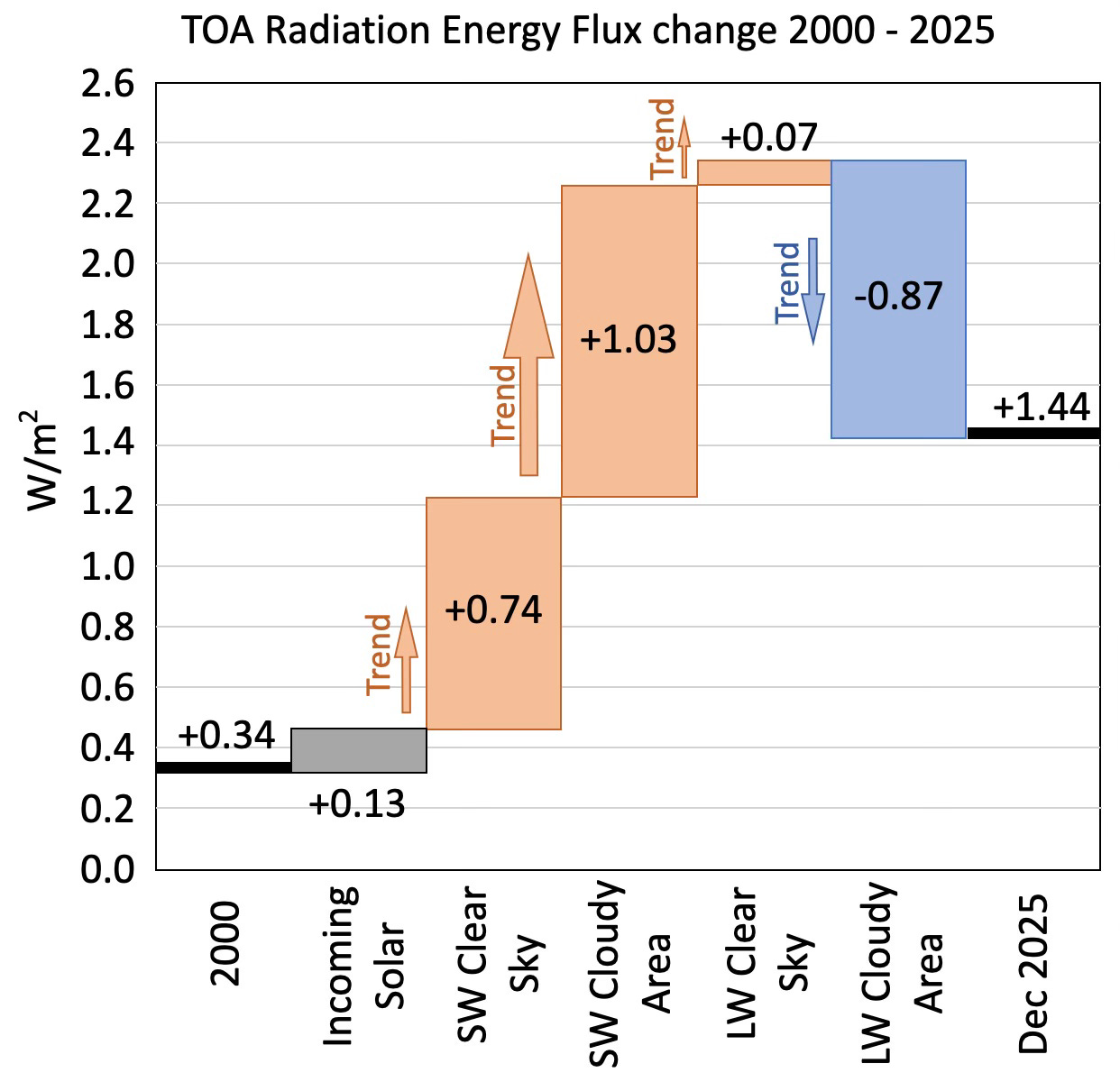
Looking at the short wave bars first, their strongly positive contributions reflect the drop in albedo discussed above. The clear sky bar is driven by the drop in cloud cover as well as the loss of surface reflectivity from ice. The cloudy bar is driven by the drop in cloud brightness as well as a contribution from cloud area loss.
The long wave bars are interesting. The clear sky bar should be strongly negative since the surface of the planet has warmed significantly and will be radiating more long wave Planck radiation as a result. However the increase in greenhouse gases means that none of this additional long wave radiation is getting out of the atmosphere. In fact slightly less is getting out than 25 years ago, despite the increase in surface heat.
The cloudy area long wave decrease is as a result of the clouds becoming warmer and also rising to higher altitudes. As a result their long wave emissions are able to escape the thinner atmosphere more readily, making this the only dampening factor in the EEI growth between 2000 and 2025.
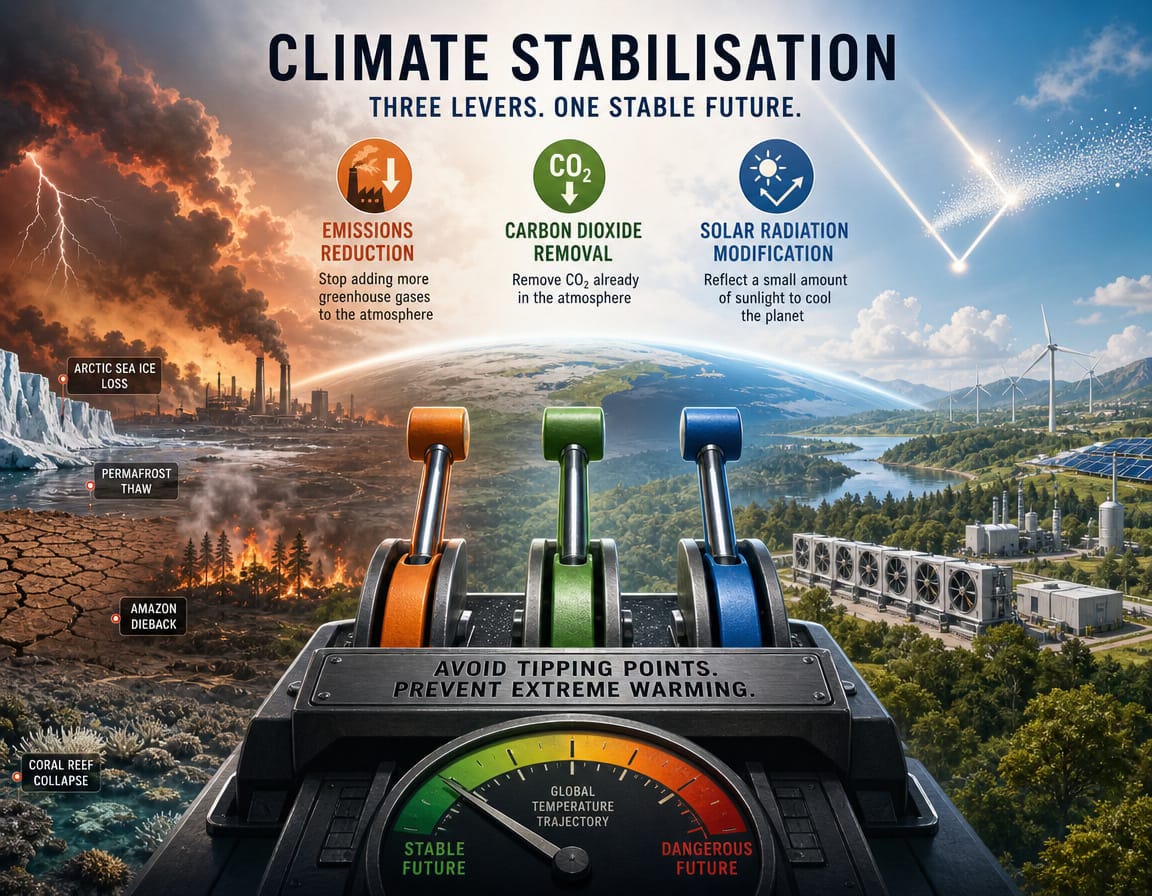
Now that we understand the drivers of the current accelerating warming, we can look at the tools available to us to ultimately get control of the EEI and stabilise the planet. The three tools or levers, are decarbonising our activities - stop releasing greenhouse gases into the atmosphere, remove the greenhouse gases we have emitted to bring the level down to a safer concentration, and increase the albedo of the planet with solar geoengineering techniques.
This comes in several guises with the most recognisable termed Net-Zero. This involves stopping all human emissions of all greenhouse gases from all sectors of the entire global economy. Where there are emissions that can’t be stopped, they must be accounted for and balanced with some matching greenhouse gas removal activities. There is also a version called True-Zero which does not allow any emissions accounting. It also deals with any natural emissions that have been triggered by other human activities or caused warming, such as permafrost melt. While net-zero stops human emissions, true-zero ensures no further rise in atmospheric concentrations.
Looking at the energy flux ladder, its possible to see what impact decarbonisation would have on the EEI (figure 6). At first glance, it will have no effect on the short wave drivers as the greenhouse gases only affect long wave radiation. However, zero emissions also includes emissions of other pollutants such as aerosols, which actually provide a cooling effect today by reflecting some shortwave radiation and brightening clouds. When zero emissions are achieved therefore, we can expect the short wave side of the diagram to increase slightly.
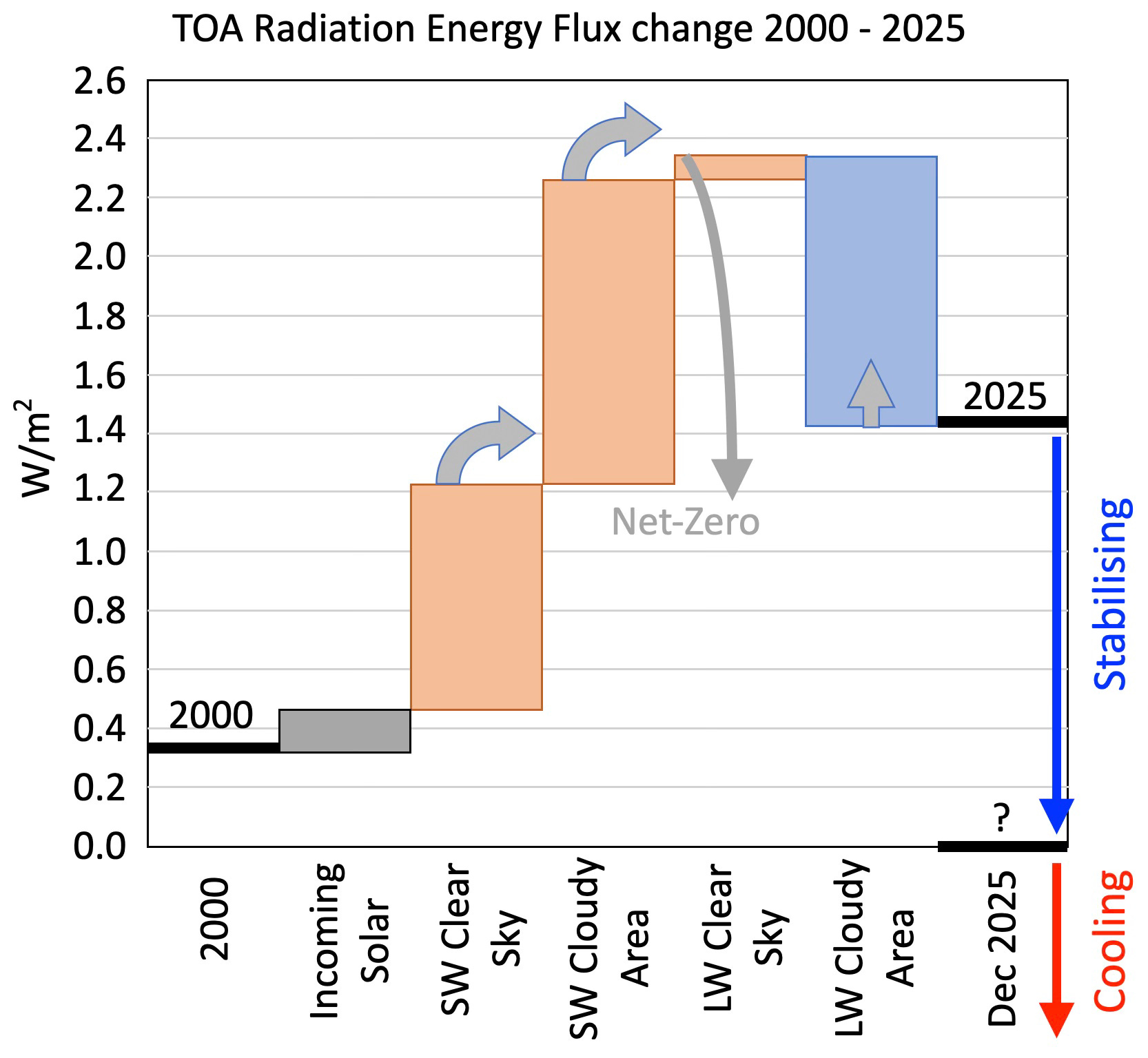
The effect on the long wave side of the ladder is the objective though. Remembering that decarbonisation won’t reduce the level of the accumulated long lived greenhouse gasses, the effect will be to allow the warming surface to catch up with the greenhouse gas effect. The surface will continue to warm, due to the still positive EEI, until it is warm enough that it can radiate sufficient long wave radiation to escape the atmosphere and balance the increased short wave side. The short wave won’t reduce since it is a temperature feedback, it may even increase with further cloud area losses, but eventually an equilibrium will be established, albeit at a higher temperature than today.
Calculating the amount of temperature rise following true-zero is obviously highly complex involving detailed modelling, however basic physical calculations exist which provide clues for what could be expected. If net-zero was achieved today with the EEI at 1.45 W/m2, the additional global average surface heating required for the escaping long wave signal to balance the EEI would be 0.73°C. This does include the feedback effect of additional water vapour in the atmosphere, but does not include any further reduction in cloud area. The eventual stable temperature would therefore be around or above 2.25°C above pre-industrial.
A recent paper1 modelled this process in more detail and found that even if the now unrealistic SSP1-2.6 was followed, EEI would continue to increase, accelerating the warming for 15-20 years until it levelled out. After that the EEI would start to drop, warming would slow down until after about 100 years, the EEI would eventually fall to zero and the climate would stabilise at that point. This assumes that no tipping elements that result in more natural emissions occur in that time, such as permafrost abrupt thaw, tropical rain forest collapse etc. That’s a big if.
In reality net-zero is unlikely to be achieved for at least another 25 years, even in a very optimistic scenario, so extrapolating from this study, temperatures would stabilise somewhere around 4°C by 2150, but probably even higher as permafrost melt would continue to increase greenhouse gas concentrations.
There was a time when net-zero would have been sufficient to control temperatures within the Paris limits, but those days are sadly behind us.
OK, so we’ve missed the boat in terms of being able to stabilise the planet at a safe level with just decarbonisation. The second tool in the box is CDR which actively removes greenhouse gases from the atmosphere. Let’s not mess about, we’re not talking about planting a few million trees here, we’re taking about drawing down the level of CO₂ in the atmosphere to below 350ppm (IPCC recommendation). That was the level in 1990, so yes, in addition to zero future emissions, we need to suck out every tonne of emissions we have dumped into the atmosphere for the last 35 years (as well as all future emissions from today). To be of any use, we also need to suck out all the natural emissions that are now increasing as the planet warms, since there is no accounting here, we’re not trying to just remove our direct emissions, were targeting a specific atmospheric concentration.
This is not new, all the ‘safe’ Paris target comparable scenarios include huge levels of CDR, as do the new CMIP7 emissions scenarios that will be used for the next round of IPCC reports. The new Medium-to-Low scenario, arguably the most likely ‘safe’ scenario involves removing over five trillion tonnes of CO₂ from the atmosphere!2
Although CDR is directly related to CO₂, there are also technologies for removing other greenhouse gases, such as methane and nitrous oxide which are included in this umbrella.
Looking back at the ladder diagram (figure 7), CDR works on the same bar as decarbonisation, but would act more quickly and have a greater stabilising effect since it reduces the amount of surface warming required to generate the level of long wave radiation that can escape the atmosphere and balance the EEI. Since the maximum temperature is lower than just decarbonation, the cloud feedback would also be reduced, meaning it also has the benefit of having less work to do in order to balance the EEI.
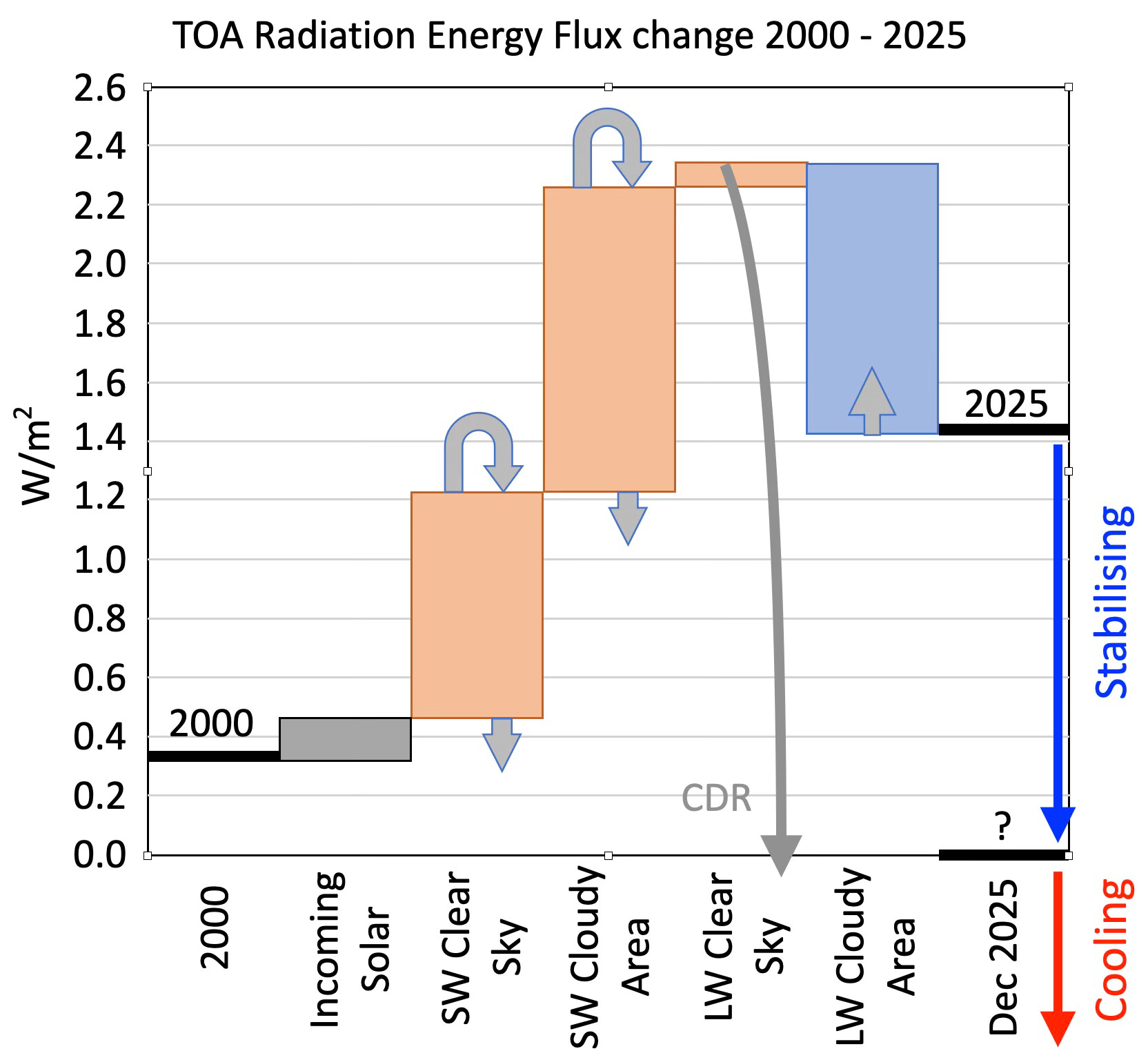
CDR is not therefore just a part of achieving net-zero, it becomes an essential tool that needs to be scaled to the point where it can draw down atmospheric concentrations as quickly as possible.
The scale of the challenge is almost unimaginably huge, but it need not all come from technological solutions. It is definitely worth including efforts to rejuvenate nature to help in the task (as well as provide a whole host of other benefits obviously). The oceans could also be encouraged to absorb more carbon with techniques such as iron fertilisation to encourage phytoplankton blooms, and alkalinity enhancement to improve the chemical take-up. There is a risk though that as the atmospheric concentration drops, the oceans may outgas some of their stored carbon to maintain a water-air partial pressure balance, but eventually equilibrium can be reached.
A conservative estimate of the temperature profile would suggest that although temperatures would almost certainly rise above 3°C, if decarbonisation and CDR were scaled quickly enough, with concentrations peaking by 2050 and reducing thereafter, 4°C could probably be avoided.
CDR is the only tool available that can permanently cool the planet. By allowing more long wave radiation to escape than is being accumulated through albedo decline, the EEI could be turned negative, cooling the planet and reversing the cloud feedback. Once a lower level of atmospheric concentration is achieved, CDR could be stopped and the climate could stabilise at a lower safer temperature. Adjustments would still persist for millennia as the ice sheets found an equilibrium within the new climate. This would drive sea level rise but to a much lower extent than just through zero emissions.
Reducing the short wave bars of the ladder diagram involves trying to increase the planet’s albedo. This would allow more solar radiation to be reflected, reducing the EEI and the warming. For this reason the technologies proposed come under the heading of Solar Radiation Modification (SRM), but the acronym also works for alternative descriptions such as Solar Radiation Management and Sunlight Reflection Methods. They all have the same driver though - Make Earth Shiny Again.
Since the loss of albedo has been due to warming feedbacks - cloud cover and ice loss, as well as aerosol pollution reduction, there is no behavioural change we can make as there is with emissions reduction for the long wave side of the ladder. If we want to increase albedo, we have to do it artificially. We also have to do it continually to maintain the effect. For example if we constructed a huge mirror in space that reflected away enough solar radiation to return the EEI to zero, warming would stop. But as soon as we took down the mirror, the EEI would jump back up and warming would resume. Worse than that though, if we had continued to accumulate greenhouse gases while the mirror was operational, the EEI would jump back to a higher level, and at a rate faster than if the mirror had never been installed in the first place. This is known as termination shock.
Space mirrors are one future approach being discussed, but a more short term plan involves spreading reflective aerosols into the stratosphere. Volcanos occasionally do this naturally and can cool the planet by over 0.5°C for a year or two. Human Stratospheric Aerosol Injection (SAI) could do the same thing. This would reduce the short wave bars, lower the EEI and stabilise the warming.
Looking at the ladder diagram one last time (finger 8), the amount of SRM would determine whether the warming acceleration was stopped - limit EEI growth, the warming rate reduced - lower the EEI, or cool the planet - take EEI negative.
The sooner SRM is deployed the less work it would have to do to avoid dangerous 3°C temperatures and triggered tipping points, but the greater the accumulated termination shock if decarbonisation and CDR were not simultaneously scaled. This is the great dilemma that will be debated increasingly in the coming years. There is a strong moral hazard argument that if SRM is deployed, it will divert attention away from the only permanent solutions, and give cover for continued fossil fuel consumption and emissions. But it’s not like we’ve been doing a great job on that without it either.
It’s becoming obvious that a strategy involving all three levers will be required to stabilise the planet whilst avoiding dangerous levels of warming and the potential for disastrous tipping points being crossed. 3°C or 4°C of warming would not just be unpleasant, they represent levels that are incompatible with our current industrialised civilisation. The Institute and Faculty of Actuaries predict a sigmoid GDP destruction path that would see at least a halving of the world economy at 3°C followed by complete collapse (~2060 on our current trajectory).3 At which point, not only would there be unimaginable starvation, death and destruction, but there would be no economy left to invest in CDR or SRM - although decarbonisation would become automatic.
Due to the short wave component of the EEI being increased through cloud feedbacks, emissions cuts on their own are now insufficient to avoid the disaster which is looming in the not too distant future. Regardless of what we do in the next couple of years, the 2°C point will be crossed in the late 2030s. This in no way means it is pointless, it is the first step on a crucial journey to bring atmospheric greenhouse gas levels back to a safer level.
Carbon dioxide removal is the second step and equally critical since it is the only way of permanently stabilising temperatures and cooling the planet down to a more hospitable level. Technological solutions are available but need to be scaled. Nay-sayers point out that they have not been scaled to date, but there has been no market incentive for them to do so. That needs to change, probably through some progressive carbon tax or carbon reward scheme backed by national or international banks.4
The rate by which the EEI is growing, and with it the warming accelerating, now strongly suggests that the world is entering a zone where dangerous tipping points will be reached. Indeed, tropical coral reef die-off has already been declared as a crossed tipping element. The only short term tool available to avoid these tipping points, and to avoid 3°C of warming, is SRM. It brings risks, both in terms of potential side effects and it will be very difficult to achieve a level of international agreement and collaboration sufficient to regulate and control it.
SRM can only be used as a stopgap and it must be accompanied by a concrete global effort to decarbonise and scale CDR. Otherwise it will ultimately fail as greenhouse gases continue to accumulate, warming continues and tipping points are breached regardless and the resulting economic destruction causes the SRM to be abandoned. At which point the termination shock could be the last nail in our coffin.
The question for the next decade may well be “Should we start SRM now?” At the moment I would say no, it should be vigorously researched but not deployed without solid signs of decarbonisation first, and a far greater understanding of both its positive and negative effects. If it is confirmed that the AMOC is collapsing, or permafrost melt is shown to be approaching its tipping point, then that answer may change. The geopolitics would be highly complex and progress is not currently possible while the US hegemony is putting all its weight behind perpetuating the carbon economy and propping up the petrodollar at all costs. My worry is that by the time the economic damage signals are obvious even to the most ardent petrolhead, it will be too late to do anything about it.
If you found this article interesting or useful, please tick the ❤️ button as it helps the algorithm point more people in this direction and gives us feedback on what subjects are most useful. Thank you!
Douville, H., & Allan, R. P. (2026). Constraints on climate change stabilization based on observations of Earth’s energy imbalance. Geophysical Research Letters, 53, e2025GL121056. https://doi.org/10.1029/2025GL121056
The Carbon Dioxide Removal implications of the new CMIP7 future emission scenarios
·
May 27
The climate and Earth system modelling work for IPCC and other reports leans on sets of pathways or scenarios that describe potential climate policy directions. The first set was developed between 2009-2011 and was used for the modelling work in CMIP5. The fifth round of the Coupled Model Intercomparison Project (CMIP). It was called Representative Conc…
Climate Risk Management: Has conventional economics got it wrong?
·
Apr 29

Recent reports and books from organisation including the Institute and Faculty of Actuaries, the University of Exeter, Carbon Tracker and others, challenge the long held economic belief that although climate damages will reduce GDP in the future, continued growth is assured. A new consensus is growing that states that indefinite growth is incompatible with the emer…
Comments
Nothing yet. Say the first thing.
Sign in to join the conversation.