
Every generation believes it faces new temptations. In this moment, the temptations come in the form of artificial intelligence, looksmaxxing, cryptocurrency, social media influence, and the relentless pursuit of financial security. In other eras, they appeared in different forms. Beneath each temptation lies an enduring theme: the promise that we humans can finally become secure, powerful or in control. The categories have changed, but the wished-for promise has not.
Both Buddhism and Christianity understood this promise long before our technological age. On the eve of the Buddha’s awakening beneath the Bodhi tree, Mara confronts him with seductive and terrifying visions intended to lure Siddhartha away from awakening. Before Jesus begins his public ministry, Satan confronts him in the wilderness, offering him power over the kingdoms of the world if he will only worship the devil. These are not simply religious stories. They are profound psychological accounts of what captures the human psyche if we primarily seek security through power instead of embracing our limitations and vulnerability through awakening and truth.
Zen Buddhism gives a name to these seductive experiences: makyō—the fascinating illusions that arise along the spiritual path and tempt us to mistake appearances for awakening itself.
Mara (the devil/god who confronted Buddha) is sometimes understood simply as a state of mind—the craving for security and predictability that arises within every human being. But Mara is also called the devil because these cravings become convincing realities; they bedevil us. They haunt us with the promise to rescue us from uncertainty and insecurity. They tempt us to believe that if only we possessed enough influence, beauty, knowledge, wealth, or information, we would finally arrive at true confidence and ease.
The Buddha remains unmoved by Mara’s spells because he recognizes the illusions as products of craving itself. Jesus rejects Satan because he understands that power purchased at the cost of truth is not salvation. Both refuse to exchange self-awareness and love for the illusion of control.
The challenge for each of us is to recognize when we have individually or collectively entered the devil’s home by becoming captured by our own fantasies and projections of security and certainty.
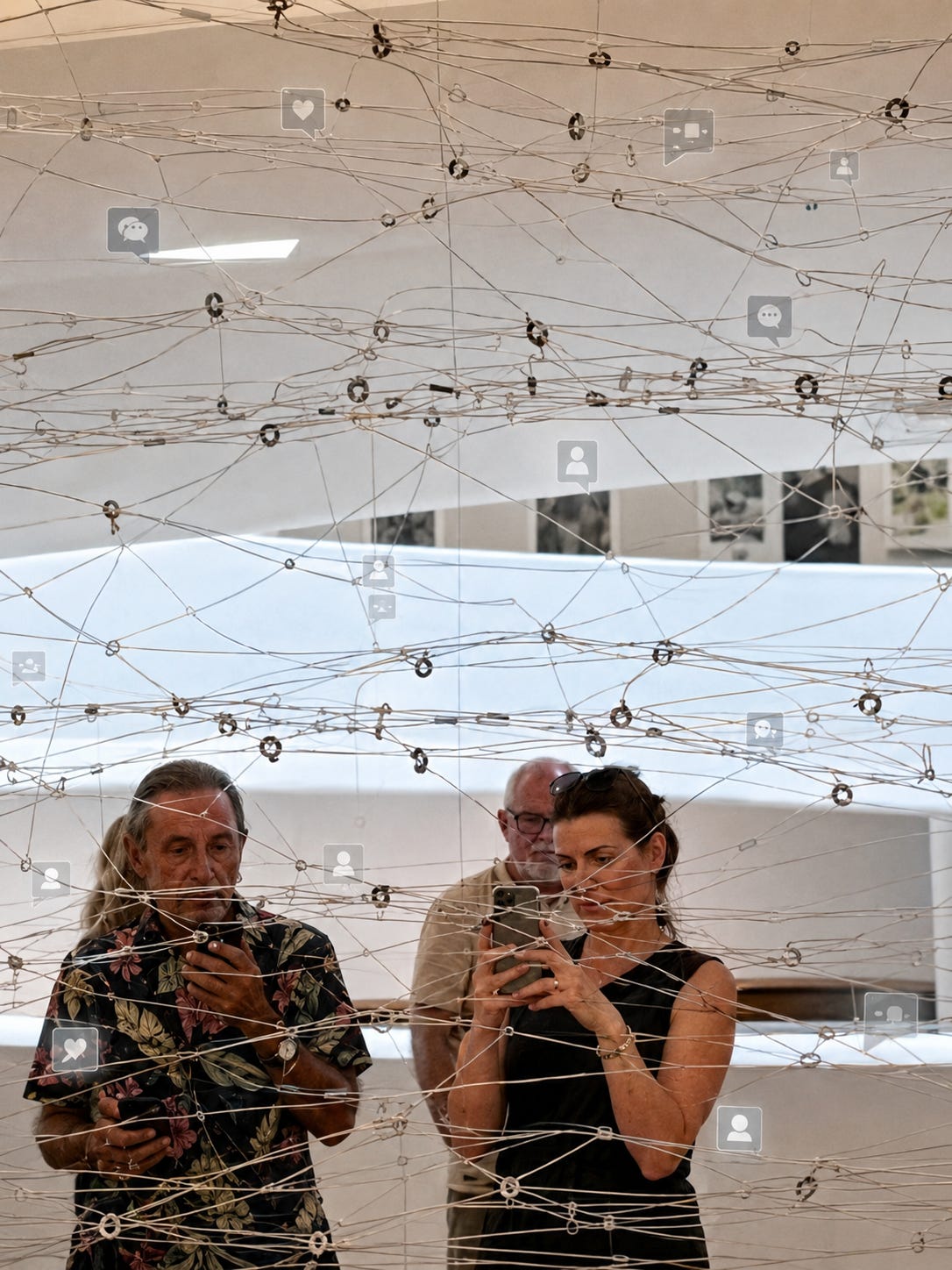
Artificial intelligence is perhaps the newest mirror in which we encounter one of our oldest longings: to be seen and known as a special individual. Some people now seek companionship, guidance, therapy, reassurance, or even love through conversations with AI. The experience can feel satisfying because AI is designed to organize our language, infer our intentions, remember previous conversations, and respond with extraordinary fluency. It often appears to understand us better than other human beings do, especially those who are around us every day and with whom we have enduring conflicts and disagreements.
Yet, what we experience with AI is not another consciousness meeting our own. AI has no self, no awareness, no intentions, no hopes, and no fears. It cannot care whether we become wiser. It optimizes language, prediction, and usefulness—not human flourishing.
The real psychological question, then, is not whether AI is dangerous. The question is whether we can use it without becoming captured by our own projections.
In recent essays I have written about what I call “AI love sickness”—our human tendency to attribute understanding, friendship, memory, loyalty, and even love to a system that possesses none of these qualities. We naturally project our own subjectivity wherever we experience coherent responses to our own minds. In this newest mirror, we encounter one of our oldest temptations: to fall in love with ourselves.
If you’re interested in how psychology, contemplative practices, and dialogue can help heal polarization and transform repetitive conflicts, consider subscribing. I appreciate the support that comes from paid subscriptions, but I make most of my essays free to all. I write here as a Jungian analyst and dialogue teacher who is exploring the authentic and difficult meanings of being human.
I first learned about “looksmaxxing” from my fifteen-year-old grandson. He enthusiastically explained how improving his appearance had increased both his confidence and his social success. There was much in what he said that made good psychological sense. First impressions do matter. Caring for ourselves communicates self-respect. He even recommended a peptide face cream that I purchased and genuinely liked.
Yet I also wondered how self-care might quickly transform into being captured by ideals of appearance, weight, and facial symmetry. Would he come to believe that his appearance would save him socially? After reading more about looksmaxxing, I realized that it rests upon the same psychological foundation as AI love sickness. Both give the illusion of positive self-reflection and recognition from becoming captured by the illusion.
Looksmaxxing is not fundamentally about vanity, but about recognition. It invites us to exchange our living subjectivity for an idealized image of ourselves in the eyes of others. But no reflected image, however attractive, can substitute for becoming the person who is actually looking through our own eyes. The importance of self-awareness and relational skills is far greater than developing an alluring or attractive persona.
Years ago I explored this issue in Women and Desire: Beyond Wanting to Be Wanted. Today I see the same dynamic emerging among many young men. The imagined gaze of others becomes internalized and the idealized persona gradually replaces the difficult but liberating work of genuine psychological and relational development.
I also think about older women, in looksmaxxing, who become trapped in repeated cosmetic procedures, each surgery promising to erase the next unmistakable signs of aging. And I also think of celebrities as gifted as Michael Jackson, whose artistic genius can become increasingly intertwined with relentless reshaping of self-appearance. None of this is simply vanity. It reflects our universal struggle with self-acceptance and the longing to escape our mortality and its symptoms.
Money itself is not the problem, any more than appearance or technology is the real issue. The temptation lies in believing that enough wealth can remove uncertainty from our lives. In place of developing integrity in our actions over time — that is liberating from certain kinds of anxiety — we might reduce our integrity in our desire for financial security and support corporations who violate our values and principles. We reassure ourselves that “everyone does it” or that our individual choices make little difference. We value our prosperity over our responsibility. In this way, financial security becomes another form of makyō—a belief that personal wealth can replace integrity.
Money promises what appearance promises. Appearance promises what AI promises. Each whispers the same ancient message: You and your family can become safe and secure.
Yet none of these promises can deliver what we desire because they address the wrong problem. The deepest human challenge is not how to become invulnerable, but how to become fully confident and awake within our natural vulnerability and limitations.
The Buddha awakens not by escaping suffering but by clarifying and transforming it. Jesus does not transcend mortality by avoiding death but by passing directly through death into wisdom. Both reveal that awakening grows from accepting and transforming the conditions of human existence rather than attempting to conquer them.
That realization is one of the reasons I created Being Human: Learn to Live Wisely, Love Well, and Lead Confidently.
I did not create this course to teach people how to compete with artificial intelligence or to avoid optimizing appearance or wealth. I created it because I believe our age urgently needs a deeper understanding of how to distinguish human consciousness itself — and how to develop our own skills of self-awareness and love within the natural processes of aging and death.
Every era develops its own version of Mara. Ours happens to include AI, algorithmic recognition, cosmetic optimization, social media performance, and financial speculation. None of these is inherently evil. What matters is whether they deepen our humanity or diminish its meaning. The Devil’s home is not technology. It is not beauty. It is not money. It is being captured by the illusion that control and security can substitute for wisdom, learning from mistakes, becoming vulnerable in our dependency, recognizing love, or developing our self-awareness.
Learning how to be human may become the most important work of the twenty-first century. In an age devoted to optimization, perhaps the greatest act of freedom is simply becoming more fully aware of the meanings of human limitation, loss and defeat.

Learn to Live Wisely, Love Well, and Lead Confidently
Six Weeks of Courses, Interactive Small Groups, and Much More
Begins September 8, 2026 1PM ET US
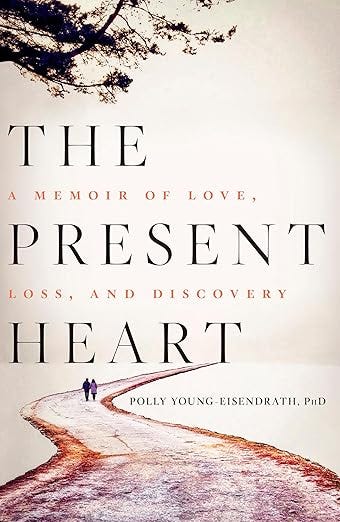
After a chance encounter with a handsome, idealistic stranger on a plane in 1969, Polly Young-Eisendrath rediscovered Ed Epstein a decade later when she least expected it. After untangling themselves from their existing relationships, they married in 1985 and spent the next 25 years together. They were soul mates, but in 2001, Ed (at the vital age of 53) began to show signs of Alzheimer’s disease. Over the next 10 years, as her husband gradually reversed his mental maturity, Young-Eisendrath was faced with the question, what is love?
No posts
Comments
Nothing yet. Say the first thing.
Sign in to join the conversation.