
Original Publication 2/25/2026
The post was clear. A family medicine physician in Alabama needed extra income while building their DPC practice. They were looking to pick up urgent care shifts, potentially overseeing non-physicians. I responded immediately: Don’t take those shifts. The legal environment makes practicing evidence-based medicine a major liability. If a woman comes in with pregnancy complications, clinical judgment could become prosecutable. The risk is documented. Women have died waiting for care that physicians were too afraid to provide. The state’s OB-GYN residency programs struggle to fill positions. Maternity wards are closing. Physicians are leaving these states or refusing to train in obstetrics and gynecology, not because they lack skill or compassion, but because the law has made their work legally hazardous.
This is not an isolated problem. In 2025, Adriana Smith, a pregnant woman in Georgia, was kept on life support against her family’s wishes after being declared brain dead. Her body became state property the moment fetal cardiac activity was detected. Autonomy was overridden. She was treated as an incubator, not a person. That case is precedent now, not speculation. The baby was born via emergency cesarean section after months on life support. Smith was removed from life support four days later. This is one manifestation of a broader pattern in states with restrictive reproductive laws, where maternal mortality has climbed and legal risk shapes every clinical decision. If a woman can be treated as property even after death, we can see how legal risk has transformed not only reproductive care, but all aspects of healthcare.
states with abortion bans, maternal mortality rates in 2023 were twice as high as states with legal access. Black mothers in ban states are 3.3 times more likely to die during pregnancy or childbirth. Texas saw maternal mortality increase 56 percent overall and 95 percent among White women in the first year after its six-week ban took effect. In the two years after Dobbs, at least 412 people faced criminal charges for conduct associated with pregnancy, pregnancy loss, or birth. Nearly half of those prosecutions occurred in Alabama alone.
I practice menopause medicine. My patients describe insomnia that has lasted years, hot flashes that wake them hourly, joint pain severe enough to limit movement, anxiety that appeared suddenly in their late forties, palpitations they worry are cardiac events, loss of libido they’ve been told is psychological, and cognitive changes they fear are early dementia. These are not minor inconveniences. They are disabling symptoms that last years that does respond to treatment. But menopause has been dismissed for so long that many women arrive in my practice apologizing for complaining. They were taught early that menstrual pain is normal, that suffering through biological processes is expected. The medical system reinforced that message. Colleagues still refer to menopause as a “quality of life issue,” as if quality of life is optional for women. Those dismissals matter because when clinical attention is devalued, the legal environment fills the vacuum with control rather than care.
These legal landscapes do not only affect pregnancy. They distort care for women across the lifespan, including conditions like menopause that already struggle for medical attention. Menopause cannot be separated from reproductive autonomy. A woman experiencing severe symptoms needs hormone replacement therapy, but she also needs to know that if she has an ectopic pregnancy at age forty-seven, she will receive emergency care without delay. She needs to know that a miscarriage won’t trigger a police investigation. She needs to know that her body is hers. Treatment occurs in context. You cannot address libido in a woman who fears forced pregnancy. You cannot prescribe estrogen to someone whose state government considers her reproductive capacity public property.
The FDA has approved medications for female sexual desire. Addyi and Vyleesi were authorized after extensive discussion of women’s sexual wellness. Addyi was recently approved for postmenopausal women in December 2025. Pharmaceutical companies have invested in libido research. There is now institutional recognition that women’s sexual function has value. But desire cannot exist in a coercive environment. A medication cannot resolve the problem of living under forced birth laws. The contradiction is absolute. The government claims to care about women’s sexual health while simultaneously removing their control over reproduction. These positions are incompatible.
Roe v. Wade was overturned in 2022. Since then, red states have passed laws criminalizing miscarriage management, delaying ectopic pregnancy treatment, and forcing women to carry nonviable pregnancies to term. South Carolina has prosecuted women for pregnancy outcomes. Women have been arrested for miscarriages and charged with crimes including homicide by child abuse. Physicians in multiple states have testified that they could not provide standard emergency care because the legal definition of imminent threat was too vague. Women have been septic before intervention was deemed legally permissible. Some have died. The OB-GYN training pipeline in these states is collapsing. Medical students are avoiding residencies in states where they could be prosecuted for providing care.
On January 22, 2026, the United States officially withdrew from the World Health Organization. This affects maternal mortality surveillance, pandemic response coordination, and access to global health data that physicians rely on to track emerging infections and drug shortages. California has since joined the WHO’s Global Outbreak Alert & Response Network independently, attempting to maintain the infrastructure that federal withdrawal dismantled. Medicine is international. Disease does not respect borders. Isolating the country from global health systems harms physicians’ ability to provide informed care and harms patients who depend on that coordination. Policymakers celebrate coordination in words.
Forced birth is not about protecting life. If it were, there would be universal prenatal care, postpartum support, subsidized childcare, and housing security for families. None of those exist. What does exist is control over reproduction without corresponding support for the people forced to give birth. This aligns with governance models where women’s bodies are treated as demographic infrastructure. The goal is not maternal health. The goal is population control.
Women are responding. The “bear versus man” question revealed that a majority of women consider an encounter with a bear safer than an encounter with a strange man. That answer is data. It reflects lived experience and risk assessment. Birth rates are declining. Increasing numbers of women are choosing not to have children, citing the unsafe legal and social environment. They are protecting future daughters from systems that do not value their autonomy. This is not confusion. This is analysis.
There is also a current estrogen patch shortage. The cause remains unclear, though supply chain issues and increased demand following the November 2024 removal of black box warnings on hormone therapy are being discussed. The shortage is a problem because treatment works. Women are finally asking for help. Physicians are finally listening. Menopause is being taken seriously as a medical transition that requires care, not dismissal. But if the supply cannot meet demand, the progress is meaningless.
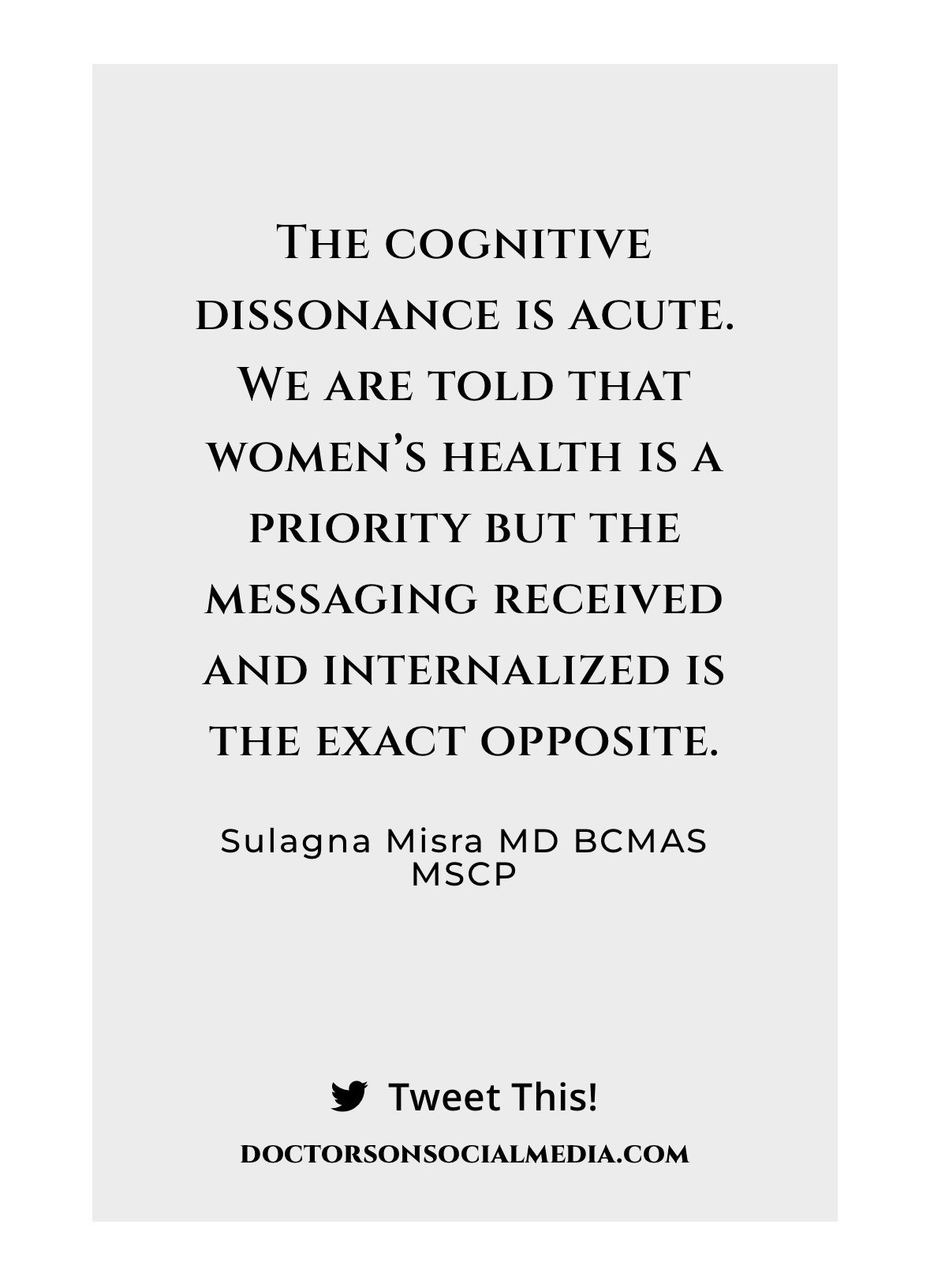
The cognitive dissonance is acute. We are told that women’s health is a priority but the messaging received and internalized is the exact opposite. Pharmaceutical research on female sexual function is expanding. Menopause is entering mainstream medical conversation. Black box warnings that scared women away from hormone therapy for two decades have been revised. But at the same time, women in red states cannot access emergency reproductive care. They are being prosecuted for miscarriages. They are dying from delayed treatment. Physicians are leaving those states or refusing to practice obstetrics. Women’s bodies are being treated as objects of state control, even as the rhetoric claims to support their “wellness”.
I prescribe hormones to manage debilitating symptoms. I prescribe antidepressants when anxiety or depression becomes unmanageable. I discuss libido medications with patients who want to reclaim that part of their lives. But I am also aware that these interventions are occurring in a system that denies women fundamental autonomy. Treating symptoms while the structural causes of distress remain unaddressed is not conspiracy. It is the predictable outcome of a collapsing framework. Medicine is being used to maintain function in people who have no legal control over their own bodies. That is not health. That is containment.
Physicians are experiencing moral injury. We are trained to provide evidence-based care and then punished or constrained when we attempt to do so. We watch patients suffer from preventable harm because the law overrides clinical judgment. We see colleagues leave states where practicing medicine has become legally dangerous. We struggle with shortages of basic treatments while being told women’s health is advancing. The contradiction between institutional recognition of menopause and the reality of women being prosecuted for pregnancy outcomes creates a dissonance that cannot be reconciled through clinical work alone.
Women are already deciding. They are choosing not to have children. They are avoiding states with forced birth laws. They are asking for permanent contraception at younger ages. They are refusing to participate in systems that treat them as incubators.
This is not a failure of education or a misunderstanding of risk.
This is a rational response to an unlivable situation.
The reckoning is quiet, but it is occurring.
No posts
Comments
Nothing yet. Say the first thing.
Sign in to join the conversation.