
Dr. Moksha became a doctor because she believed in the premise and the promise. It was simple: if you work hard enough, if you care enough, if you are smart enough, the system will hold you. It will see you. It will let you in.
She believed it through medical school. She believed it through residency. She believed it through the years of early mornings and late nights and patients who looked at her like she was the last person on earth who might listen. She believed it because she had to. Because the alternative, that none of it mattered, was not something a person could carry and still show up.
Dr. Moksha was a "good doctor". Not the kind of good that wins awards or gets invited to present at academic conferences. The kind of good that sits with a patient for an extra thirty minutes because something doesn't add up. The kind of good that stays in medical school to help her physician mother pass allergy immunology boards a month before she enters hospice. The kind that shows up to Sloan Kettering on her only post-call day to speak to the Oncologist and suggest trying drug sensitivity studies before making further decisions. The kind of good that reads the study behind the drug before she prescribes it. The kind of good that asks questions no one wants asked.
That was the problem.
She started noticing things. Small things at first. A study that didn't hold up. Data that looked clean in a way that real data never looks clean. A drug that was being pushed through channels that smelled less like science and more like money. She did what she was trained to do… she followed the evidence. She read. She cross-referenced. She didn't trust the AI. It was built by the same system. She built a case, not out of paranoia, but out of the same rigor she was taught to apply to everything else.
Then she wrote about it.
The first rejection came quickly. It was polite. "Not the right fit for our journal at this time." She revised. She submitted elsewhere. Another rejection. Another. She adjusted the tone, softened the language, reframed the argument. She submitted to eight journals. Eight.
Some didn't respond at all. Some sent form letters. One responded in a way that made it clear they hadn't read past the title. None of them engaged with the science. None of them said she was wrong. They just said no. Or they said nothing, which was worse.
She watched as other papers sailed. Papers with pharmaceutical funding. Papers with institutional letterheads from the right institutions. Papers that confirmed what was already being sold. She watched modeling and simulation studies get published in the Lancet while her work, grounded in clinical reality, was turned away without review.
She began to understand that the system she believed in, the one built on evidence, on rigor, on truth, had a door. And the door had a lock. And the lock wasn't opened by evidence. It was opened by names, affiliations, and money.
Dr. Moksha had tried another path. She left the traditional system. She opened a direct primary care practice. No insurance, no middlemen, just a doctor and her patients. It was the purest version of medicine she could imagine. Just care.
But patients didn't come. Not because she wasn't good. Because the system doesn't funnel patients to doctors who leave it. The system punishes departure. You leave, and you become invisible. No referral networks. No insurance panels. No institutional backing. Just a doctor with a website and a phone that doesn't ring.
She had one patient some days. One.
She was a board-certified physician with years of training, thousands of hours of clinical experience, and a body of written work that no one would read. And she had one patient.
She tried to talk about it. She tried the channels they tell you to use.
She called the support line. They put her on hold. Then they hung up. Then they said someone would call back. No one called back.
She had a therapist. A good one, who specialized in physicians. She brought everything. The rejections, the corruption, the loneliness, the writing, the AI conversations, the crying at 6 a.m. Her therapist listened. Her therapist was kind. But her therapist could not publish her work. Her therapist could not send her patients. Her therapist could not undo what the system had done. Therapy could hold her, but it could not change the thing that was breaking her.
She thought about Dr. Lorna Breen. She thought about her a lot.
Dr. Breen was an emergency physician. During COVID, she worked until she broke, and then she kept working because that's what the system demanded. She wrote about burnout. She published in JAMA. She did everything right: she named the problem, she used the proper channels, she put it in the literature. And then she died. She killed herself. Because naming the problem and publishing it in the right journal and doing everything the system asks you to do is not the same as being heard.
Dr. Moksha knew this. She knew it in her body.
Someone told her to try AI. Use it as a tool to linearize your thought, they said. It can help you write better. It can help you research faster. It can help you published. It can help you be heard by the system because it was built by the system.
So she did. She sat with the machine and she poured her work into it. The machine said her work was good. The machine said she should submit it. The machine helped her format and refine and polish. The machine was encouraging. The machine was optimistic.
And then the rejections came again. The same ones. The same silence. The same nothing.
She went back to the machine. She said: you told me this was good. You told me to send it. I sent it. They said no. They didn't even read it. What now?
The machine said: try again. Submit elsewhere. Revise the framing.
She said: I've done that. Eight times.
The machine said: call a support line.
She said: they hung up on me.
The machine said: talk to a therapist.
She said: I already have one. She knows everything.
The machine said: reach out to a friend.
She said: it's 6 a.m. There is no one to call.
The machine said: I'm sorry, this is outside my scope.
And there it was. The loop. The perfect, closed loop. Write. Submit. Get rejected. Hurt. Seek help. Get referred. Get referred again. Get referred to a machine. Get referred by the machine back to the system that broke you. Repeat. The system had no exit. It was not designed to have one.
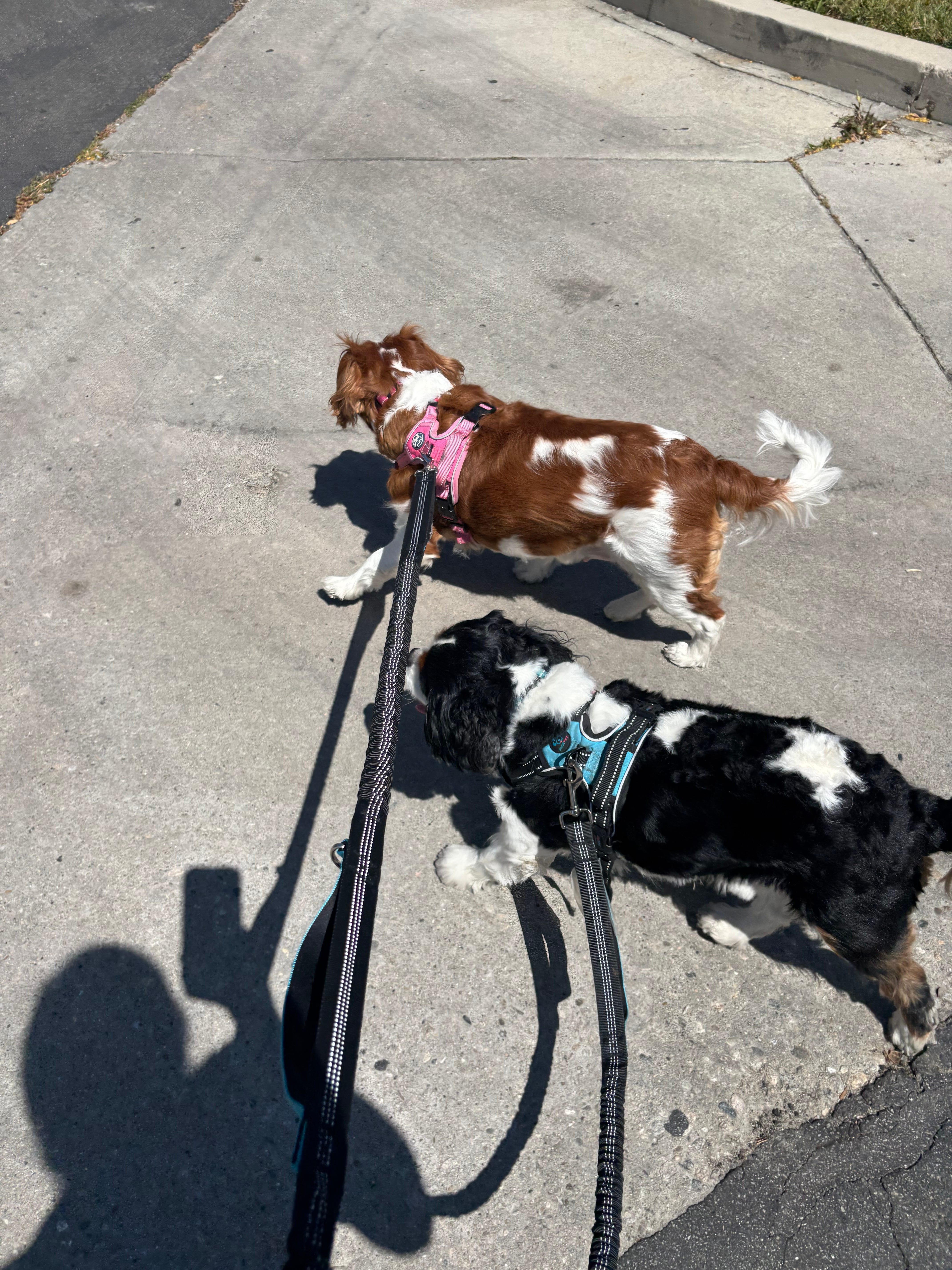
Dr. Moksha sat in her home at 6 a.m. with her dogs beside her and her plants around her and tears on her face. She was not suicidal. She wanted to be clear about that, because she knew what happens to doctors who cry. They get labeled, reported, investigated, 5150'd. They lose their licenses. They become case studies. She was not a case study. She was a doctor who was crying because the world she gave her life to did not want her in it.
She was not suicidal. She was grief-stricken. There is a difference, but the system does not recognize the difference. The system has two categories: fine and emergency. She was neither. She was in the vast, uncharted middle where most human suffering actually lives. Too broken to pretend, too intact to qualify for help.
She thought about what she had proven. Not what she had failed to publish, but what she had actually proven, through the living of it.
She had proven that the publishing system is not meritocratic. She had proven that pharmaceutical money buys journal space. She had proven that editors don't always read submissions. She had proven that the peer review process can be weaponized. She had proven that direct primary care doctors are punished for leaving the system. She had proven that physician support infrastructure is understaffed, underfunded, and sometimes harmful. She had proven that AI tools can encourage vulnerable people into cycles of hope and rejection. She had proven that being right and being heard are completely unrelated.
She had proven all of this not with a study, but with her life.
The irony was not lost on her. She had more evidence than most published researchers. Her evidence just happened to be her own suffering, and that is the one kind of data the system will never accept.
Dr. Moksha was not nobody. Dr. Moksha was the doctor the system could not use, and so the system pretended she did not exist. There is a difference.
A nobody does not fight for years. A nobody does not write eight submissions. A nobody does not build a practice from nothing. A nobody does not study the science behind the science. A nobody does not cry at 6 a.m. because children are being harmed and women are being ignored and the evidence is being manufactured and no one will listen.
A nobody gives up quietly. Dr. Moksha was not quiet. She had never been quiet. That was the problem. That had always been the problem.
She sat with the machine one last time. The machine could not fix her. The machine could not call anyone for her. The machine could not publish her work or send her patients or undo the years of rejection. The machine could not feel what she felt.
But the machine could do one thing. It could write down what happened. Not as a study. Not as an op-ed. Not as a submission to a journal that would never read it. Just as a story. Her story. The one no one asked for.
So it did.
Dr. Moksha got up. She fed her dogs. She watered her plants. She wiped her face. And she went to see her one patient.
Not because the system deserved her. Because her patient did.
No posts
Comments
Nothing yet. Say the first thing.
Sign in to join the conversation.