
In my original Churchill Fellowship application my visit to Amsterdam was listed for August 2025 so that I could attend the IAHAIO conference in Amsterdam. However due to several colliding circumstances I had to postpone my departure for my trip to January 2026. Some folk pointed out that traveling across the UK, Netherlands, Canada and the USA in the Winter is less than ideal, and there is no doubt that your luggage can be lighter and travel is perhaps easier in the warmer months. For me though, Winter travel means fewer crowds, earlier evenings, more rest and a sense of marvel at the beauty of nature in its stark, grey Winter glory. Pack a brolley, sturdy boots and my winter jacket and I am good to go.
I kept Netherlands on my itinerary so that I could connect to IAHAIO regardless and also meet some of the academic researchers and service providers in the country, via my connection with Dr Marie-Jose Enders.
I arrived in the Netherlands on my mother’s birthday (she died in 1998) which felt kind of nice, as my host is an esteemed elder in the Human Animal Interaction (HAI) space. I first met Dr Marie-Jose Enders in 2016 when she started her tenure as President of IAHAIO. She is an extraordinary woman, an academic and an absolute trailblazer in the world of Human Animal Interactions. IAHAIO stands for International Association of Human Animal Interaction Organisations. I remember one of my early conversations with Marie-Jose when she talked about the need for research and practice to meet. And IAHAIO is exactly that type of organisation, a community of academic researchers in the HAI (Human Animal Interaction) space and practitioners, with many of the members working in the Animal Assisted Therapy space. (By the way, they offer organisation and individual memberships now which is wonderful.)
Cherished Pets has been a member organisation since 2015, and I value the connections I have made here , including other vets (it’s how and where I originally met Dr Bin Johnson and Dr Elizabeth Ormerod too). My engagement with this organisation has always led to productive conversations and insights into where research and practice need to meet, and this is one of the questions I carry with me on my Fellowship. As there are gaps. Many gaps!
In 2016 I was blessed to attend the IAHAIO conference in Paris, thanks to the generous support of one of our private donors. I co-presented a workshop on Bond-Centred Vet Practice with Bin and Liz.
It was also at this conference that the future of Cherished Pets social service started to take shape: I attended a lecture on the Link between Pets & Family Violence presented by Phil Arkow, Founder of the National Link Coalition. In his presentation he talked about Veterinary Social Work at the University of Tennessee. I vividly remember a light bulb moment, returning to my hotel room, googling Vet Social Work at the University of Tennessee and going “oh my lord, we are actually doing social work, but we are not social workers. What are we missing and what do we need to do about it”.
The penny had dropped and a seed was planted. A question I carried with me beyond that conference was: “What do we need to do to incorporate the professional lens of care that social workers bring to the table”. You’ll learn more about how we responded to this question beyond this blog!
My connection to Marie-Jose went deeper in 2018 when she visited Cherished Pets and the Winged Horse in Geelong, along with Brinda Jegatheesen, another renowned academic in the HAB space …. They were in Australia for the ISAZ conference and made a special journey to our corner of the world for what ended up being a rich and wonderful two days. See photos!
In years since I have had regular contact with Marie-Jose and her team – around supporting their work, presenting at one of their virtual conferences and then at their conference in Romania in 2024. The benefits of these connections deepen our understanding of practice and academia. So even though I missed the IAHAIO conference I reached out to Marie-Jose and she generously offered to host me for three days and connect me to programs and people in her network. It was wonderful.
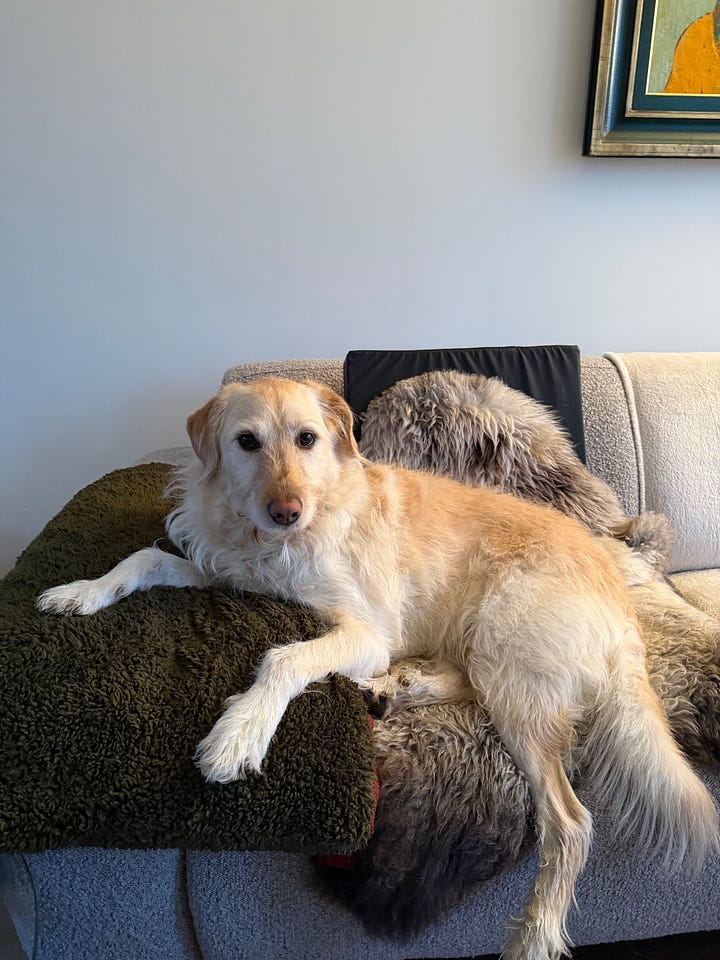
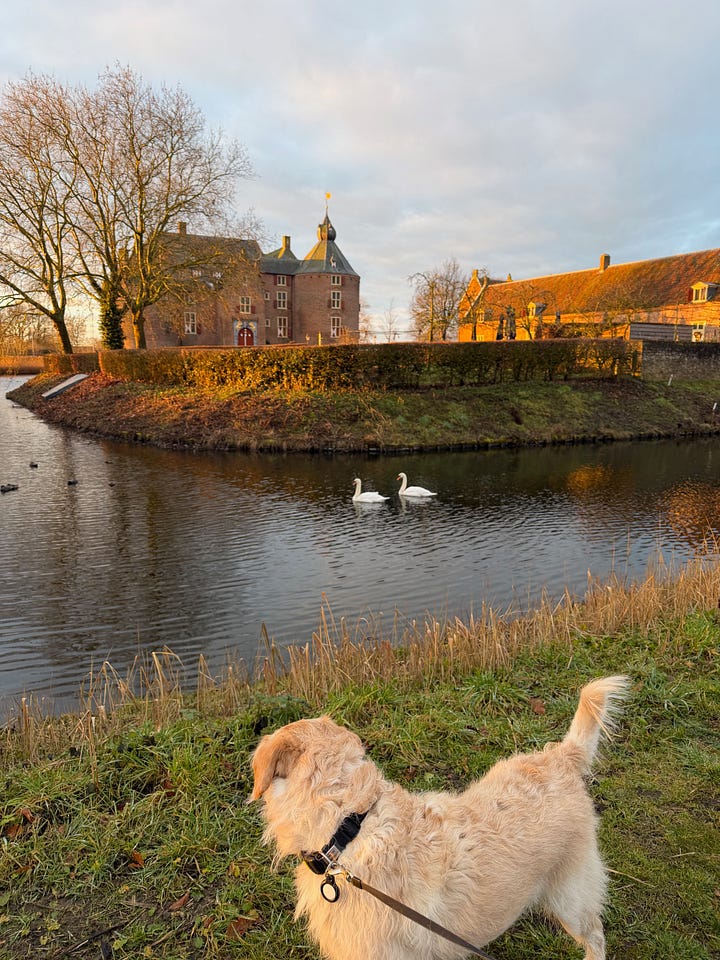
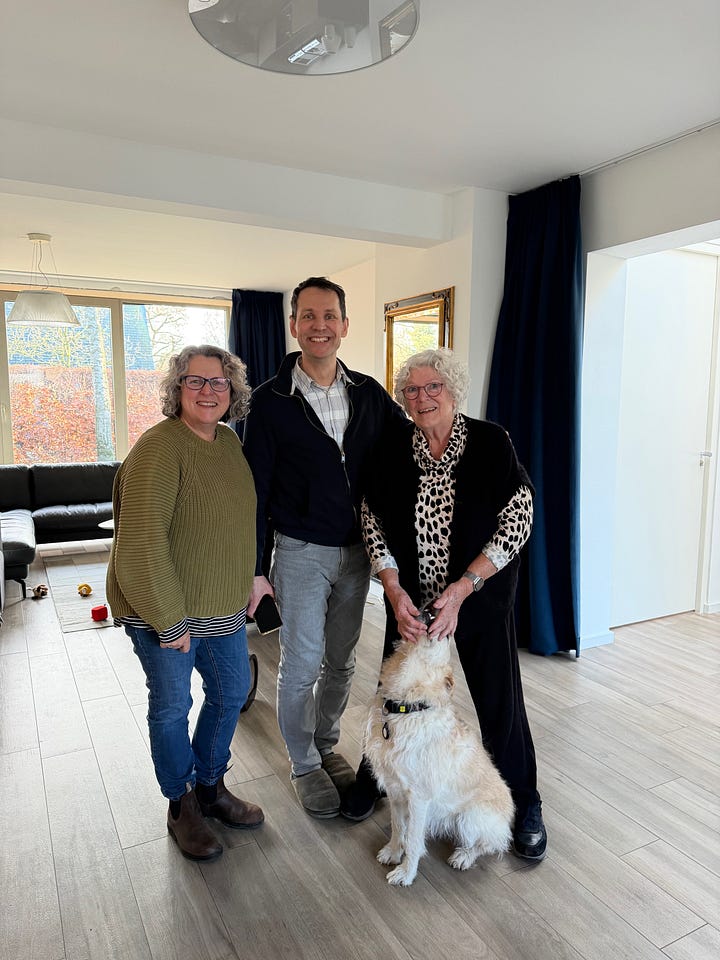
Marie-Jose lives in a country town in the Netherlands called Ammerzoden. A place I would otherwise probably not have reason to visit, and I am so pleased I did. The train ride there was part of the experience, to be met by Marie-Jose in a bigger town nearby and then we drove to her sweet little home in a neighbourhood street down the road from a 13th Century castle!! It was amazing. Better still, Marie-Jose has Fleurtje, a labrador cross dog who I was able to walk twice a day around local sights. Having been away for a month at this point it was so wonderful to spend time with a dog, and she lapped up every bit of attention, although her main human is and always will be Marie-Jose.
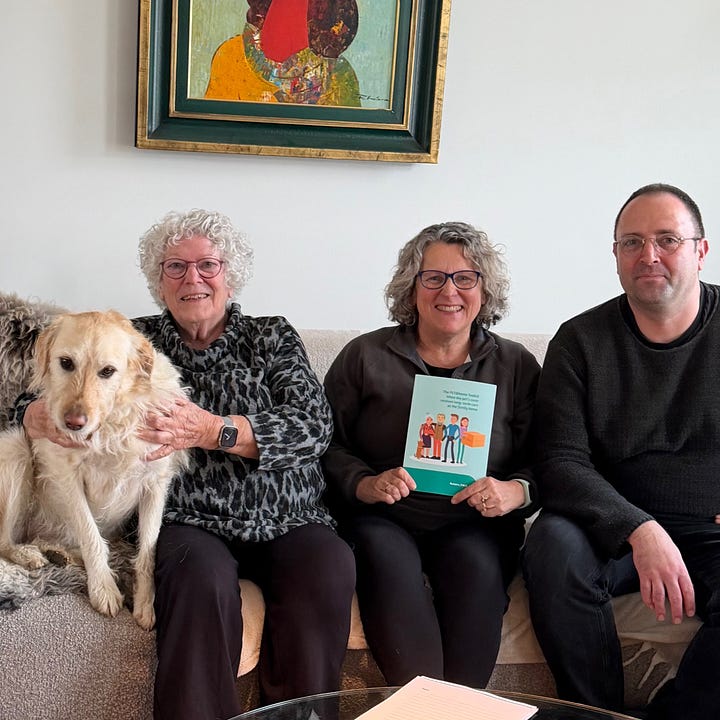
Our first official meeting was with Peter Reniers who did his PhD with Marie-Jose through Open University after she suggested a good topic would be creating a Tool Kit for older people who have pets and receive home care. The result is the PET@home toolkit. It is a beautifully practical resource including conversation cards, care plan checklists, guidance for home care support workers and information for families, all designed to do one simple thing: make sure that when an older person’s health starts to decline and a support worker comes through the door, nobody forgets that there is also a pet in the room who matters. The toolkit helps support workers and families have the conversations that often don’t happen, such as who will walk the dog if the human goes to hospital, what will happen to the cat if the time comes to move into residential care. In the Netherlands, it’s being rolled out through home care organisations and municipalities. In the UK, Peter has been adapting it with a veterinary lens. We have started a conversation about creating an Australian version of this toolkit. Evidence-based, adapted for our aged care system, and incorporating our community vet nurse role. Watch this space.
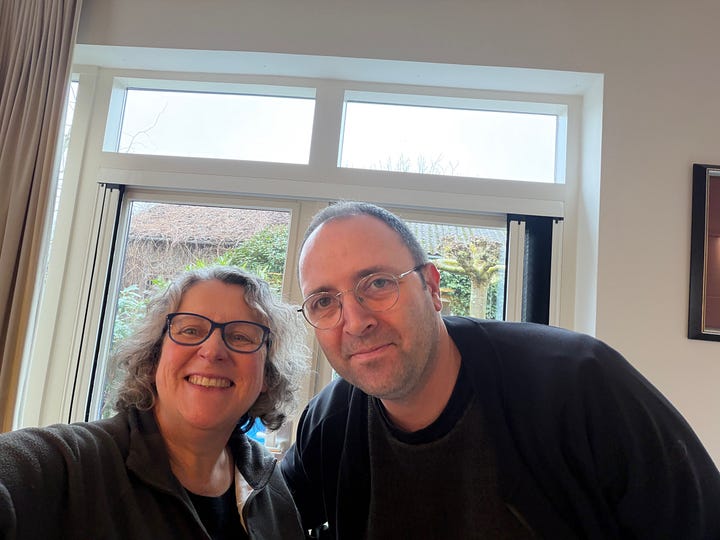
On my next day in the Netherlands we were warmly hosted in the home of Dr Roeslan Leontjevas, a researcher whose work sits at a fascinating edge of the human-animal bond that I hadn’t anticipated exploring on this fellowship: robotics. Specifically, social robots for people with dementia. I was curious at first and became really engaged with what Roeslan shared. His research shows that as dementia advances, the need for animal-like comfort doesn’t diminish. It actually grows. The tactile warmth, the soft presence, the emotional connection that a pet provides become more important as language and cognition fade. And yet for many people at that stage, a live animal is no longer safe or practical. Sadly I have witnessed on multiple occasions serious cases of harm and neglect of cherished pets whose humans are succumbing to progressive dementia. So I kept an open heart and mind as Roeslan and his associate, Ine Declercq shared their work. Their data shows that people with dementia have significantly greater acceptance of animal-inspired robots than any other robot form and that this acceptance increases further in later stages of the disease. The most studied robot in the world for this purpose is PARO, a robotic seal, which has been shown in dozens of studies to reduce agitation and loneliness in dementia care. But there is a whole landscape of animal-inspired companions emerging, from robotic dogs and cats to plush imaginary creatures, each offering something the care system currently offers almost nothing of: cosy, soft, huggable comfort that responds to you.
By the time Marie-Jose, Fleurtje and I left Roeslan’s house a new question was emerging in my head. My fellowship is fundamentally about protecting and supporting the live human-animal bond. But what about the people for whom that bond is no longer safely possible? Do we just leave that gap unfilled? The answer, increasingly, seems to be: we don’t have to.
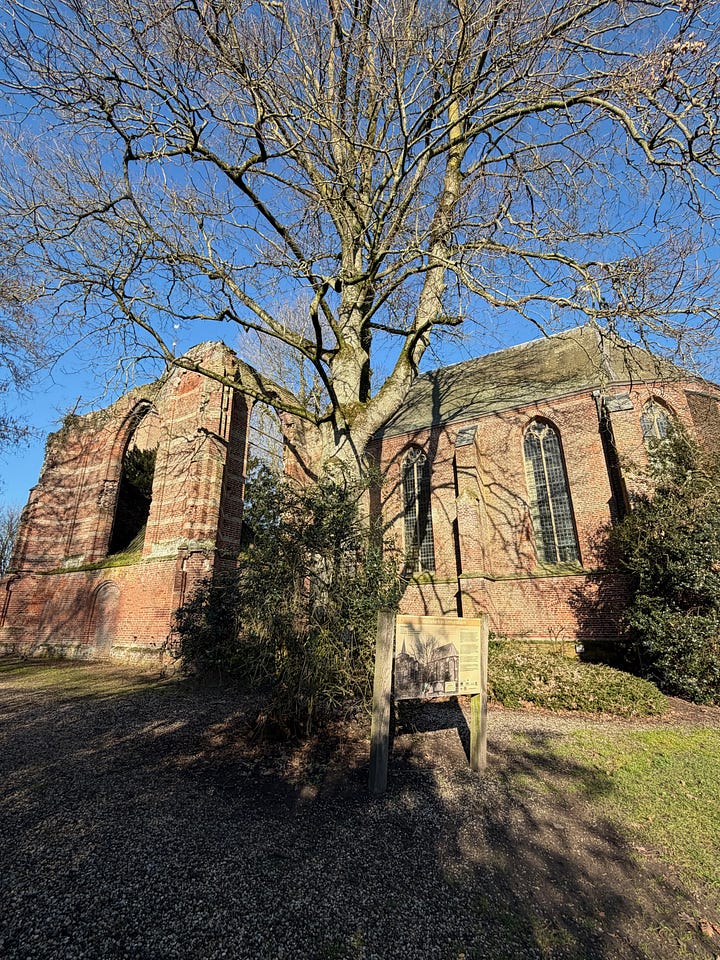
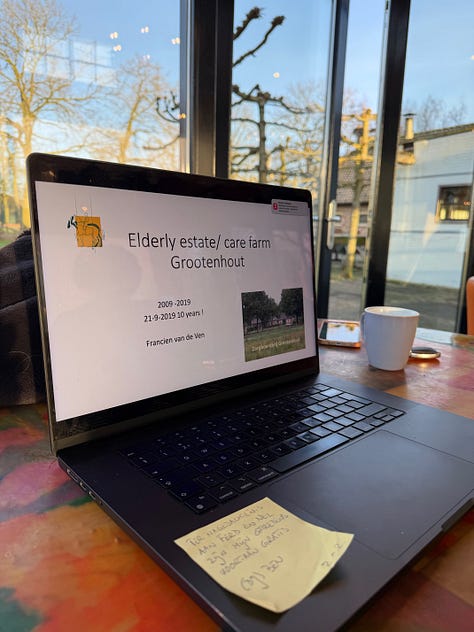
Which brings me to perhaps the most magical visit of my entire Netherlands time. Grootenhout. I am not sure how to adequately describe this place except to say: it is what happens when someone decides to do aged dementia care the way it should be done, and then actually does it. Francien van de Ven has been running this care farm or as they beautifully call it, an elderly estate, since 2009. It is a working farm property in the Dutch countryside, and every single resident has dementia. Only people with dementia live here. Francien calls it a mini society, and she means it. Residents live in small homes of five or six people, with support, set within what genuinely feels like a rural village with cobblestone courtyards, a barn, outdoor spaces, animals, activity areas. The philosophy is disarmingly simple and quietly radical: every day, residents leave their home. They go outside. They come back. They have the experience of going somewhere and returning; of having a day. Francien reminded us,
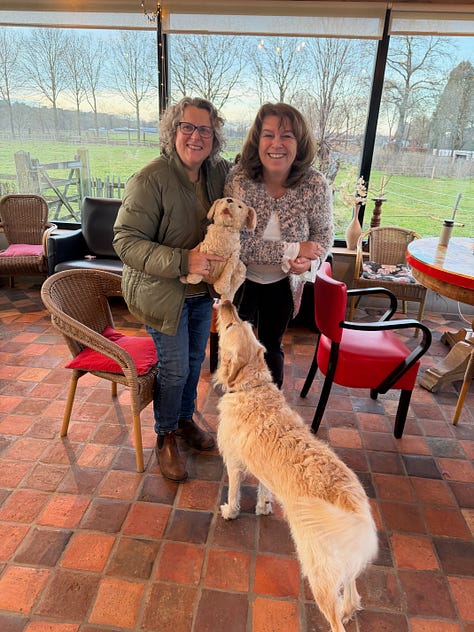
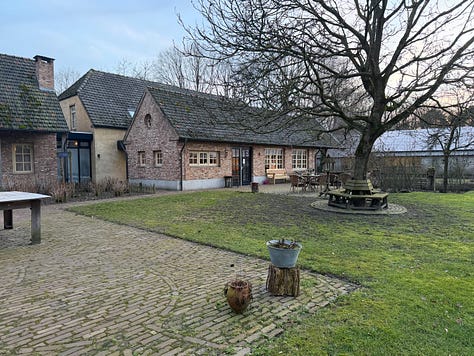
Francien put it plainly: the goal is to stimulate what people like to do with freedom, choice, and dignity of risk. The right to live, even when you are vulnerable. Even when there is uncertainty. Even when the system would rather keep you safely indoors and accounted for.
The Netherlands, it turns out, is doing some extraordinary thinking about what it means to age with dignity and with animals real, robotic, or simply nearby in a barn on a winter afternoon.
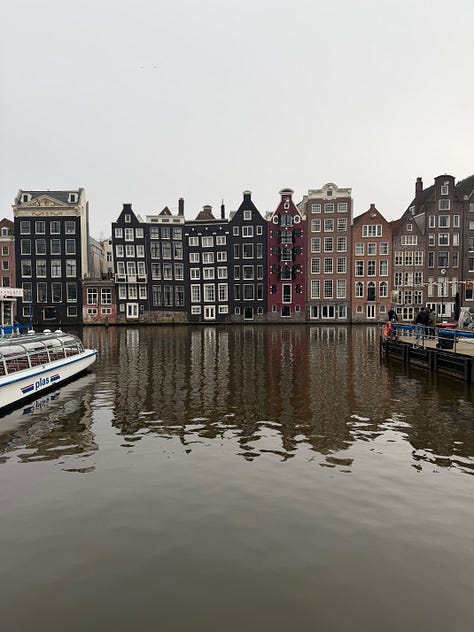
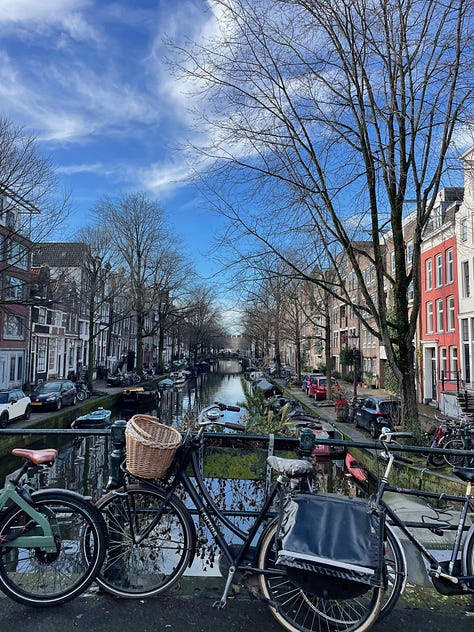
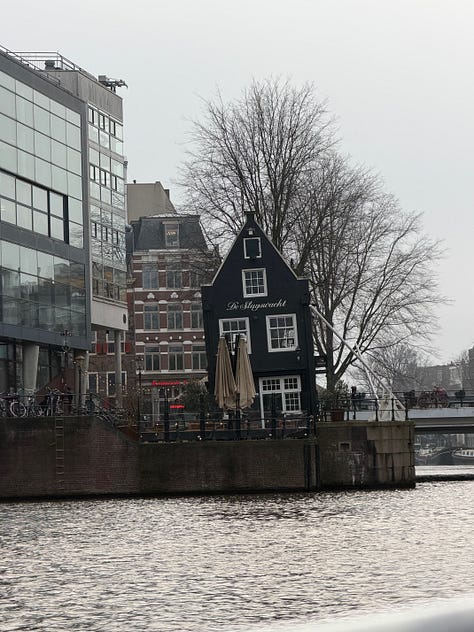
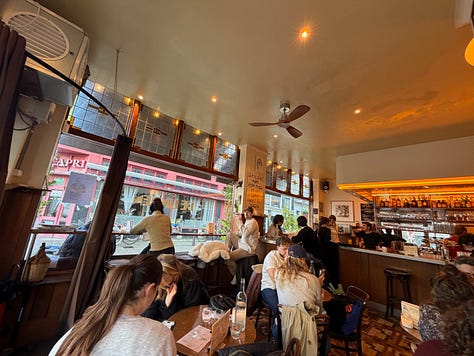
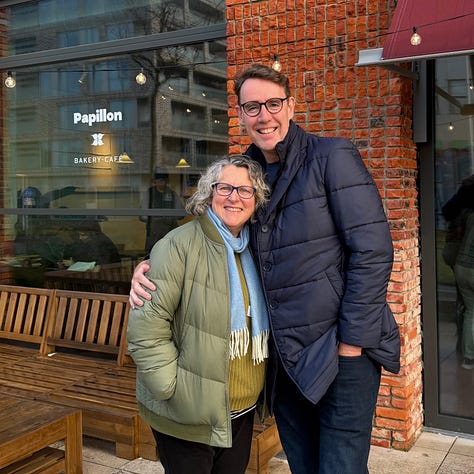
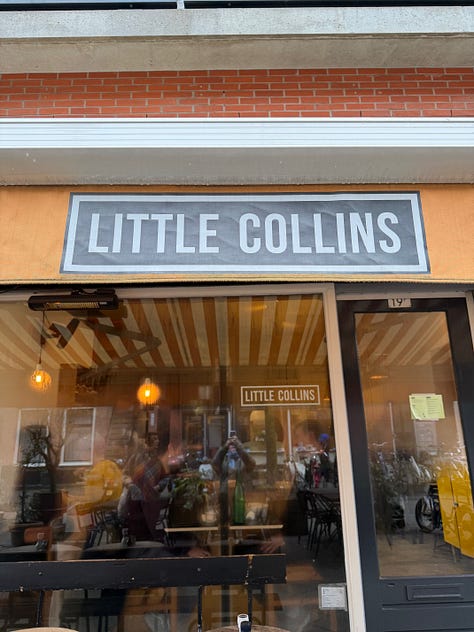
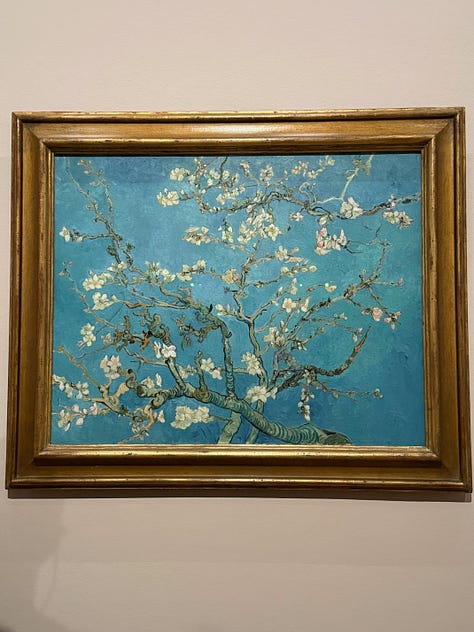
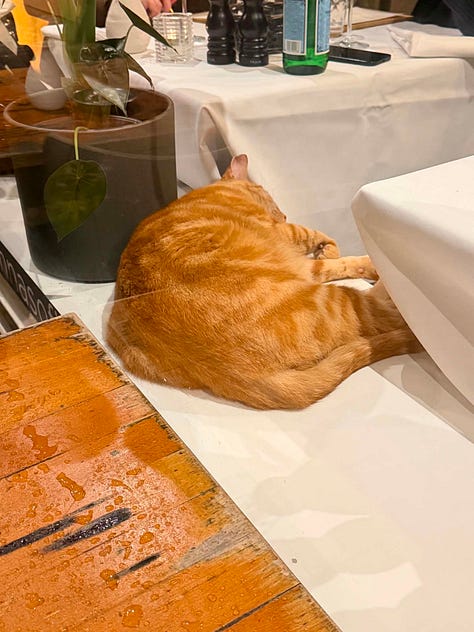
I treated myself to two days of sightseeing in Amsterdam after my visit to Ammerzoden, strolling the canals, spotting cats sleeping in windows and visiting the Van Gogh Museum where the almond blossom was featuring. I found this moving as almond blossom was one of my Dad’s favourite’s and he has been in my thoughts often as I have been on my travels since his passing in December. And I wrapped up my visit with a serendipity catch up with Simon Fieldhouse, Chair of CPF, who happened to be in Amsterdam at exactly the same time, flying in the night before I left!!
Onwards to snowy Guelph and Toronto .. coming soon!
Comments
Nothing yet. Say the first thing.
Sign in to join the conversation.