
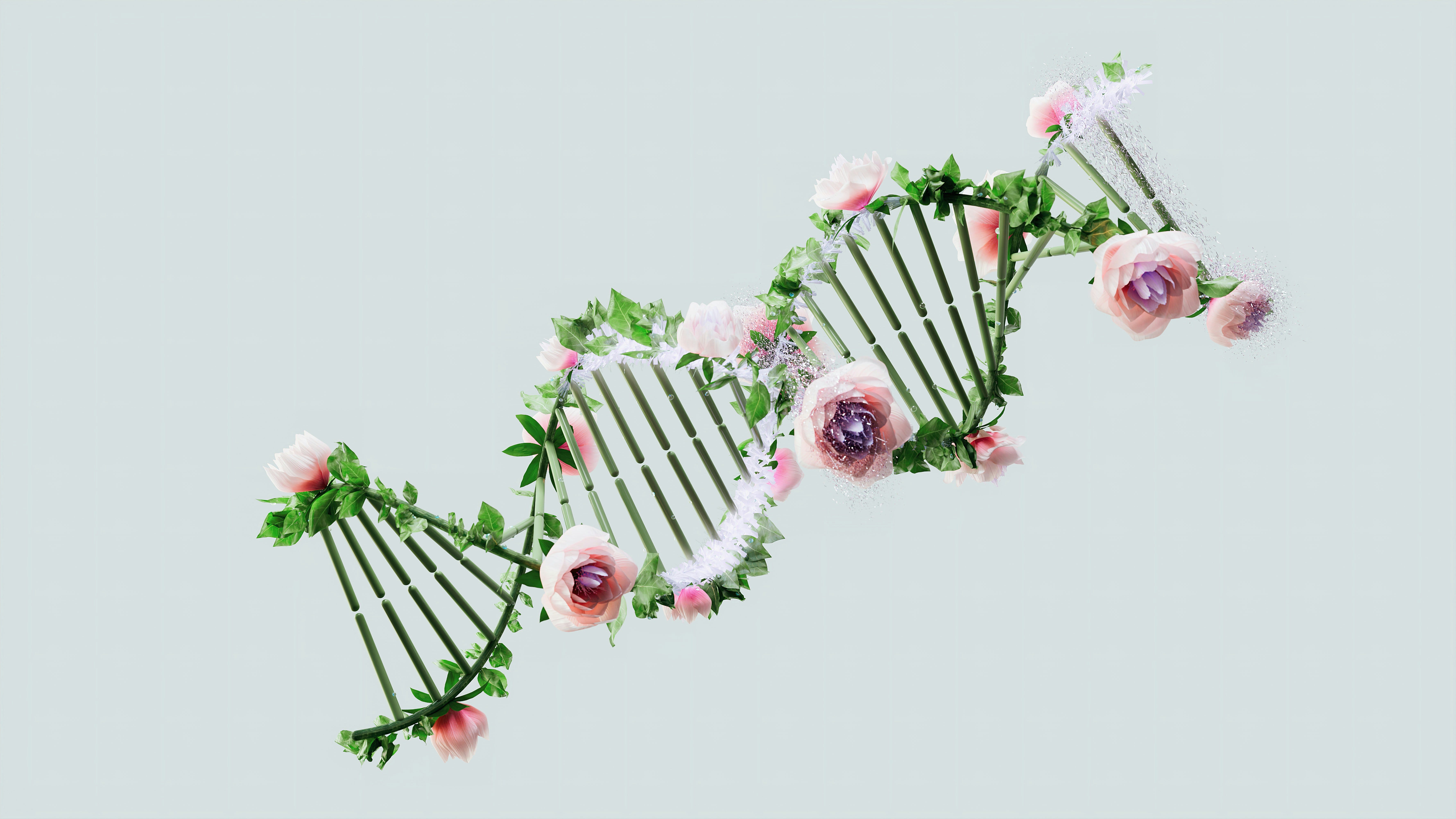
When most people think about cancer genetics, they over-estimate the contribution of straightforward inheritance. Many express shock from an unexpected cancer diagnosis with the same wide-eyed opening statement, I have no family history.
When we talk about cancer genetics, most people picture a dominant gene traveling neatly down a family tree, like eye color or height. In reality, the genetics of cancer is far more complex, ultimately less direct, and with enormous variability. Cancer risk is shaped by a mix of inherited and non-inherited random DNA changes over time and environmental exposures. The space between risk and actual cancer is further affected by those same variables. To add to the complexity, there is so much we don’t know. That sentence cannot be overstated.
Large population studies consistently show that only about 5–10% of cancers arise from a clearly hereditary cancer syndrome where a single heritable (germline) mutation—like BRCA1/2 or Lynch-related genes—plays a leading role. The remaining 90–95% are “sporadic” or “multifactorial,” meaning they develop from mutations acquired during life, plus lifestyle and environmental factors, without a simple, traceable pattern in the family.
This means that most people diagnosed with cancer do not have a strong or obvious family history of the disease. This feels counterintuitive because popular narratives focus heavily on dramatic hereditary stories—families with repeated early-onset breast, colon, or ovarian cancers. It seems one of many elements of misinformation that sticks heavy in our collective society. Maybe it is less scary than realizing that we know so little and are all so vulnerable.
Every time a cell divides, it copies billions of DNA letters. This copying process is astonishingly accurate—but not perfect. Over a lifetime, those tiny errors accumulate. If enough of them land in the wrong genes, at the wrong time, in the wrong tissue, cancer can emerge even in someone who did “everything right.”
That reality is both frightening and strangely freeing. You cannot control every mutation. But you can influence the terrain in which they land: your inflammatory burden, your metabolic health, your exposures, your surveillance. You can’t eliminate risk, but you can meaningfully reshape it.
If most cancers arise from a complex interplay of genetics, environment, and time, then we’re participants. We can choose how we eat, move, sleep, and engage with known carcinogens. We can choose to get a colonoscopy, a skin exam, a mammogram, or a low dose CT, even when we feel perfectly fine. We can practice consistent good nutrition and use tools to fuel our bodies so they can be active and churning. We can choose to take seriously the early hints our bodies send, the good ones and the bad ones.
And even when there is a known mutation, families do not pass down cancer; they pass down risk. A BRCA mutation, for example, is not a sentence—it’s a predisposition. Even the highest risk genes come with probabilities, not guarantees. Two siblings can inherit the same mutation and live radically different lives: one develops cancer young, another never does. This means that even if you do carry a hereditary mutation, there is space—real, biologically meaningful space—for prevention, surveillance, and intervention. Fate is far less rigid than people imagine.
No posts
Comments
Nothing yet. Say the first thing.
Sign in to join the conversation.