
Brain health research is evolving fast, and I’m often asked, “Where can I go to stay updated?” With so much information out there, it can be overwhelming to know where to start. That’s why I created the Brain Health 4-1-1—a simple, weekly update to help you stay in the know.
Each edition delivers:
✅ 4 key insights on brain health
✅ 1 expert or resource to explore
✅ 1 thought-provoking idea or myth to consider
What is my goal? To make brain health knowledge clear, accessible, and actionable—so you can focus on what matters most. I’m grateful that you’re here and I look forward to sharing this journey with you!
Please accept my apologies for this week's newsletter being slightly delayed.
My migraine brain won for a couple of days and didn’t cooperate as I hoped.
🫶 Like all things, it required some rest and brain care. So here is the issue…

— These healthy habits benefit your whole body—including your brain—and may help contribute to lower dementia risk over time.
New WHO guidelines say up to 45% of dementia cases could be prevented or delayed. The habits behind that number aren't a mystery — heart health, don’t smoke and limit your alcohol intake, stay connected, care for your vision and hearing, improve your sleep, and follow a balanced diet— but the surprising part is how much they overlap and reinforce each other. One expert put it best: this isn't about blame, it's about hope. Read the full article to learn more!
🧭 You’ve likely read about these lifestyle factors before and the encouraging part is how much these daily habits reinforce one another rather than competing for your time.
— A large 11-year study of nearly 4,000 older adults finds that cumulative cortisol exposure is linked to faster cognitive decline
Cortisol is the body’s primary stress hormone. It follows a natural daily rhythm — rising sharply after you wake up, then gradually declining across the day. That pattern is not just about stress response. It is a reflection of how well your body’s stress regulation system — the hypothalamic-pituitary-adrenal (HPA) axis — is functioning. And according to a new study published in JAMA Network Open, how cortisol behaves across the day may be a meaningful early indicator of cognitive aging.
Researchers from Rush University Medical Center followed 3,895 community-dwelling older adults in Chicago — including 2,503 Black and 1,392 white participants, with a mean age of 77 — for up to 11 years as part of the Chicago Health and Aging Project. Participants collected salivary cortisol samples three times in a single day: at waking, in the afternoon, and at bedtime. Cognitive assessments were repeated across the follow-up period.
Crucially, the researchers did not just measure a single cortisol number. They derived five distinct measures capturing different dimensions of how cortisol behaved across the day — including how much it varied from morning to night, how much total cortisol a person was exposed to across the day, and how the hormone changed over time.
Review the FULL Research Article
The findings revealed two distinct and complementary patterns:
Higher cumulative cortisol exposure was linked to faster cognitive decline. People in the highest quintile of total daily cortisol output showed significantly faster decline on global cognition scores over the follow-up period. The pattern held even after adjusting for age, sex, education, APOE4 status, medical conditions, medications, and health behaviors — suggesting the relationship between stress physiology and cognitive aging is not simply explained by other known risk factors.
Moderate intra-day cortisol variability was linked to slower cognitive decline. This was one of the more nuanced and interesting findings. People who showed some natural daily fluctuation in their cortisol — neither completely flat across the day nor wildly variable — showed slower cognitive decline than those with very low variability. This inverse U-shaped pattern suggests that a healthy, responsive cortisol rhythm appears protective, while both blunted and excessively variable cortisol may reflect disrupted stress regulation with different consequences for the aging brain.
The study also found notable racial differences in cortisol patterns. Black participants showed lower total cortisol output but flatter diurnal slopes and less intra-day variability — a pattern described as a blunted diurnal rhythm. The researchers note this is consistent with theoretical frameworks suggesting that chronic exposure to social and structural stressors may recalibrate the body’s baseline stress physiology over time — a concept sometimes called weathering. Importantly, despite different cortisol profiles, the associations between cortisol and cognitive decline were broadly similar across racial groups.
No cortisol index was significantly associated with short-term risk of incident Alzheimer’s disease — but the researchers note this likely reflects the limited sample size for Alzheimer’s diagnosis and the very long preclinical course of the disease, rather than an absence of a biological relationship.
We have known for a long time that chronic stress is bad for the brain. Cortisol crosses the blood-brain barrier and directly affects the hippocampus and prefrontal cortex — regions critical for memory, learning, and executive function. Chronically elevated cortisol has been linked to hippocampal atrophy and memory deficits in prior research.
What makes this study significant is the scale and diversity of its sample and the multi-dimensional approach to measuring stress physiology. Rather than reducing stress to a single number, it captured multiple layers of how the body regulates and responds to stress across a day — and found that those different dimensions have different relationships with cognitive aging.
The finding about intra-day variability is particularly worth sitting with. It suggests that a healthy stress response is not about having no cortisol — it is about having a responsive, well-regulated system that rises and falls across the day in a healthy pattern. Chronic stress does not just raise cortisol — over time, it can flatten the rhythm, disrupt the body’s natural recovery processes, and contribute to the gradual biological wear and tear that shows up years later in cognitive performance.
The racial disparities finding is also important. Black adults in this study had a more blunted diurnal cortisol rhythm — a pattern researchers attribute not to intrinsic biology but to the compounding effects of social and structural stressors embedded over a lifetime. This is not a trivial distinction. It means that stress-related cognitive disparities are not simply about individual stress management. They are shaped by the environments and systems people live within.
Take chronic stress seriously as a brain health issue — not just a mood issue or a productivity issue. This research adds to a growing body of evidence that the body keeps a biological score of cumulative stress exposure, and that score has consequences for how the brain ages.
Build stress regulation into your daily brain care routine. Activities that support healthy cortisol rhythms include consistent sleep and wake times, regular physical activity especially in the morning, time outdoors in natural light, mindfulness practices, and strong social connections. These are not soft suggestions — they are physiologically grounded brain health practices.
Pay attention to the pattern of your stress, not just the intensity. Chronic low-grade stress — the kind that never fully resolves — may be more damaging to long-term cortisol regulation and cognitive health than acute but recoverable stress events.
Discuss chronic stress with your healthcare provider if you are managing ongoing stressors that feel unmanageable. There are evidence-based approaches to supporting HPA axis regulation, including therapy, mind-body practices, and in some cases medication.
Understand that individual stress management tools matter — and so does advocating for the structural and community conditions that reduce chronic stress exposure at a population level. Both are brain health priorities.
🧭 Stress is not just something you feel — it is something your body measures, accumulates, and carries over time. How your cortisol fluctuates across the day may be one of the earliest signals of how that accumulated stress is affecting your aging brain.
— A University of Kentucky study identifies the brain’s own immune cells as the surprising culprit behind Alzheimer’s-related sleep loss
Note: This research was conducted in mice. Human clinical applications are still years away, but the findings open an important new direction in Alzheimer’s research.
We have long known that sleep loss is one of the earliest and most consistent features of Alzheimer’s disease — and that poor sleep accelerates the accumulation of the very toxic proteins associated with it. What we did not know until now was exactly what was causing that sleep loss. Most researchers assumed it was damaged neurons or the physical presence of amyloid plaques — the sticky protein clumps that build up in Alzheimer’s brains.
A new study from the University of Kentucky, published in Alzheimer’s & Dementia, challenges that assumption entirely. The real culprit, researchers found, may be the brain’s own immune cells — and the discovery opens a potentially new treatment target that bypasses the plaques altogether.
The study focused on microglia — specialized immune cells that live in the brain and are responsible for monitoring for threats, clearing debris, and maintaining a healthy environment for neurons. When amyloid plaques begin to form, microglia respond — but in Alzheimer’s disease, that response becomes overactive and inflammatory, as if, as the lead researcher described it, “the microglia are partying all night, and keeping the brain awake.”
Researchers studied mice with a genetic tendency to develop amyloid plaques and compared them to normally aging mice. Using detailed brain monitoring tools including EEG and EMG to precisely track sleep stages, they confirmed that mice with amyloid pathology were losing significant amounts of sleep — specifically the deeply restorative stage called non-REM (NREM) sleep, which is critical for physical repair, memory consolidation, and the brain’s waste-clearance system. Normal aging, by contrast, reduced REM sleep — the dreaming stage — a distinct pattern that helped researchers distinguish Alzheimer’s effects from regular aging.
To test whether microglia were actually driving the sleep disruption, the team used a drug called Pexidartinib to temporarily eliminate approximately 87% of the brain’s immune cells. The result was striking: the mice regained more than two hours of sleep per day — and critically, this improvement happened even though the amount of amyloid plaque in the brain did not change at all.
The researchers also found something unexpected about timing. Sleep disruption did not worsen proportionally as plaques accumulated. The disruption was established early — when plaques first emerged — and remained at roughly the same level even as plaque burden more than doubled. This suggests that the first wave of microglial immune activity may be sufficient to set the sleep problem in motion, with additional plaques not necessarily making it worse.
The team is now investigating whether existing medications already in clinical use — including the diabetes drug Metformin and the antiseizure drug Stiripentol — can calm microglial overactivity without removing the cells entirely. They are also exploring whether portable EEG technology could eventually serve as an accessible, affordable biomarker for detecting early Alzheimer’s-related changes without expensive or invasive testing.
Review the FULL Research Article
This research matters because it reframes the relationship between Alzheimer’s and sleep in an important way. Sleep loss in Alzheimer’s has traditionally been understood as a downstream consequence of brain damage — something that happens because neurons are dying. This study suggests it may instead be driven by a reversible inflammatory process, happening earlier than previously understood, and potentially treatable independently of the plaques themselves.
That is a meaningful shift. It raises the possibility that restoring sleep in people with early Alzheimer’s — before significant cognitive decline is apparent — could help interrupt the harmful cycle in which poor sleep reduces the brain’s ability to clear waste, which leads to more damage, which leads to more sleep disruption.
It also reinforces what we have said many times in the Brain Health 4-1-1: sleep is not passive. It is the brain’s primary maintenance window — the time when toxic waste is cleared, memories are consolidated, and cellular repair happens. When that window closes, everything else is affected.
Protect your sleep — especially your deep, restorative NREM sleep. This is the stage most directly implicated in Alzheimer’s-related disruption, and it is the stage most supported by consistent sleep schedules, cooler sleeping environments, limited alcohol and caffeine, and treatment of sleep disorders like sleep apnea.
If you or someone you love is experiencing notable changes in sleep patterns — particularly difficulty achieving deep or restorative sleep, or significant changes in sleep architecture — bring this to a healthcare provider’s attention. Sleep changes can be an early signal worth investigating.
Watch this space. The researchers are already identifying existing medications that may be able to calm microglial overactivity safely. This is a rapidly moving area of Alzheimer’s research.
Understand that this research is in mice, not humans. The mechanisms are compelling, and the implications are significant — but human trials are needed before clinical applications are possible.
🧭 Stay tuned! The brain's immune system, meant to protect against Alzheimer's, may actually be driving one of its most damaging early symptoms. Restoring sleep — not by clearing plaques, but by calming inflammation — could be a powerful new direction in the fight against this disease.
I’m including this visual guide becuase fiber is essential to a brain-healthy lifestyle and yet it is commonly overlooked. This guide included popular foods and how you can combine them into meals. You’ll want to check this out and maybe bookmark it for future reference.
— This simple “fiber math” guide shows exactly how much fiber is in 11 everyday foods and how to combine them into satisfying meals.
Fiber quietly supports digestion, blood sugar, and cholesterol more than almost any other nutrient — yet most people have no real sense of how much they're eating or need. A dietitian breaks down the "fiber math" behind 11 everyday foods, turning an abstract number into something you can actually picture on your plate.
🧭 The average adult eats about 15 grams of fiber a day against a 25-38 gram target — a gap most people don't even know exists, since fiber rarely gets the airtime that protein or sugar does.
Questions about your personal fiber goals? Talk with your healthcare provider or consider working with a dietician or nutritionist as brain health experts for your personal care needs.

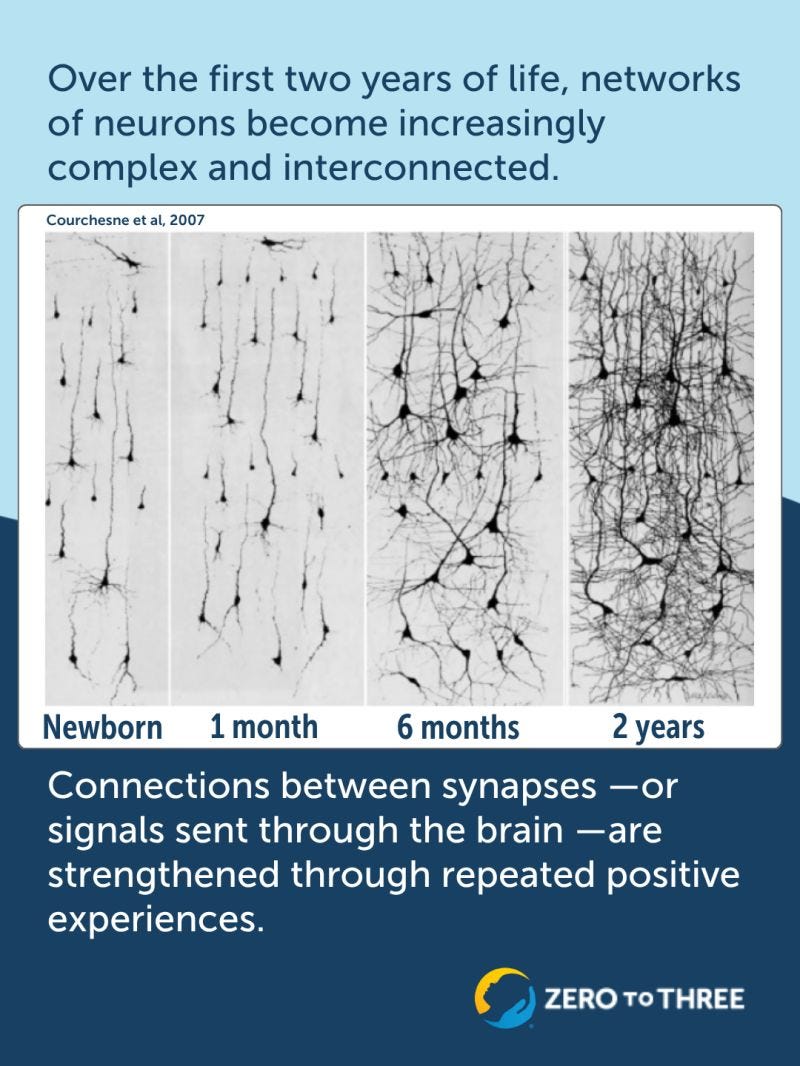
Between 0–3 years old, a child’s brain forms over 1 million neural connections per second. This time in life is the most pivotal, and also the most vulnerable for brain development. Early experiences shape cognitive development in early childhood. We’ve made the science of baby brain development accessible for all.
Between 0–3 years old, a child’s brain forms over 1 million neural connections per second. This time in life is the most pivotal, and also the most vulnerable for brain development. Early experiences shape cognitive development in early childhood. They made the science of baby brain development accessible for all.

“Investing in brain health means investing in people. It helps individuals reach their potential and supports healthier, more resilient societies.”
- Professor Steven Lewis, MD, President of the World Federation of Neurology
Comments
Nothing yet. Say the first thing.
Sign in to join the conversation.