

Today I have set myself the challenge of asking-or answering-the question: what is perimenopause? And honestly, I find this an extremely complicated question to answer, because what I'm seeing in the space right now is such confusion around what perimenopause is. There are so many aspects to this question that I don't take my responsibility lightly when I embark on the task of answering it.
This article is so much more than just a definition and a bunch of signs and symptoms. It's an invitation for you to step into the awareness of the fact that women are often not taught about the magnificence and the cyclical nature of their incredible biochemistry, and what is going on for them at any particular time based on their hormones. Because I'm seeing so many errors-in prescribing, in supporting perimenopausal women-it's a huge responsibility to answer this question properly. My intention is that this empowers you and sheds light on the fact that your doctors really do want to help you.
However, there is a huge issue around perimenopausal training and understanding even for the most well-educated doctors in our clinics, and it isn't their fault that they didn't receive this training. It is a systems approach or an entire apparatus issue. Recent evidence and policy reviews confirm that most GPs receive little or no formal training on perimenopause and menopause, a gap recognised internationally and in Australia [11,12,13].
I invite you to understand who you are, where you are at in your life cycle, and to start bringing awareness to what is going on for you in your body, in your mind, in your spirit, in your experiences, in your connections with others. So that you can truly take up space in this beautiful human suit of yours. My hope is that we can collectively, in a unified beautiful way, start to understand what is actually going on for us so that we can make some changes for the good. When women are well, the impact is tremendous. It impacts our children. It impacts our partners. It impacts society by and large.
So buckle up, and let's try to do this with scientific precision and grace, while also keeping an open mind. I'm going to do my very best, but in answering this question about perimenopause, I also need to tell you what menopause is. And we need to stay focused on the fact that perimenopause is not menopause. So let's start there-with the promise of balancing the turmoil of a dysregulated nervous system, a dysregulated gut, a dysregulated metabolism-so that you can simply enjoy your life and be free of physical signs and symptoms that could be impacting your mind, your body, and your spirit.
From a scientific perspective, perimenopause is a well-defined hormonal transition. It begins as early as age 35 for some women, even when menstrual cycles are still regular [4]. Perimenopause is characterised by the early decline of progesterone, while estrogen levels begin to fluctuate erratically, sometimes reaching higher peaks than during the reproductive years [3,4,6]. This transition can last for years before full menopause, which is defined as 12 months plus one day after the final menstrual period (FMP) [7]. Distinct hormonal patterns during perimenopause are responsible for specific symptoms experienced by women [2,3,4,17].
Recent cohort studies and reviews have mapped the chronology of hormonal changes and symptom development during the menopausal transition, linking specific symptoms to reproductive aging milestones [17,3].
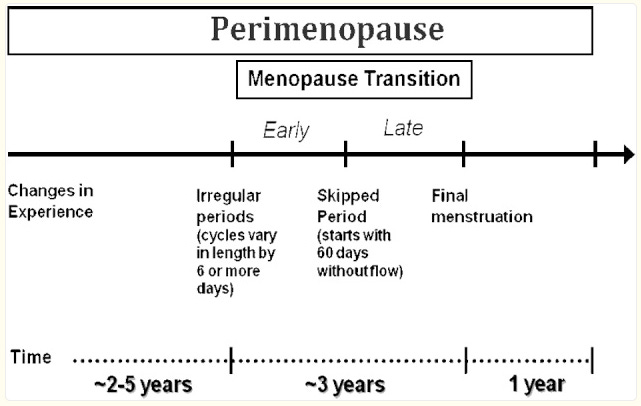
Figure 1. Stages of the perimenopausal transition.
Reproduced from: Prior JC. Progesterone for symptomatic perimenopause treatment -- progesterone politics, physiology and potential for perimenopause. Facts Views Vis Obgyn. 2011;3(2):109-120. Figure 1, p. 112. Available from: https://www.ncbi.nlm.nih.gov/pmc/articles/PMC3987489/
Professor Jerilynn Prior's research challenges conventional wisdom about perimenopause. Through her work at the Centre for Menstrual Cycle and Ovulation Research, she has shown that perimenopause is not simply a state of estrogen deficiency; rather, it is characterised by higher, erratic estrogen levels coupled with insufficient progesterone [1,4].
About 20% of women experience severe symptoms but receive inappropriate treatments [2].
Up to 80% of women have hot flushes and night sweats, not due to estrogen deficiency, but often due to sharp drops from high to low estrogen [2,4].
Around 25% experience heavy menstrual bleeding, often related to high estrogen and other factors such as iron deficiency [5].
Approximately 10% suffer from breast pain and tenderness, also linked to highest estrogen [2,4].
Most women face sleep disturbances and mood changes, often related to low progesterone [4,8].
Large-scale surveys and qualitative reviews reveal that many women feel their perimenopausal symptoms are dismissed or inadequately managed in primary care, leading some to seek private care or specialist advice [14,15,16]. Qualitative evidence syntheses and large surveys show that both GPs and patients experience uncertainty and dissatisfaction during perimenopause consultations, and that women frequently report barriers to effective care [14,15,16].
Estradiol (1 of 3 types of estrogen) levels during perimenopause average about 26% higher than in the regular reproductive years, contradicting the common belief that estrogen is simply low in this transition [3,4,6]. These high estrogen levels fluctuate erratically, while progesterone production decreases as ovulation becomes disrupted [4,6]. The most symptomatic women are often those with the highest estrogen and lowest progesterone levels [4].
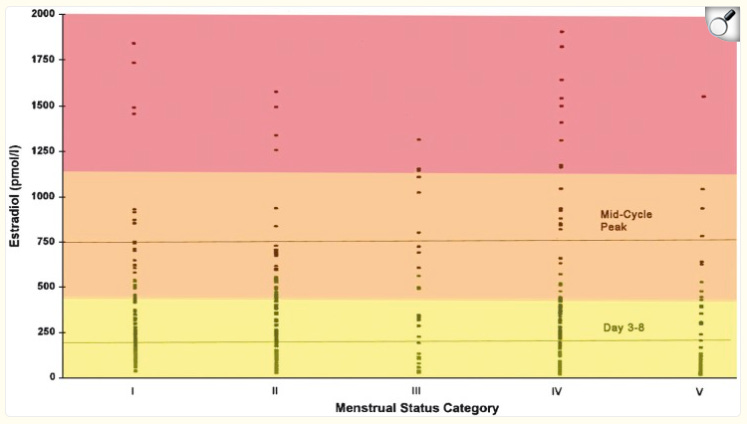
Figure 2. Cross-sectional mid-follicular phase estradiol levels by menstrual cycle characteristics in menstruating women ages 45--55, with reference lines for premenopausal mean and peak E2 levels.
Reproduced from: Prior JC. Progesterone for symptomatic perimenopause treatment -- progesterone politics, physiology and potential for perimenopause. Facts Views Vis Obgyn. 2011;3(2):109-120. Figure 2, p. 113. Available from: https://www.ncbi.nlm.nih.gov/pmc/articles/PMC3987489/
This visual evidence of elevated estrogen levels directly challenges the conventional wisdom that perimenopause is characterised by declining estrogen. As seen in the figure,estrogen levels during perimenopause can actually be higher and more erratic than during regular reproductive years [3,5,6]. This misunderstanding has led to inappropriate treatments that often exacerbate symptoms rather than relieve them [1,4].
Despite scientific clarity, there is a profound disconnect in how this information is shared with women. Many doctors receive minimal training on perimenopause, often just a few hours in medical school [11,12,13]. The distinction between perimenopause and menopause is frequently blurred or ignored, and women are often told their symptoms are "just stress" or "normal ageing". The focus is almost exclusively on estrogen, when in fact, progesterone's decline is the first crucial event [1,4].
This creates a body literacy crisis where women:
Don't recognise their own perimenopausal symptoms
Can't find healthcare providers who acknowledge what they're experiencing
Lack a vocabulary to describe their changing biochemistry
Feel isolated and confused during a major life transition
May receive treatments that worsen their symptoms because they're based on misunderstanding the hormonal state [1,2,4,14,15,16].
During perimenopause:
Progesterone levels decrease first as ovulation becomes less regular [4,6].
Estrogen doesn't decline steadily-it actually fluctuates dramatically, sometimes reaching higher peaks than during reproductive years [3,4,6].
These hormone swings drive symptoms like sleep disturbances, mood changes, and irregular or heavy periods [2,4,8].
Metabolism, gut health, and stress response all undergo significant changes [4].
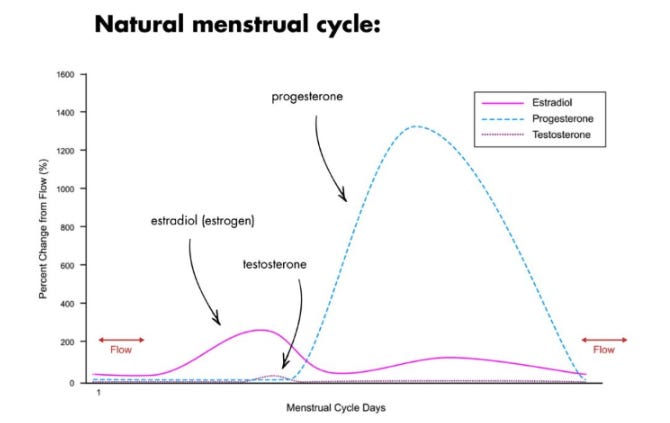
Figure 3. Natural menstrual cycle hormone fluctuations.
Adapted from: Briden L. How does birth control affect hormones? [Internet]. [cited 2025 May 15]. Available from: https://www.larabriden.com/how-does-birth-control-affect-hormones/
Understanding these hormone patterns is essential for interpreting the effects of hormone therapies on female physiology. Notably, progesterone is usually 100-200 times higher in a natural menstrual cycle than estrogen-a fact crucial to understanding why progesterone's decline in perimenopause has such profound effects [4].
Professor Prior proposes oral micronized progesterone (300 mg at bedtime) as a physiological therapy that works with women's natural hormonal patterns [1,10]. This approach:
Decreases hot flushes and night sweats [10]
Improves sleep quality [8,10]
Relieves breast tenderness [1]
Reduces heavy bleeding (when combined with ibuprofen) [1]
Helps address insulin resistance and weight gain (when used with metformin/berberine) [1]
Supports breast, bone, and heart health, and reduces 40% of bothersome perimenopausal symptoms; it can be safely prescribed without estrogen [1,9,10].
Unlike conventional treatments such as oral contraceptives or hormone replacement therapy, progesterone therapy does not increase breast cancer risk and has beneficial effects on bone formation and cardiovascular health [1,9]. Even women in excellent health can be significantly affected by this transition [2].
Current clinical guidelines from national and international societies provide evidence-based recommendations for the management of perimenopausal symptoms, including both hormonal and non-hormonal therapies [18,19]. These guidelines emphasise individualised care, symptom tracking, and consideration of both hormonal and non-hormonal treatment options.
The transition isn't a mystery to science, but it remains shrouded in confusion for those experiencing it due to this profound communication gap [1,4,11,12,13,14,15,16].
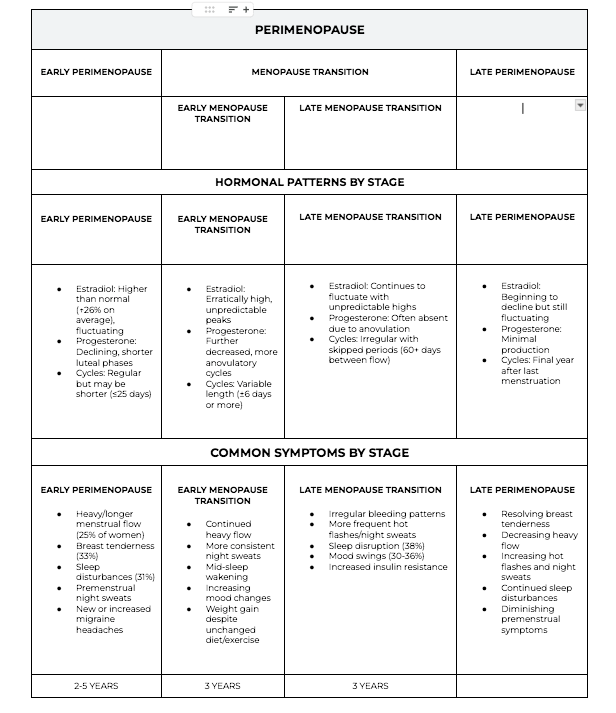
The table, Perimenopause Stages and Symptoms: A Visual Guide, offers a structured overview of the hormonal changes and common symptoms experienced throughout the perimenopausal transition. Drawing on the refinements from the ReSTAGE Collaboration and Professor Prior's clinical research, this visual summary helps clarify how perimenopause unfolds in distinct phases, each with characteristic hormonal patterns and symptom profiles.
The table breaks down the transition into clearly defined stages-from the late reproductive years through early and late perimenopause to the final menstrual period (FMP). For each stage, it outlines key hormonal shifts, such as the early decline in progesterone and the increasingly erratic fluctuations in estrogen, as well as the most commonly reported symptoms at each phase. This approach not only demystifies the progression of perimenopause but also provides clinicians and patients with a practical reference for anticipating and managing the diverse experiences of this transition.
By visually mapping symptoms to hormonal changes, the table underscores the importance of individualised care and highlights why symptom patterns can vary widely between women and across different stages.
Table 1. Perimenopause Stages and Symptoms: Hormonal Patterns and Common Symptoms by Stage
Adapted from: Prior JC. Progesterone for symptomatic perimenopause treatment -- progesterone politics, physiology and potential for perimenopause. Facts Views Vis Obgyn. 2011;3(2):109-120; and Harlow SD, Mitchell ES, Crawford S, et al. The ReSTAGE Collaboration: defining optimal bleeding criteria for onset of early menopausal transition. Fertil Steril. 2008;89(1):129-140.
Perimenopause Stages and Symptoms: A Visual Guide
As we've explored throughout this article, perimenopause isn't simply "pre-menopause" or a time of estrogen deficiency. It's a distinct hormonal transition with its own unique patterns—characterised by declining progesterone and erratically fluctuating (often high) estrogen levels. This scientific reality runs counter to many common misconceptions that may be preventing you from receiving appropriate care.
Your symptoms—whether they're hot flushes, sleep disturbances, heavy bleeding, mood changes, or metabolic shifts—aren't "just aging" or "all in your head." They reflect real hormonal changes happening in your body, changes that science has documented and that deserve proper acknowledgement and treatment.
I encourage you to use this knowledge as a source of power. When you understand what's happening in your body, you can:
Recognise your symptoms for what they truly are
Speak confidently with healthcare providers about your experiences
Ask informed questions about treatment options, including progesterone therapy
Make lifestyle choices that support your changing biochemistry
Remember that perimenopause, while challenging, is a natural transition—not a disease. With the right support and interventions, most symptoms can be significantly improved. You deserve care that's grounded in scientific understanding of what your body is actually experiencing, not outdated notions or dismissive attitudes.
Most importantly, know that you're not alone in this journey. Millions of women are experiencing similar changes, and growing awareness is gradually improving both medical education and societal understanding of perimenopause.
Your body carries deep wisdom, even through its transitions. By honouring this phase of life with awareness, appropriate care, and support, you can navigate perimenopause with greater confidence and emerge with a deeper connection to your changing body and its needs. This isn't just about enduring symptoms—it's about embracing a new chapter of your life with knowledge, self-compassion, and empowered advocacy for your health and wellbeing.
Prior JC. Progesterone for symptomatic perimenopause treatment -- progesterone politics, physiology and potential for perimenopause. Facts Views Vis Obgyn. 2011;3(2):109-120. Available from: https://www.ncbi.nlm.nih.gov/pmc/articles/PMC3987489/
Dennerstein L, Dudley EC, Hopper JL, Guthrie JR, Burger HG, Morris HA. A prospective population-based study of menopausal symptoms. Obstet Gynecol. 2000;96(3):351-8. Available from: https://pubmed.ncbi.nlm.nih.gov/10960625/
Santoro N, Rosenberg J, Adel T, Carter MM. Characterization of reproductive hormonal dynamics in the perimenopause. J Clin Endocrinol Metab. 1996;81(4):1495-501. Available from: https://pubmed.ncbi.nlm.nih.gov/8636357/
Prior JC. Perimenopause: The complex endocrinology of the menopausal transition. Endocr Rev. 1998;19(4):397-428. Available from: https://pubmed.ncbi.nlm.nih.gov/9715373/
Moen MH, Kahn H, Bjerve KS, Halvorsen TB. Menometrorrhagia in the perimenopause is associated with increased serum estradiol. Maturitas. 2004;47(2):151-5. Available from: https://pubmed.ncbi.nlm.nih.gov/14757274/
Hale GE, Hughes CL, Burger HG, Robertson DM, Fraser IS. Endocrine features of menstrual cycles in middle and late reproductive age and the menopausal transition classified according to the Staging of Reproductive Aging Workshop (STRAW) staging system. J Clin Endocrinol Metab. 2007;92(8):3060-7. Available from: https://pubmed.ncbi.nlm.nih.gov/17550960/
O'Connor KA, Ferrell RJ, Brindle E, Trumble B, Shofer J, Holman DJ, Weinstein M, Wood JW, Weinstein M. Total and unopposed estrogen exposure across stages of the transition to menopause. Cancer Epidemiol Biomarkers Prev. 2009;18(3):828-36. Available from: https://pmc.ncbi.nlm.nih.gov/articles/PMC2675575/
Schussler P, Kluge M, Yassouridis A, Dresler M, Held K, Zihl J, Steiger A. Progesterone reduces wakefulness in sleep EEG and has no effect on cognition in healthy postmenopausal women. Psychoneuroendocrinology. 2008;33(8):1124-31. Available from: https://pubmed.ncbi.nlm.nih.gov/18676087/
Fournier A, Berrino F, Clavel-Chapelon F. Unequal risks for breast cancer associated with different hormone replacement therapies: results from the E3N cohort study. Breast Cancer Res Treat. 2008;107(1):103-11. Available from: https://pubmed.ncbi.nlm.nih.gov/17333341/
Prior JC, Hitchcock CL. Oral micronized progesterone for vasomotor symptoms-a placebo-controlled randomized trial in healthy postmenopausal women. Menopause. 2012;19(4):406-12. Available from: https://pubmed.ncbi.nlm.nih.gov/22453200/
Briden L. How does birth control affect hormones? [Internet]. [cited 2025 May 15]. Available from: https://www.larabriden.com/how-does-birth-control-affect-hormones/
Senate Community Affairs References Committee. Menopause inquiry recommends GP education boost. newsGP. 2025 Jan 28. Available from: https://www1.racgp.org.au/newsgp/clinical/menopause-inquiry-recommends-gp-education-boost
Sivapalan S, Naz S, Rashid S, Jha P. An online survey and interview of GPs in the UK for assessing their satisfaction regarding the medical training curriculum and NICE guidelines for the management of menopause. Cureus. 2022 Sep 20;14(9):e29294. Available from: https://pmc.ncbi.nlm.nih.gov/articles/PMC9500171/
Kling JM, Hopkins RP, Fried LP. Barriers to the care of menopausal women. J Womens Health (Larchmt). 2018 Nov;27(11):1271-1277. Available from: https://pmc.ncbi.nlm.nih.gov/articles/PMC6597249/
Balance Menopause, Mumsnet, Gransnet. Women are struggling to get help from GPs for perimenopause and menopause symptoms. Balance Menopause. 2020 Feb 26. Available from: https://www.balance-menopause.com/news/women-are-struggling-to-get-help-from-gps-for-perimenopause-and-menopause-symptoms/
O'Mahony L, McCarthy L, O'Mahony A, Johnston J, Hynes SM. General practitioners' and women's experiences of perimenopause consultations: a qualitative evidence synthesis protocol. Syst Rev. 2024;13:123. Available from: https://pmc.ncbi.nlm.nih.gov/articles/PMC11605171/
Santoro N, Randolph JF. Perimenopause: From Research to Practice. J Womens Health (Larchmt). 2016;25(4):332-339. Available from: https://pmc.ncbi.nlm.nih.gov/articles/PMC4834516/
Australasian Menopause Society. Perimenopause or Menopausal Transition. 2023 Mar 26. Available from: https://www.menopause.org.au/hp/information-sheets/perimenopause
Royal Australian and New Zealand College of Obstetricians and Gynaecologists (RANZCOG). Managing menopausal symptoms. 2020. Available from: https://ranzcog.edu.au/wp-content/uploads/Managing-Menopausal-Symptoms.pdf
Comments
Nothing yet. Say the first thing.
Sign in to join the conversation.