
Hi everyone. Happy Sunday.
This has been an incredibly difficult week for my family as we navigate a serious cancer diagnosis for my mom, so much of my time and attention has been focused there.
As a result, this is coming a day late, but I still wanted to get it out. So, let’s get into what happened this week.
Thousands of people across multiple states have developed cyclosporiasis, a gastrointestinal illness caused by a microscopic parasite called Cyclospora. Michigan is reporting the largest number of cases so far, with more than 1,500 infections and at least 44 hospitalizations, which is far above the roughly 50 cases the state typically reports in an entire year.
Cyclospora spreads when people consume food or water contaminated with fecal matter, most commonly through fresh produce. It can cause prolonged watery diarrhea, cramping, bloating, fatigue, nausea, loss of appetite, and gas. Symptoms usually begin about a week after exposure but can take anywhere from a few days to two weeks to appear, which makes cases particularly difficult to trace back to a specific food.
Cases typically increase during the spring and summer, but the surge being reported this year is unusually large. Health officials have not identified a common source, and it is not yet clear whether all of the cases are connected to a single outbreak or represent several separate outbreaks occurring at the same time.
Previous outbreaks have been linked to foods including bagged salad, raspberries, fresh basil, cilantro, green onions, and snow peas. Cyclospora does not spread directly from one person to another because the parasite must spend time outside the body before it becomes infectious.
Over the past few days, my DMs have been flooded with questions about this, so here is what you need to know:
The most effective way to kill the parasite is to cook produce to at least 158℉.
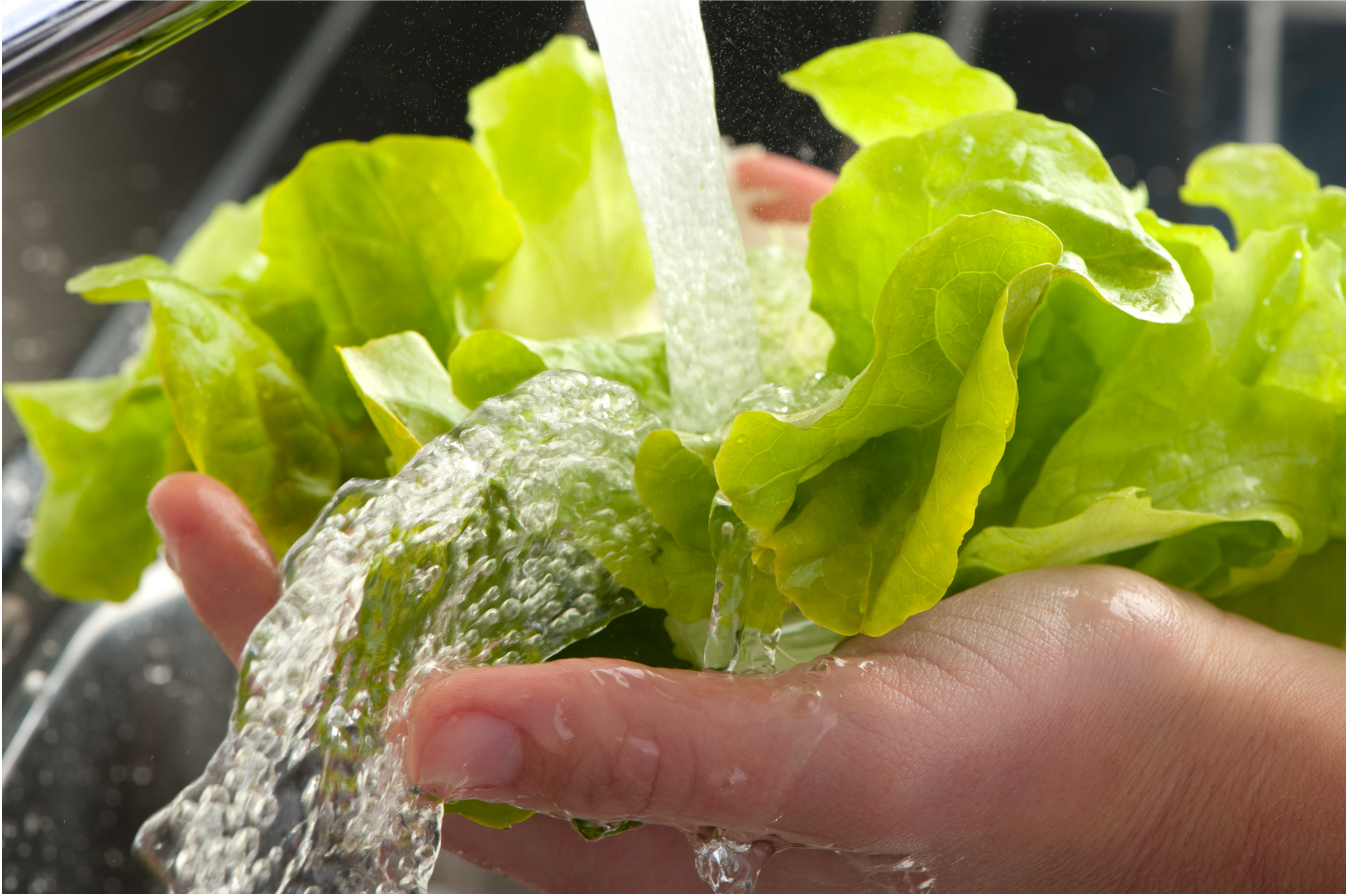
Wash fruits and vegetables thoroughly under running water before eating, cutting, or cooking them. Washing can reduce contamination, but it cannot guarantee that every Cyclospora parasite will be removed.
Scrub firm produce, including melons and cucumbers, with a clean produce brush. Peeling fruits and vegetables can provide an additional layer of protection when appropriate.
During the current outbreak, the Michigan Department of Health and Human Services has recommended buying whole heads of lettuce or leafy greens rather than prewashed, bagged salad mixes. Remove the outer two or three layers and wash the remaining leaves thoroughly.
Wash your hands before and after preparing produce, and clean knives, cutting boards, countertops, and other surfaces that come into contact with it.
Commercially frozen and canned produce are lower-risk options. To date, no Cyclospora outbreaks in the United States have been linked to commercially frozen or canned produce.
Produce from a home garden is generally considered lower risk if the garden has not been exposed to contaminated water, sewage, or human waste. But it should still be washed before eating.
Cyclosporiasis is not known to pass through breast milk. Someone who becomes ill can generally continue breastfeeding, but prolonged diarrhea can cause dehydration, so it is important to drink enough fluids and contact a healthcare provider for individualized guidance.
If you develop persistent watery diarrhea or other symptoms, contact your healthcare provider and ask whether testing for Cyclospora is appropriate. It may not be included in a standard stool panel, and the infection can be treated.
One challenge in responding to this surge is that we still do not have a complete national picture of how widespread it is. CDC figures have lagged significantly behind numbers reported by individual states, leaving the public dependent on a patchwork of state and local updates. That is happening after the Trump administration scaled back the CDC’s FoodNet surveillance program last year. Beginning in July 2025, states participating in FoodNet were no longer required to include Cyclospora and several other major foodborne pathogens in their FoodNet surveillance. FoodNet played a critical role in monitoring long-term trends and helping researchers understand whether illnesses like cyclosporiasis were becoming more common.
This outbreak is a reminder that public health surveillance is often invisible when it’s working well, but it’s an invaluable tool for limiting the spread of foodborne illness.
The Bureau of Alcohol, Tobacco, Firearms and Explosives rolled back more than 30 gun regulations affecting firearm sales, private transfers, and restrictions involving some people with mental health conditions.
Supporters say the changes strengthen Second Amendment protections. Critics, including former ATF officials, say they weaken federal oversight and prioritize the interests of gun owners and manufacturers over public safety. The rollback continues the administration’s broader effort to reverse gun regulations adopted in recent years, including its repeal of the “zero tolerance” policy for gun dealers that repeatedly or willfully violated federal law.
Gun violence remains a major public health problem in the United States, contributing to tens of thousands of deaths each year. Firearm deaths have declined somewhat from their recent peak, but guns remain the leading cause of death among children and teenagers, with significant disparities across communities.
Data from 55 leading research universities show that PhD admissions declined by roughly 15% this year compared with last year, with universities citing federal funding uncertainty as a major reason.
The decline follows a year of research funding cuts, delayed grant awards, and reductions to the federal scientific workforce. Universities rely on stable, multiyear funding to support doctoral students, and without it, many programs are admitting fewer people.
More than 10,000 PhD-trained workers also left federal science agencies during the first year of Trump’s second term, further weakening the country’s scientific infrastructure.
The administration has also made graduate education more difficult to finance. Earlier this month, a new Department of Education rule changed which graduate programs qualify for higher federal student loan limits, making advanced training in some science and health professions harder to afford. For more on that, see my post here.
The effects will extend far beyond this admissions cycle. PhD students teach, mentor, conduct research, and become the scientists who lead future discoveries. Rebuilding that pipeline could take decades, even if funding is eventually restored.
The Trump administration finalized a rule removing habitat destruction from the legal definition of “harm” under the Endangered Species Act. This makes it easier for drilling, mining, logging, and real estate development projects to proceed even when they destroy critical habitat, as long as they do not directly kill or injure a protected species.
Since its passage in 1973, the Endangered Species Act has been one of the country’s most successful conservation laws, with roughly 99% of listed species avoiding extinction. The law requires federal agencies to consider how proposed projects affect threatened and endangered species and the habitats they depend on.
The new rule reverses a decades-old interpretation that treated significant habitat destruction as a form of harm. That interpretation was upheld by the Supreme Court in 1995, and scientists widely recognize habitat loss as one of the leading drivers of extinction.
Conservation groups have called the change “the most severe erosion of protections for wildlife in half a century.” It is also another example of this administration weakening long-standing public protections to make it easier for industry and development projects to move forward.
I write this to cut through the noise and bring you the truth about what’s happening in science and public health. If you value this work and are able to support it, please consider becoming a paid subscriber. Every subscription helps make it possible for me to keep doing this work and reach more people.
Comments
Nothing yet. Say the first thing.
Sign in to join the conversation.