

It is my pleasure to share the work of Andrew McGonigle, a.k.a. the Doctor Yogi, on this week’s Drip, Drip, Drip. Andrew’s unique and intelligent approach to teaching anatomy within a yoga context is a gift to both newbie yogis and longtimers like myself.
I love how Andrew offers new perspectives on old ideas about what does and doesn’t help or harm in yoga. He skillfully offers his evidence-backed topics in a measured way that allows the reader to be open to fresh ways of thinking and exploring anatomy and physiology within a yoga context.
If that weren’t enough, he is also just the most fun and openhearted guy! We are lucky to have his growing presence in the greater yoga community and I feel lucky to call him my friend.
And today, I am thrilled to share his work with you!
Make sure you don’t miss his Demystifying Aging Workshop!
Check Out Doctor Yogi's Substack Here
Aging is often spoken about in the language of decline.
We hear about shrinking brains, deteriorating joints, fragile bones, slowing metabolism, and inevitable limitation. Even in wellness and yoga spaces, aging is frequently framed as a problem to solve, resist, reverse, or transcend.
Underneath much of this sits a quiet assumption: the older body is a body moving away from possibility.
And yet, when we look more carefully, both scientifically and experientially, the picture becomes far more nuanced.
Some capacities do change with age. Recovery may become slower. Certain tissues may tolerate load differently. Vision changes. Balance may require more attention. But many of the things we commonly attribute to aging are not caused by aging alone.
What we stop doing matters.
What we believe matters.
What we expect matters.
In many ways, aging is not simply a biological process. It is also a relationship, shaped by culture, memory, identity, fear, movement, and meaning.
Most of us have inherited powerful narratives about what aging is supposed to look like.
Move carefully.
Slow down.
Don’t fall.
Don’t overdo it.
Your body can’t handle that anymore.
Some of these messages arise from care and concern. But over time, they can begin to shape identity itself.
Research suggests that beliefs about aging influence behaviour, confidence, movement, engagement, and even health outcomes (Levy, 2009). If we expect decline, fragility, and limitation, we may gradually organise our lives around those expectations.
We may stop getting down to the floor.
Stop loading our muscles.
Stop challenging balance.
Stop learning new things.
Stop trusting our bodies.
Eventually, the body adapts to that smaller world.
This is one reason I have become increasingly interested not just in anatomy and physiology, but in the psychological and cultural dimensions of movement. Bodies do not exist separately from beliefs.
One of the most hopeful things modern research continues to show is that the body remains adaptable throughout life.
Muscle tissue still responds to strength training later in life. Bone continues responding to loading. Balance improves with practice. The brain remains capable of adaptation and learning. Confidence itself can be trained.
None of this means we become immune to aging. It means that aging is more dynamic than many of us have been taught.
I often think about how many older adults have spent decades receiving messages that movement should become increasingly small, cautious, and limited.
And yet many of the capacities we associate with “successful aging” require continued exposure to challenge and engagement:
Strength
Variability
Coordination
Curiosity
Challenge
Community
This creates an interesting paradox. The very things many people begin avoiding with age may be some of the things the body and brain continue needing most.
Yoga and meditation spaces occupy an interesting position within these conversations.
At their best, these practices can help us become more intimate with change itself. They may help us relate to the body with greater compassion, curiosity, and less identification. They can soften fear and deepen awareness.
But these spaces are not immune from cultural narratives around aging either.
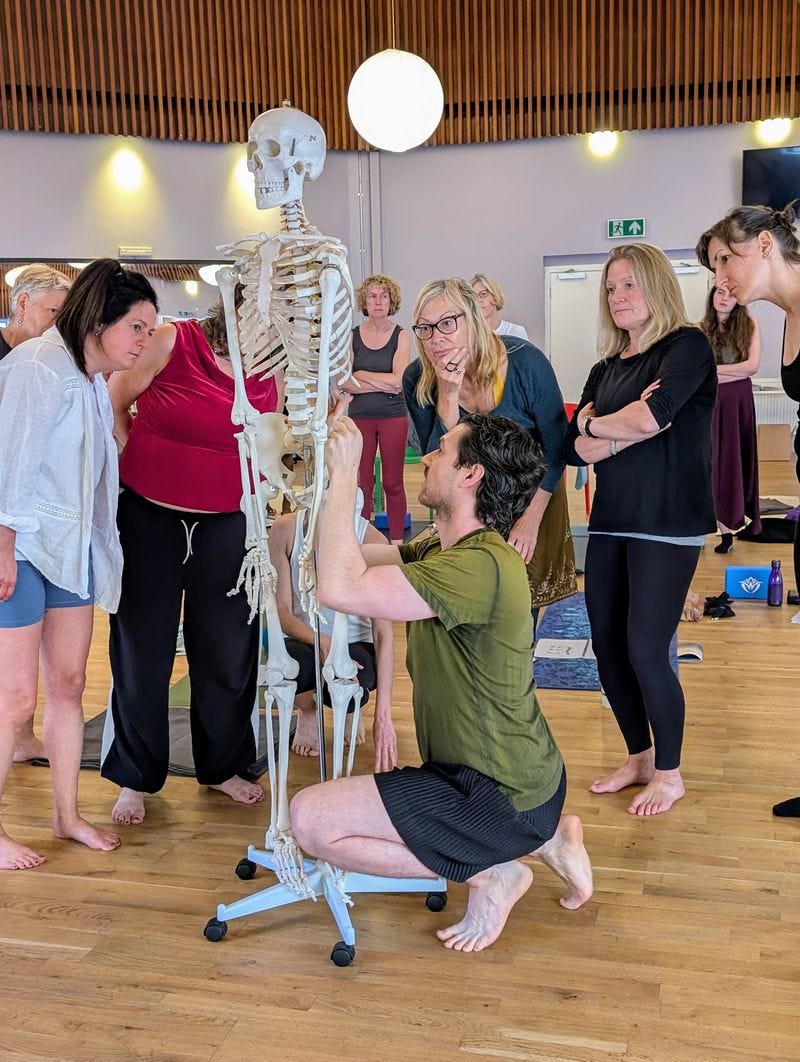
Sometimes yoga spaces unintentionally reinforce fragility through overprotection and fear-based language. Other times they move to the opposite extreme, promoting the idea that spiritual practice should somehow allow us to transcend biology entirely.
Neither feels particularly helpful to me.
Aging is not failure.
Needing adaptation is not failure.
Change is not failure.
At the same time, challenge is not the enemy either.
There is something deeply important about continuing to engage with life physically, cognitively, and socially. About continuing to practise balance. Continuing to build strength. Continuing to learn. Continuing to trust that the body is still capable of adaptation.
Not because we are trying to “beat aging”, but because participation itself matters.
Perhaps part of demystifying aging is learning to move away from binary thinking altogether.
Not decline versus optimisation.
Not fragility versus denial.
Not “anti-aging” versus passive acceptance.
But something more relational and more honest.
Aging involves change. Some things become more difficult. Some capacities narrow. Loss is real. Grief can be real too.
And yet adaptability also remains real.
The aging body is not simply a story of deterioration. It is also a story of ongoing responsiveness, complexity, learning, and possibility.
That feels like a far more interesting conversation to me.
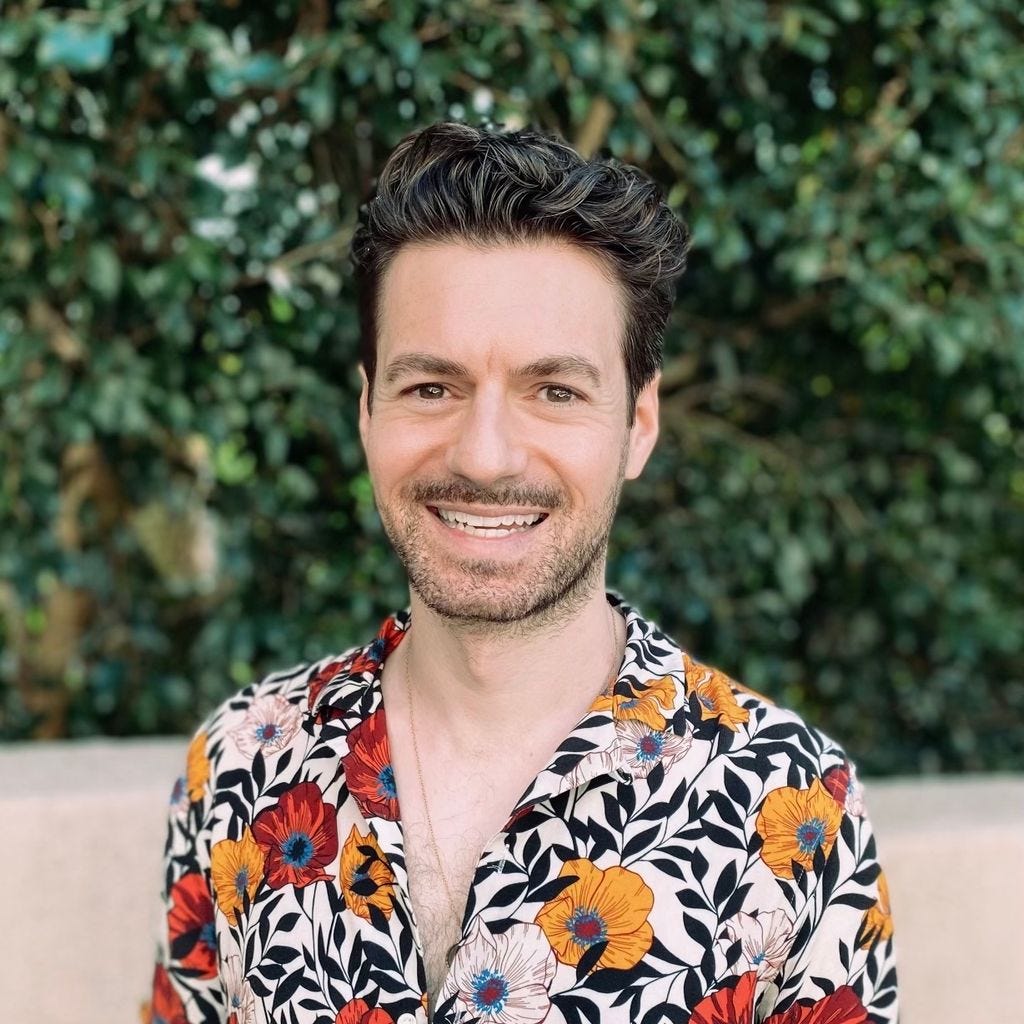
Andrew McGonigle has been studying anatomy for over twenty years, originally training to become a doctor and then moving away from Western medicine to become a yoga teacher and anatomy teacher. He combines his skills and experience to teach anatomy and physiology on Yoga Teacher Training courses internationally and runs the Enlightened Yoga Collective - an education-based online community membership for yoga teachers. His first book Supporting Yoga Students with Common Injuries and Conditions: A Handbook for Yoga Teachers and Trainees was published in March 2021 and his most recent book The Physiology of Yoga was published in June 2022. He lives in Los Angeles with his husband.
This workshop is designed primarily for yoga teachers and movement educators, but it is also open to yoga practitioners who are interested in developing a clearer, evidence-based understanding of aging bodies and brains.
Fiatarone, M. A. et al. (1990). High-intensity strength training in nonagenarians. JAMA, 263(22), 3029–3034.
Levy, B. R. (2009). Stereotype embodiment. Psychological Science, 20(12), 1537–1543.
Livingston, G. et al. (2020). Dementia prevention, intervention, and care. The Lancet, 396(10248), 413–446.
Erickson, K. I. et al. (2011). Exercise training increases hippocampal size and improves memory. Proceedings of the National Academy of Sciences, 108(7), 3017–3022.
No posts
Comments
Nothing yet. Say the first thing.
Sign in to join the conversation.